Artwork
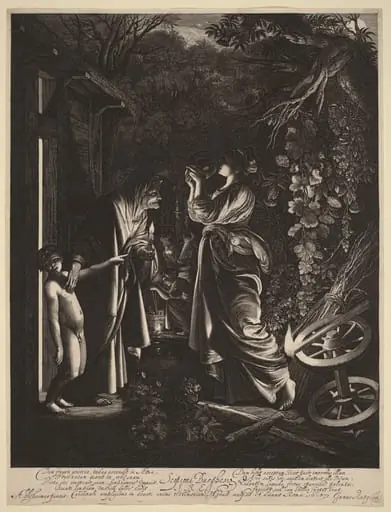
The Hag and the Young Man
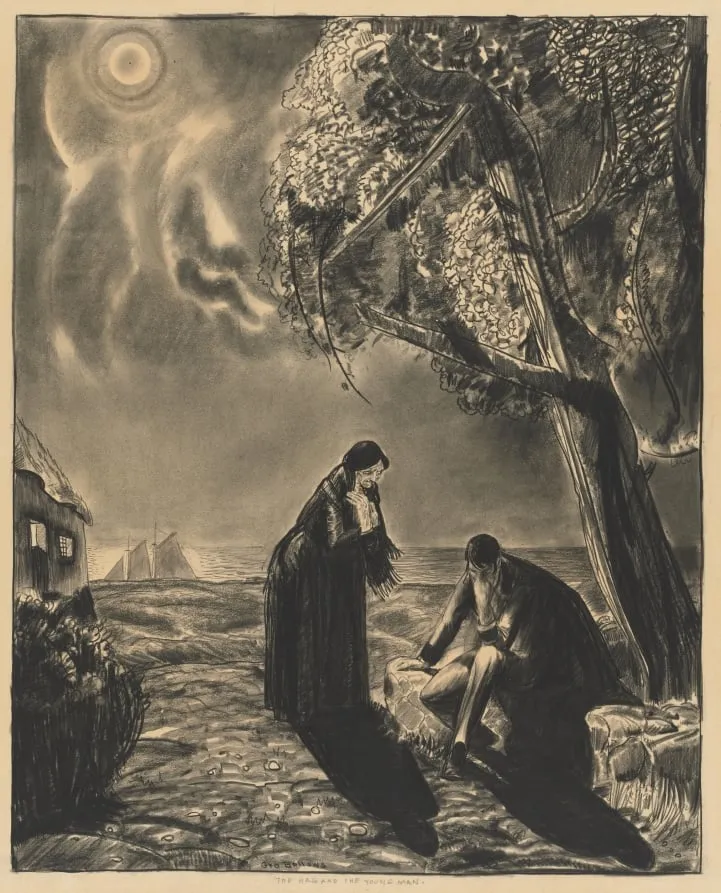
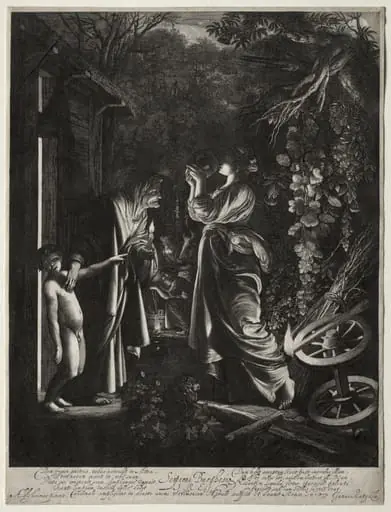
The Hag and the Young Man is a drawing by George Bellows. It dates from 1922 and is held in the collection of the Cleveland Museum of Art.
- Accession no.
- 1937.512
- Credit line
- Leonard C. Hanna Jr. Fund
About this work
Overview
Bellows rendered the scene with rapid, expressive lines, capturing a fleeting moment of tension between two figures under artificial light.
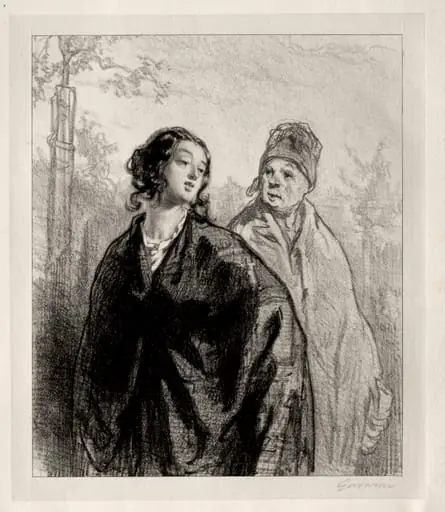
Created in 1922, The Hag and the Young Man is a charcoal drawing by George Bellows, made as part of a series illustrating Donn Byrne’s short story The Wind Bloweth. Though published in The Century Magazine, the image was excluded from the subsequent book edition. Bellows rendered the scene with rapid, expressive lines, capturing a fleeting moment of tension between two figures under artificial light.
Subject & Meaning
The drawing depicts an elderly woman gripping the arm of a younger man beneath a dim streetlamp. Her hunched posture and angular features contrast with his smoother, weary face, suggesting a moment of coercion or reluctant guidance. The interaction implies a quiet struggle, perhaps between generations, obligation, or survival, set against the isolation of a nocturnal Irish street.
Technique & Style
Bellows employed loose, energetic charcoal strokes to convey immediacy and emotional weight. Deep shadows dominate the composition, with light concentrated only on the figures’ faces and hands, creating a stark chiaroscuro effect. The rough texture and unpolished lines reflect a spontaneous, almost documentary approach, as if the scene was sketched in real time.
History & Provenance
The drawing was produced for a serialized story in The Century Magazine, appearing on page 96 in May 1922. Despite its inclusion in the magazine, it was omitted when the story was later published as a standalone book. The reason for its exclusion remains unrecorded, though editorial decisions often favored more conventional imagery for book illustration at the time.
Context
Bellows’s engagement with Irish themes likely stemmed from his friendship with John Butler Yeats, father of the poet W.B. Yeats, who shared an interest in Celtic folklore and rural life. Though Bellows was primarily known for urban American scenes, this series reflects a brief but deliberate exploration of Irish subject matter, influenced by personal connections and contemporary literary trends.
Legacy
Though not widely reproduced after its magazine appearance, the drawing stands as an example of Bellows’s versatility and his ability to convey psychological depth with minimal means. Its raw aesthetic anticipates later 20th-century tendencies toward expressive realism, and it remains a quiet testament to the artist’s interest in marginalized human moments.
Artist & collection
Artist
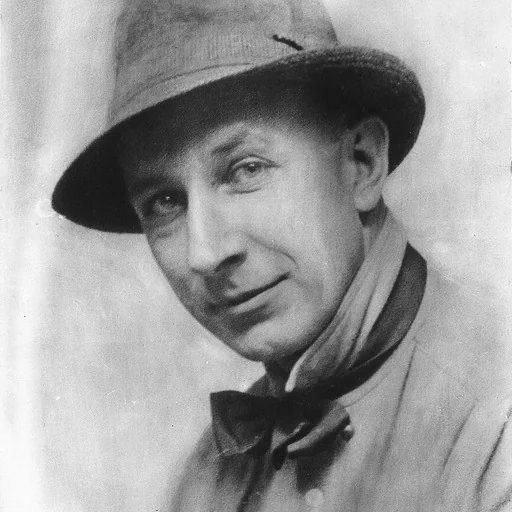
George Wesley Bellows (August 12 or August 19, 1882 – January 8, 1925) was an American realist painter, known for his bold depictions of urban life in New York City.