Artwork
Democritus
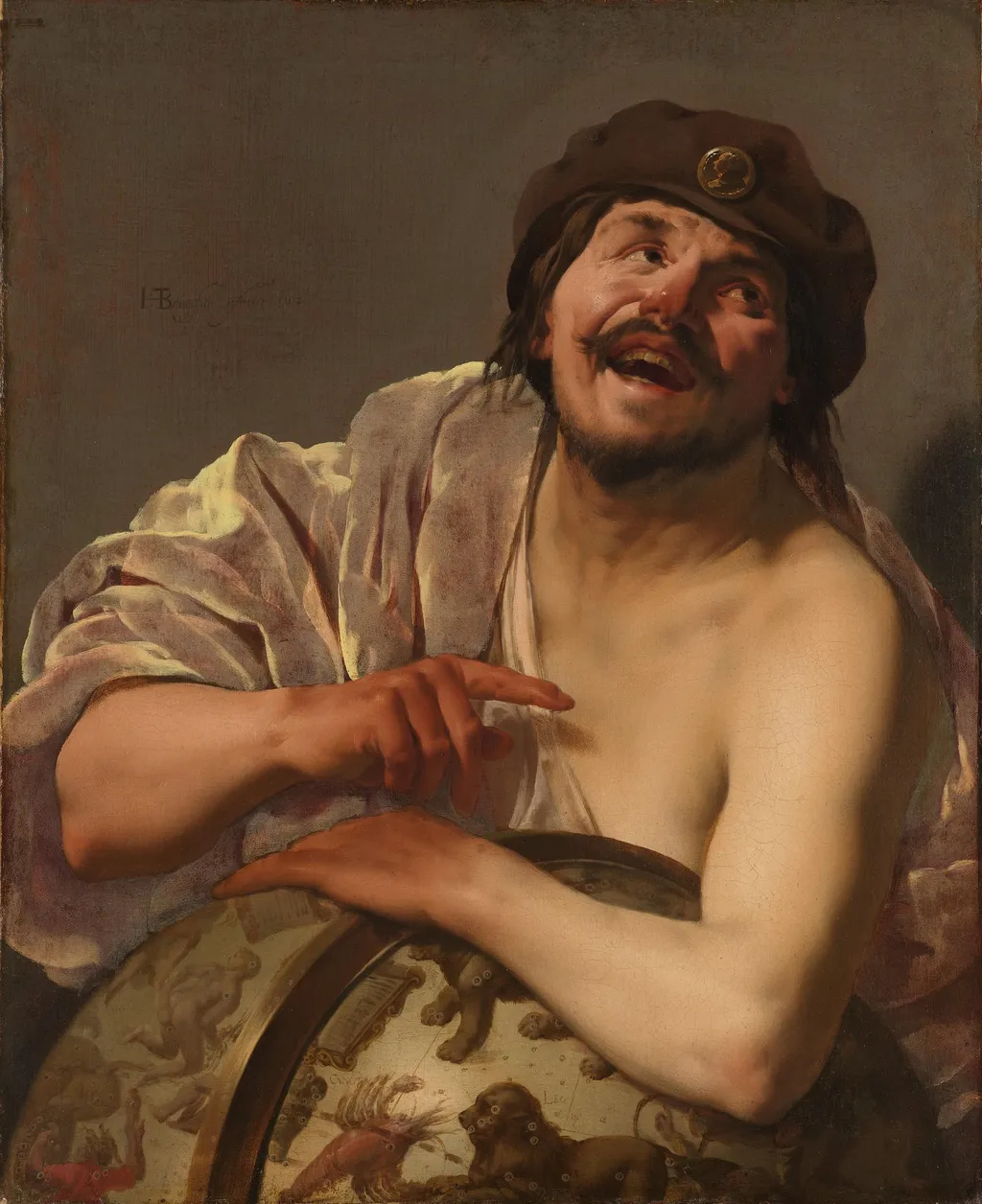
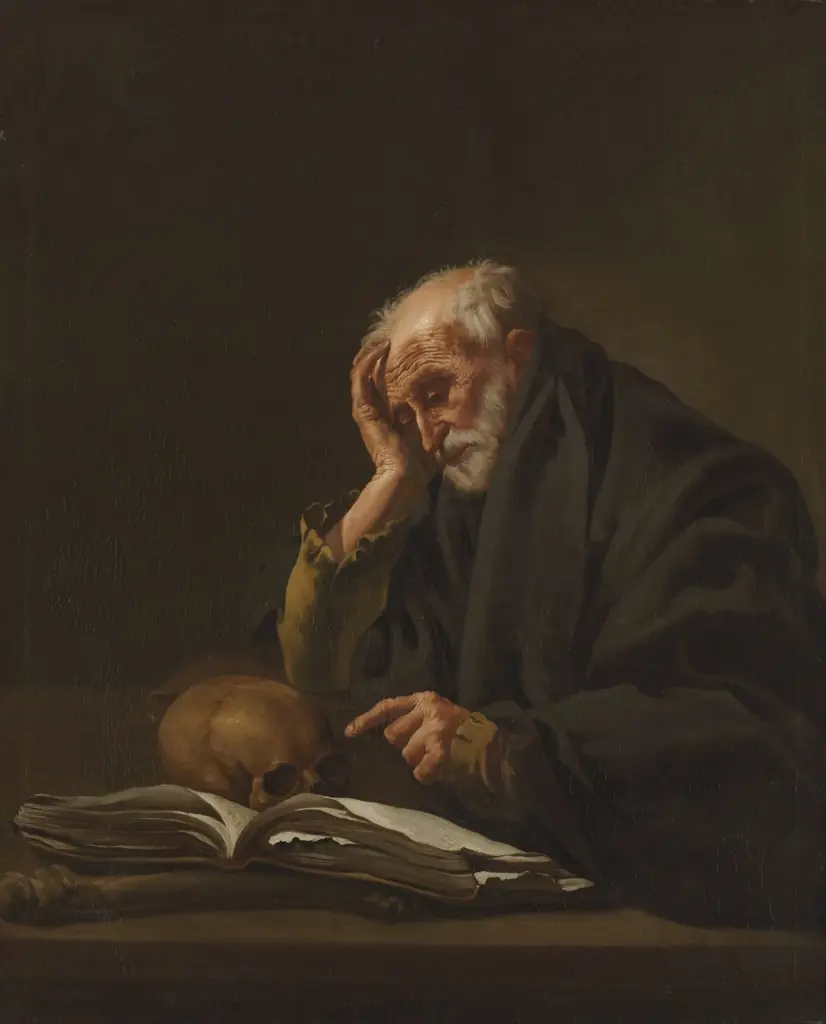
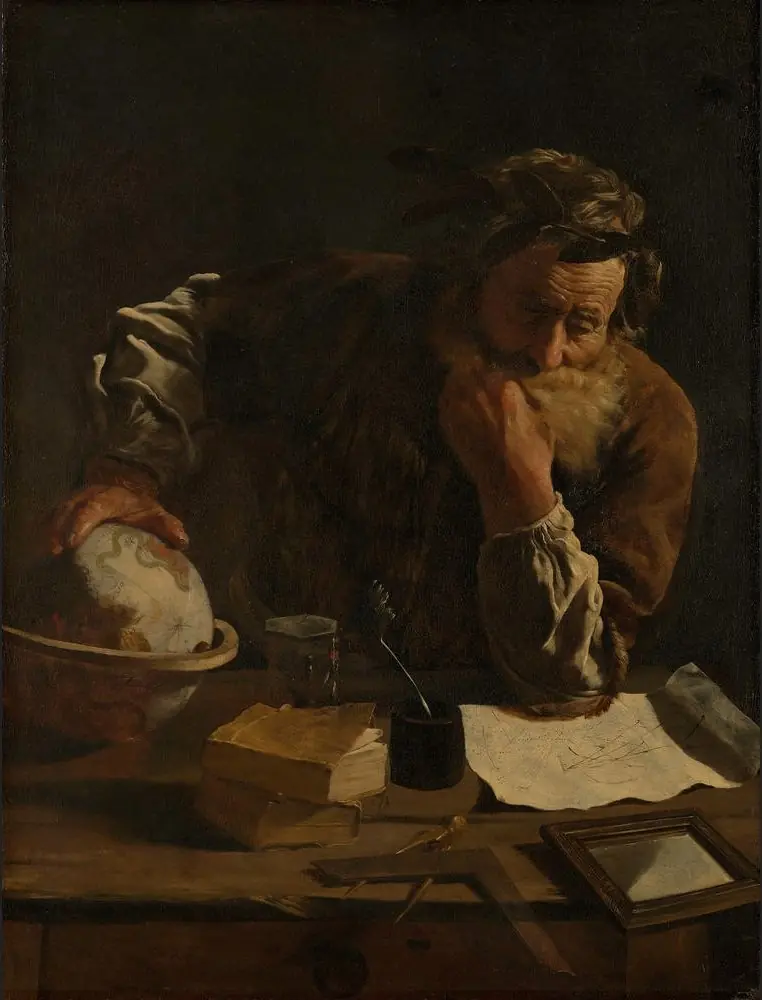
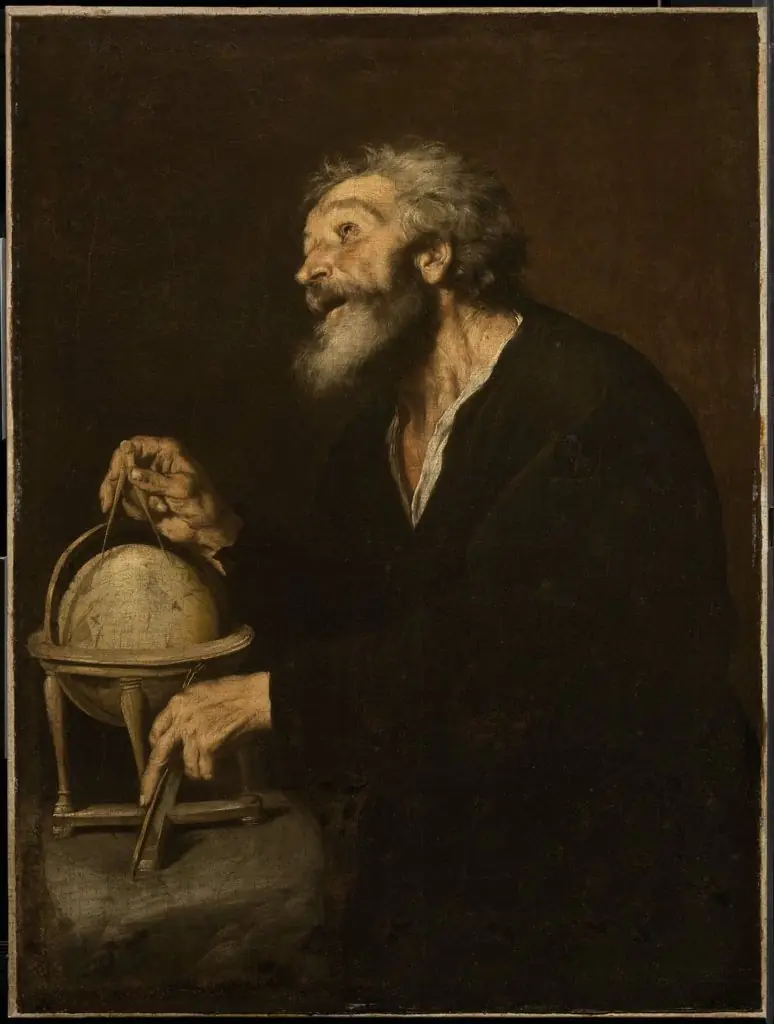
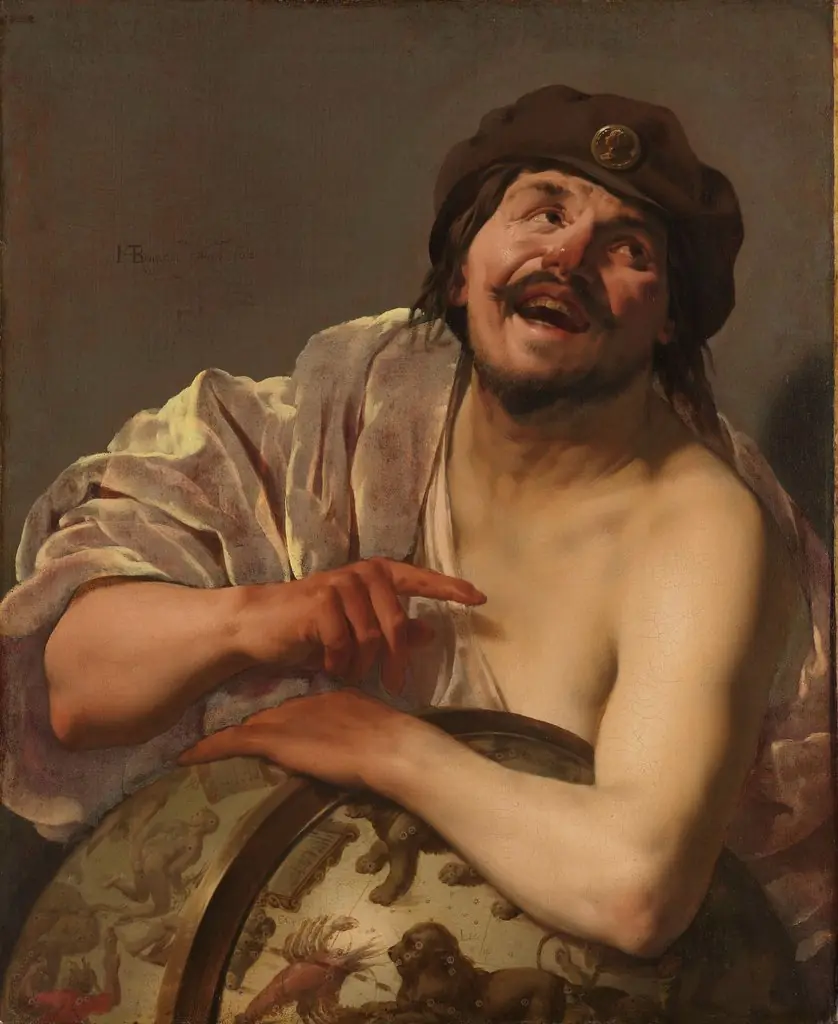
Democritus is an unspecified painting by the Caravaggisti artist Hendrick ter Brugghen. It dates from 1628 and is held in the collection of the Rijksmuseum.
About this work
Technique & Style
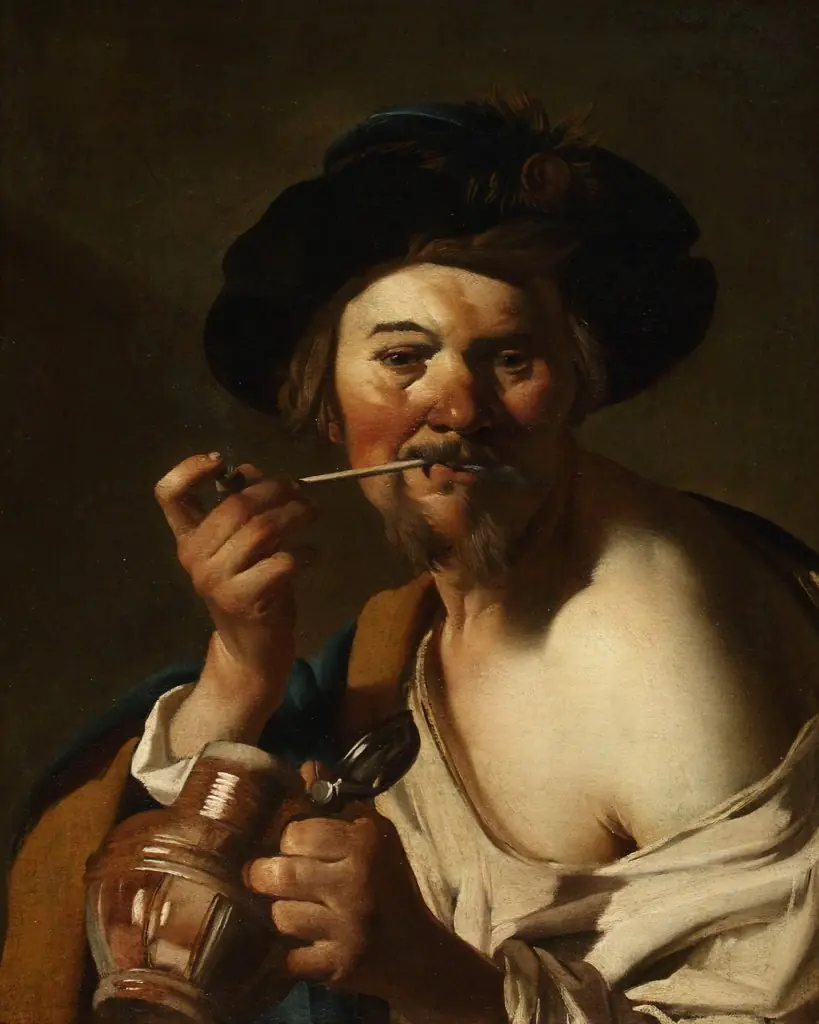
The work employs a dramatic tenebroso technique, characterized by bold contrasts between bright, illuminated surfaces and sombre, dark backgrounds.
Hendrick ter Brugghen's *Democritus* (1628) is an oil painting executed in the Utrecht Caravaggist style. The work employs a dramatic tenebroso technique, characterized by bold contrasts between bright, illuminated surfaces and sombre, dark backgrounds. Ter Brugghen adapted the influence of Caravaggio and his followers, such as Orazio Gentileschi, to create a palette that is notably cooler and less aggressively dramatic than the Italian master's, while retaining a strong emotional charge. The handling of the medium features a subtle use of color with unusual combinations, a hallmark of the artist's personal style. Although the composition is grounded in the Dutch tradition, it reflects the artist's study of Italian models during his time in Rome. The painting depicts a half-length figure, a format the artist favored for genre scenes and portraits, utilizing light to define the subject's form against the shadow.
History & Provenance
The painting *Democritus* by Hendrick ter Brugghen was created in 1628. It is one of the artist's later works, produced during his final year of life before his death on November 1, 1629. No specific commission or patron is recorded in the available sources for this particular work. The painting belongs to the artist's mature period, following his return from Italy around 1614-1615 and his establishment in Utrecht as a member of the local painters' guild in 1616. While ter Brugghen's early career included religious and genre scenes, his later output, including *Democritus*, reflects his distinctive adaptation of Caravaggesque style with dramatic lighting and half-length figures. The work predates the artist's death by approximately one year and stands as part of his final creative phase in Utrecht.
Context
Hendrick ter Brugghen’s Democritus belongs to the Utrecht Caravaggisti, a circle of Dutch painters who adapted Caravaggio’s dramatic chiaroscuro and naturalism in the early seventeenth century. Ter Brugghen’s half-length figure, rendered with concentrated light and sober expression, exemplifies the group’s synthesis of Italian tenebrism with a restrained northern sensibility.
The painting’s critical fortunes have varied. Joachim von Sandrart, writing in 1675, judged ter Brugghen’s works as profound but melancholic, noting that an unfriendly fate pursued him to the grave. In the early eighteenth century, the artist’s son Richard countered this view, circulating a pamphlet that claimed Peter Paul Rubens had praised ter Brugghen as the only painter worthy of note in Utrecht. Modern scholarship has rehabilitated the artist’s reputation; recent studies emphasize his originality within Dutch Caravaggism and his influence on Rembrandt’s religious narrative and the tonal refinements of later painters.
Legacy
During his lifetime, Hendrick ter Brugghen held a strong reputation, with Constantijn Huygens praising him as one of the finest Dutch history painters. However, his standing later fluctuated; Joachim von Sandrart criticized his work in 1675 for its melancholic and somber nature. In the early 18th century, his son Richard actively worked to restore the artist's fame, commissioning an engraving and circulating claims that Peter Paul Rubens had declared ter Brugghen the only great painter he found in the Netherlands. Although ter Brugghen eventually fell into relative obscurity in subsequent centuries, modern scholarship regards him as the most highly valued seventeenth-century painter from Utrecht. His influence extended to contemporaries and successors, with his treatment of religious subjects reflected in the work of Rembrandt. Elements of his style, particularly his use of color, are also detectable in the paintings of Frans Hals and Johannes Vermeer.
Own this work as a print
Artist & collection
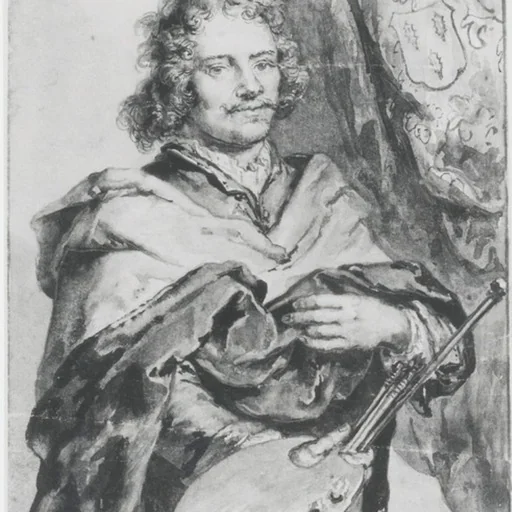
Artist
Hendrick Jansz ter Brugghen (or Terbrugghen; 1588 – 1 November 1629) was a Dutch painter of genre scenes and religious subjects.