Artwork
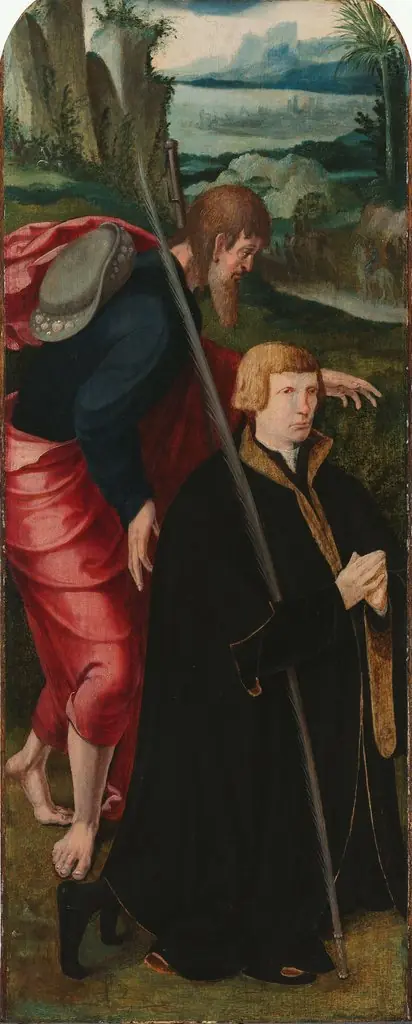
Franco van Langhel and His Sons with Saint John the Evangelist (outer face); Pieter van Os with Saint Peter (inner face)
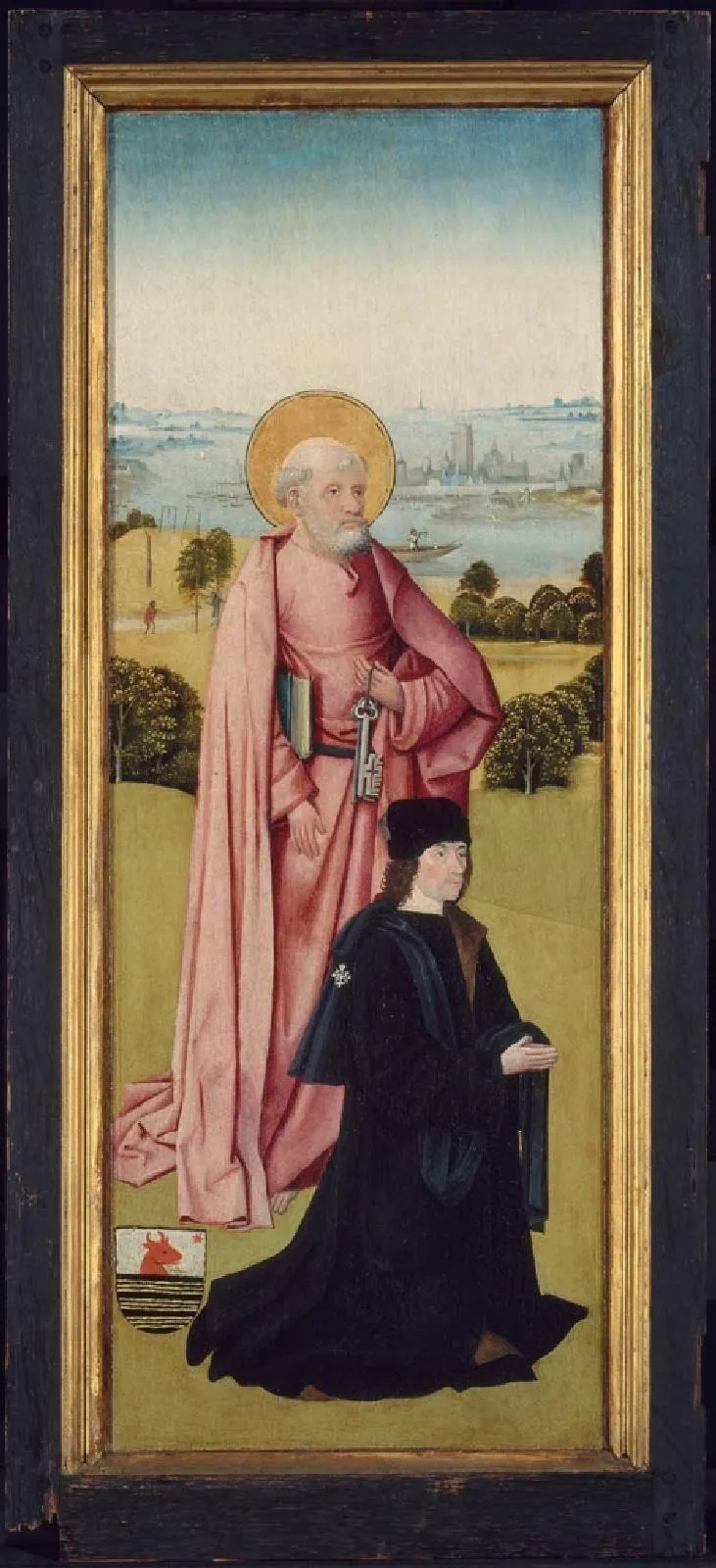
Franco van Langhel and His Sons with Saint John the Evangelist (outer face); Pieter van Os with Saint Peter (inner face) is an oil painting by the Northern Renaissance artist Hieronymus Bosch. It dates from 1500 and is held in the collection of the Museum of Fine Arts Boston.
About this work
Overview
9 centimeters and is held in the collection of the Museum of Fine Arts, Boston.
Franco van Langhel and His Sons with Saint John the Evangelist (outer face); Pieter van Os with Saint Peter (inner face) is a religious painting by the Dutch artist Hieronymus Bosch, dated to 1500. Executed in oil on panel, the work measures 79.4 by 35.9 centimeters and is held in the collection of the Museum of Fine Arts, Boston. The panel belongs to a larger triptych context, specifically associated with Bosch's Ecce Homo Triptych, and exemplifies the artist's contribution to Early Netherlandish painting through its combination of donor portraiture and sacred iconography.
Subject & Meaning
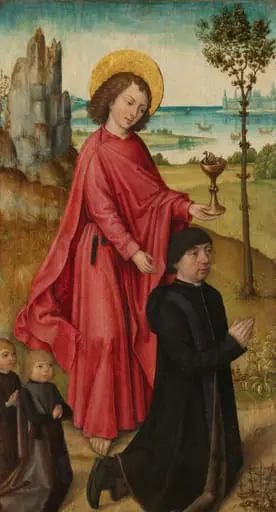
The inner face of the panel depicts Pieter van Os kneeling in prayer before Saint Peter, identifiable by his traditional attributes: the large key, symbolizing the keys to the kingdom of heaven, and the book representing scriptural authority. The standing saint wears a rose-pink robe with deep folds and bears a golden halo, while the donor figure is dressed in voluminous black garments with a fur collar and black cap, his hands clasped in devotional gesture. A heraldic shield bearing a red ox head with black and gold stripes appears in the lower left corner, signifying the van Os family arms. The outer face presents Franco van Langhel and his sons accompanied by Saint John the Evangelist. This dual-faced structure integrates personal commemoration with intercessory devotion, a common function of Netherlandish triptych wings where donors sought spiritual protection through proximity to patron saints.
Technique & Style
Bosch employed oil paint on panel support, working with smooth, even brushwork that achieves precise detail in the faces and drapery. Light falls evenly from the left, modeling the figures without strong dramatic shadows. The palette is dominated by the pink of Saint Peter's robe, the black of the donor's dress, and muted greens and blues in the background landscape. The landscape itself is rendered in softer, more atmospheric tones, featuring stylized trees, a river with boats, and a distant walled city beneath a pale blue sky that lightens toward the horizon. The surface shows fine craquelure throughout, consistent with its age. The composition is framed by a dark wooden border with inner gilt molding, and the vertical format accommodates the standing saint and kneeling donor in a hierarchical yet intimate arrangement typical of Bosch's religious panels.
History & Provenance
The panel is dated to 1500, placing it within the mature phase of Bosch's career. Its dimensions of 0.359 by 0.794 meters confirm its function as a wing of a larger triptych structure. The work is now in the collection of the Museum of Fine Arts, Boston, having been accessioned into this public institution. The panel's association with the Ecce Homo Triptych, as indicated by its Wikidata classification and Commons categorization, suggests it originally formed part of a multi-panel devotional ensemble, though the exact circumstances of its separation from the central panel, if such occurred, remain unspecified in the available sources.
Context
Hieronymus Bosch (circa 1450-1516) was a Dutch painter from Brabant and one of the most notable representatives of the Early Netherlandish painting school. His work, generally oil on oak wood, mainly contains fantastic illustrations of religious concepts and narratives. Within his lifetime, his work was collected in the Netherlands, Austria, and Spain, and widely copied, especially his macabre and nightmarish depictions of hell. This panel, however, demonstrates his capacity for more conventional devotional imagery, combining donor portraiture with saintly intercession in a manner consistent with contemporary Netherlandish practice. The Museum of Fine Arts, Boston's holding of this work reflects the international dispersal of Bosch's panels across major collections. The panel's identification with both the van Langhel and van Os families indicates it served multiple commemorative functions, possibly across generations or through marriage alliances.
Legacy
The panel's afterlife is bound up with the broader reputation of Bosch as a foundational figure of Early Netherlandish art. Its preservation in the Museum of Fine Arts, Boston ensures public access and continued scholarly attention. The work's classification within the Ecce Homo Triptych category on Wikimedia Commons indicates ongoing efforts to reconstruct Bosch's oeuvre and triptych assemblies, a persistent challenge given the dispersal of Netherlandish panels over centuries. The panel's dual faces, serving different donor families, may suggest adaptive reuse or complex original commissioning practices that continue to inform understanding of how devotional objects functioned in early sixteenth-century Netherlandish society.
Artist & collection
Artist
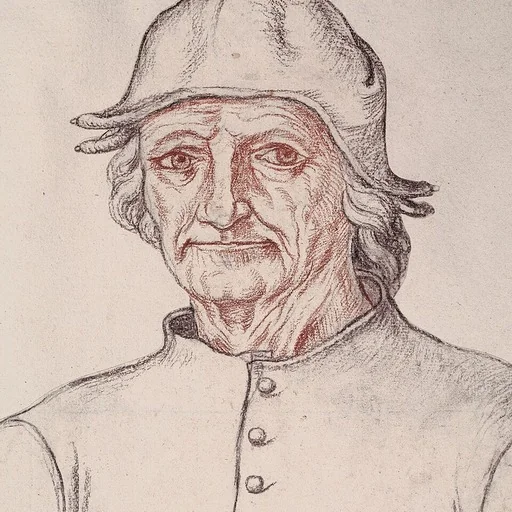
Hieronymus Bosch (; Dutch:; born Jheronimus van Aken; c. 1450 – 9 August 1516) was a Dutch painter from Brabant. He is one of the most notable representatives of the Early Netherlandish painting school. His work,…

 Wing of Lazarus triptych with donor and Saint James
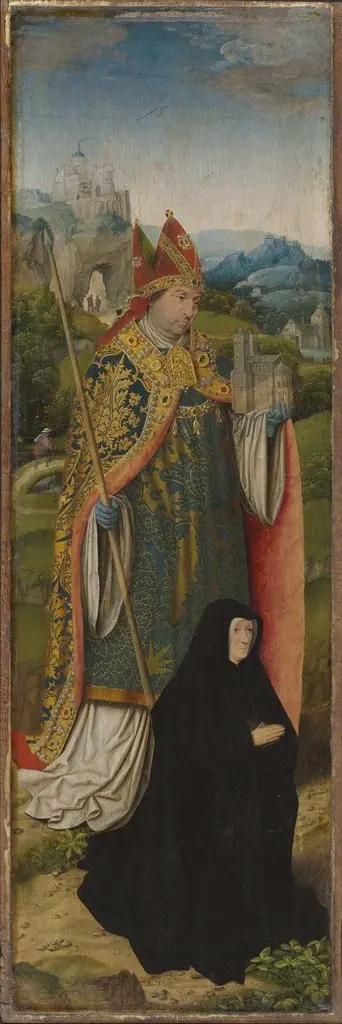 Kreuzigungsaltar: Hl. Bischof (Lambertus von Lüttich?) mit Stifterin
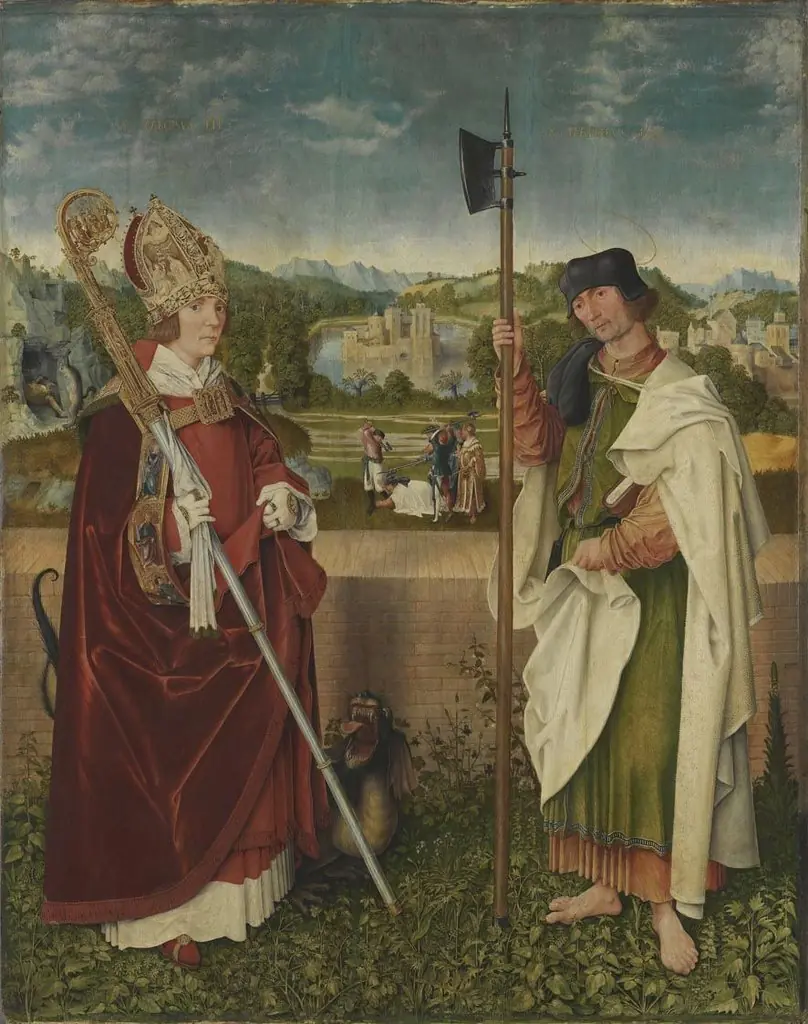 Universitätsaltar: Hll. Narzissus und Mathäus
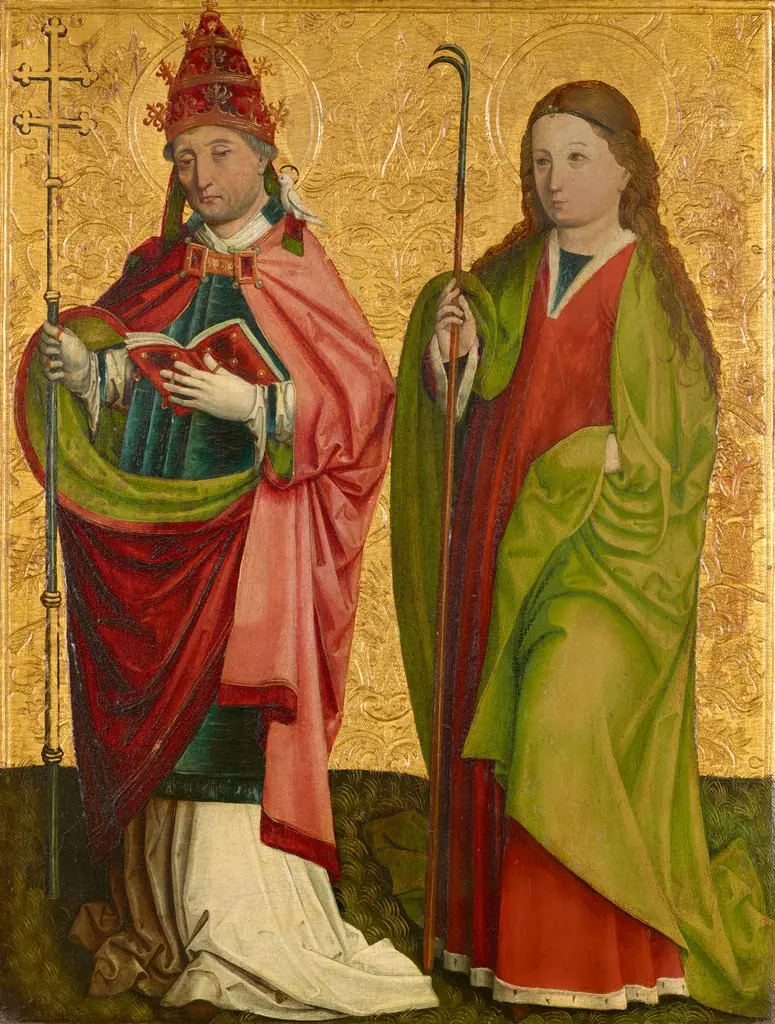 Rechter Flügel des sog. Pretschlaipfer-Triptychons: Hll. Gregor und Agathe (Innenseite); Hll. Erasmus und Barbara (Außenseite)
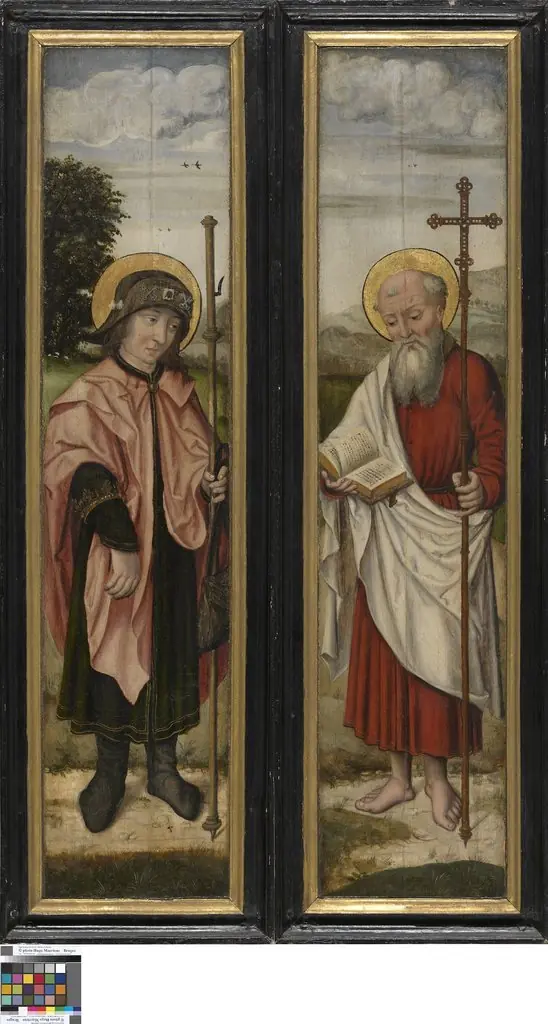 Saints Judoc and Peter
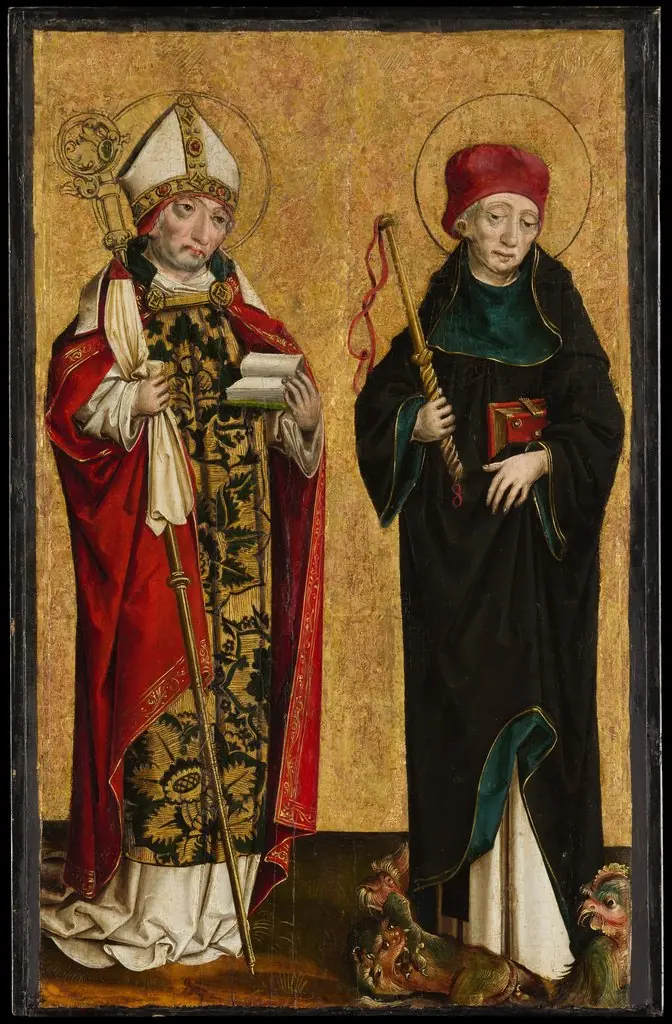 Saint Adalbert and Saint Procopius
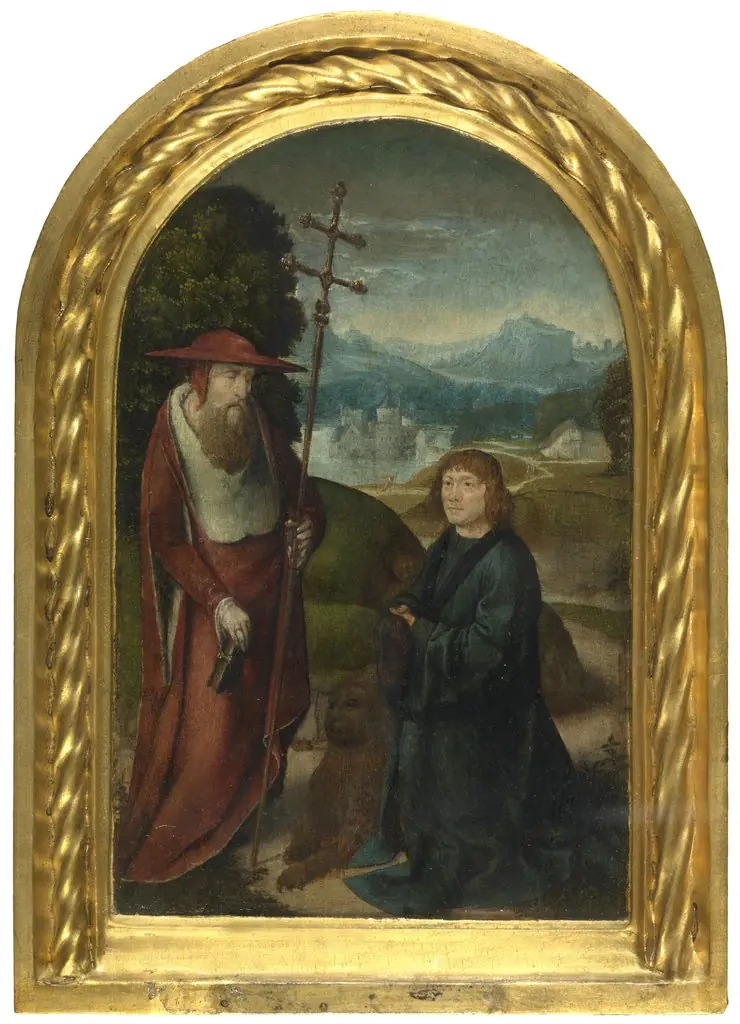 Saint Jerome and Donor
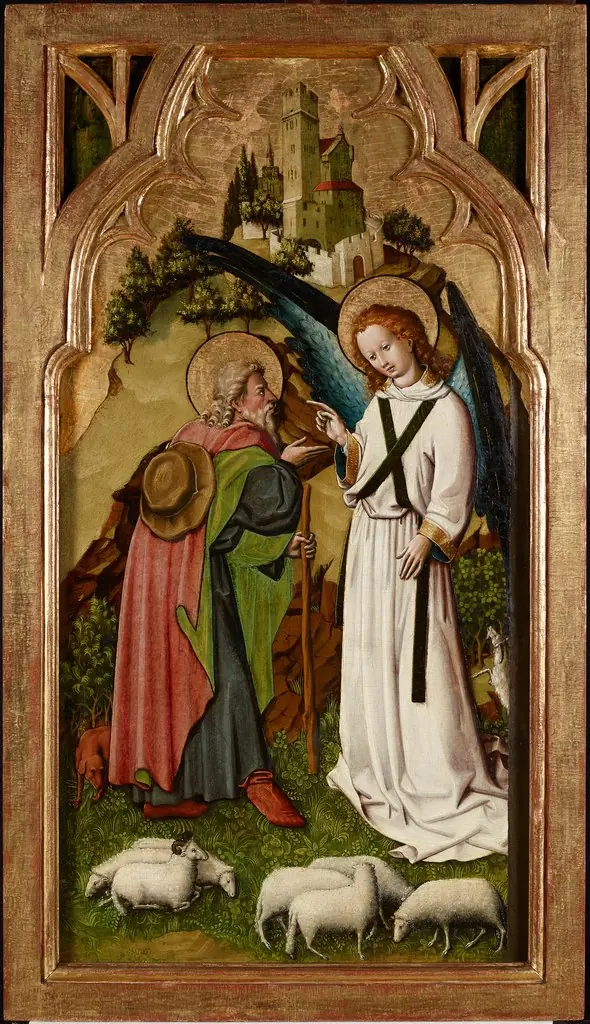 Botschaft des Engels an Joachim
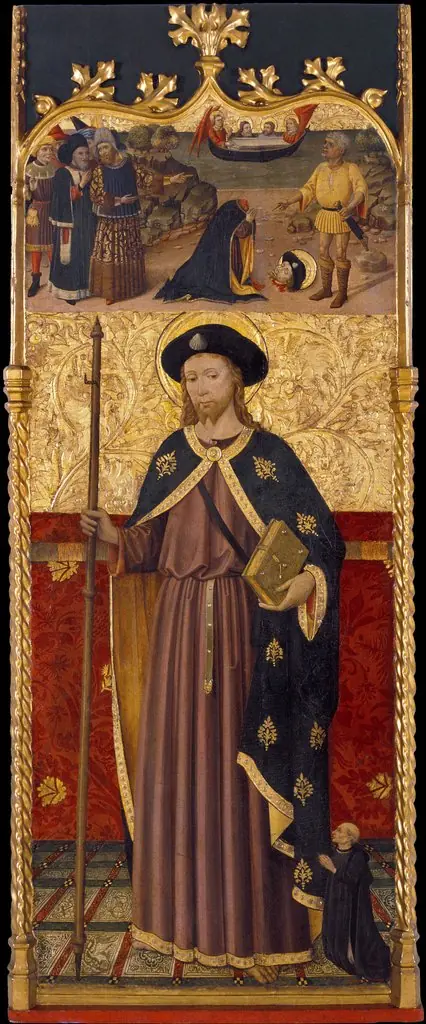 Saint James with a Donor, Decapitation of Saint James
 Kreuzigungsaltar: Hl. Agnes und Stifterin