Artwork
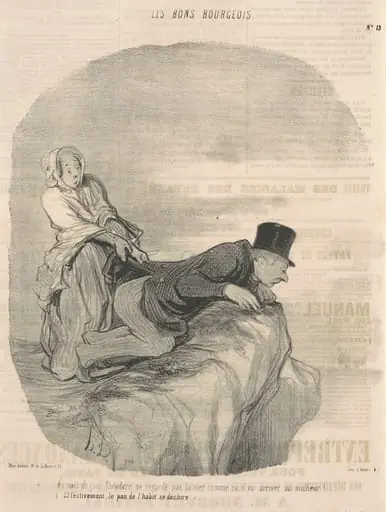
I want to leave an imperishable monument of our visit to this cliff...
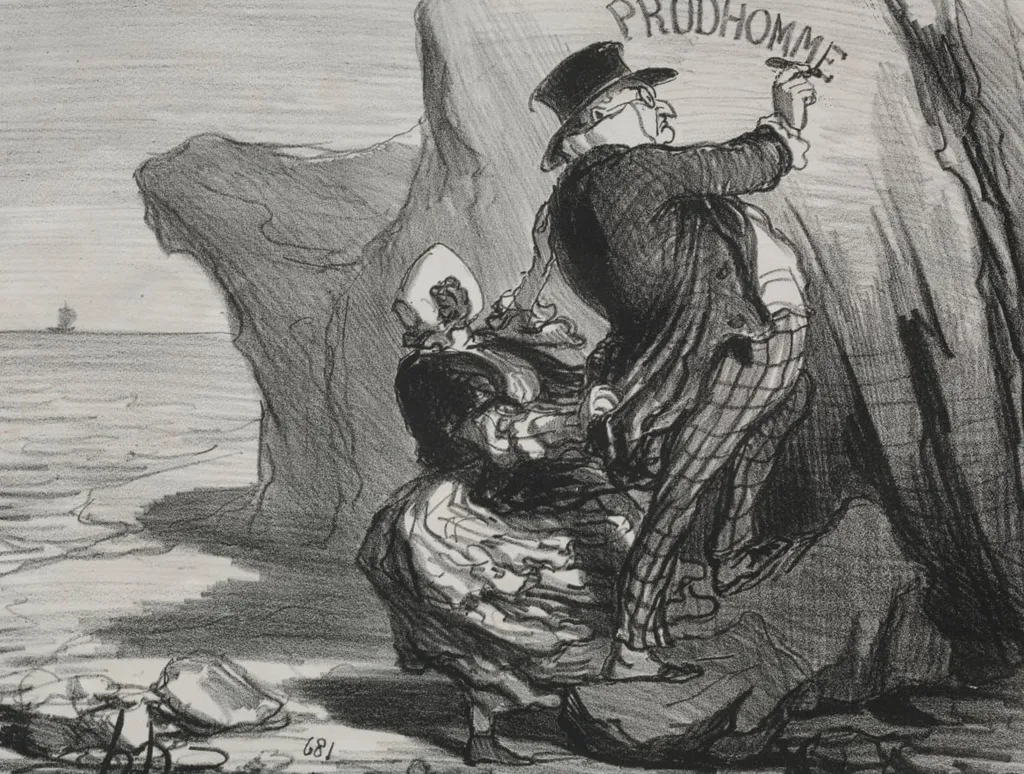
I want to leave an imperishable monument of our visit to this cliff... is a print by the Impressionist artist Honoré Daumier. It dates from 1854 and is held in the collection of the Cleveland Museum of Art. This lithograph, published in Le Charivari on October 9, 1854, is the second plate in the series The Good Bourgeois.
- Accession no.
- 1920.723
- Credit line
- Gift of Frank S. Lahm
About this work
Overview
Its publication in a satirical weekly underscores its role in critiquing middle-class aspirations through everyday scenes.
This lithograph, published in Le Charivari on October 9, 1854, is the second plate in the series The Good Bourgeois. It depicts a solitary figure on a cliffside, engaged in conversation with an unseen companion. The image captures a moment of contemplation, framed by the act of seeking to memorialize a transient experience. Its publication in a satirical weekly underscores its role in critiquing middle-class aspirations through everyday scenes.
Subject & Meaning
The figure on the cliff expresses a desire to leave a permanent mark of his visit, reflecting a broader bourgeois impulse to authenticate experience through physical commemoration. The unseen companion suggests shared but unspoken expectations of social performance. The cliff, a symbol of natural grandeur, becomes a canvas for human vanity, highlighting the tension between fleeting presence and the longing for lasting legacy.
Technique & Style
Executed in lithography, the print employs fine, controlled lines to define the figure and landscape with restrained detail. The composition isolates the man against a sweeping horizon, using negative space to emphasize solitude. Subtle tonal gradations suggest atmospheric depth, while the absence of facial features on the companion reinforces anonymity and the universality of the scene's theme.
History & Provenance
Created for Le Charivari, a Parisian satirical journal, the print was part of a broader series examining middle-class behavior in mid-19th-century France. It was not intended as fine art but as social commentary distributed widely through print media. The Cleveland Museum of Art acquired it as part of its collection of 19th-century French graphic satire, preserving its original context as journalistic illustration.
Context
In 1854, France’s urban middle class was expanding, increasingly concerned with leisure, tourism, and visible markers of cultural refinement. The Good Bourgeois series responded to this shift, using irony to expose the performative nature of such pursuits. This image reflects how emerging tourism practices were intertwined with identity construction, turning natural landscapes into sites of personal assertion.
Legacy
Though not widely exhibited as a standalone work, the print endures as a representative example of French satirical printmaking’s capacity to distill social observation into compact visual narratives. Its themes of memory, presence, and self-representation resonate with later critiques of consumer culture and the commodification of experience.
Artist & collection
Artist
Honoré-Victorin Daumier (French: ; 26 February 1808 – 10 or 11 February 1879) was a French painter, sculptor, and printmaker, whose many works offer commentary on the social and political life in France, from the…

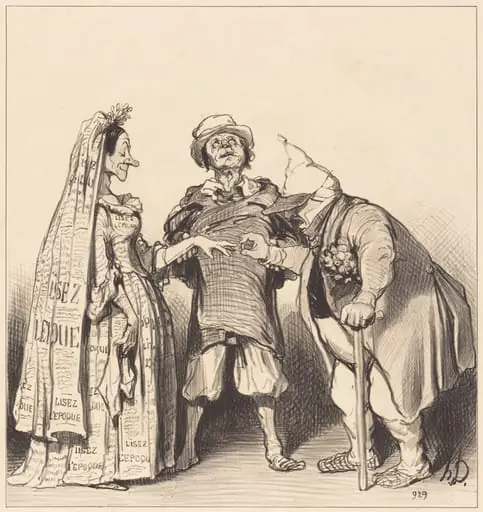 Mariage de l'Époque et du Constitutionnel
 Au nom du ciel, Théodore ne regarde pas ...
 Précaution indispensable que prennent les Parisiens ...
 An Intensely Contested Young Woman
 Toujours la heunesse-flourens
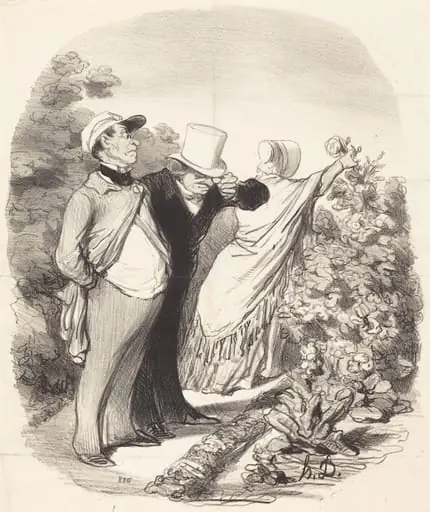 Allons bon!... voila que'elle me cueille une rose...
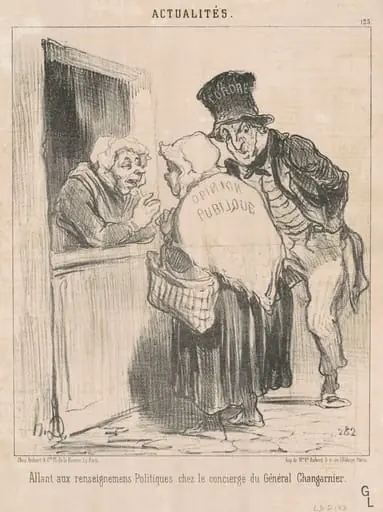 Allant aux renseignements politiques ...
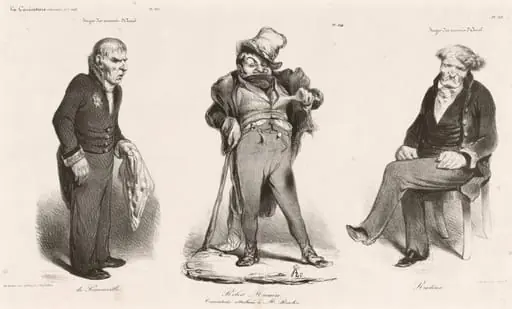 Huguet de Sémonville - Robert Macaire (Thiers) - Comte Roederer
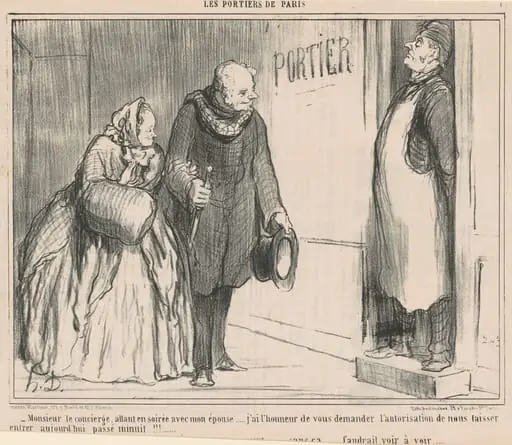 Monsieur le concierge, allant en soirée
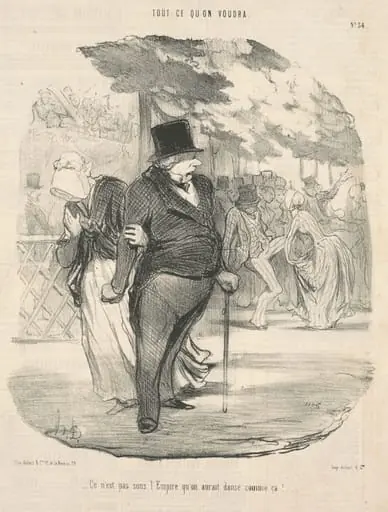 Ce n'est pas sous l"empire qu'on aurait dansé comme ca! ...
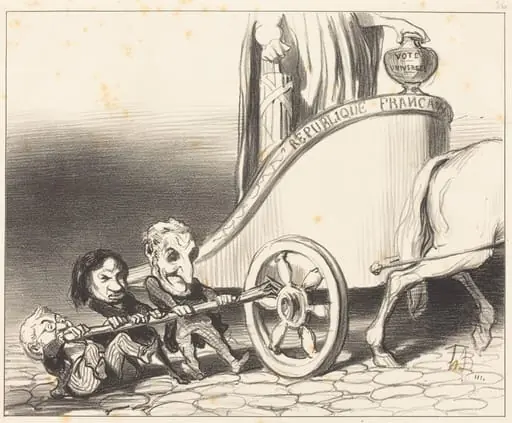 Ce char marchera toujours...
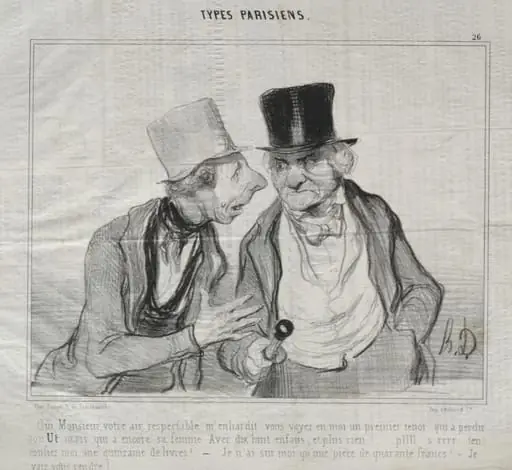
- Yes, Sir, your respectable air encourages me...