Artwork
Hanshan and Shide
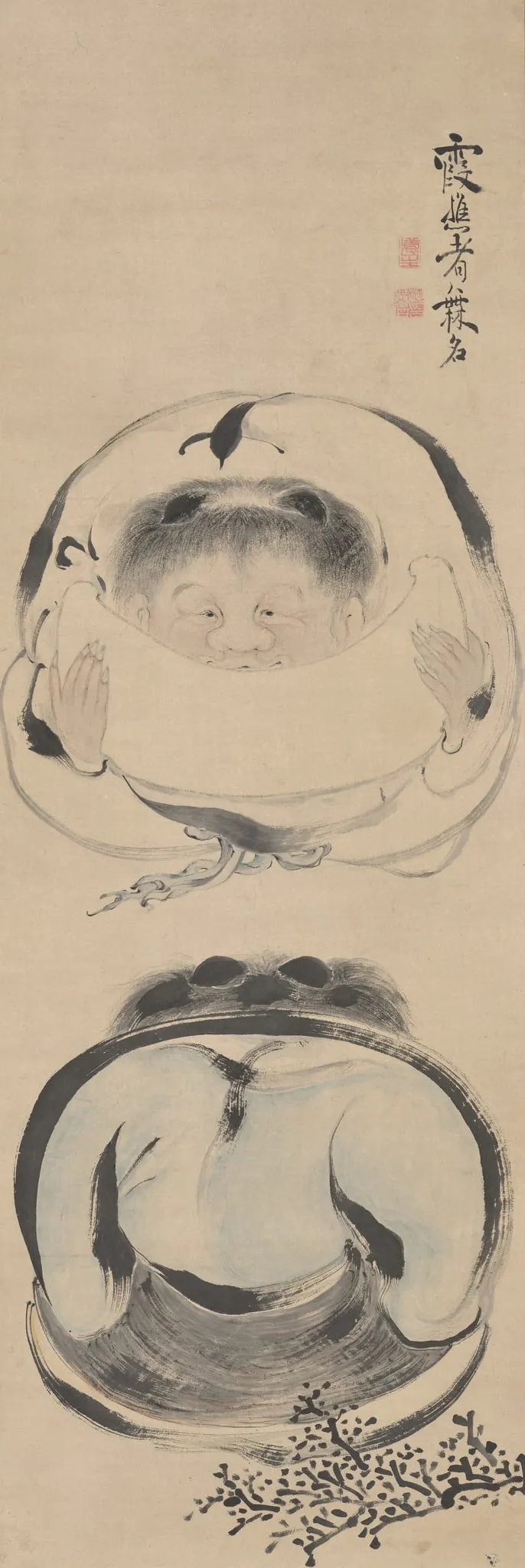
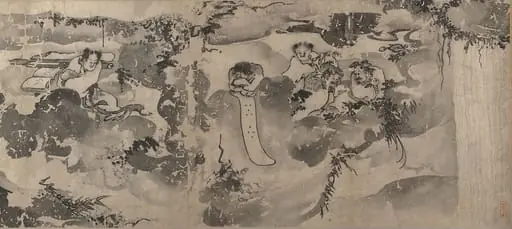
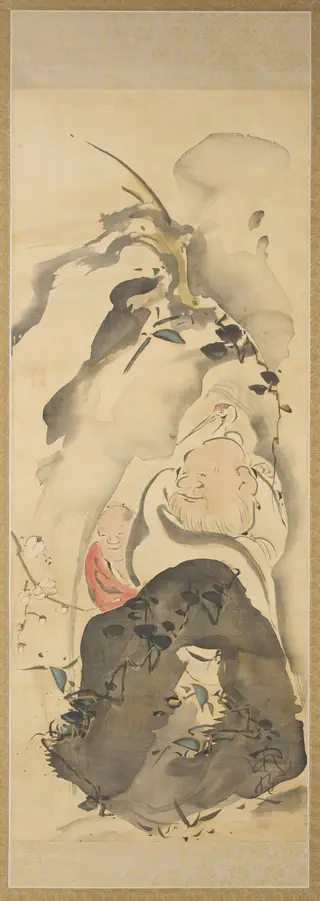
Hanshan and Shide is an unspecified painting by the Baroque artist Ike Taiga. It dates from 1760 and is held in the collection of the Cleveland Museum of Art.
- Accession no.
- 1979.49
- Credit line
- Purchase from the J. H. Wade Fund
About this work
You can learn more about this style by looking at the work of Ike Taiga (Japanese, 1723–1776).
This painting shows two men, Hanshan and Shide, in a quiet scene. Hanshan is a monk-poet reading from a scroll, while Shide listens closely. They were friends who lived in China, and their story was popular in Japan.
Hanshan's poetry is a key part of this scene. He lived on Cold Mountain, which is how he got his name. His poems are still read today.
You can learn more about this style by looking at the work of Ike Taiga (Japanese, 1723–1776).
Overview
The painting depicts two figures traditionally identified as the Chan monks Hanshan and Shide. Hanshan, a poet‑monk, is shown holding a scroll from which he reads aloud, while Shide, his companion and temple caretaker, listens attentively, a brush‑broom at his side. The composition is quiet and intimate, emphasizing the exchange of verse between the two.
Subject & Meaning
Hanshan, whose name translates as “Cold Mountain,” is celebrated for his spontaneous poetry that blends nature and spirituality. Shide, meaning “Foundling,” is portrayed as the humble attendant who values the poet’s words. Their interaction reflects the Chan ideal of direct transmission of insight through ordinary dialogue, rather than formal teaching.
Technique & Style
Rendered in a restrained ink wash, the work employs delicate brushstrokes to suggest the figures’ robes and the surrounding landscape with minimal detail. The use of negative space creates a sense of stillness, while the subtle gradations of tone convey depth without elaborate ornamentation, characteristic of Chinese literati painting of the early Tang period.
Context
Hanshan and Shide were historical figures who lived on Mount Tiantai in the 8th‑century China and became legendary in Zen lore, especially after their stories were transmitted to Japan, where they are known as Kanzan and Jittoku. Their partnership has been a recurrent theme in East Asian art, illustrating the harmonious balance of poetic inspiration and humble service.
Artist & collection