Artwork
Satyr and the Peasant
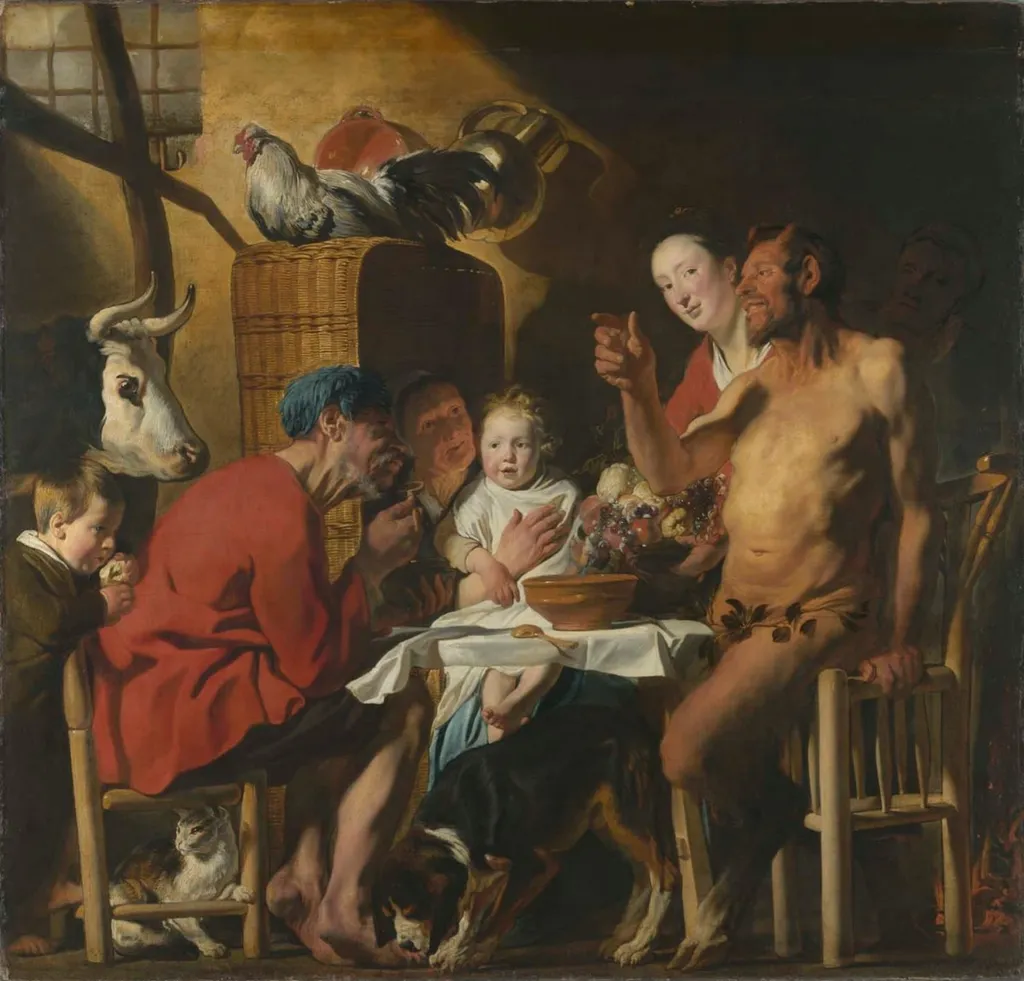
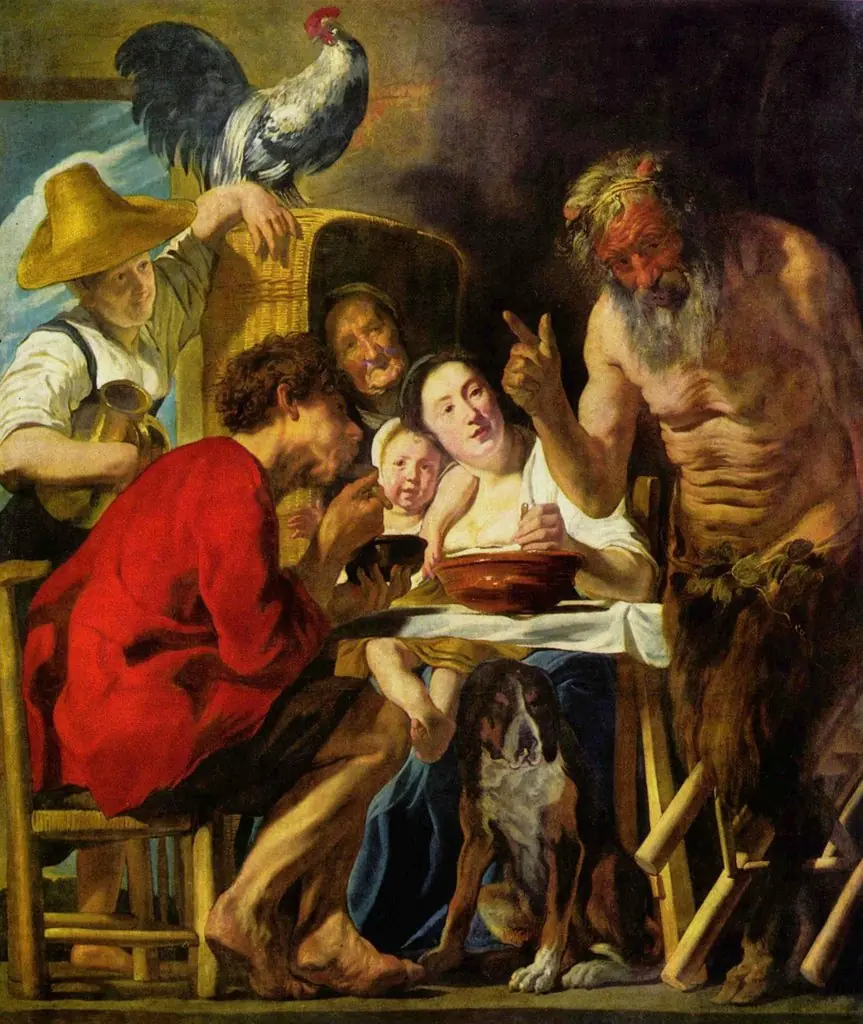
Satyr and the Peasant is an oil painting by the Baroque artist Jacob Jordaens. It dates from 1620 and is held in the collection of the Bavarian State Painting Collections.
About this work
Subject & Meaning
Jordaens depicts the precise moment the satyr raises his hand and begins to rise from the peasant's table, while the peasant pauses over his meal.
The painting illustrates a moralizing fable from Aesop's sixth-century-BC collection, in which a satyr befriends a peasant and discovers him blowing on his hands to warm them and later blowing on his hot porridge to cool it. Appalled by this contradiction, the satyr declares he can no longer trust a man who blows both hot and cold with the same breath. Jordaens depicts the precise moment the satyr raises his hand and begins to rise from the peasant's table, while the peasant pauses over his meal.
The fable's traditional lesson concerns the duality of human nature, though scholars suggest Jordaens chose the subject primarily to stage a robust peasant genre scene rather than to emphasize the moral.
The composition combines history painting with Flemish genre imagery, set inside a rustic farm interior populated by a cow, dog, cat, and rooster integrated with the furniture and figures. A multi-generational peasant family gathers around the table: a child stands behind the man's chair, an elderly woman cradles a baby, and a young woman glances over the satyr's shoulder. Jordaens pushes every figure into the foreground, crowding them into a shallow space and using tenebrism and chiaroscuro in the manner of the Utrecht Caravaggisti to spotlight selected bodies, such as the baby in the old woman's lap.
Technique & Style
Executed in oil on canvas, this large-scale work measures 174 cm by 203.5 cm. The composition exemplifies Jacob Jordaens's Baroque style by crowding figures into the immediate foreground within a confined interior space. The artist employs dramatic tenebrism and chiaroscuro, techniques associated with the Utrecht School, to create strong contrasts of light that highlight specific elements, such as an infant held by an elderly woman. This lighting approach and the modeling of bodies show affinities with the work of Gerrit van Honthorst.
Jordaens achieves a heightened sense of naturalism through detailed observations, including the depiction of the peasant's dirty feet in the foreground, aligning the piece with contemporary Caravagist trends in Flemish art. The scene integrates various domestic animals and multiple generations of a family around a table, blending mythological narrative with genre painting.
History & Provenance
Jacob Jordaens created the oil painting Satyr and the Peasant around 1620–1621, a period during which he produced two versions of this Aesopic fable theme. The work is currently held by the Bavarian State Painting Collections at the Alte Pinakothek in Munich, where it is titled Satyr beim Bauern. While the exact commission details remain undocumented, the painting was likely utilized by Jordaens as an instructional tool for his assistants and students, evidenced by the existence of numerous copies and variations in the same style lacking the master's seal.
The artist reportedly used his wife, Catharina Jordaens, as the model for the female figure in this specific version. The composition reflects the Flemish Baroque style, incorporating Caravaggist naturalism and Utrecht school chiaroscuro to depict a moralizing genre scene within a rustic farm setting.
Satyr and the Peasant is held by the Bavarian State Painting Collections and is accessioned within the Alte Pinakothek in Munich, where it has been exhibited as part of the museum’s permanent display of Baroque paintings. The work was created in 1620 and measures 174 cm in height by 203.5 cm in width. It was first recorded in the Alte Pinakothek’s inventory in the early 19th century and has been shown in several exhibitions on Flemish and Dutch genre painting, including a 1993 retrospective of Jacob Jordaens at the Koninklijk Museum Voor Schone Kunsten.
Context
Painted around 1620–1621, Satyr and the Peasant belongs to the early Flemish Baroque output of Jacob Jordaens and is held by the Alte Pinakothek in Munich as part of the Bavarian State Painting Collections. The work blends history painting with a peasant genre scene, a typically Netherlandish combination, and illustrates a moralizing fable from Aesop about a satyr who cannot trust a man who blows hot and cold with the same breath. Jordaens treated the subject more than once, producing two versions near 1620–21, and scholars such as Max Roses and R. A. d'Hulst have catalogued his life and work.
Stylistically, the painting shows Jordaens pushing all figures forward into a crowded foreground plane and employing tenebrism and chiaroscuro associated with the Utrecht school, with lighting and bodily modeling that recall Gerrit van Honthorst. The naturalistic depiction of the peasant's bare feet also connects the canvas to contemporary Caravaggesque trends in Flemish art. The painting is thought to have served a didactic function in Jordaens's workshop, given the many copies and variants produced by assistants and pupils that lack the master's seal.
Legacy
Jacob Jordaens' Satyr and the Peasant has left a modest but documented imprint on later art through its Baroque compositional daring and didactic narrative. Contemporary accounts note that the work's dramatic chiaroscuro and tightly packed figures influenced later genre painters seeking heightened emotional realism, while its moralizing subject drawn from Aesop's fable was cited by scholars as a model for later mythological genre scenes. The painting's provenance in the Bavarian State Painting Collections has ensured its continued scholarly citation as an exemplar of early 17th-century Flemish naturalism, reinforcing its reputation as a bridge between mythological history and everyday peasant life.
Overview
Jacob Jordaens painted Satyr and the Peasant in 1620 with oil on canvas. The work is a lively interior scene populated by people, children, and animals, rendered in the warm, vigorous palette typical of Flemish Baroque. It is part of the collection of the Alte Pinakothek in Munich.
Artist & collection
Artist
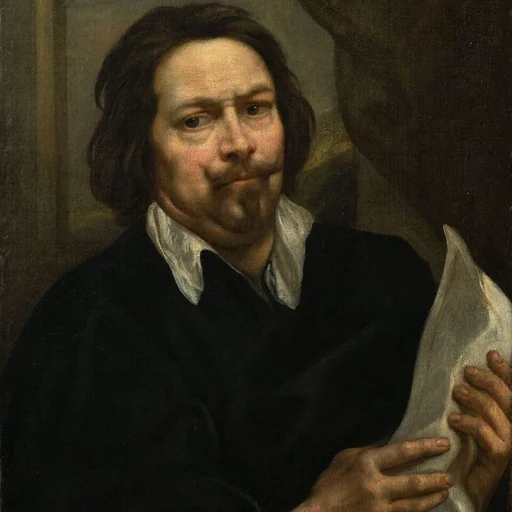
Jacques (Jacob) Jordaens (19 May 1593 – 18 October 1678) was a Flemish painter, draughtsman and a designer of tapestries and prints.

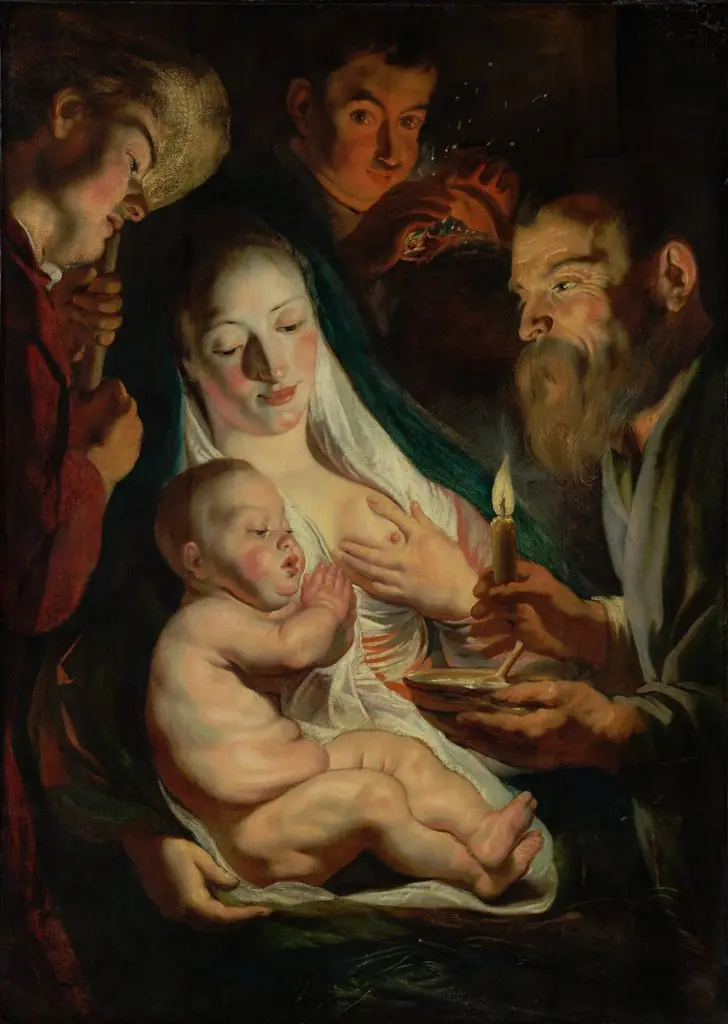 The Holy Family with Shepherds
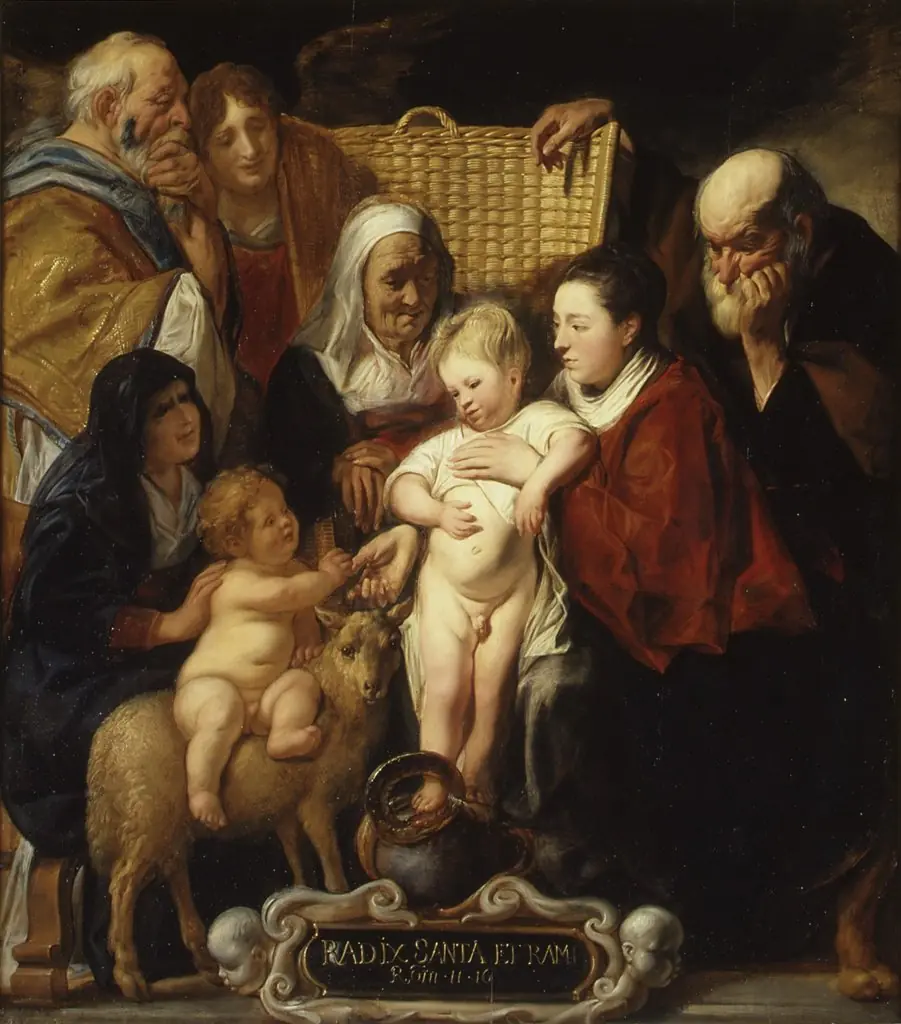 The Holy Family with Saint Anne and the Young Baptist and His Parents
 Untitled
 Apollo as Victor over Pan
 Susanna and the Elders
 The Betrayal of Christ
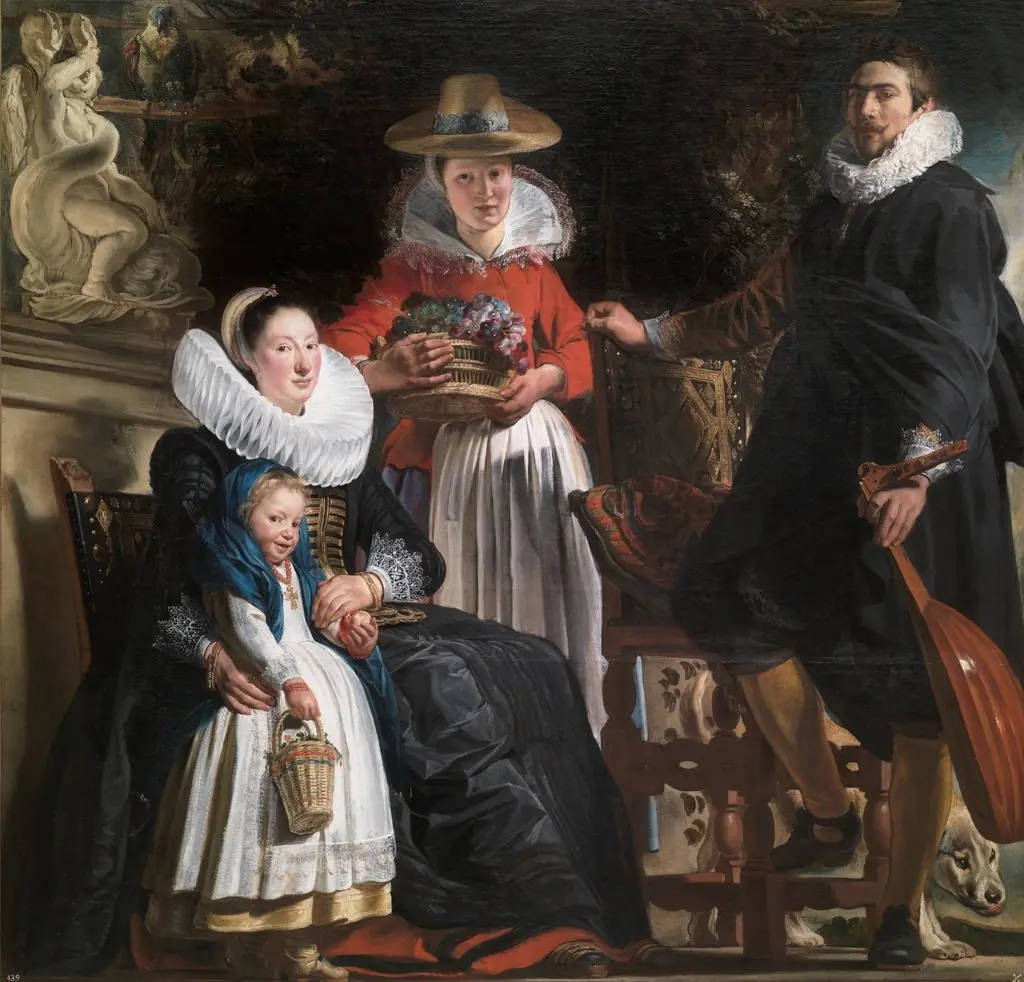 Portrait of the artist with his family
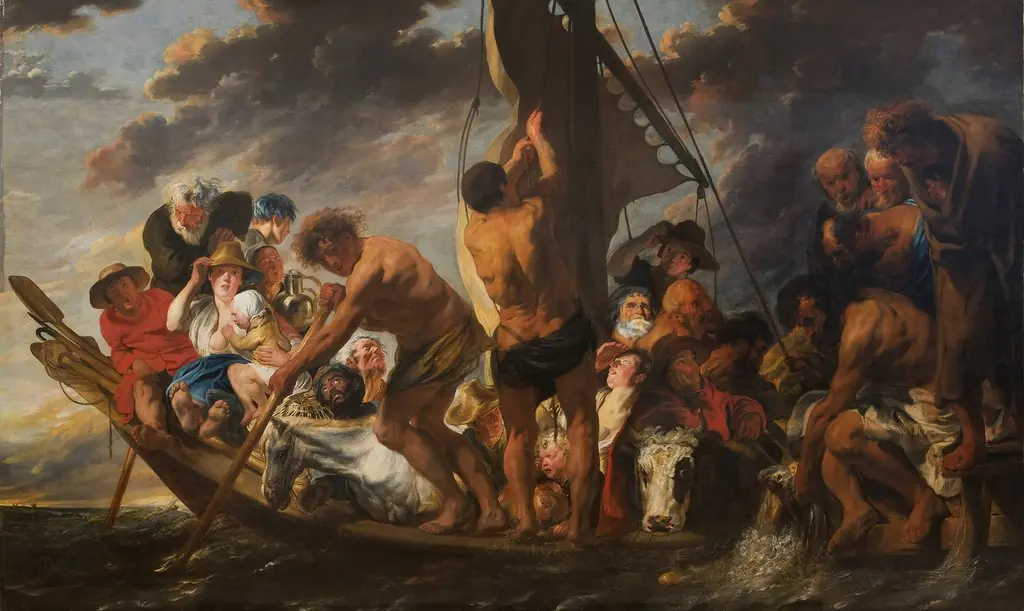 The Tribute Money. Peter Finding the Silver Coin in the Mouth of the Fish. Also called "The Ferry Boat to Antwerp"