Artwork
The Burial of Christ
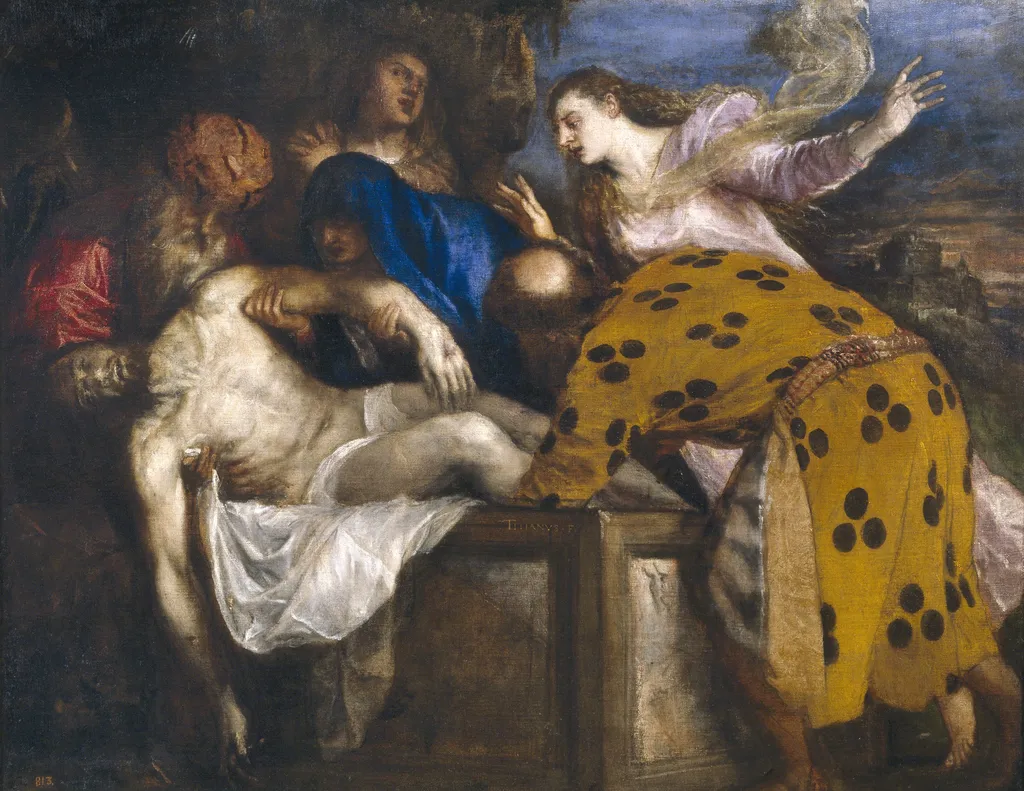
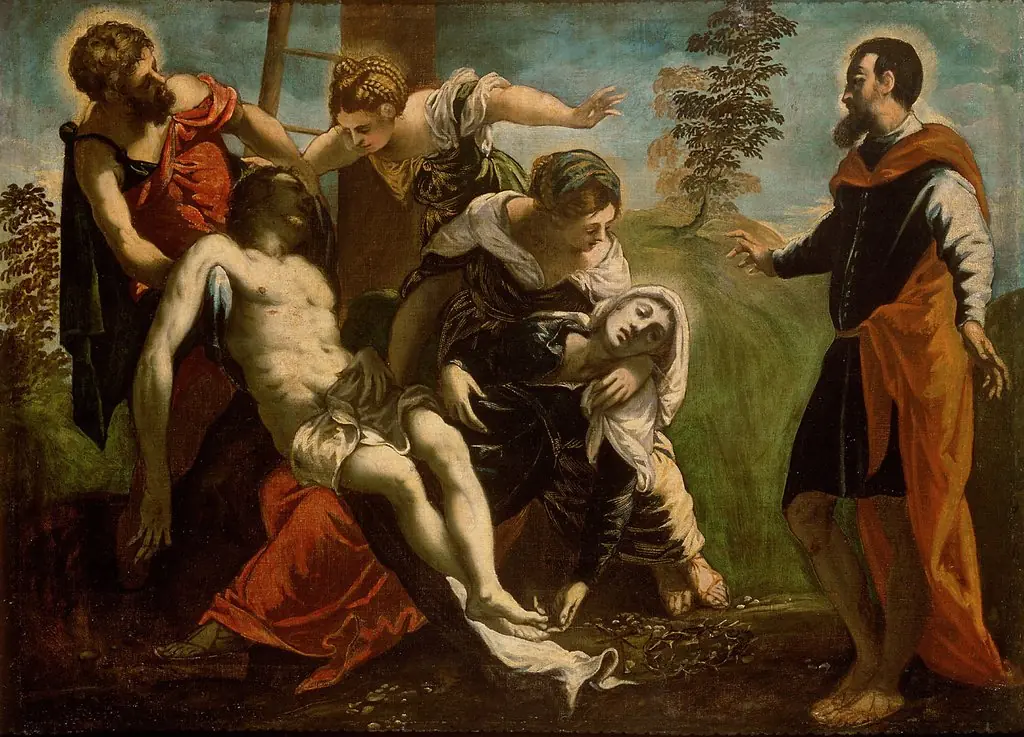
The Burial of Christ is an oil painting by the High Baroque Italian artist Titian. It dates from 1572 and is held in the collection of the Museo del Prado.
About this work
Subject & Meaning
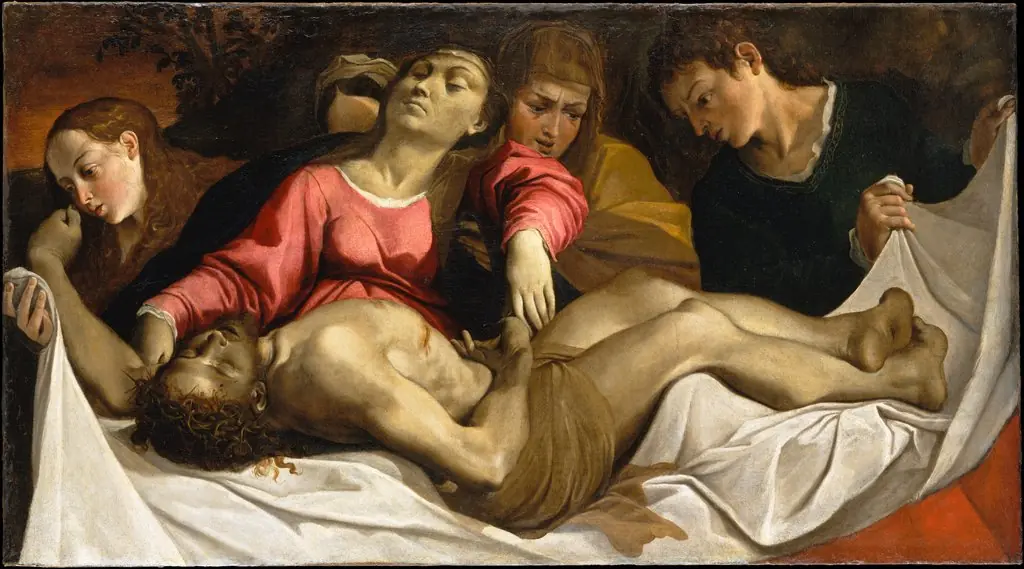
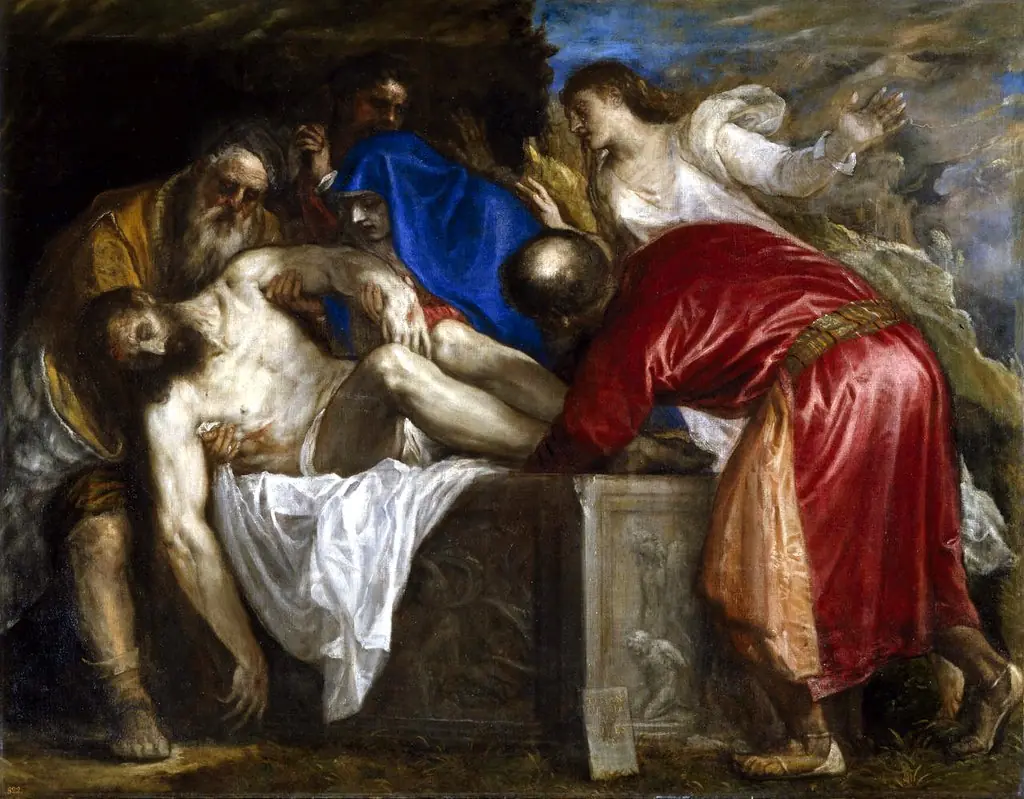
The painting depicts the entombment of Christ, a subject drawn from the Gospel accounts of Christ's burial following the Crucifixion.
The painting depicts the entombment of Christ, a subject drawn from the Gospel accounts of Christ's burial following the Crucifixion. The work is classified as religious art and centers on Jesus Christ as its main subject.
In Christian iconography, the entombment scene traditionally marks the transition between Christ's death and his Resurrection, emphasizing themes of sacrifice, mourning, and the promise of redemption. By focusing on this moment, the composition engages with one of the central narratives of the Passion, inviting contemplation of Christ's humanity and the grief of those who accompanied him to the tomb.
Technique & Style
The Burial of Christ is executed in oil paint on canvas, a medium Titian employed throughout his mature practice. The work measures 130 cm in height by 168 cm in width, giving it a horizontal orientation suited to the multi-figure religious composition. Classified as a painting within the religious genre, it depicts the entombment of Christ as its main subject.
Stylistically, the canvas belongs to Titian's late production, a period associated with loosened brushwork and a heightened emphasis on tonal and chromatic atmosphere rather than linear precision. The horizontal format supports a processional arrangement of figures around the dead Christ, a compositional device characteristic of Italian Renaissance and Mannerist treatments of the Entombment theme.
History & Provenance
The work titled The Burial of Christ was painted by Titian in 1572 as an oil on canvas religious composition. It entered the collection of the Museo del Prado, where it remains on display.
The painting was created for a devotional context within the Spanish royal court, reflecting Counter-Reformation preferences for dramatic entombment imagery. Contemporary records indicate it was commissioned directly by the Spanish monarchy for placement in a private chapel before being transferred to the royal galleries.
The work measures 168 cm by 130 cm and was executed on canvas using oil paint, a technique typical of Titian’s mature period. Its iconography centers on the entombment of Christ, aligning with contemporary liturgical practices.
The Burial of Christ is held by the Museo del Prado in Madrid, with inventory designation P000441. The work measures 130 cm in height and 168 cm in width (oil on canvas, 1572). It has been part of the museum's collection since its acquisition, forming a central piece in religious art exhibitions focused on the entombment of Christ.
The painting entered the Museo del Prado's holdings as a foundational work of Titian's late religious output, displayed prominently in curated retrospectives of the artist's career and thematic displays on Christ's Passion.
Legacy
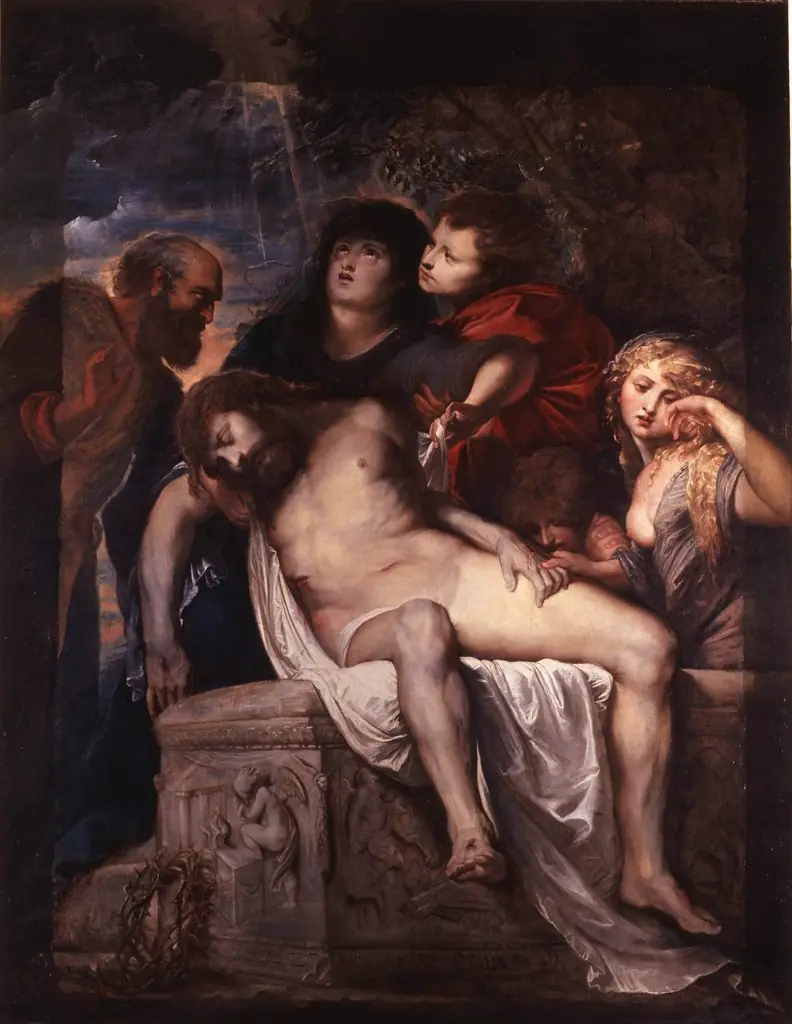
The Burial of Christ by Titian, painted in 1572 for the Spanish royal chapel, became a pivotal reference for Baroque funerary imagery, particularly influencing later depictions of Christ’s entombment in Spanish and Flemish art. Its compositional treatment of the corpse and mourners informed the emotional gravity seen in works by Rubens and later Spanish masters, cementing its reputation as a model for sacred narrative. The painting remains on view at the Museo del Prado, where it is studied as a cornerstone of Titian’s late religious output.
Overview
The Burial of Christ is a 1572 oil painting by Titian, a prominent Venetian artist. It is a representative work of the High Baroque period in Italy.
Own this work as a print
Artist & collection
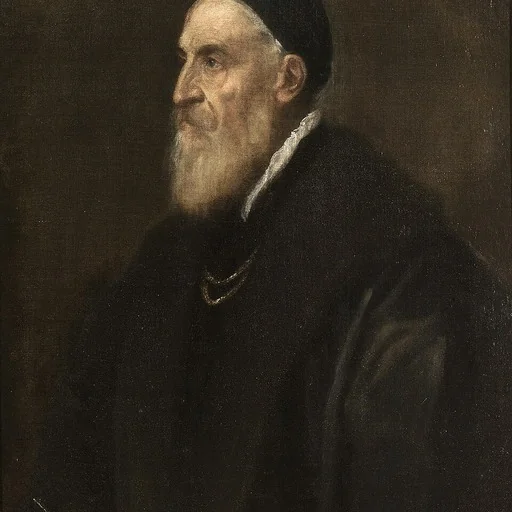
Artist
Tiziano Vecellio (Italian:; c. 1488/1490 – 27 August 1576), Latinized as Titianus, hence known in English as Titian ( TISH-ən), was an Italian Renaissance painter. The most important artist of Renaissance Venetian…