Artwork
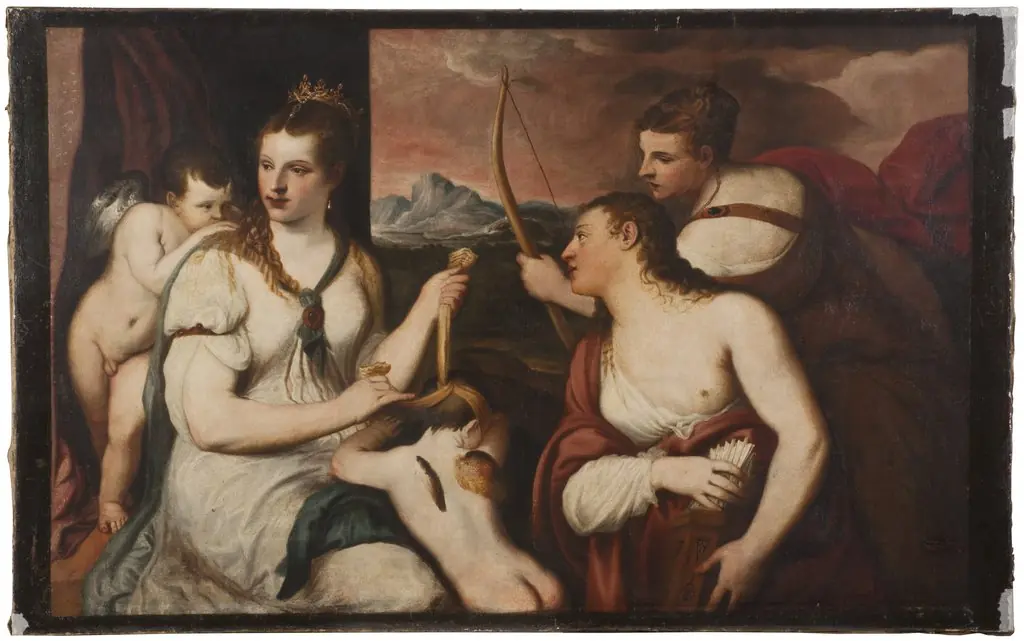
Venus Blindfolding Cupid
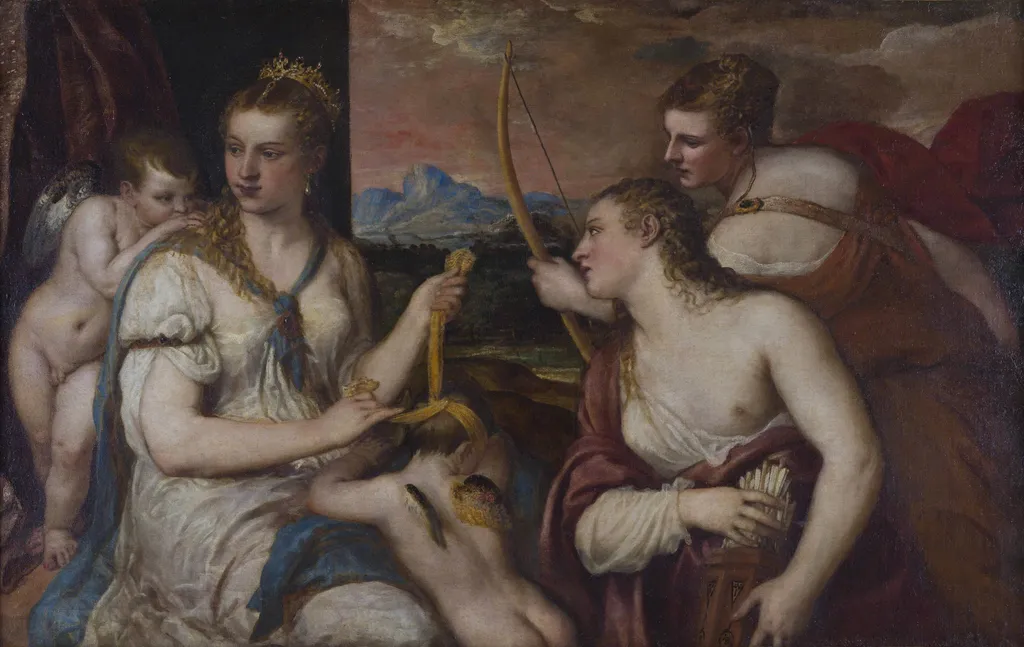
Venus Blindfolding Cupid is an oil painting by the Mannerist artist Titian. It dates from 1565 and is held in the collection of the Borghese Collection.
About this work
Overview
It resides in the Galleria Borghese in Rome and was once part of the collection of Flemish patron Cornelis van der Geest.
Painted around 1565, this oil on canvas work by Titian depicts Venus gently blindfolding Cupid. It resides in the Galleria Borghese in Rome and was once part of the collection of Flemish patron Cornelis van der Geest. The painting’s composition and subject were popular enough to inspire multiple copies in the 17th century, and it appears in two interior scenes by Willem van Haecht, documenting van der Geest’s art gallery.
Subject & Meaning
The scene illustrates Venus, goddess of love, restraining her son Cupid by covering his eyes, symbolizing the idea that love operates without sight. The contrast between Venus’s calm demeanor and Cupid’s lighthearted expression suggests a gentle control over impulsive desire. The imagery draws from classical mythology to convey a moral or philosophical reflection on the nature of affection and its irrationality.
Technique & Style
Titian employs chiaroscuro to model the figures with soft transitions between light and shadow, enhancing their three-dimensionality. The textures of fabric, skin, and quiver are rendered with loose, expressive brushwork typical of his late style. The landscape background, though subdued, provides spatial depth without distracting from the intimate interaction between the two figures, emphasizing emotional tone over narrative detail.
History & Provenance
The painting was owned by the Antwerp collector Cornelis van der Geest before entering the Borghese collection. Its presence in van der Geest’s gallery is documented in two 1630s paintings by Willem van Haecht, which show it displayed among other antiquities and Renaissance works. This early provenance underscores its status as a valued object in elite collections during the early Baroque period.
Context
Created during Titian’s later years, the work reflects a shift toward poetic, introspective themes in Venetian painting. Mythological subjects like this one were favored by patrons seeking allegorical depth rather than overt religious narratives. The painting aligns with a broader Renaissance interest in classical myths as vehicles for humanist ideas about emotion, power, and perception.
Legacy
The composition was widely reproduced in prints and paintings by later artists, attesting to its enduring appeal. Its visual language, serene deity, playful child, restrained gesture, became a reference point for depictions of love’s blindness in European art. Though not among Titian’s most famous works, it remains a subtle example of his late mastery in conveying psychological nuance through myth.
Own this work as a print
Artist & collection

Artist
Tiziano Vecellio (Italian:; c. 1488/1490 – 27 August 1576), Latinized as Titianus, hence known in English as Titian ( TISH-ən), was an Italian Renaissance painter. The most important artist of Renaissance Venetian…