Artwork
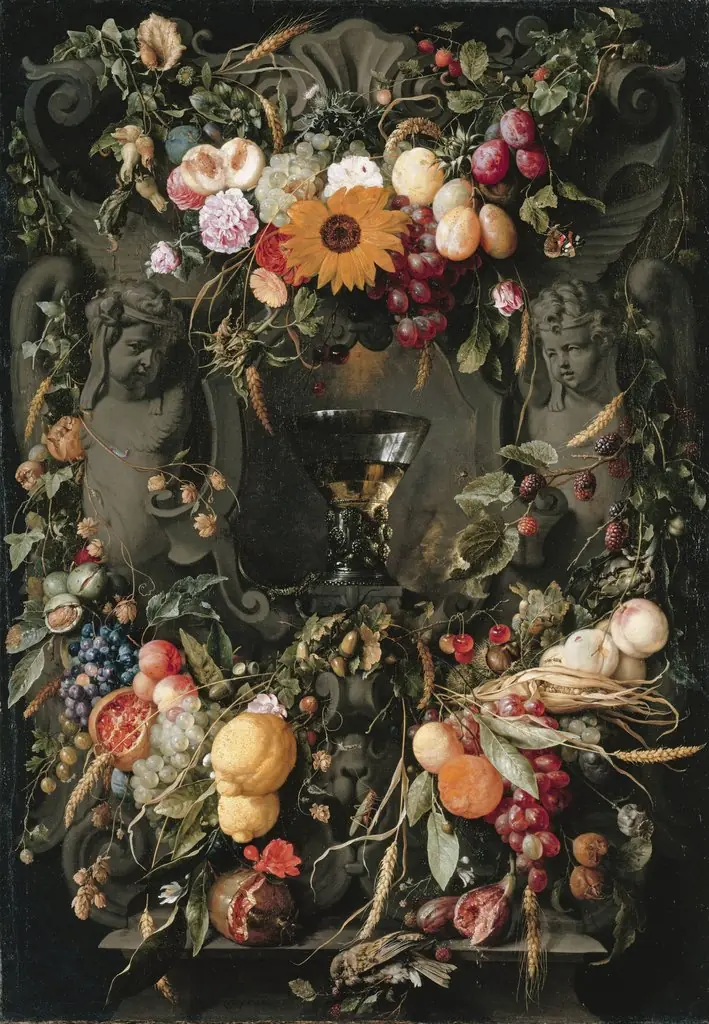
Festoen van vruchten en bloemen
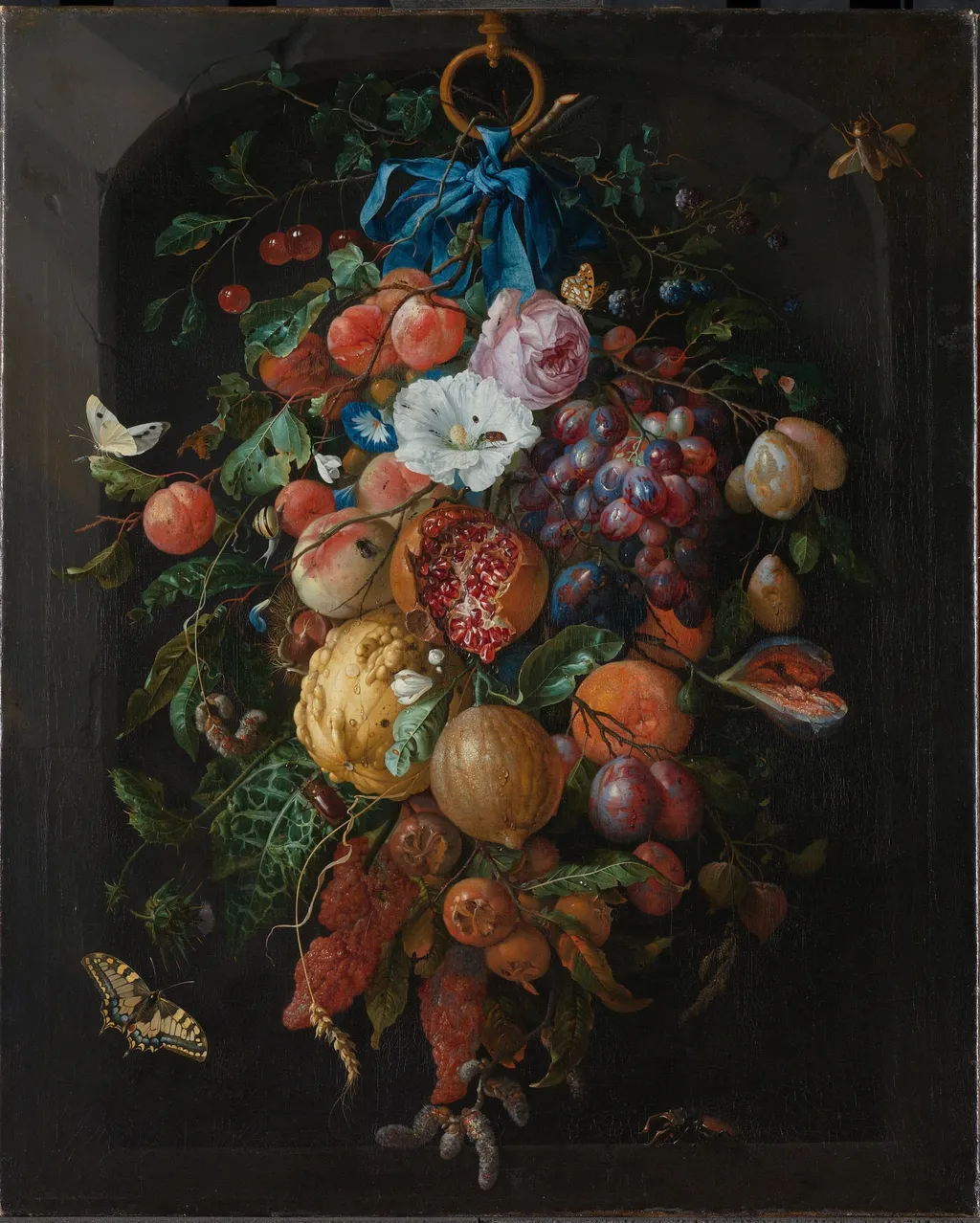
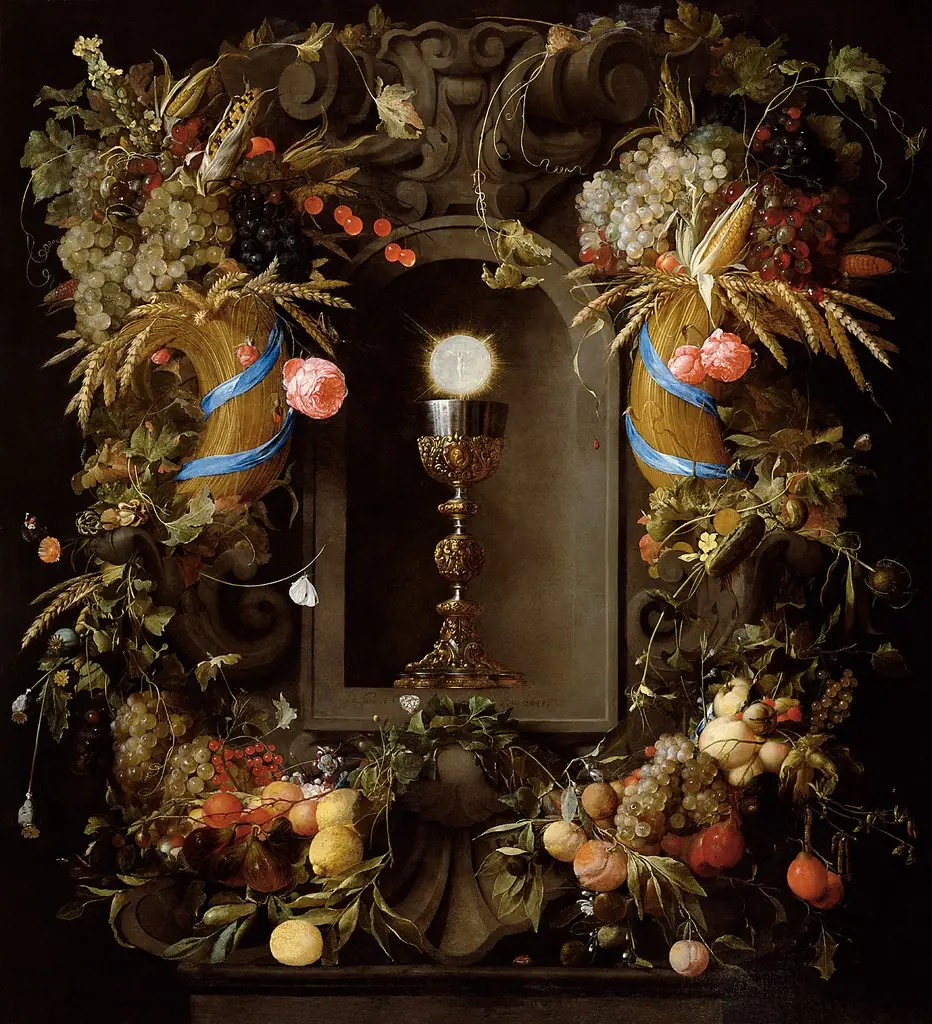
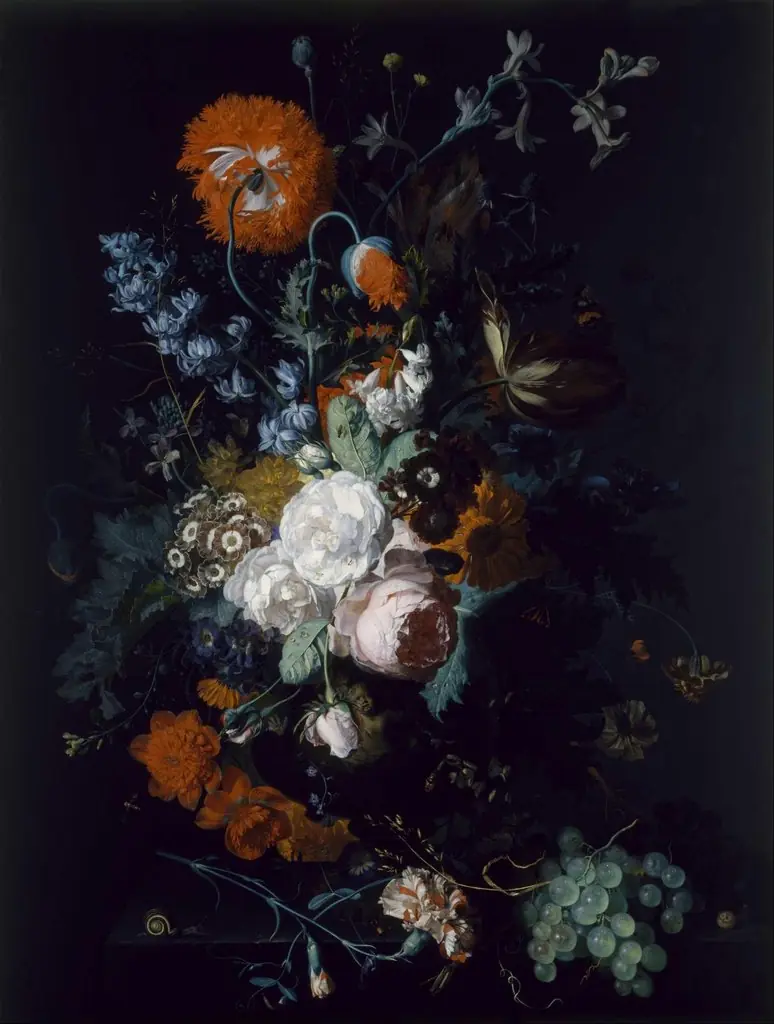
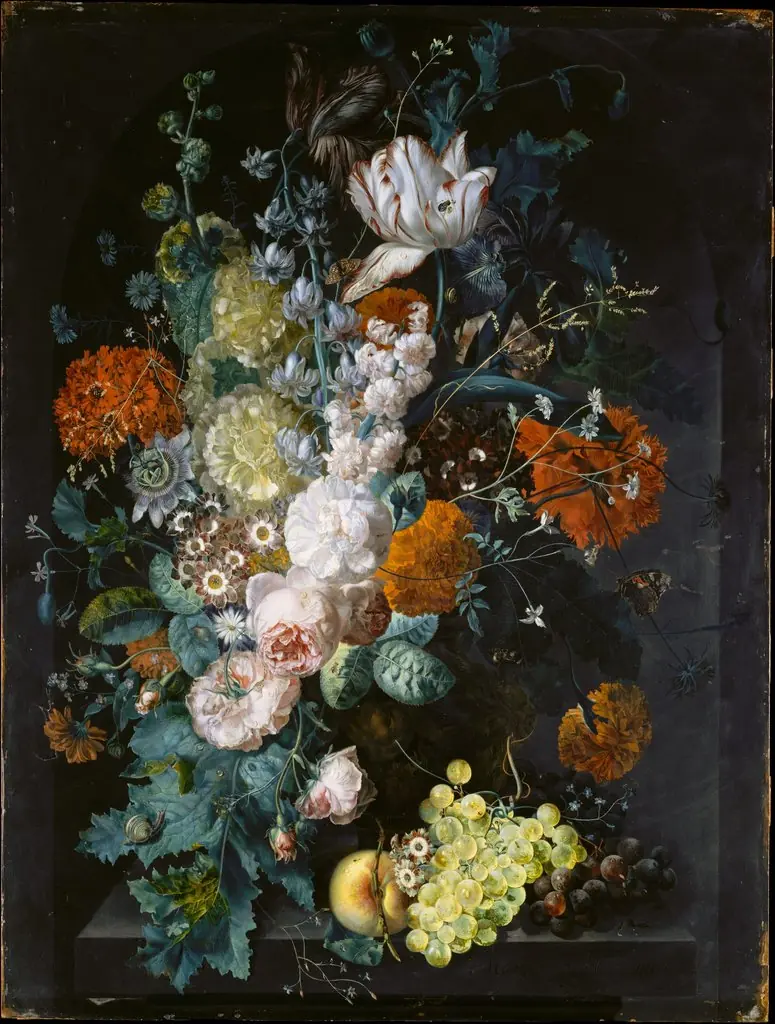
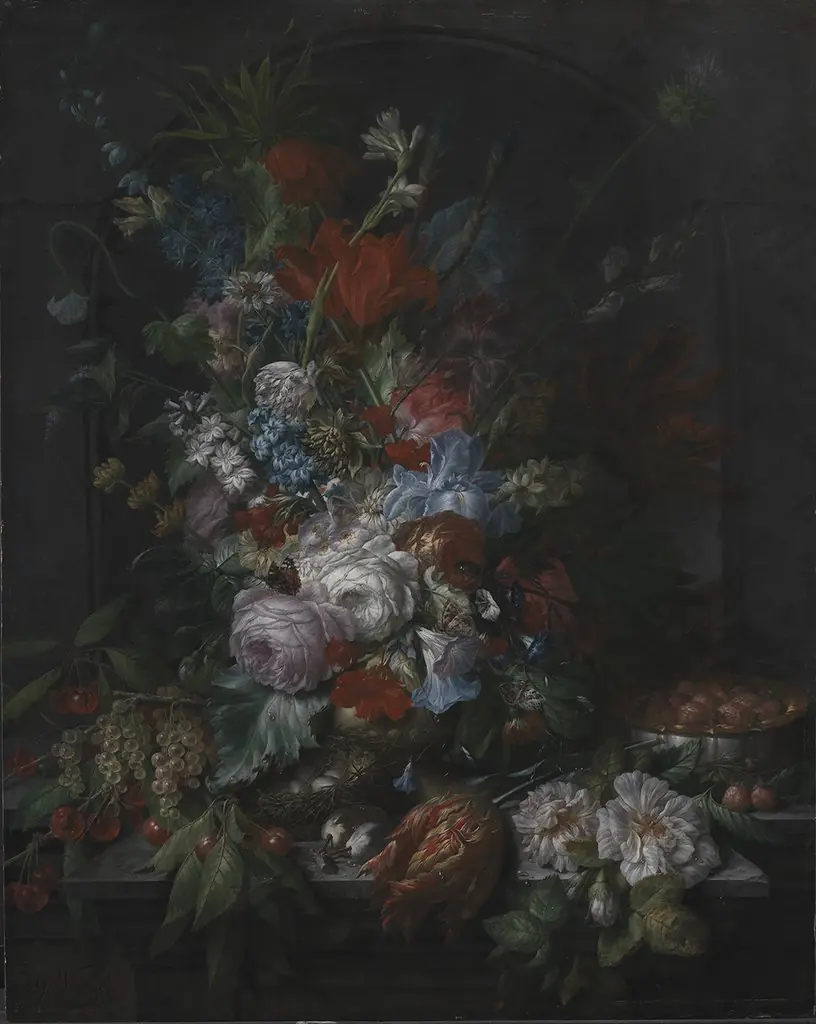
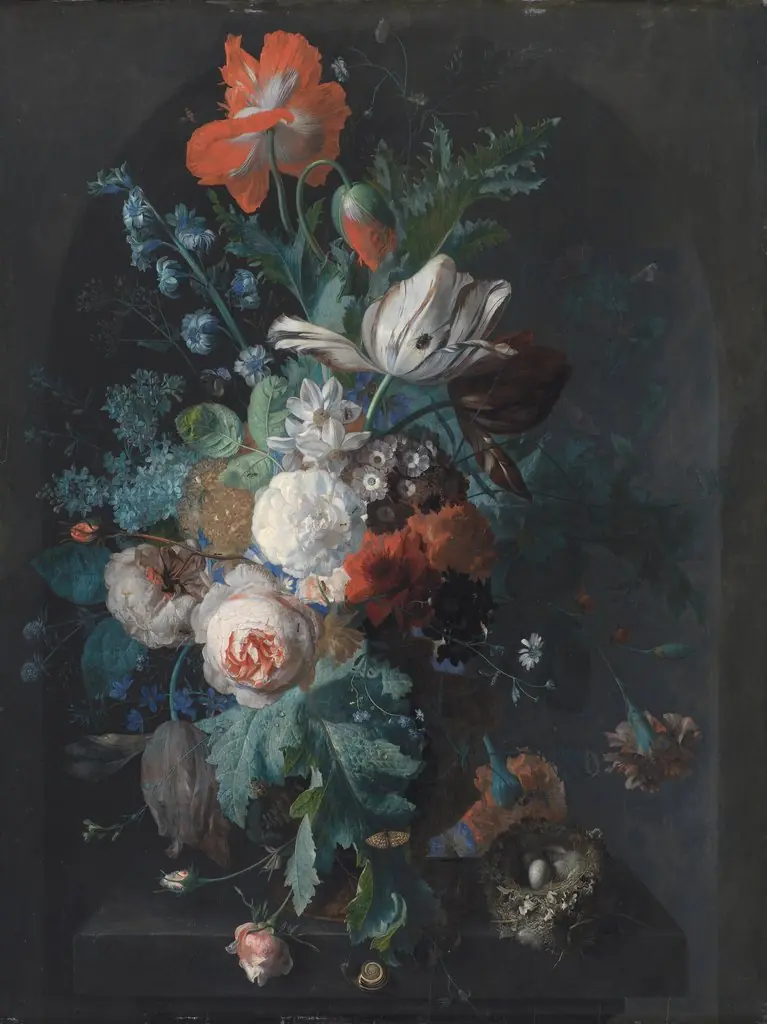
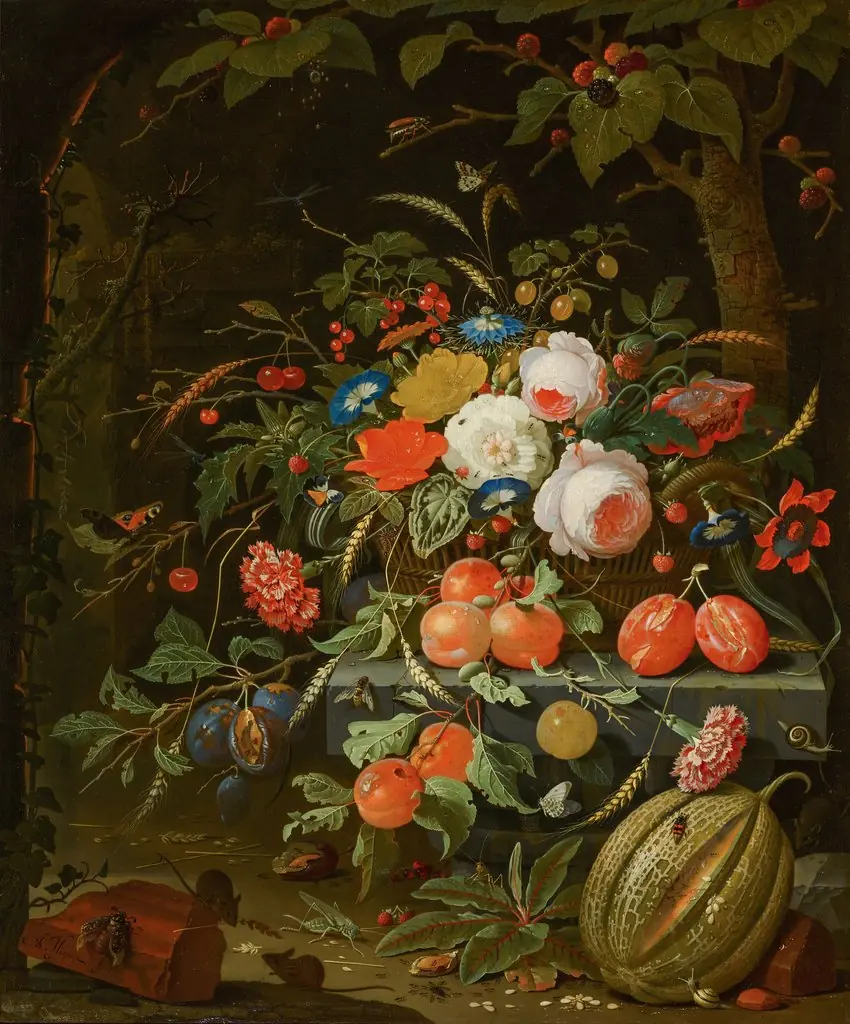
Festoen van vruchten en bloemen is an unspecified painting by the Baroque artist Jan Davidsz. de Heem. It dates from 1665 and is held in the collection of the Rijksmuseum. Created in the early seventeenth century, this work presents a garland of blossoms and fruit suspended against a dark background.
About this work
Context
Her legacy persists in major European collections, including the Royal Collection at Kensington Palace and the North Carolina Museum of Art.
Maria van Oosterwijck emerged as one of the most accomplished Dutch Baroque flower painters of the 17th century, specializing in richly detailed still lifes that combined botanical accuracy with symbolic vanitas themes. Her work displayed luminous coloration and dramatic chiaroscuro, often set against dark backgrounds to heighten the brilliance of foreground flora, reflecting contemporary Dutch interests in transience and divine obligation. Though denied guild membership due to her gender, she achieved remarkable financial success and international recognition, securing patrons including Louis XIV of France, Leopold I of the Holy Roman Empire, and Augustus II the Strong of Saxony.
Her paintings, frequently incorporating insects, fruits, and shells to suggest impermanence, helped elevate the genre of floral still life within the Dutch Golden Age tradition. She trained female students including Geertje Pieters and influenced contemporaries such as Wallerant Vaillant, who portrayed her in a 1671 Rijksmuseum portrait as both artist and muse. By the 1680s she had produced approximately thirty known works, most small-format, before retiring in 1690 and dying in Uitdam in 1693.
Her legacy persists in major European collections, including the Royal Collection at Kensington Palace and the North Carolina Museum of Art.
Legacy
Maria van Oosterwijck achieved significant international renown during her lifetime, securing commissions from European royalty including Louis XIV, Leopold I, and William III. Although contemporary biographer Arnold Houbraken eulogized her, he paradoxically did not classify her as a professional artist despite the high prices her works commanded. Her reputation experienced a decline in the centuries following her death, but interest revived by the early 21st century, with her paintings again fetching substantial sums at auction, such as a vanitas still life selling for €262,000 in 2005.
Her legacy was further cemented in 2013 when PostNL issued a postage stamp honoring her as one of six notable women in Dutch history.
Overview
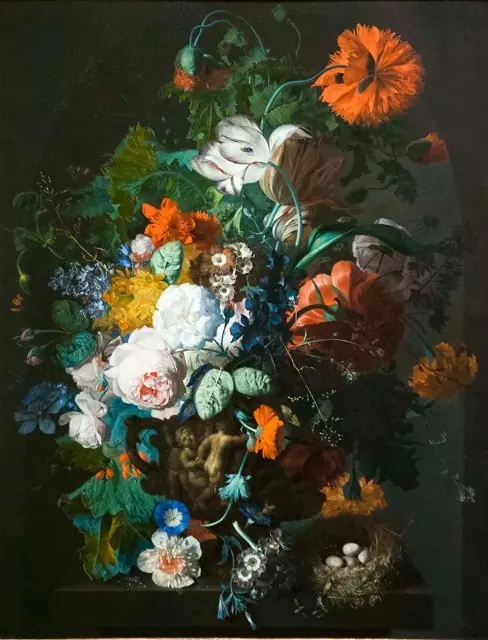
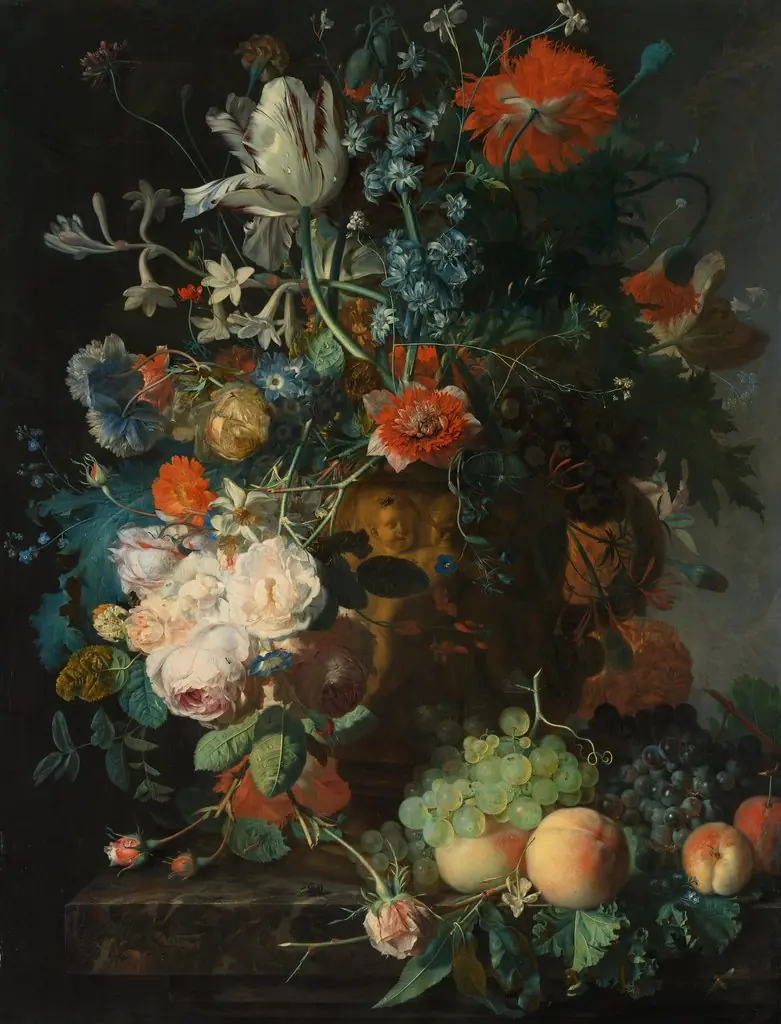
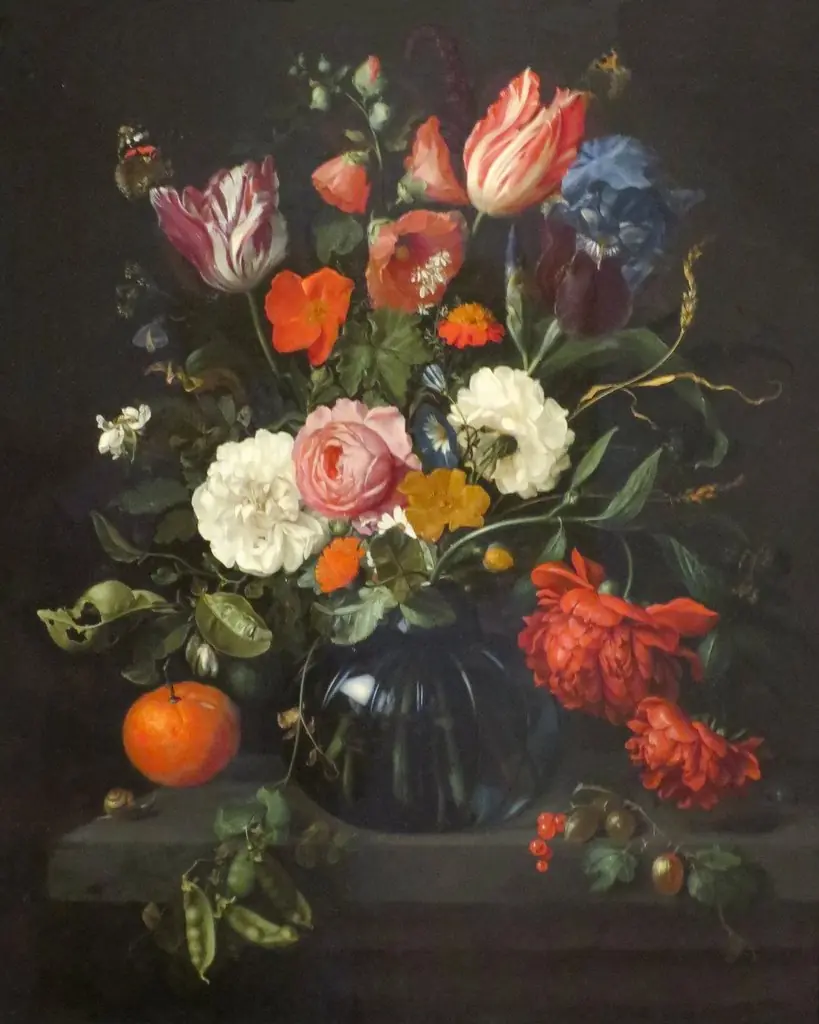
Created in the early seventeenth century, this work presents a garland of blossoms and fruit suspended against a dark background. The composition is dominated by a looping arrangement of flowers, grapes, and other produce, interspersed with tiny insects such as ants, a fly, and a beetle. The overall effect is both decorative and meticulously observed, reflecting the artist’s skill in rendering natural detail.
Subject & Meaning
The painting depicts a celebratory wreath of flora and fruit, a common motif in Baroque still-life that underscores abundance and the fleeting nature of life. The presence of insects on the leaves and petals adds a layer of realism, reminding viewers of the delicate balance between growth and decay within the natural world.
Technique & Style
Executed with fine, precise brushwork, the artist captures the texture of each petal, leaf vein, and droplet of moisture. The contrast between the luminous colors of the blossoms and the deep, shadowy wall heightens the three‑dimensionality of the objects. The inclusion of minute insects demonstrates a commitment to naturalistic observation characteristic of Flemish still-life painting.
History & Provenance
Born in Utrecht, the painter relocated to Antwerp in 1626, where he encountered the vibrant Flemish tradition of still-life art. The work likely originated in his Antwerp studio, a city known for producing large, bold compositions that showcased the technical prowess of its artists.
Own this work as a print
Artist & collection
Artist
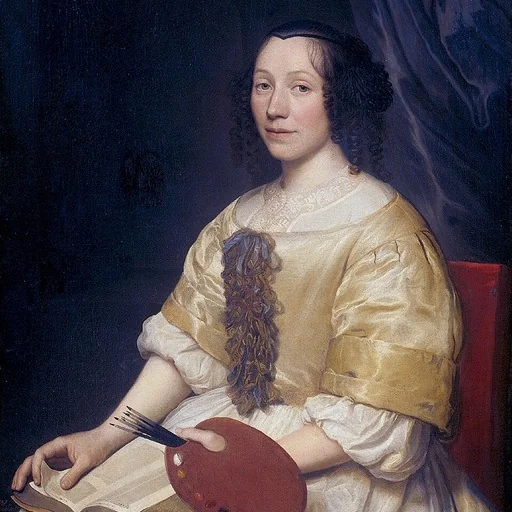
Maria van Oosterwijck (1630–1693), also spelled Oosterwyck, was a Dutch Golden Age painter, specialising in richly detailed flower paintings and other still lifes.