Artwork
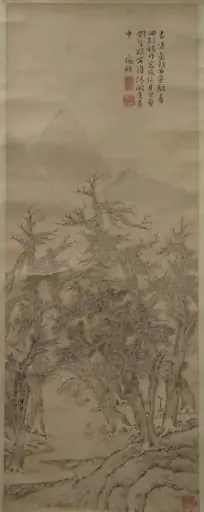
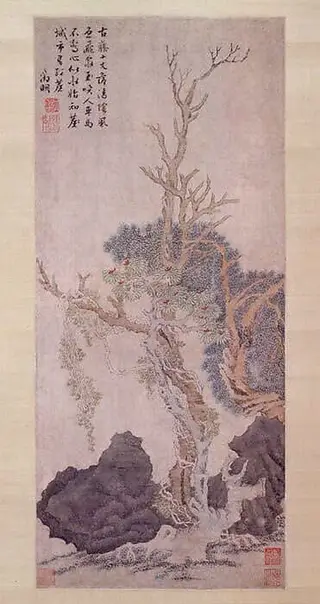
明文徵明古木寒泉 軸
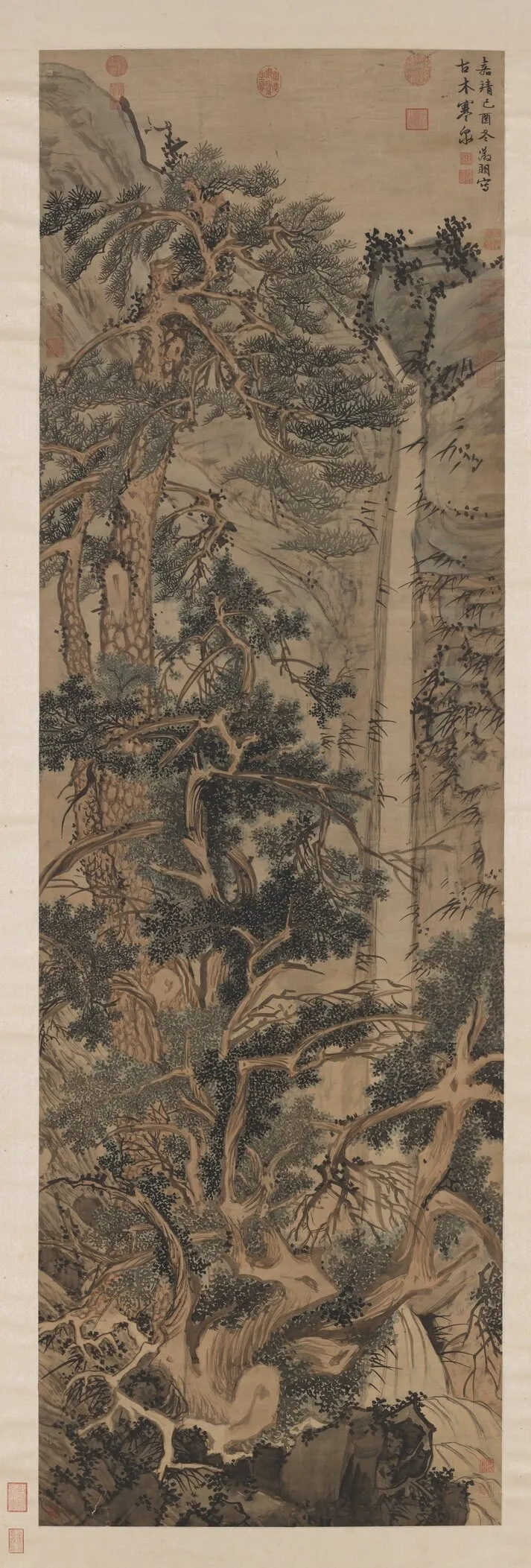
明文徵明古木寒泉 軸 is an unspecified painting by the Ming dynasty painting artist Wen Zhengming. It dates from 1549 and is held in the collection of the National Palace Museum.
About this work
Overview
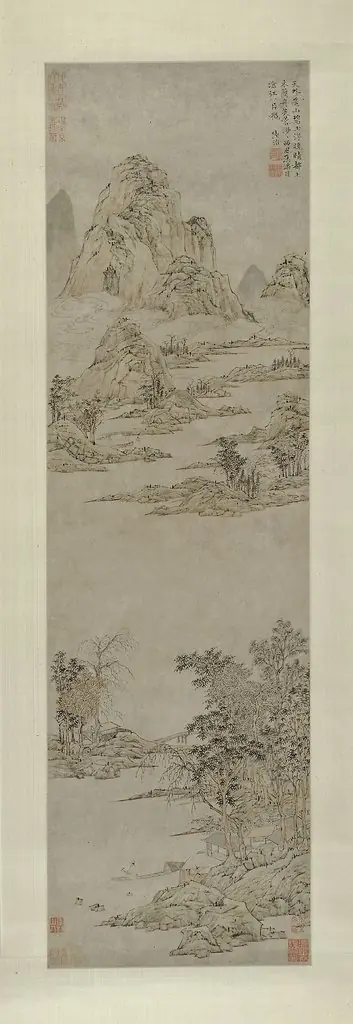
Behind these ancient forms, a misty mountain rises, its slopes dotted with sparse vegetation, creating a sense of depth and atmospheric perspective.
Created in 1549 by Wen Zhengming, a leading figure of the Wu School during the Ming Dynasty, 'Ancient Trees and Cold Spring' is a hanging scroll executed in ink and color on silk. The composition features a vertical arrangement dominated by towering, gnarled trees in the foreground, their intricate branches and textured bark rendered with precise, calligraphic brushwork. Behind these ancient forms, a misty mountain rises, its slopes dotted with sparse vegetation, creating a sense of depth and atmospheric perspective.
A cold spring or stream likely flows at the base, though the focus remains on the enduring strength of the arboreal subjects. The palette relies on subtle shades of brown, gray, and black, emphasizing tonal variation over vibrant color. Painted when the artist was seventy-nine years old, this work exemplifies Wen's mature style, characterized by a synthesis of the rigorous detail of the Northern Song tradition and the literati emphasis on expressive brush quality.
It reflects his lifelong dedication to landscape painting as a means of cultivating spiritual refinement and demonstrating scholarly erudition, securing his status as a master of the Southern School.
Subject & Meaning
The composition depicts a secluded woodland scene where towering trees dominate the foreground and a low mountain, dotted with sparse vegetation, recedes into the background. The serene atmosphere suggests a contemplation of nature’s quiet endurance, a theme often explored in literati painting.
Technique & Style
Executed on silk, the work employs fine brushwork to convey the texture of bark and the delicate forms of leaves. Ink outlines define the major elements, while subtle washes of brown and gray build atmospheric depth, reflecting Wen’s mastery of the restrained, scholarly aesthetic of the period.
History & Provenance
The painting has been documented as a 1549 creation by Wen Zhengming, a leading figure of the Wu School. It entered the National Palace Museum’s holdings, where it remains accessible to scholars and the public as an example of mid‑Ming literati landscape.
Artist & collection

Artist
Wen Zhengming spent most of his life in Suzhou, a city of canals and scholars where art and poetry were daily habits, not hobbies.

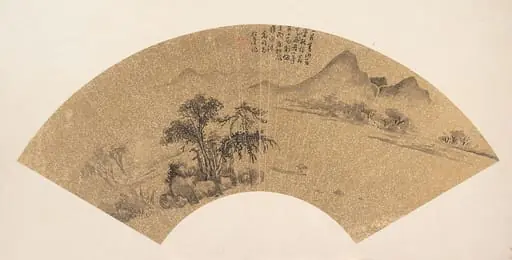
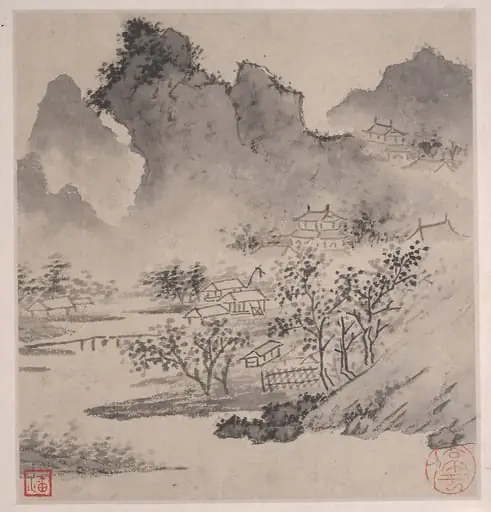
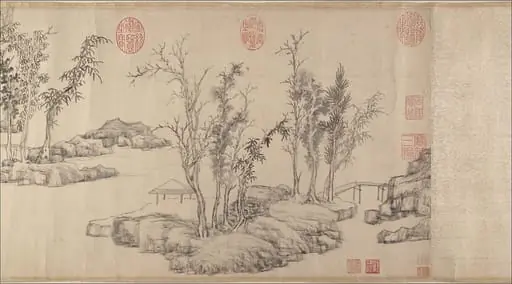
- Old Trees by a Cold Waterfall
 Landscape
 Playing the Qin in a Secluded Valley
 Quiet Life in a Wooded Glen
 Vernal Dawn at the Peach Blossom Spring
 Water Margin Bandits
 Untitled
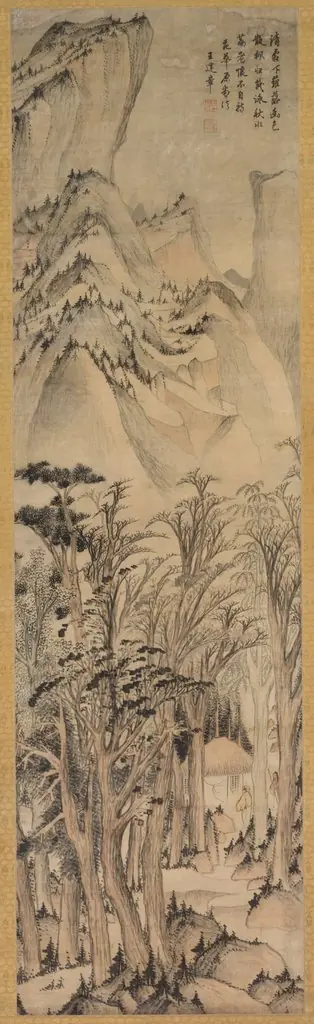 Solitary Colors of the Autumn Woods
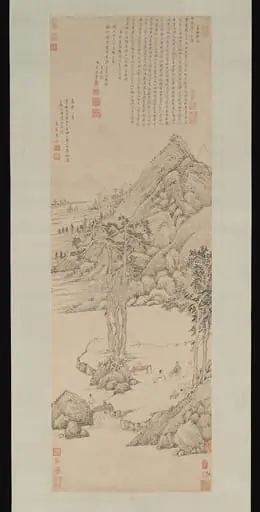 明 文嘉 為項元汴作山水圖 軸|Landscape dedicated to Xiang Yuanbian
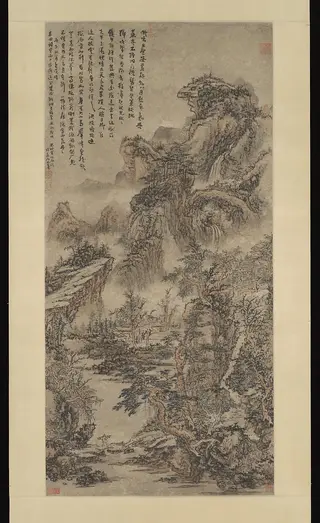 清 倣髡殘 蒸嵐昏巒圖 軸|Wooded Mountains at Dusk
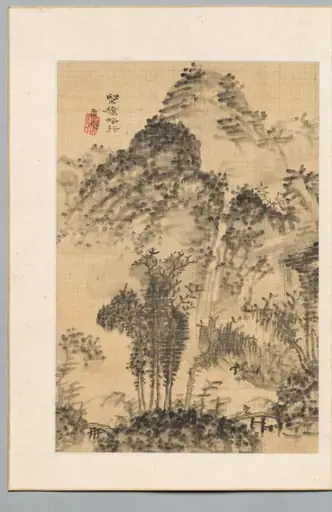 Wild Bridge, Poet's Walk
 Pulling Oars under Clearing Autumn Skies (Distant Mountains)