Artwork
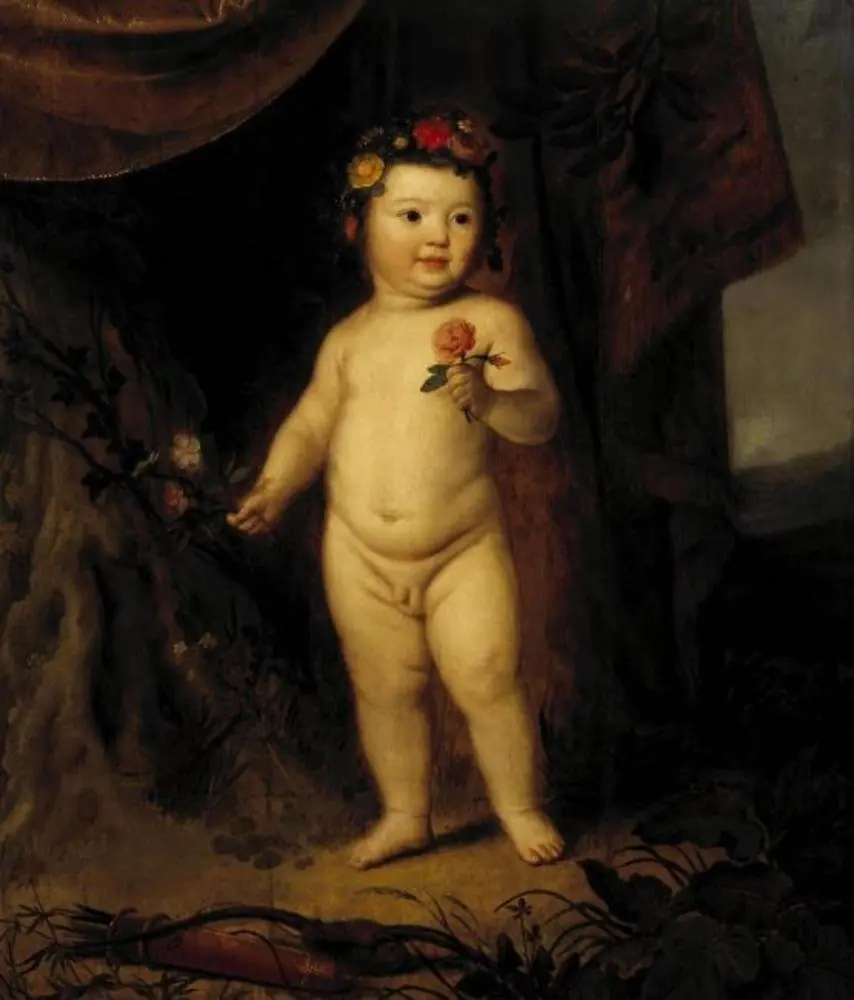
Eugenia Martínez Vallejo, desnuda
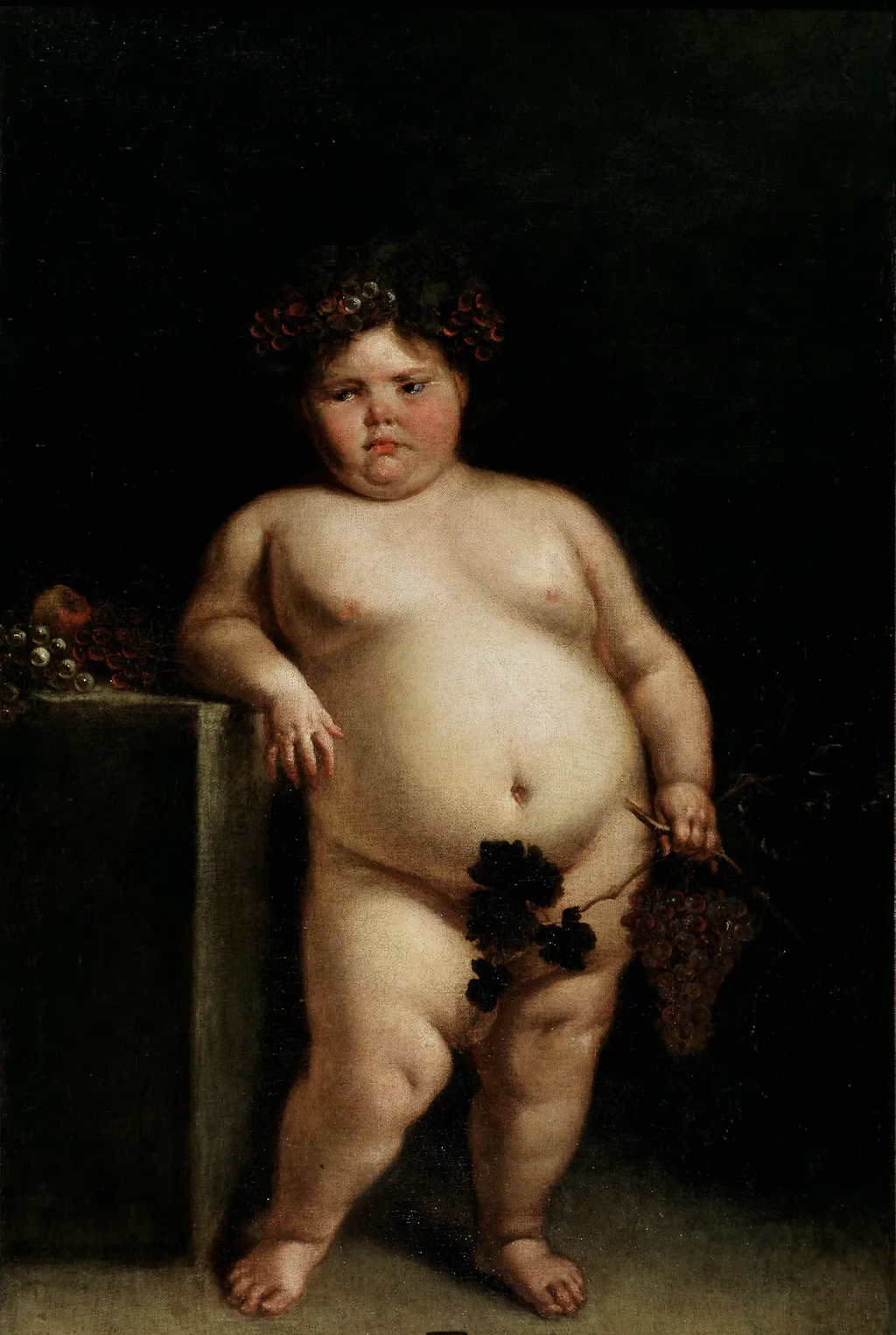
Eugenia Martínez Vallejo, desnuda is an oil painting by the Flemish Baroque painting artist Juan Carreño de Miranda. It is held in the collection of the Museo del Prado.
About this work
Subject & Meaning
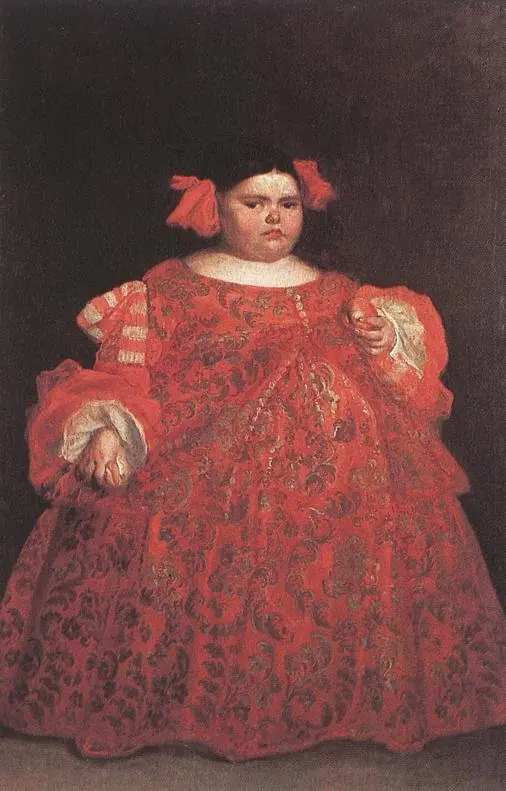
The painting depicts Eugenia Martínez Vallejo, a child known by the nickname "la Monstrua" because of her physical build, shown nude in a Baroque portrait composition. According to the sources, the figure allegorically represents Bacchus, the classical god associated with wine and festivity, lending the portrait a mythological dimension beyond straightforward likeness. The work forms a pendant pair with a companion painting, La monstrua vestida, in which the same girl appears clothed in a red dress, offering a clothed counterpart to the nude allegory.
Technique & Style
The handling aligns with Carreño de Miranda's approach to formal portraiture, adapted here to the unconventional subject of a nude figure.
The painting is executed in oil on canvas, measuring 165 × 108 cm. Its technique follows the Baroque style prevalent in Spanish court painting of the period. The work presents a nude portrait of Eugenia Martínez Vallejo, allegorically representing Bacchus. A companion portrait exists in which the same sitter appears clothed, suggesting a deliberate paired conception by the artist.
The handling aligns with Carreño de Miranda's approach to formal portraiture, adapted here to the unconventional subject of a nude figure. No specific condition information is provided in the sources.
History & Provenance
The painting titled Eugenia Martínez Vallejo, desnuda was created in 1680 by the Spanish Baroque artist Juan Carreño de Miranda. It was commissioned as a depiction of the young girl Eugenia Martínez Vallejo, known as "la Monstrua", and was painted to allegorically represent Bacchus. The work measures 165 cm by 108 cm and was executed in oil on canvas.
After its completion, it entered the collection of the Museo del Prado in Madrid, where it remains on display. A companion piece portraying the same girl clothed, titled La monstrua vestida, also exists.
Juan Carreño de Miranda painted Eugenia Martínez Vallejo, desnuda in 1680. The work is an oil on canvas measuring 165 by 108 centimeters and is part of the collection of the Museo del Prado in Madrid. It has been exhibited at the Museo del Prado as part of displays of the museum's holdings of 17th-century Spanish portraiture and baroque paintings.
Context
Created in 1680 by Juan Carreño de Miranda, La monstrua desnuda is a Baroque portrait that situates its subject, Eugenia Martínez Vallejo, within the allegorical tradition of depicting the god Bacchus. The work is frequently discussed alongside its companion piece, La monstrua vestida, which portrays the same sitter in red clothing, highlighting the artist's dual approach to representing her physical condition. Scholars note the painting's function as a courtly curiosity that blends realistic portraiture with mythological symbolism, a characteristic practice of the Spanish Baroque era.
Currently housed in the Museo del Prado, the canvas remains a significant example of how 17th-century Spanish art navigated the depiction of physical difference through classical allegory.
Overview
Juan Carreño de Miranda’s oil painting, Eugenia Martínez Vallejo, desnuda, dates from 1690 and is part of the collection at Madrid’s Museo del Prado. The work presents a solitary female figure, nude, positioned centrally and looking directly at the viewer. A dark, subtly graded backdrop recedes behind her, giving the composition a restrained spatial depth.
Own this work as a print
Artist & collection

 Portrait of a Child as Cupid
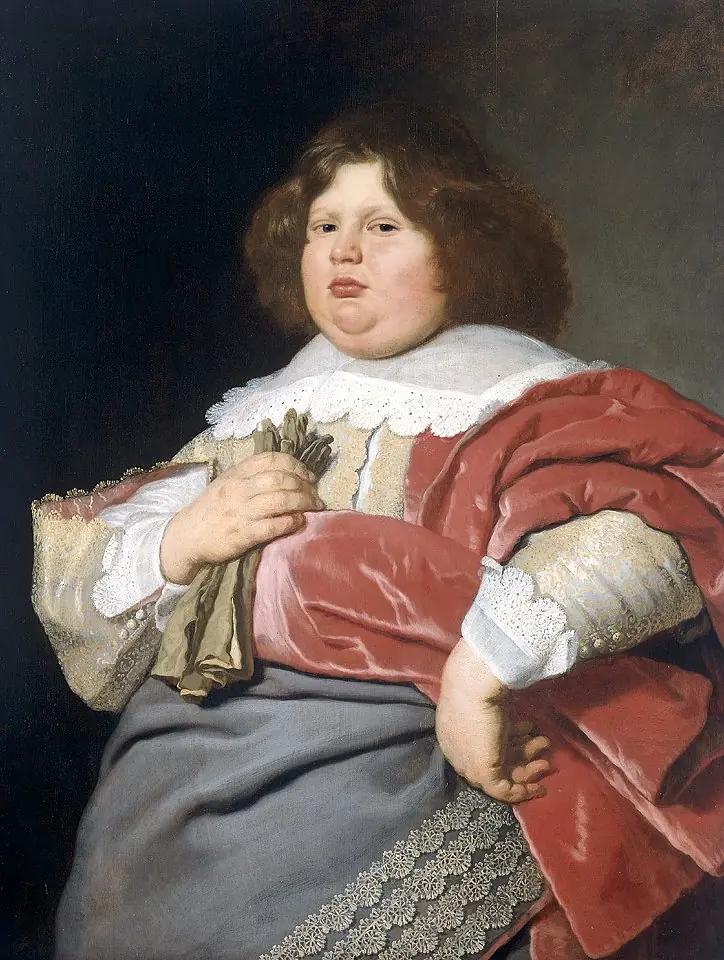 Portrait of Gerard Andriesz Bicker, son of Andries Bicker and lord of Muiden
 The Christ Child Sleeping on the Cross
 Meren allegoria
 Allegory of Summer
 A Child Picking Fruit
 The Sleeping Christ Child
 Ceres (Allegory of Summer)
 Allegory of Spring
 Garzia de' Medici
 Portrait of Giovanni de' Medici as a Child
- Eugenia Martinez Valleji, called La Monstrua