Artwork
Untitled
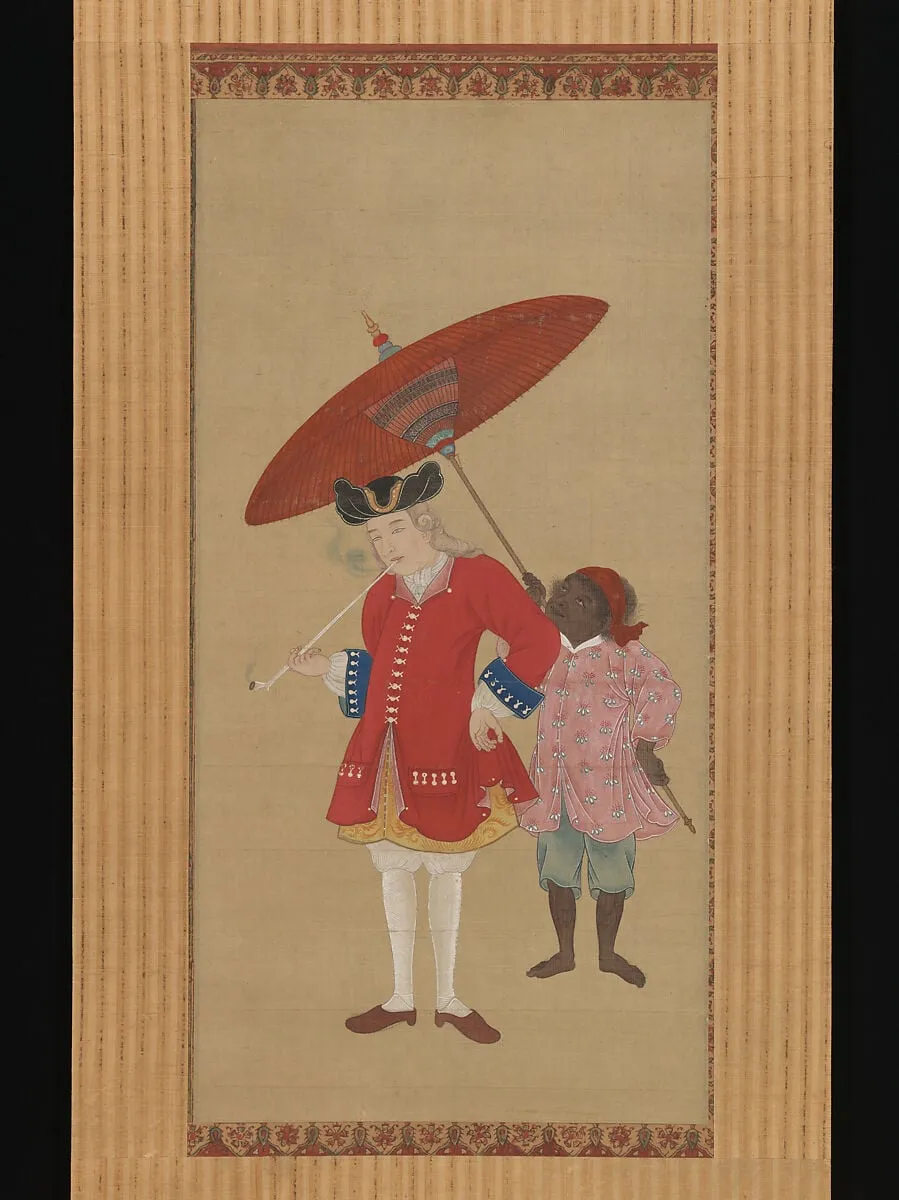
Untitled is an ink painting by the Romanticist artist Kawahara Keiga. It dates from 1816 and is held in the collection of the Metropolitan Museum of Art.
About this work
Subject & Meaning
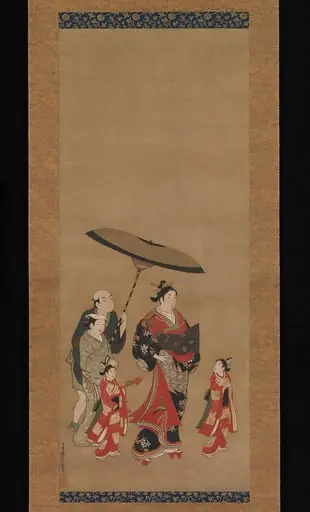
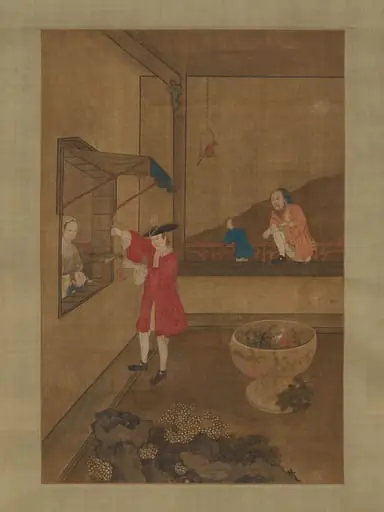
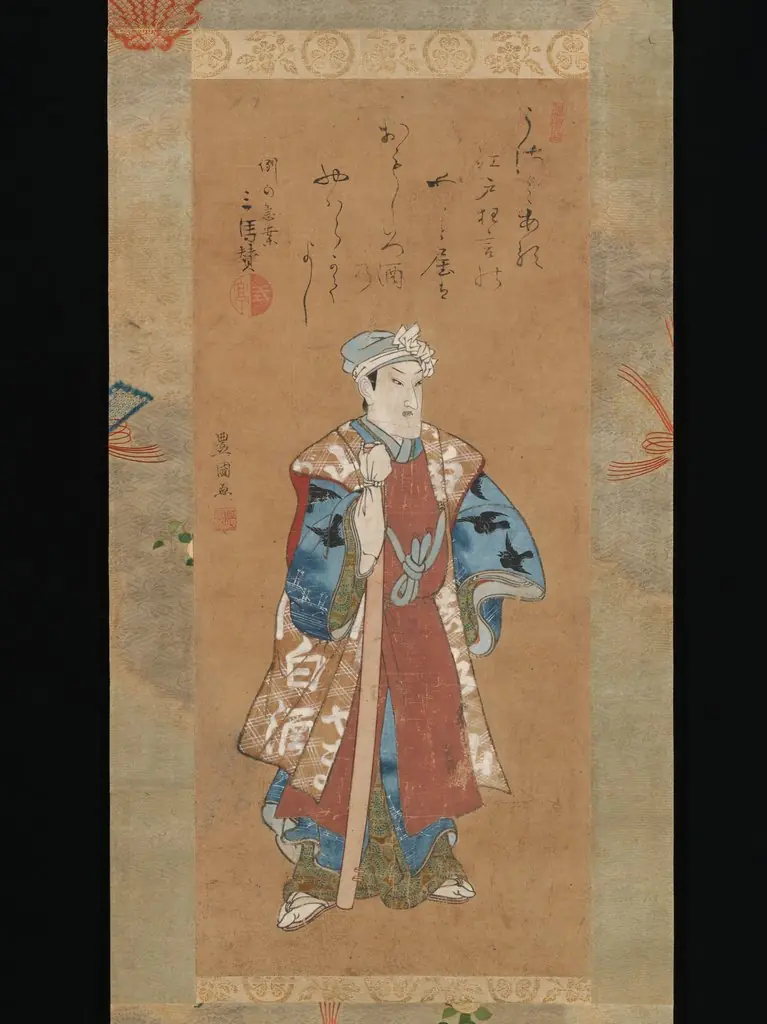
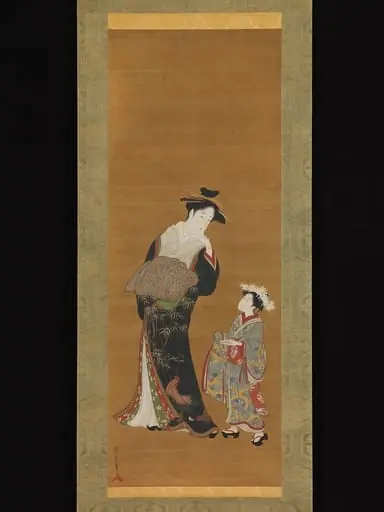
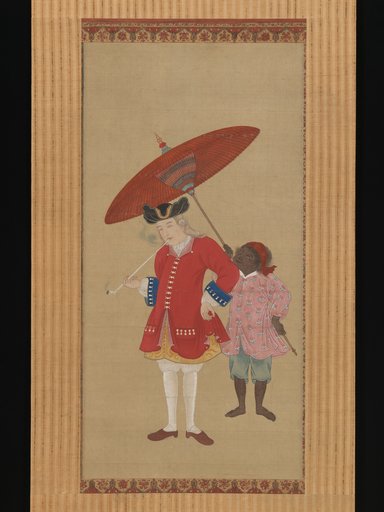
The painting depicts a domestic scene in early nineteenth-century Japan, featuring a seated man under a parasol engaged in smoking, alongside a domestic worker.
The painting depicts a domestic scene in early nineteenth-century Japan, featuring a seated man under a parasol engaged in smoking, alongside a domestic worker. The parasol serves as a marker of status or leisure, while the act of smoking situates the scene within quotidian social practice of the period. The inclusion of the attendant suggests a household of some means, reinforcing the genre’s focus on refined domestic life.
Together, these elements convey the cultural emphasis on refined conduct and the visual codification of social hierarchy in early modern Japanese painting.
Technique & Style
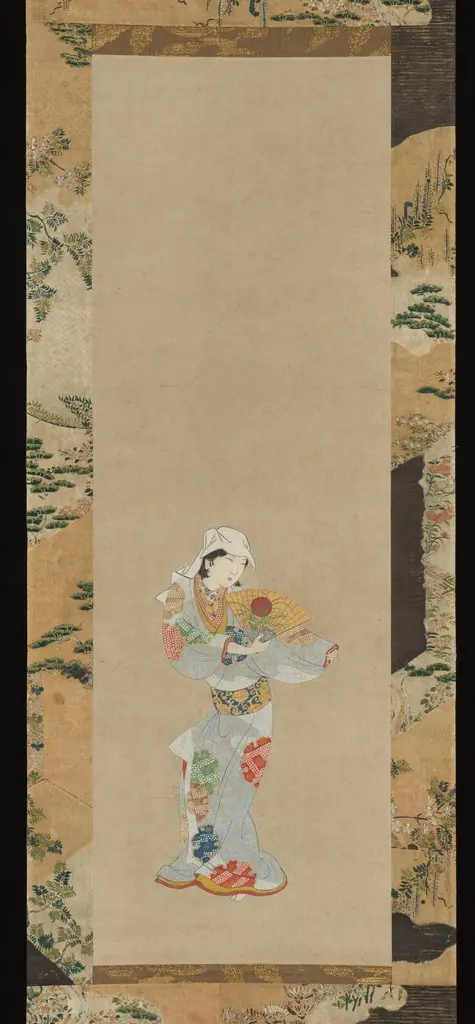
The work is executed as a hanging scroll on silk, employing ink outlines supplemented with polychrome washes; the surface incorporates negoro‑lacquered roller knobs that frame the composition. Measuring approximately 50.2 cm in height and 25.1 cm in width, the piece belongs to the genre of domestic scenes and portrays a man holding a parasol while a domestic worker engages in smoking, a motif documented in the Metropolitan Museum of Art’s catalogue. The scroll’s formal arrangement reflects Edo‑period stylization, with balanced negative space and subtle color gradients that emphasize narrative detail over ornamental excess.
History & Provenance
Untitled, a 1816 hanging scroll by Kawahara Keiga, was created in Japan using ink, color on silk with negoro lacquer roller knobs. The work is classified as a Paintings genre_scene depicting a domestic worker, man, parasol, and smoking. It entered the Metropolitan Museum of Art’s collection, where it is catalogued with an inception date of 1816‑01‑01, dimensions of 50.2 × 25.1 cm, and recorded as made in Japan. No documentation of a specific commission is available in the cited sources.
The hanging scroll is held in the collection of the Metropolitan Museum of Art, as recorded in Wikidata documentation for the work. The same source identifies the institution as both the holding collection and the current location of the painting., a corpus record, confirms the work's classification as a painting without providing additional curatorial data. No accession number, credit line, or specific exhibition history is documented in the available sources for this 1816 work by Kawahara Keiga.
Context
Scholarship situates this 1816 hanging scroll by Kawahara Keiga within the artist’s broader output of genre scenes that document everyday Edo‑period life, emphasizing its depiction of a domestic worker alongside a man with a parasol and smoking pipe. Contemporary critical reception is sparse, but modern analysis highlights the work’s role in illustrating shifting visual narratives around labor and domesticity in early 19th‑century Japan. As part of the Metropolitan Museum of Art’s collection, the piece contributes to the historiography of ukiyo‑e by expanding the genre beyond theatrical subjects to include intimate household moments, thereby enriching understanding of Keiga’s place in the evolution of Japanese painting.
Overview
Painted in 1816 by Kawahara Keiga, this hanging scroll depicts a genre scene commissioned specifically for Dutch traders residing in Dejima, the Dutch trading post in Nagasaki. Keiga, one of the few Japanese artists permitted to work for the Dutch East India Company, captures a moment of leisure within this restricted enclave. The composition centers on a man in a blue robe reclining while smoking a long pipe, a gesture of relaxation and status.
A servant stands attentively holding a red parasol to shield the figure from the sun, while a second man kneels nearby presenting a tray, likely containing refreshments. Executed in ink and color on silk with negoro lacquer roller knobs, the work reflects the artist's adaptation of traditional Japanese painting techniques to satisfy European curiosity about daily life in Japan. The piece serves as a historical document of cross-cultural exchange during the Edo period, illustrating the specific social dynamics and material culture observed by foreign residents under the strict isolationist policies of the Tokugawa shogunate.
Keiga's ability to render these scenes with observational precision established his reputation as a bridge between Japanese artistic traditions and Western demand.
Artist & collection
Artist
Kawahara Keiga (Japanese: 川原慶賀, also known as Taguchi Takumi or Toyosuke, Nagasaki, 1786–1860?) was a late Edo period Japanese painter of plants, fishes, birds, reptiles, crustaceans, social scenes, landscapes and…