Artwork
Madonna Pisa
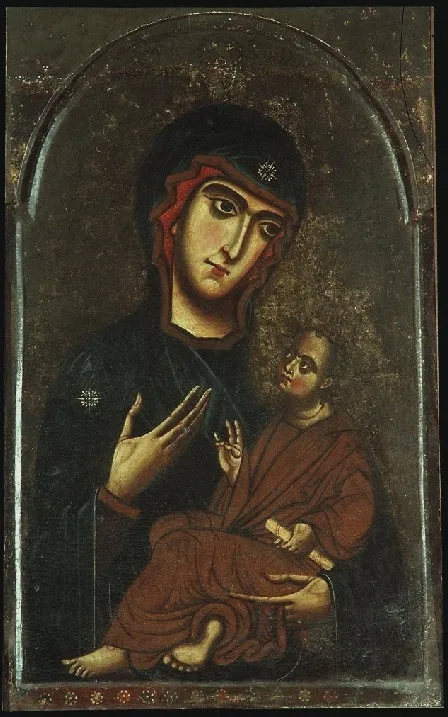
Madonna Pisa is a tempera painting by the Byzantine icon painting artist Maestro della Sant'Agata. It dates from 1250 and is held in the collection of the Uffizi Gallery.
About this work
Overview
Its attribution and dating have been subjects of scholarly debate, reflecting the broader challenges of reconstructing the oeuvre of anonymous medieval masters.
The Madonna Pisa is a tempera-on-panel painting of the Madonna and Child, attributed to the Maestro della Sant'Agata, an anonymous painter of the Florentine school active in the thirteenth century. Measuring 98 by 60 centimeters, the work is dated circa 1250-1280 and is held in the Uffizi Gallery in Florence, where it bears the inventory number 1890 9213. The painting occupies a significant place in the history of Italian art as a representative example of Duecento panel painting, bridging Byzantine iconographic traditions and emerging Tuscan stylistic developments. Its attribution and dating have been subjects of scholarly debate, reflecting the broader challenges of reconstructing the oeuvre of anonymous medieval masters.
Subject & Meaning
The painting depicts a Hodegetria-type Virgin and Child, a compositional formula whose Greek name signifies she who shows the way. The Virgin Mary, robed in dark blue mantle over a red undergarment with a dark head covering bordered in red, holds the Christ Child on her left arm while raising her right hand with fingers extended in a directing gesture toward her son. The Christ Child, draped in reddish-brown cloth, sits upright on her forearm, his right hand raised in blessing with two fingers extended, his left hand grasping a small scroll. This iconography carries layered significance: Mary symbolizes the Church, directing the faithful toward Jesus and salvation, while the Child's ancient philosopher's attire and scroll identify him as divine wisdom incarnate. His blessing of his mother extends metonymically to the Church itself. Two embroidered stars appear on Mary's blue mantle, ancient symbols of divine grace descended upon her and evoking the Star of Bethlehem, though the third star of the traditional triad is absent here. The figures display the slightly divergent gazes characteristic of the period, avoiding direct engagement with the viewer in a manner typical of Byzantine-influenced devotional images.
Technique & Style
The Madonna Pisa is executed in tempera on panel, its dark background originally covered with silver. The surface shows age cracks and worn areas, particularly near the top, with colors now subdued: deep blues, browns, and muted reds against the dark ground. The technique appears smooth with fine detail in the faces and hands, though modeling is minimal throughout. Linear folds define the drapery, and halos are indicated by simple circular bands. The composition is framed by a rounded arch with a thin border, and a narrow decorative border of stylized rosettes runs along the bottom edge. Stylistically, the work reveals strong Byzantine influence in its fixed, hieratic quality and pronounced dark shading. Distinctive features include the extremely long, slender fingers of the Virgin, described as resembling thin twigs, especially in the hand that holds the Child's garment, and the highly stylized, almost two-dimensional rendering of one of the Child's feet. The elongated faces with large outward-directed eyes further underscore the painter's debt to Byzantine icon conventions while participating in the specific visual language of thirteenth-century Florentine panel painting.
History & Provenance
The painting derives its name from Luigi Pisa, who brought it to the Uffizi Gallery in 1933, initially as a deposit and subsequently as a donation. The work's earlier provenance remains unrecorded in the available sources. It entered the Uffizi collection with the inventory number 1890 9213. The painting's acquisition in 1933 represents a significant addition to the museum's holdings of thirteenth-century Tuscan panel painting, filling an important chronological and stylistic position within the Uffizi's survey of early Italian art. No exhibition history beyond its permanent installation is documented in the sources.
Context
The Madonna Pisa is generally assigned to the Maestro della Sant'Agata, a painter of the Florentine school of the Duecento whose very name derives from a work in the Sant'Agata church. This master has also been tentatively associated with the Madonna del Popolo in the Brancacci Chapel, a suggestion advanced by Coor Achenbach. Scholarly opinion on both attribution and dating remains divided. Angelo Tartuferi proposed a dating to 1270-1280 and argued that the Sant'Agata master and the painter of the Brancacci Chapel Madonna were two distinct personalities. By contrast, Miklos Boskovits dated the Madonna Pisa to the sixth decade of the thirteenth century, supporting the earlier end of the accepted range. These debates reflect the broader methodological difficulties of attributing anonymous medieval works and the evolving criteria for distinguishing hands within the relatively homogeneous production of thirteenth-century Florentine workshops. The painting's critical reception has centered on its value as a document of Byzantine influence in Tuscany and its testimony to the slow emergence of more naturalistic tendencies in Italian panel painting.
Legacy
The Madonna Pisa stands as an important touchstone for understanding the transmission and adaptation of Byzantine visual culture in thirteenth-century Florence. Its preservation in the Uffizi Gallery ensures continued scholarly attention and public access, contributing to narratives of early Italian painting that trace the development from medieval icon to Renaissance naturalism. The work's role in debates about the Maestro della Sant'Agata's oeuvre and the broader problem of Duecento attribution has sustained its relevance in specialized scholarship. As one of the relatively few surviving panel paintings from this period in the Uffizi collection, it serves educational and research functions, offering material evidence of the techniques, materials, and devotional conventions of its era. The painting's cultural afterlife remains primarily institutional and academic, embedded in museum display and scholarly literature rather than in broader popular reception.
Artist & collection
Artist
This 13th-century Italian painter made delicate tempera panels of holy scenes. One of them shows the Madonna holding the infant Jesus, draped in soft pink folds, set against a gold background, it’s called Madonna Pisa.…

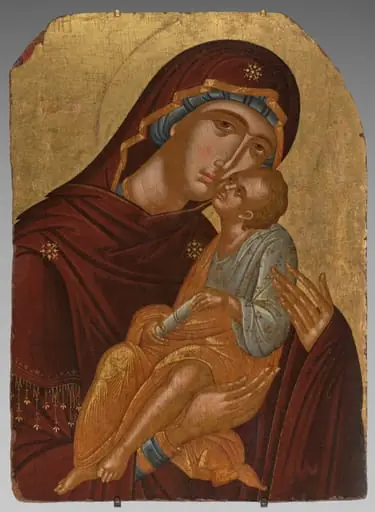 Icon of the Mother of God and Infant Christ (Virgin Eleousa)
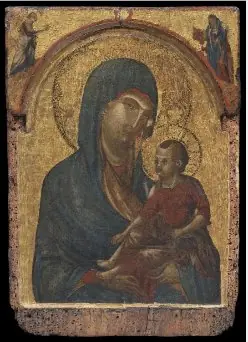 Virgin and Child with Annunciation
 Madonna in trono col Bambino
 The Virgin and Child
 Virgin and Child
 Maic
Maic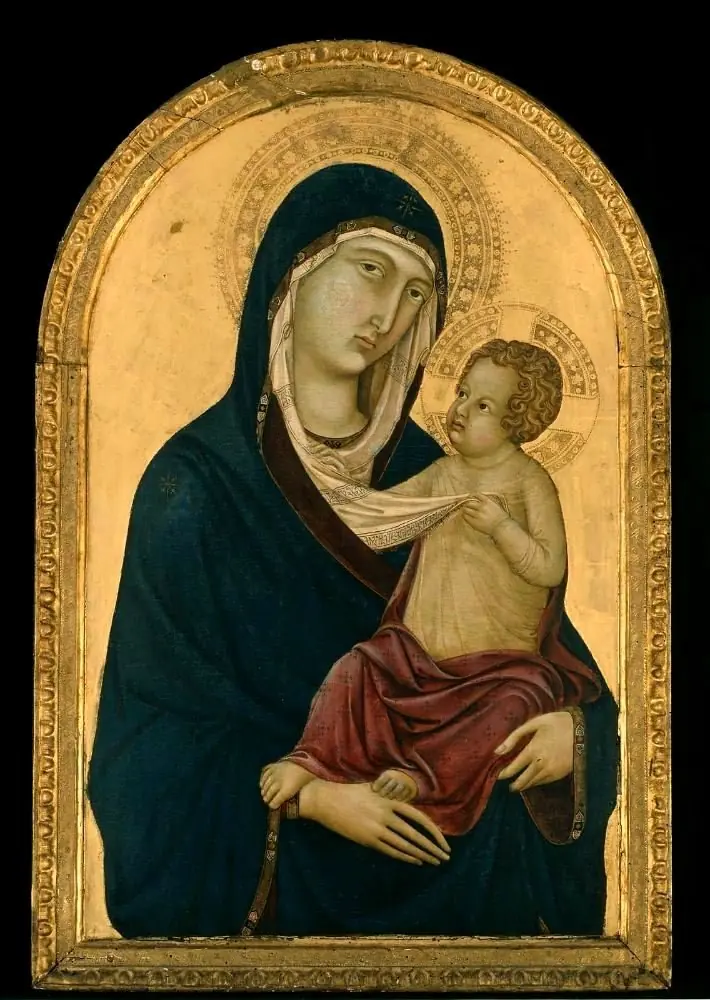 Virgin and Child
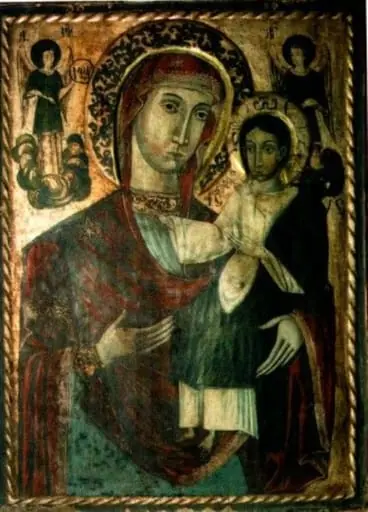 Maica Domnului cu Pruncul
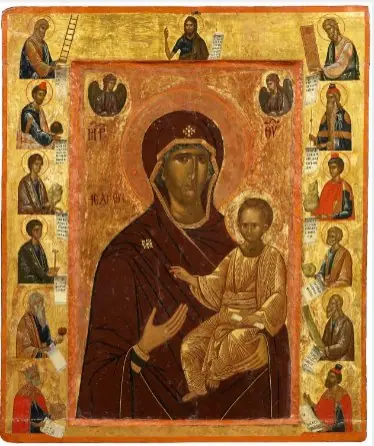 The Virgin and Child, Saint John the Baptist and Prophets
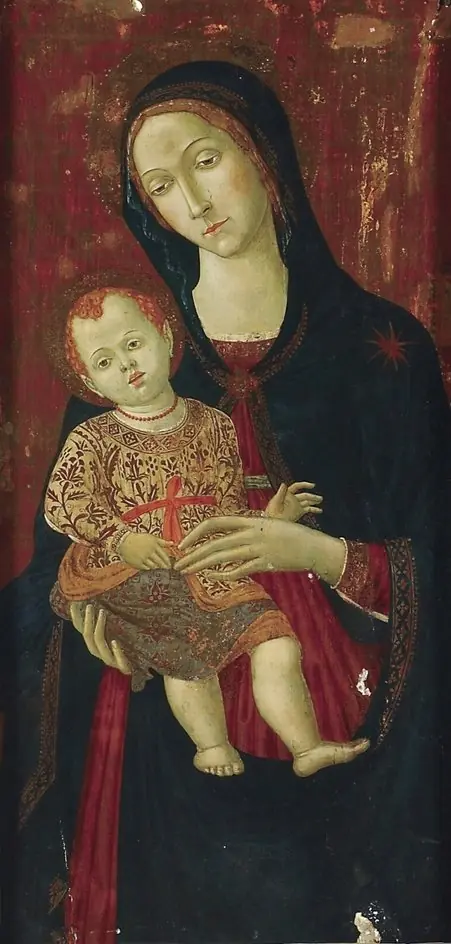 The Virgin and Child
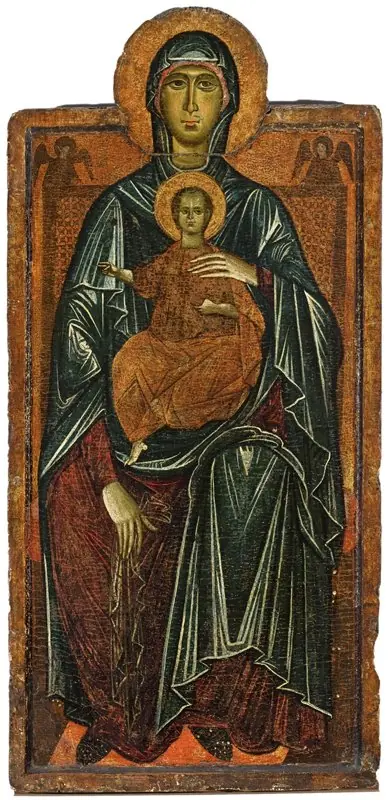 Maestà attributed to the Master of Bigallo
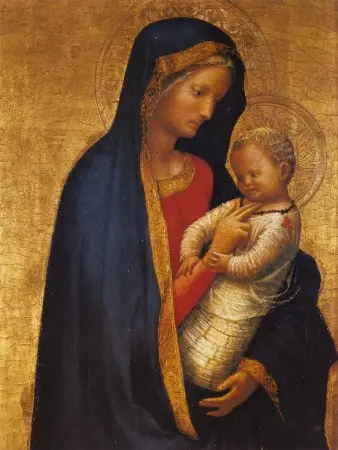
- Madonna Casini
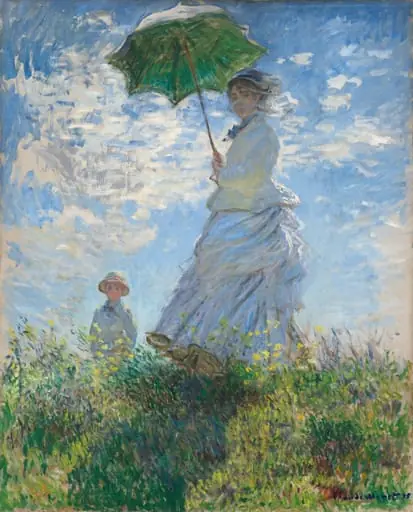 Woman with a Parasol - Madame Monet and Her Son
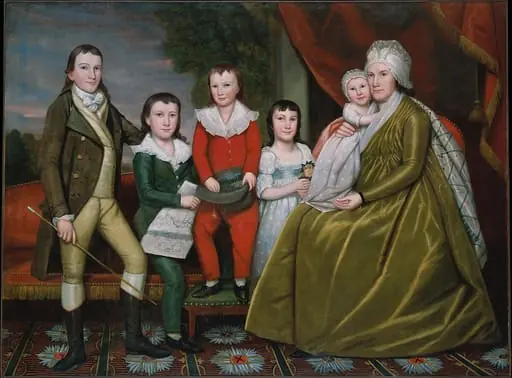 Mrs. Noah Smith and Her Children
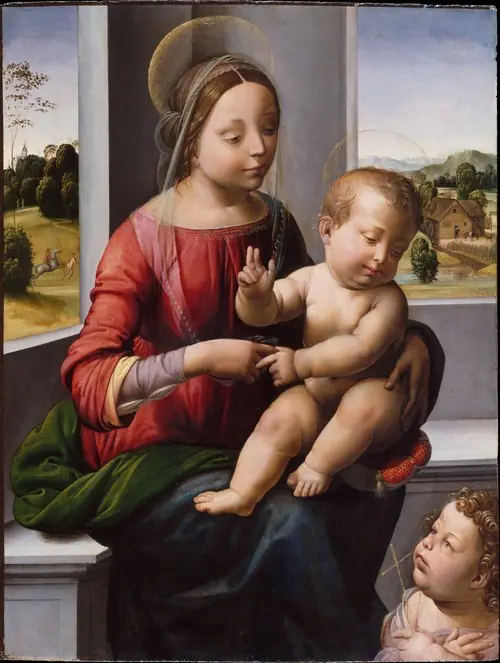 Madonna and Child with the Young Saint John the Baptist
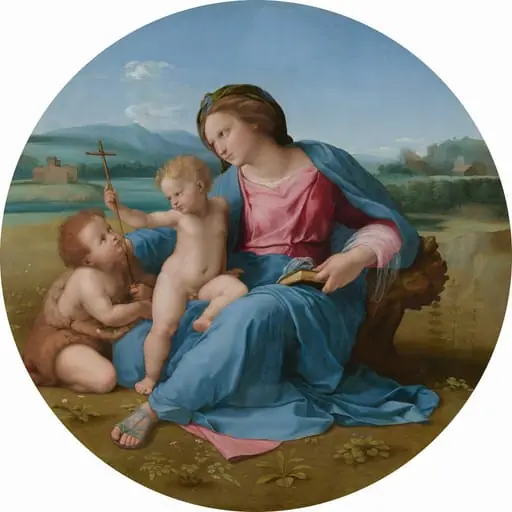 The Alba Madonna
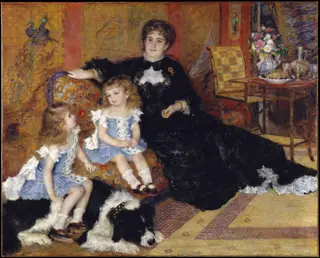 Madame Georges Charpentier and her Children
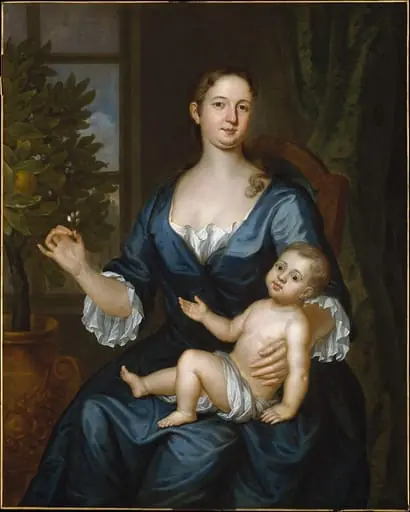 Mrs. Francis Brinley and Her Son Francis
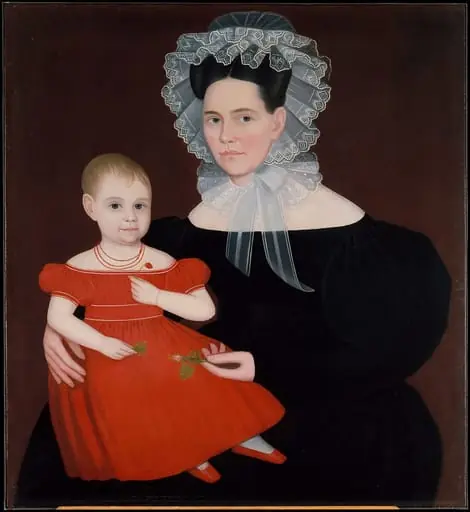 Mrs. Mayer and Daughter
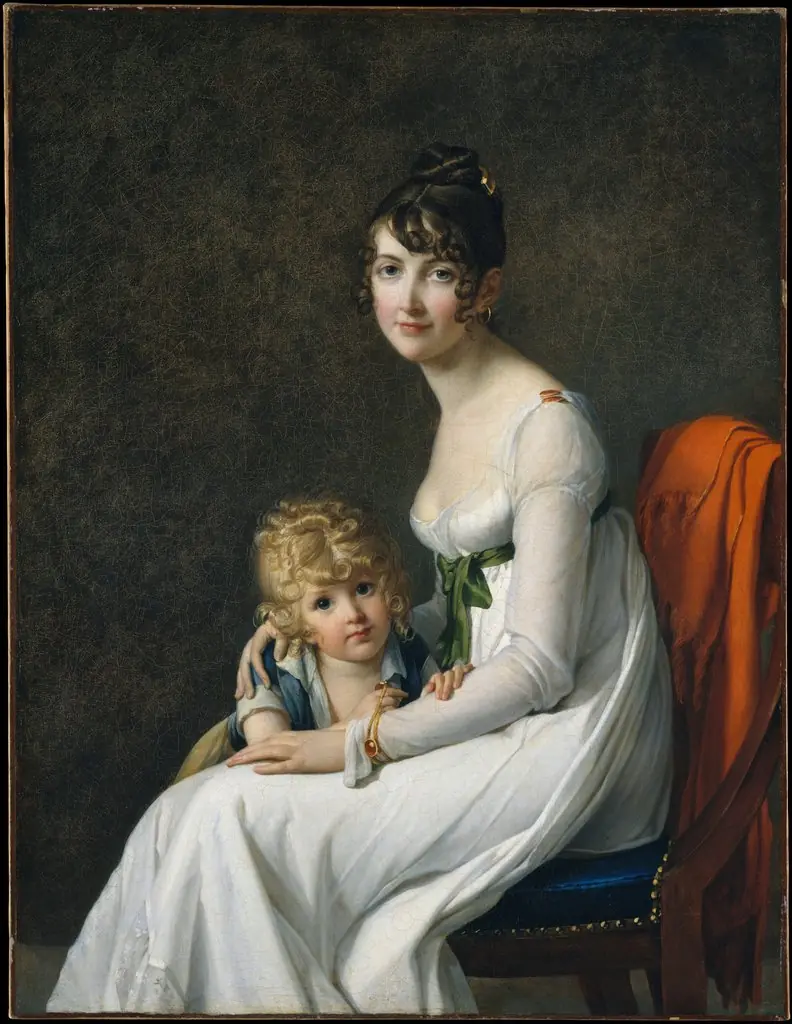 Madame Philippe Panon Desbassayns de Richemont (Jeanne Eglé Mourgue, 1778–1855) and Her Son, Eugène (1800–1859)