Artwork
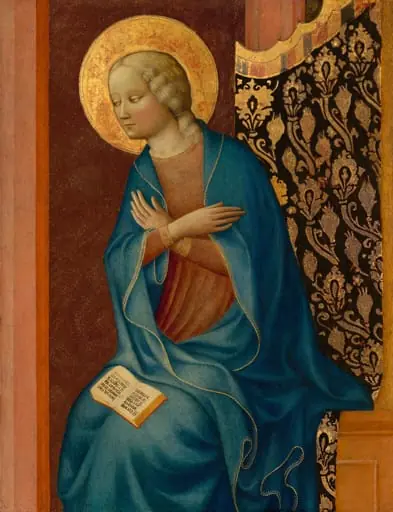
Madonna from the Annunciation Scene
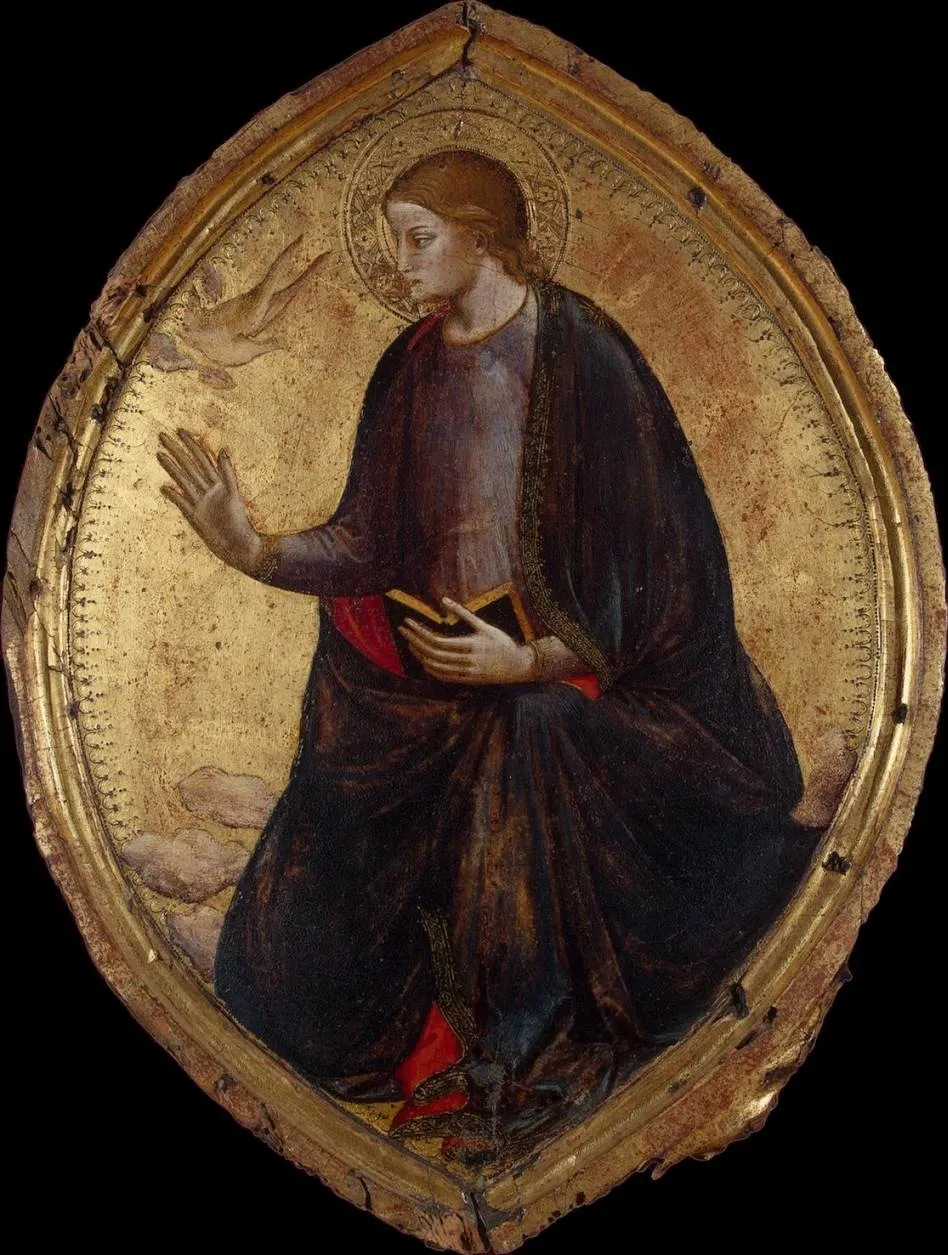
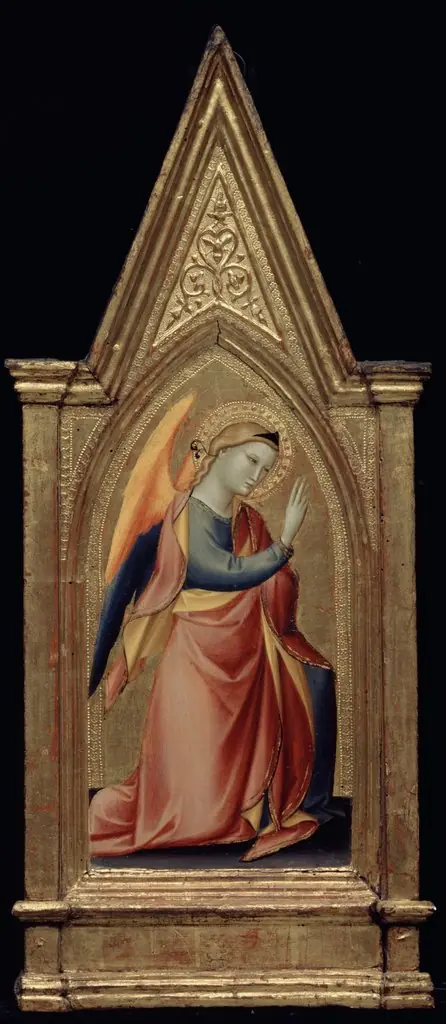
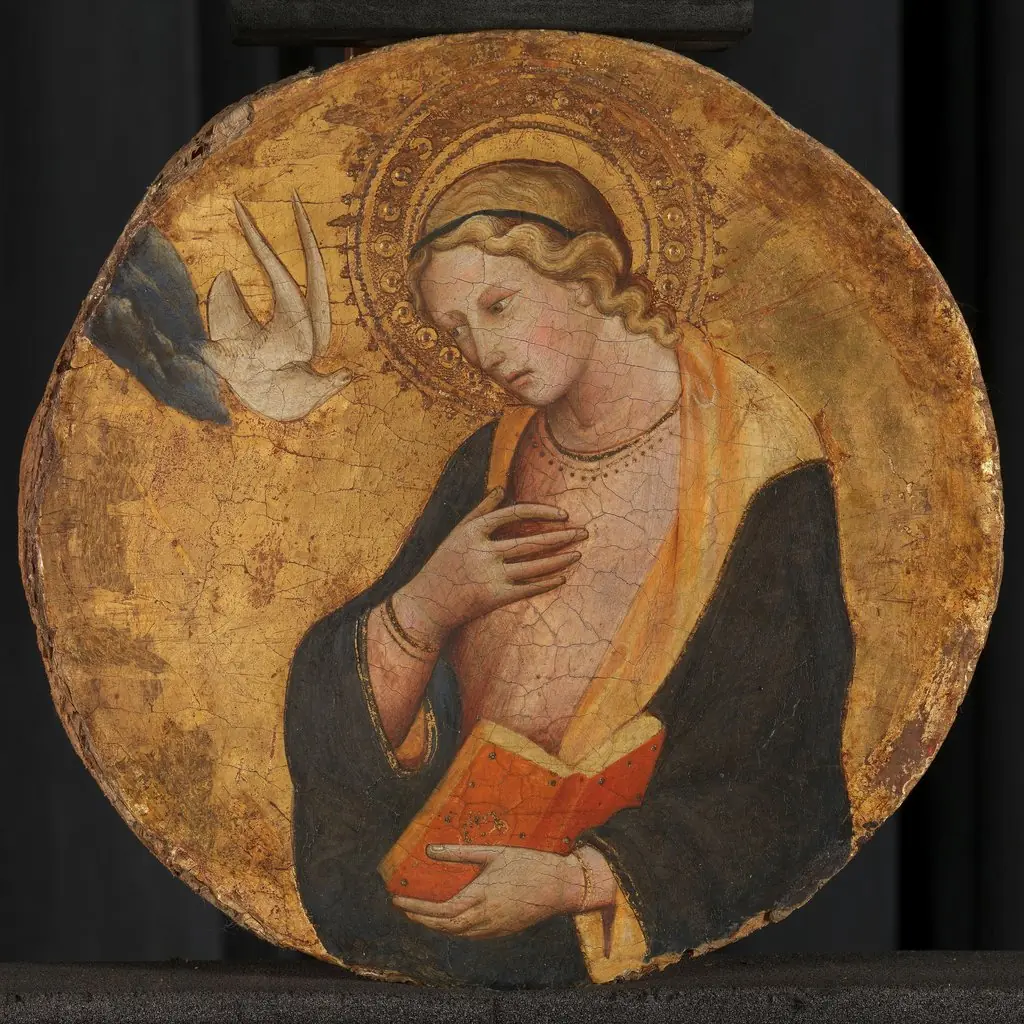
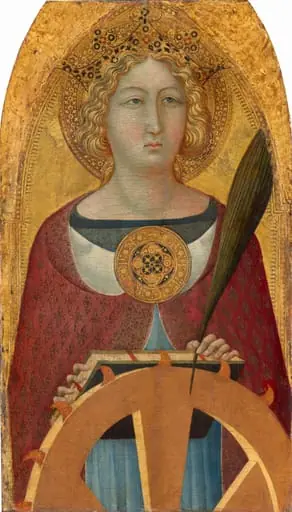
Madonna from the Annunciation Scene is a tempera painting by the Italo Byzantine artist Mariotto di Nardo. It dates from 1400 and is held in the collection of the Hermitage Museum.
About this work
Overview
Created around 1400 by the Florentine artist Mariotto di Nardo, this tempera panel depicts a figure from the Annunciation narrative.
Created around 1400 by the Florentine artist Mariotto di Nardo, this tempera panel depicts a figure from the Annunciation narrative. Executed in the traditional medium of egg-based pigment, the work belongs to a series of devotional images produced for religious contexts in early 15th-century Tuscany. Its small scale and formal composition reflect the enduring influence of Byzantine models adapted to contemporary Florentine tastes.
Subject & Meaning
The figure is the Virgin Mary, identified by her halo and solemn posture, caught in the moment of divine revelation. She holds a book, symbolizing her piety and readiness to receive God’s word, while her raised hand suggests acceptance or awe. The minimal background, clouds and gold, emphasizes her spiritual presence over earthly setting, aligning with medieval conventions that prioritized sacred meaning over naturalism.
Technique & Style
The painting employs tempera, a medium made from pigment mixed with egg yolk, applied in fine, controlled strokes over a gilded wood panel. The use of gold leaf for the halo and background follows Italo-Byzantine practices, while the drapery folds and linear contours reveal Gothic sensibilities. Surface cracking, typical of aged tempera, underscores the material’s fragility and the passage of time since its creation.
History & Provenance
Mariotto di Nardo was active in Florence between the late 1300s and early 1400s, producing altarpieces and devotional panels for churches and civic institutions. Though the specific original location of this panel is unrecorded, its style and technique align with works commissioned for private chapels or monastic settings. It likely formed part of a larger narrative cycle, now dispersed or lost.
Context
During Mariotto’s career, Florence was transitioning from medieval to early Renaissance aesthetics. While artists like Giotto had begun exploring spatial depth and naturalism, many religious commissions still favored the hierarchical, symbolic language of the Gothic and Byzantine traditions. This panel represents that conservative strand, valued for its devotional clarity rather than innovation.
Legacy
Though Mariotto di Nardo is not among the most widely studied painters of his era, his works exemplify the persistence of traditional methods in Florentine religious art well into the 15th century. This panel contributes to understanding the diversity of artistic practice before the full emergence of linear perspective, illustrating how older styles coexisted with emerging innovations.
Artist & collection
Artist
Mariotto di Nardo di Cione (fl. 1388–1424) was a Florentine painter in the Florentine Gothic style. He worked at the Duomo of Florence, the church of Santa Maria Maggiore, and the Orsanmichele. He created both frescoes…

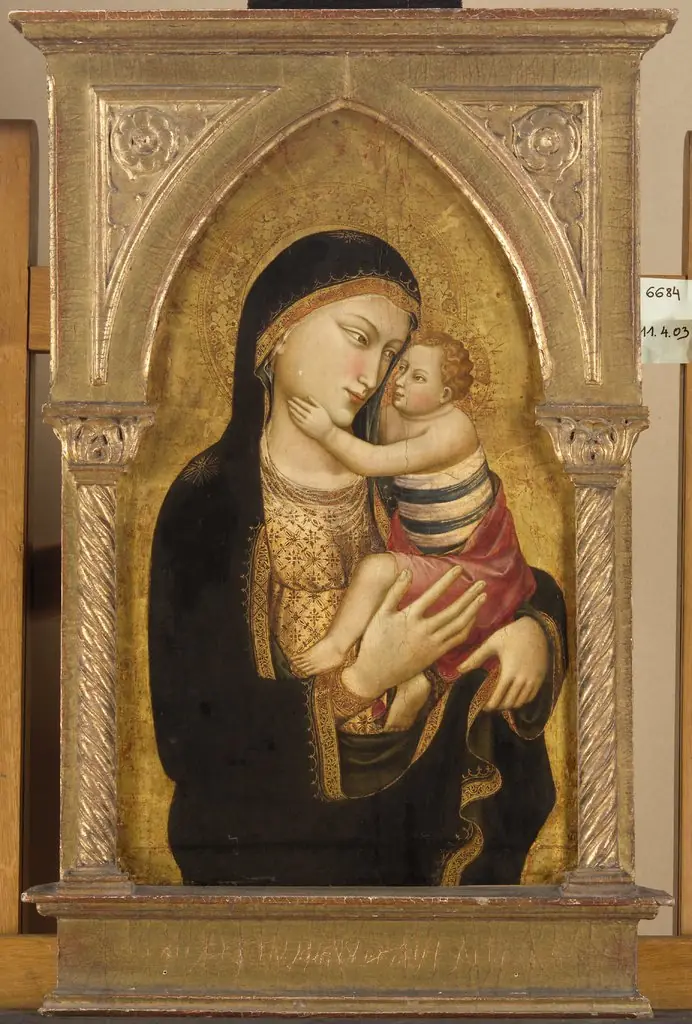 Maria mit Kind
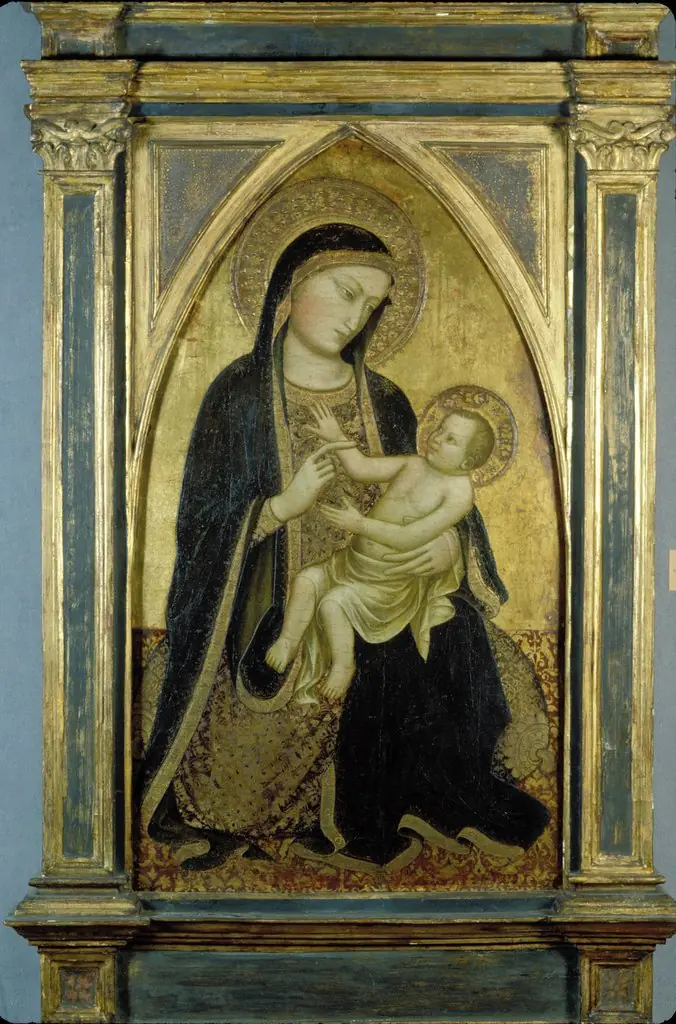 Madonna and Child
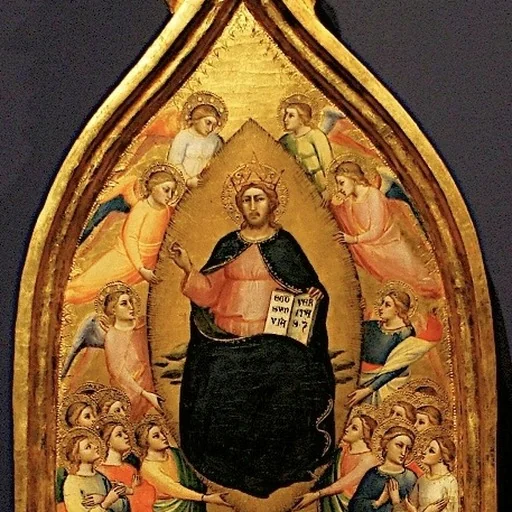
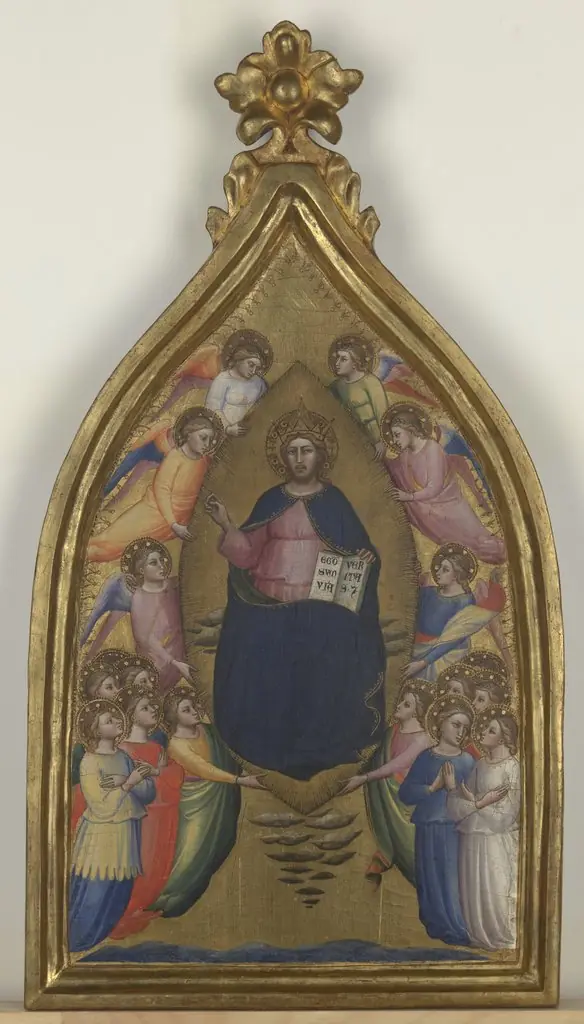 Christ Enthroned Within a Mandorla
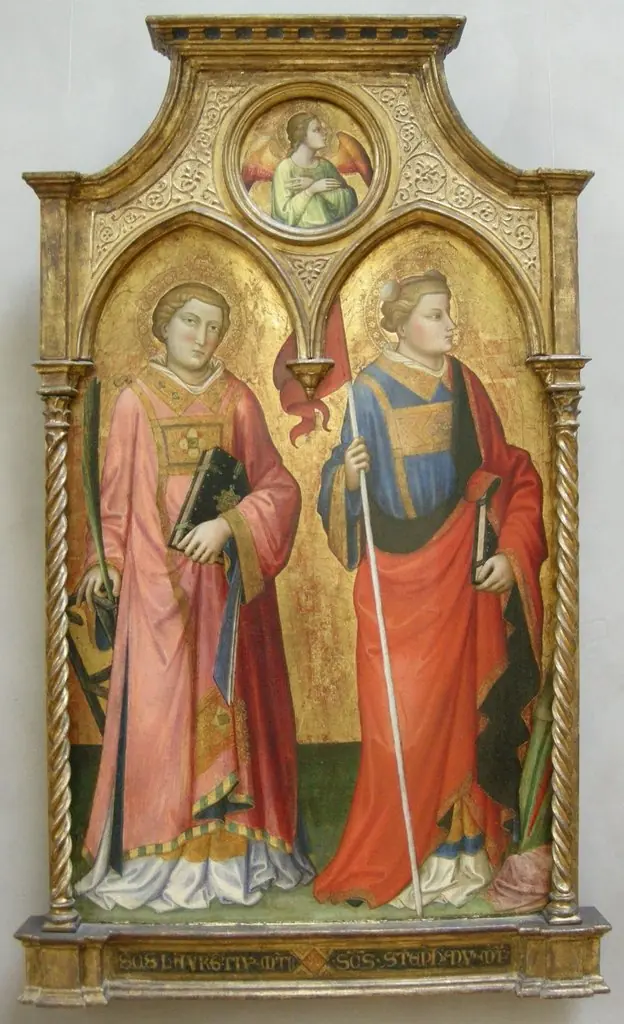 Saints Lawrence and Stephen
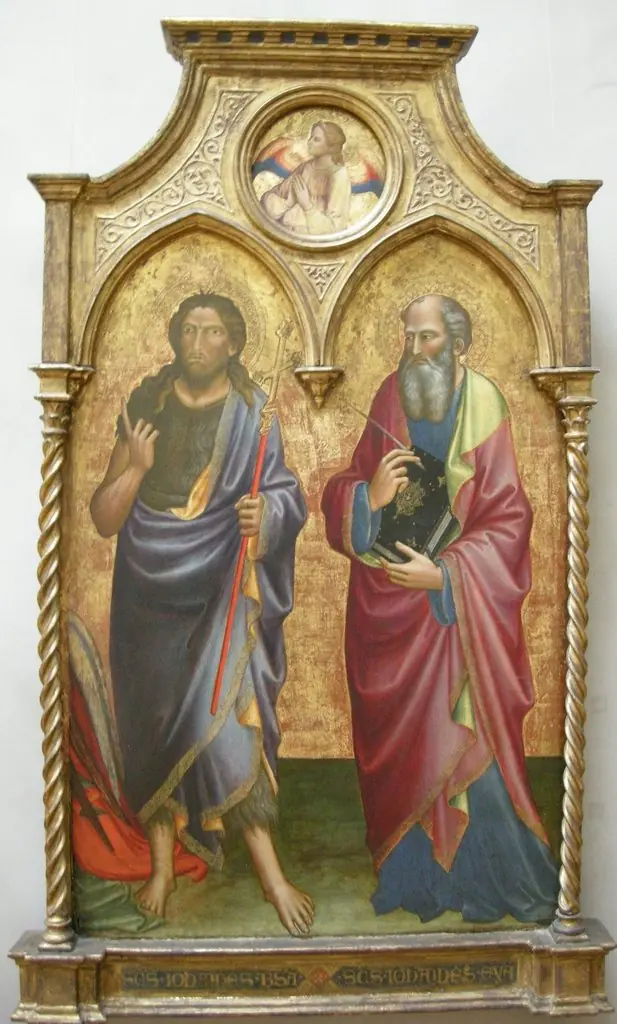 Saints John the Baptist and John the Evangelist
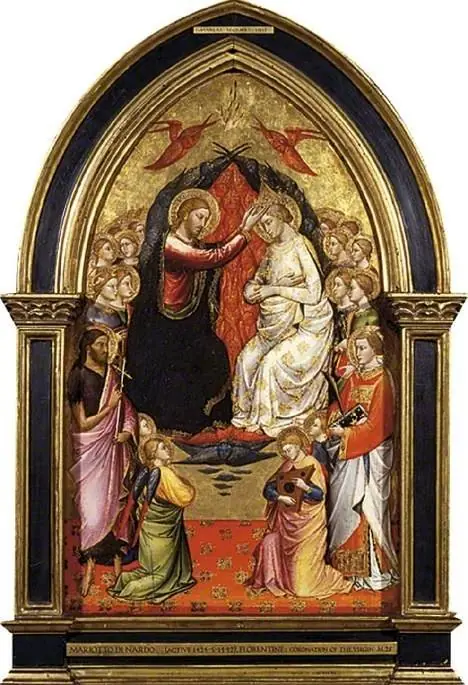 The Coronation of the Virgin
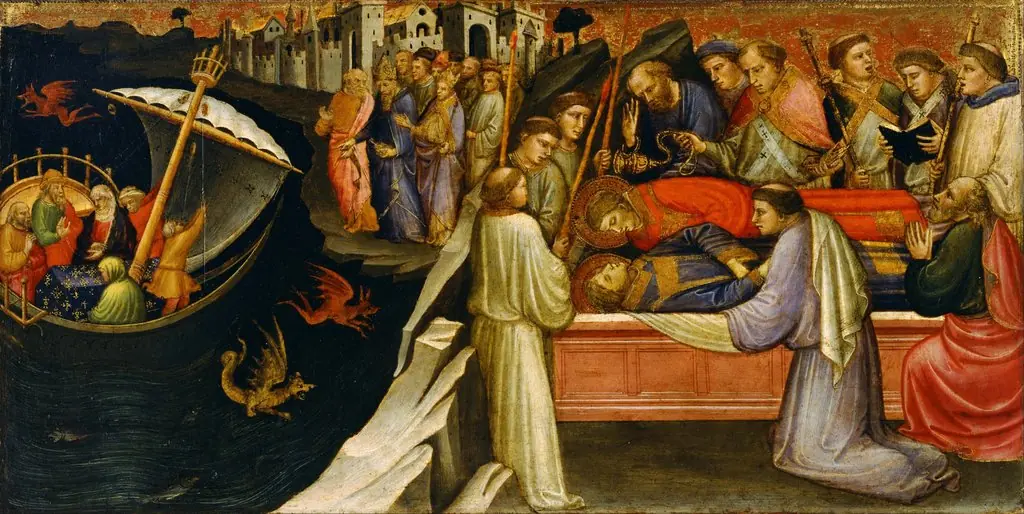 Predella Panel Representing the Legend of St. Stephen: Devils Agitating the Sea as Giuliana Transports the Body of St. Stephen from Jerusalem to Constantinople
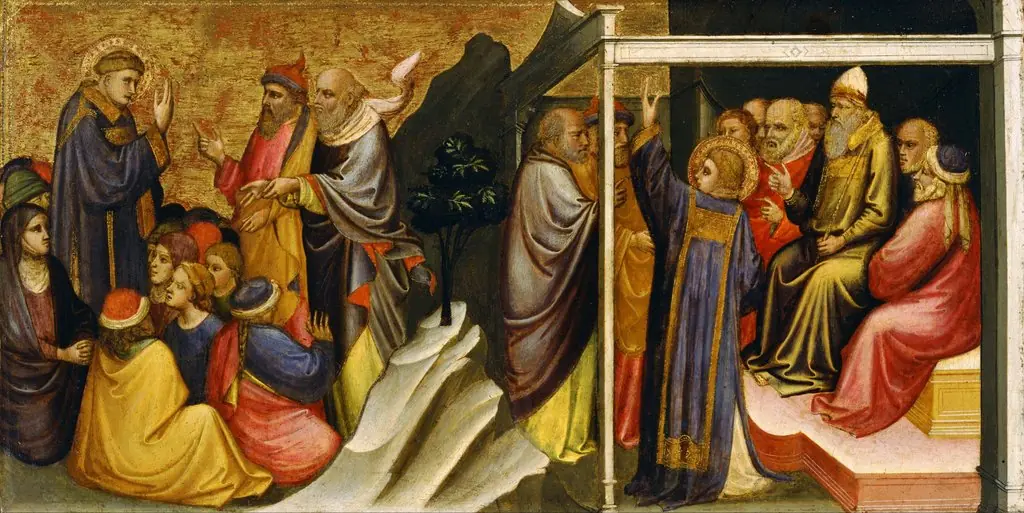 Predella Panel Representing the Legend of St. Stephen: St. Stephen Preaching
![Saint Mary Magdalene, with an Angel [left panel], by Pietro Lorenzetti](https://artifactworldgallery.com/img/pietro-lorenzetti--saint-mary-magdalene-with-an-angel-left-panel--c015f106a0790d0d-w320.webp)