Artwork
The Birth of Cupid
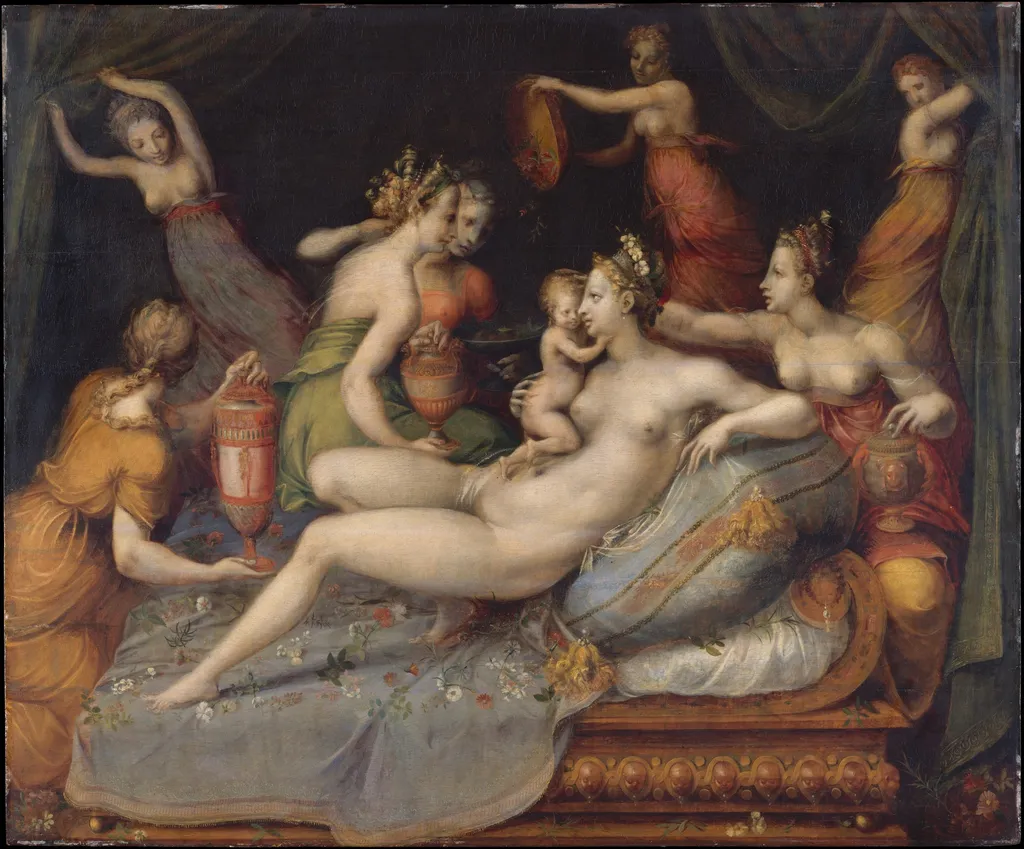
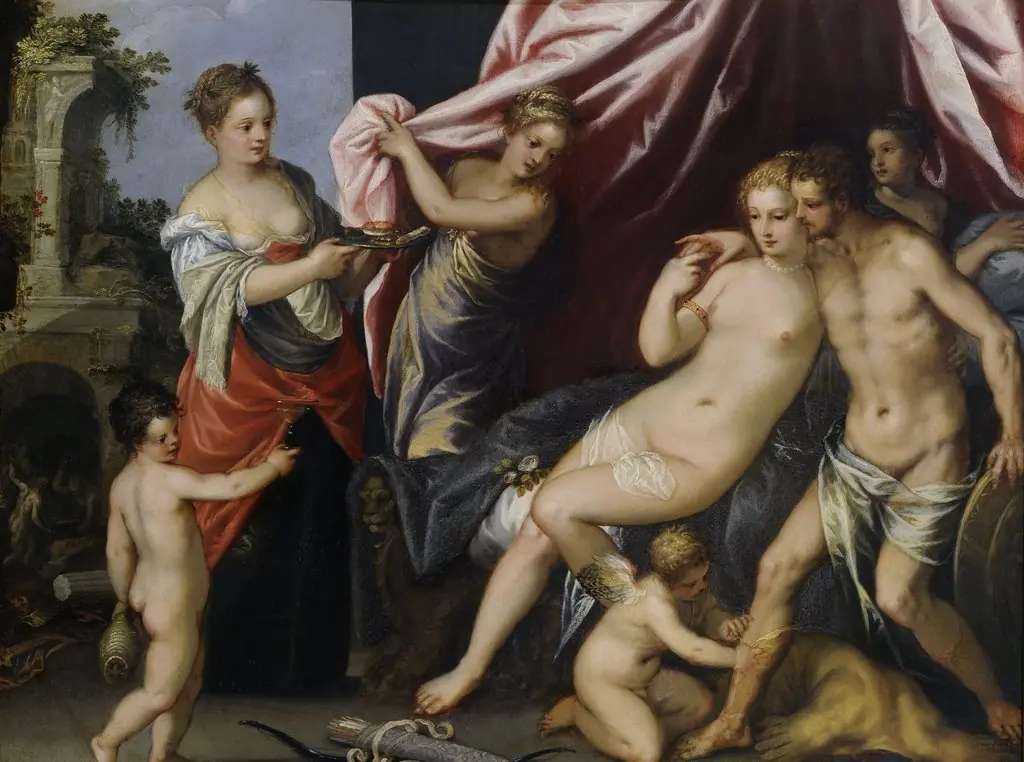
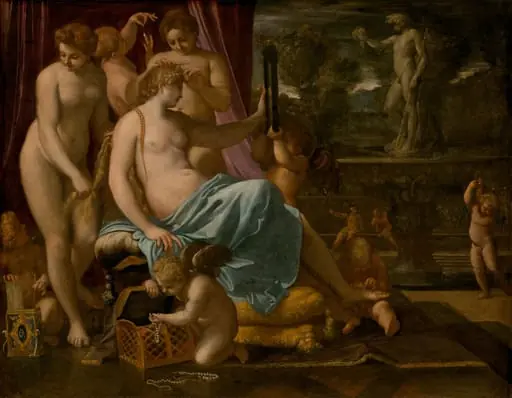
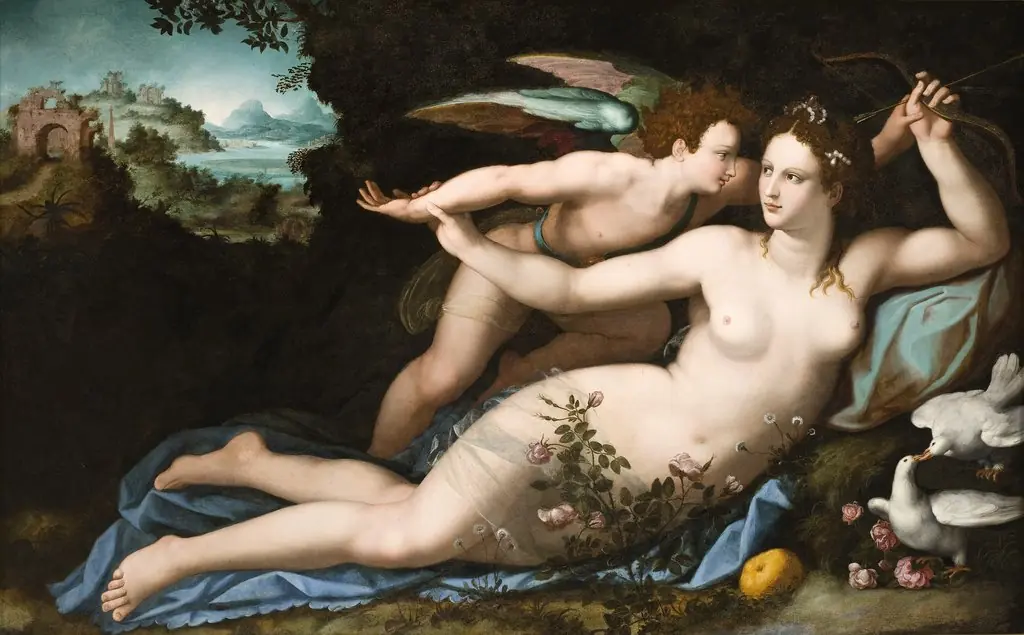
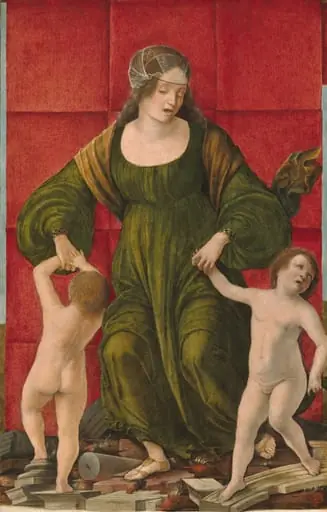
The Birth of Cupid is an oil painting by the Mannerist artist Master of Flora. It dates from 1574 and is held in the collection of the Metropolitan Museum of Art.
About this work
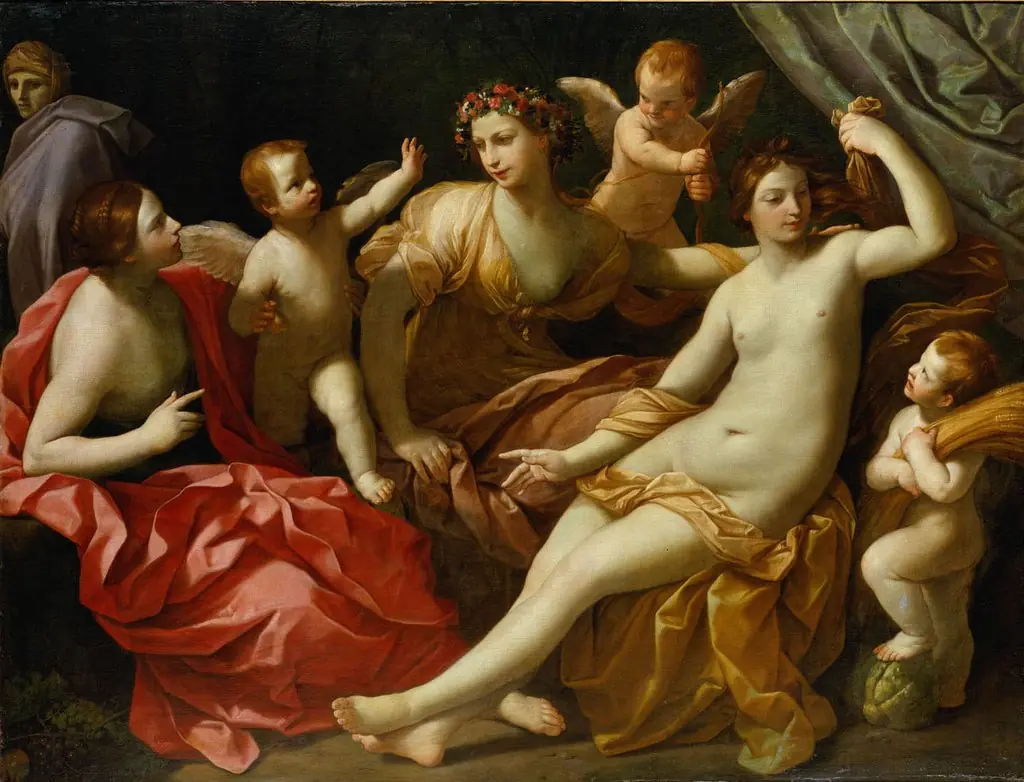
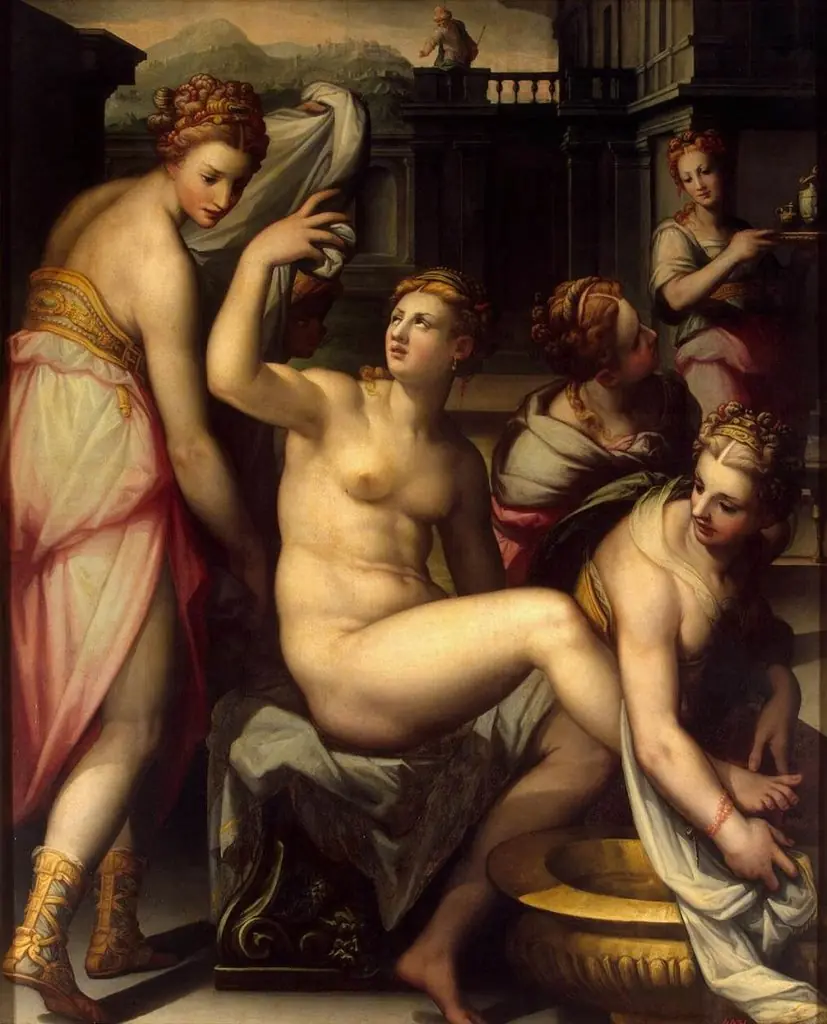
Attendants tend to Venus in a scene the Met identifies as the birth of her son Cupid. The Master of Flora, an Italian active at Fontainebleau in the later sixteenth century, painted the panel in oil on wood, and it keeps its original Italian frame. The decorative grouping reflects the Mannerist style of Rosso Fiorentino and Francesco Primaticcio. The Met acquired it in 1941.
Subject & Meaning
The scene includes symbolic props such as a pillow, urn, curtain, bed, and headgear, which frame the event as a domestic yet divine childbirth.
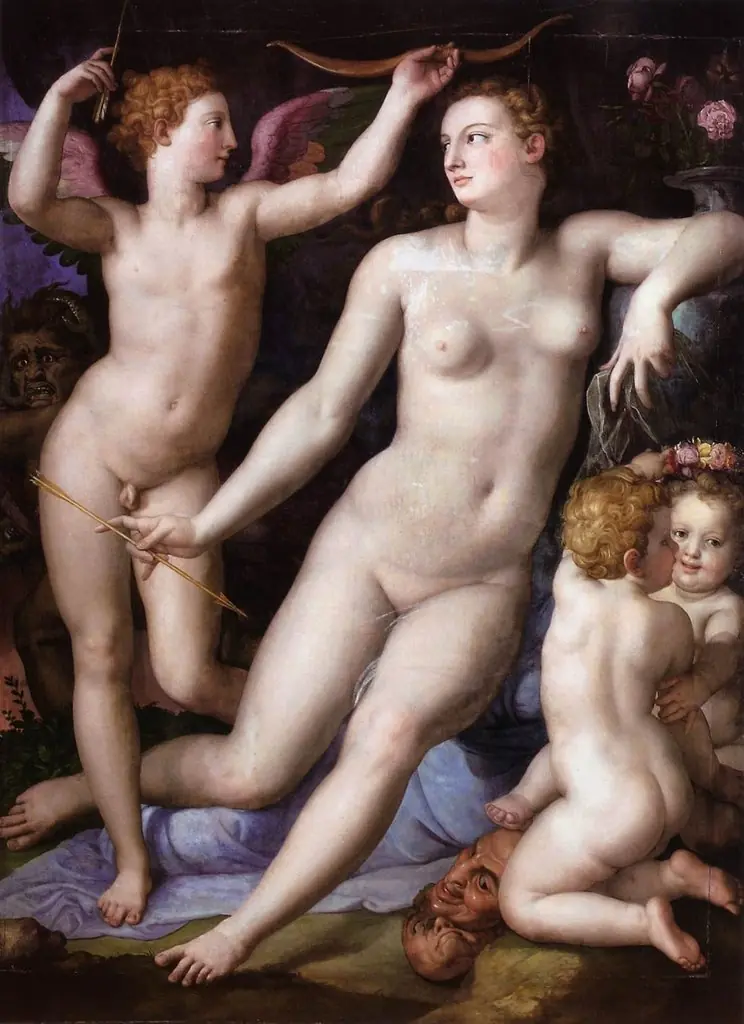
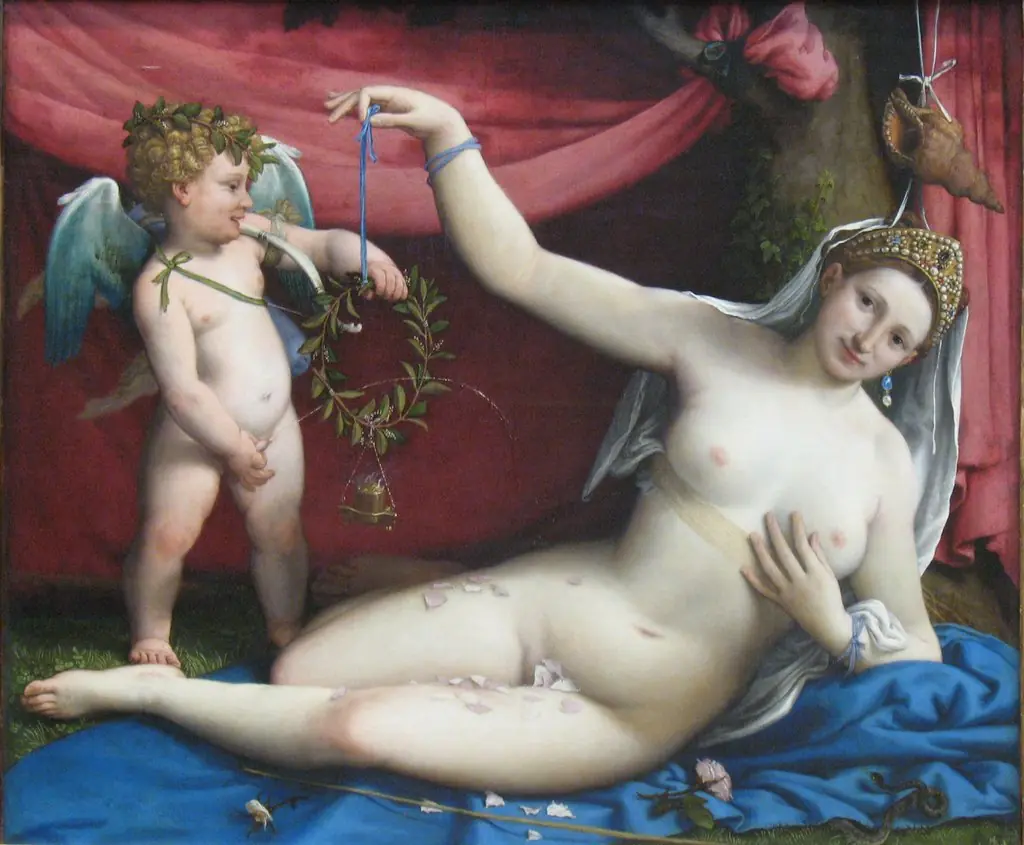
The painting depicts the mythological birth of Cupid, with Venus as the mother and the newborn Cupid as the central figure. The scene includes symbolic props such as a pillow, urn, curtain, bed, and headgear, which frame the event as a domestic yet divine childbirth. As a mythological painting, it represents the origin of love itself, Cupid, the god of desire, emerging from Venus, the goddess of love.
The iconography emphasizes the tender yet powerful moment of love’s creation, blending classical mythology with intimate human imagery.
Technique & Style
The painting is executed in oil paint on a panel support, with dimensions of 108 × 130.5 cm. The medium and support are typical of the late 16th-century Northern European works, allowing fine detail and rich color. Formal qualities include a mythological scene depicting nude figures of Venus and Cupid, along with childbirth, bed, curtain, urn, and other domestic elements. The composition likely employs a balanced arrangement, though specific handling or brushwork is not documented in the available sources. No condition report is provided.
History & Provenance
Painted in 1574 by the Master of Flora, The Birth of Cupid entered the collection of the Metropolitan Museum of Art, where it is now held as accession number 41.48. Prior to its museum acquisition, the painting was owned by Antonin Juritsky. No record of a specific commission survives, and the circumstances of its creation remain undocumented beyond the artist's attribution and the dated inscription.
The painting is held at the Metropolitan Museum of Art (MET) in New York, cataloged under accession number 41.48. It was previously owned by Antonin Juritsky before entering the MET collection, likely in 1941 based on the accession number prefix. The available sources do not provide any recorded exhibition history for this work, including no details of loans or public display.
Overview
The Birth of Cupid is an oil painting on a wood panel attributed to the Master of Flora, an Italian artist active at the French royal court of Fontainebleau during the latter half of the sixteenth century. The work depicts the mythological scene of Cupid's birth, with attendants ministering to his mother, Venus. The Metropolitan Museum of Art acquired this panel in 1941, where it remains a notable example of the period's artistic trends.
Context
The Master of Flora's presence at the Château de Fontainebleau highlights the significant cultural exchange between Italy and France in the sixteenth century. Italian artists, notably Rosso Fiorentino and Francesco Primaticcio, were instrumental in importing and developing the Mannerist style at the French court. Their work, characterized by elegant forms and sophisticated compositions, established the distinctive School of Fontainebleau, which profoundly influenced French art.
Own this work as a print
Artist & collection
Artist
The Master of Flora was a French painter, associated with the School of Fontainebleau, who was active in the middle of the 16th century.