Artwork
Self portrait of Michiel van Musscher (1645-1705) with his family
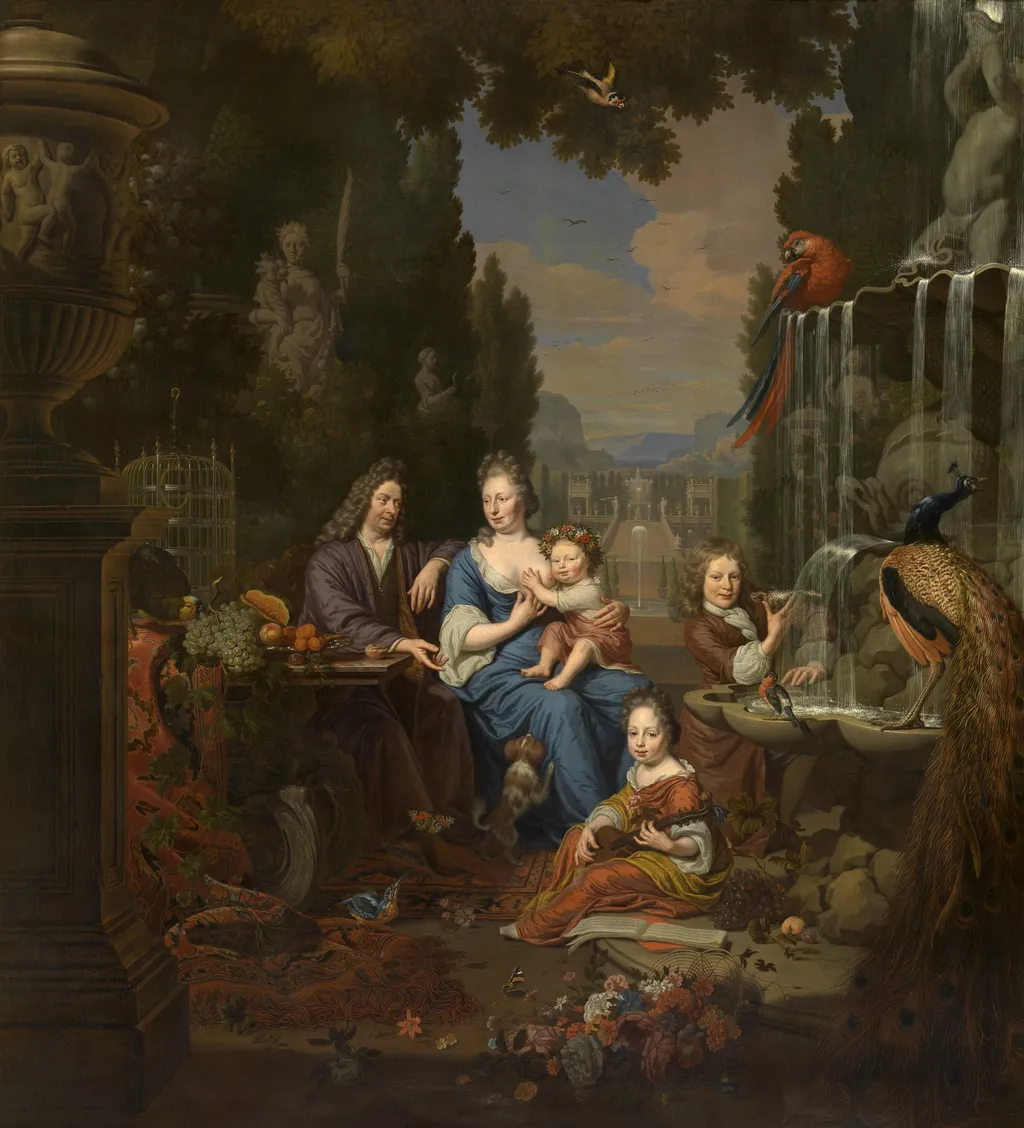
Self portrait of Michiel van Musscher (1645-1705) with his family is an oil painting by the Dutch Golden Age artist Michiel van Musscher. It dates from 1695 and is held in the collection of the Royal Museum of Fine Arts Antwerp. Created in 1695, this oil painting by Michiel van Musselcher presents the artist together with his immediate family.
About this work
Overview
Created in 1695, this oil painting by Michiel van Musselcher presents the artist together with his immediate family. The composition places the figures around a modest table within an open garden setting, where a distant palace and ornamental fountains can be seen beyond the foliage. The work is part of the collection of the Royal Museum of Fine Arts in Antwerp.
Subject & Meaning
At the centre sits the painter in a dark brown coat, flanked by his wife in blue who cradles an infant. Two young children stand beside them, one dressed in orange, the other in brown, while a small dog rests at their feet. The inclusion of domestic objects and a cultivated landscape suggests an idealised view of family life and social standing in the late‑seventeenth century.
Technique & Style
Van Musselcher employs a pronounced chiaroscuro, contrasting deep shadows with illuminated highlights to model forms and give the scene a three‑dimensional presence. The textures of the fruit on the table, the fabrics of the children’s clothing, and the fur of the dog are rendered with meticulous detail, creating a tactile realism that draws the viewer’s eye across the composition.
History & Provenance
The portrait remained in private hands for several generations before entering the Royal Museum of Fine Arts, Antwerp, where it is currently displayed. Documentation records its attribution to van Musselcher and its dating to the year 1695, aligning with the artist’s mature period.
Context
Painted during the Dutch Golden Age, the work reflects contemporary trends of family portraiture that combined personal representation with symbols of prosperity. The garden background, featuring fountains and a distant palace, echoes the period’s fascination with landscaped settings as a backdrop for displaying status and cultivated taste.
Own this work as a print
Artist & collection

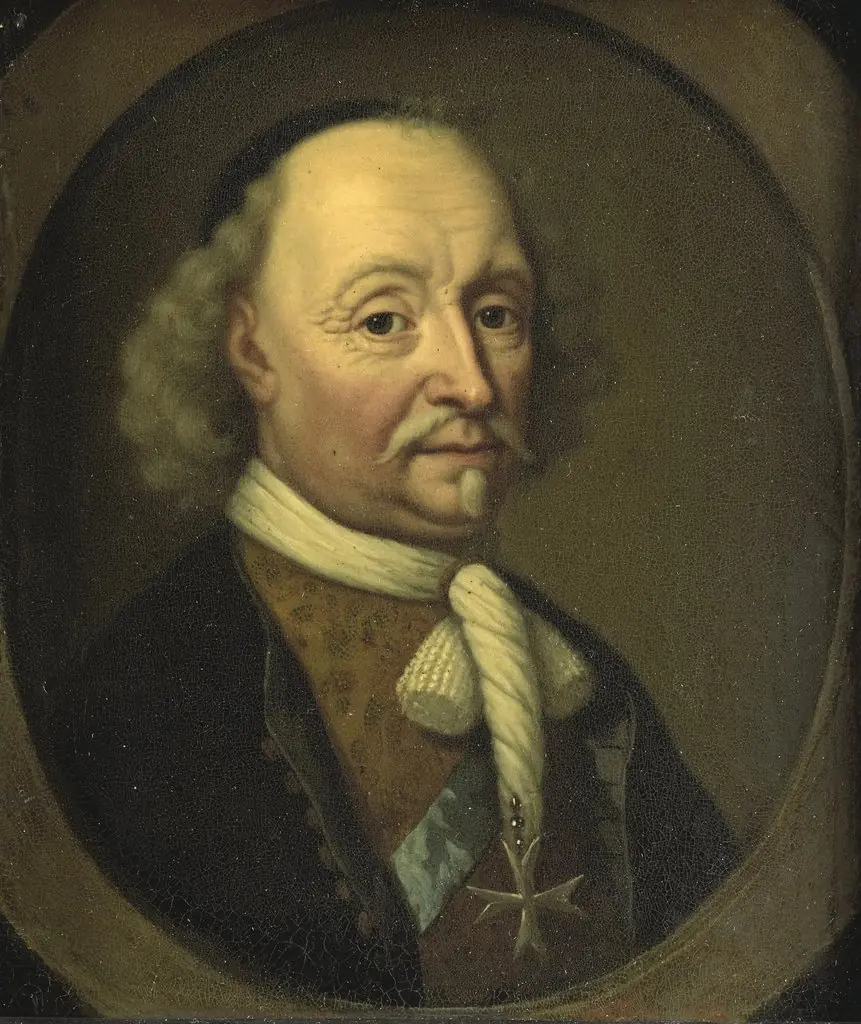 Portrait of Johan Maurits (1604-79), count of Nassau-Siegen and governor of Brazil
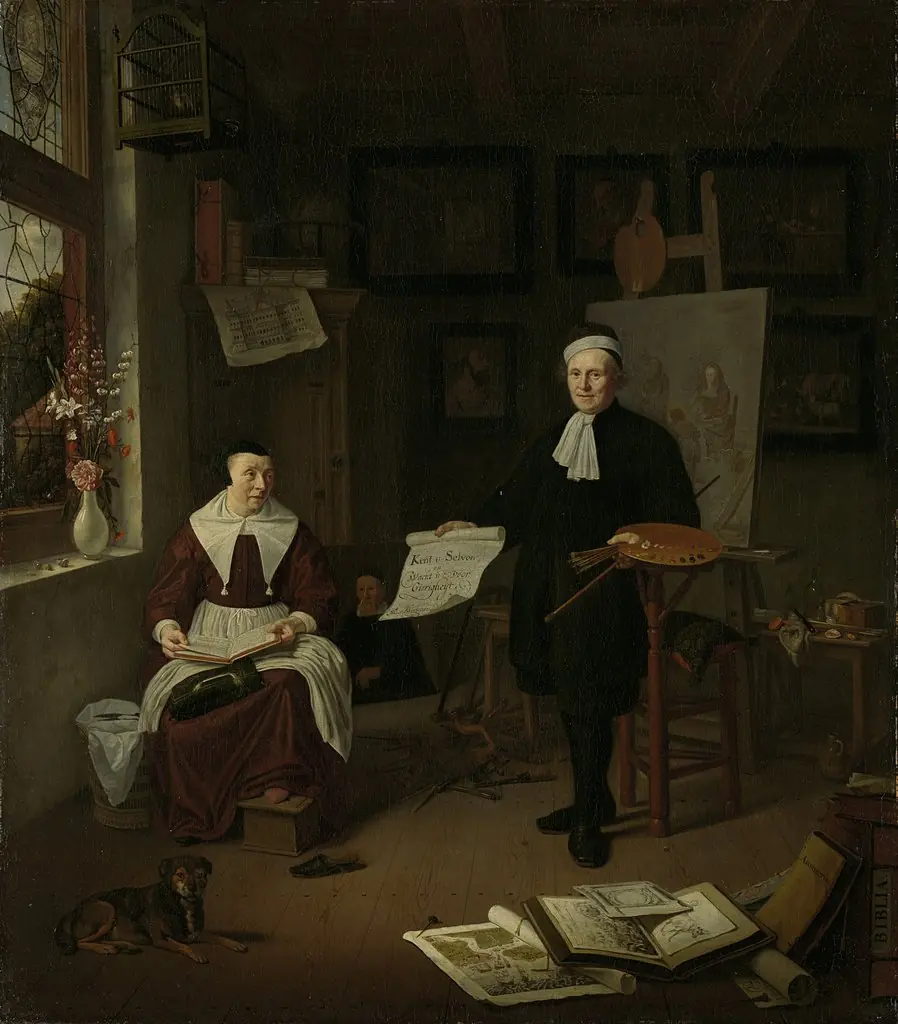 Portrait of Michiel Comans (d. 1687), calligrapher, etcher, painter and schoolmaster, with his third wife Elisabeth van der Mersche
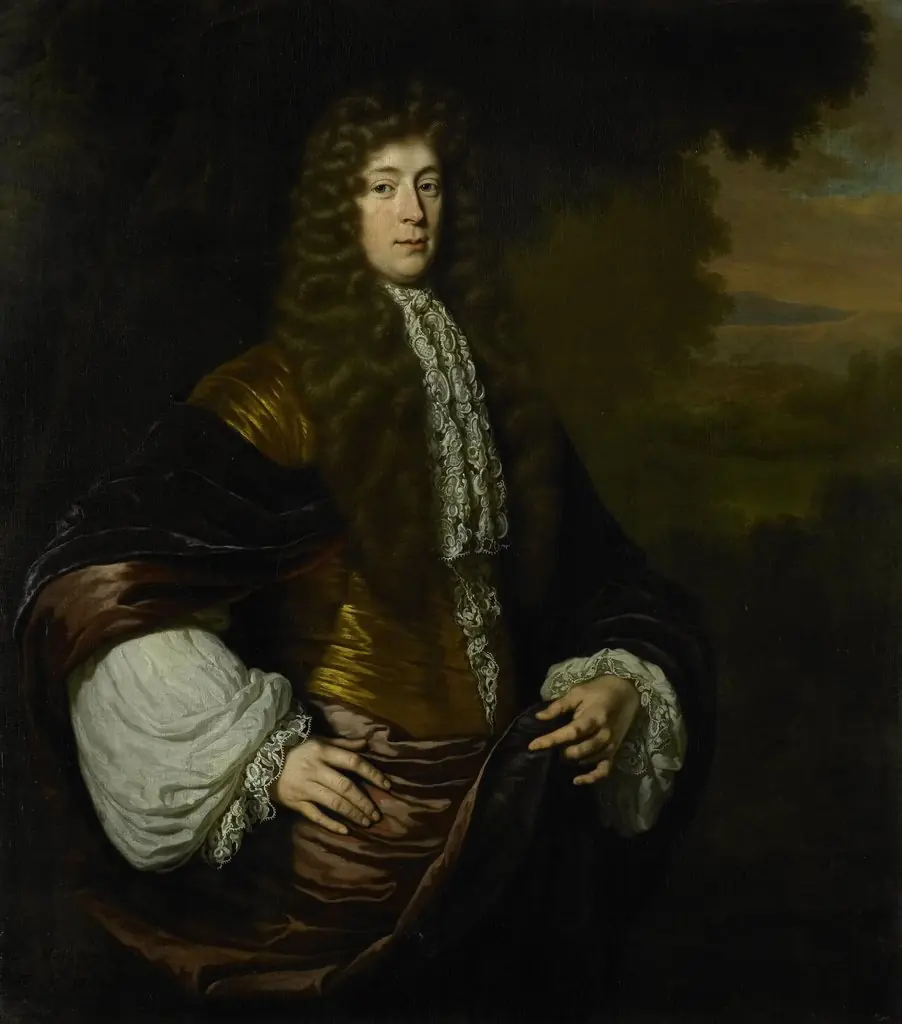 Portrait of Hendrick Bicker (1649 - 1718), burgomaster of Amsterdam
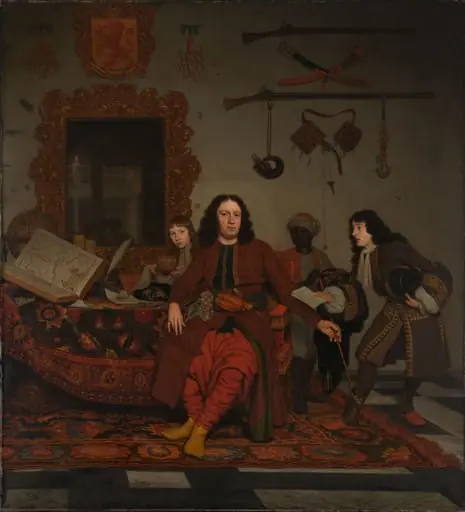 Thomas Hees and his Servant Thomas and Nephews Jan and Andries Hees
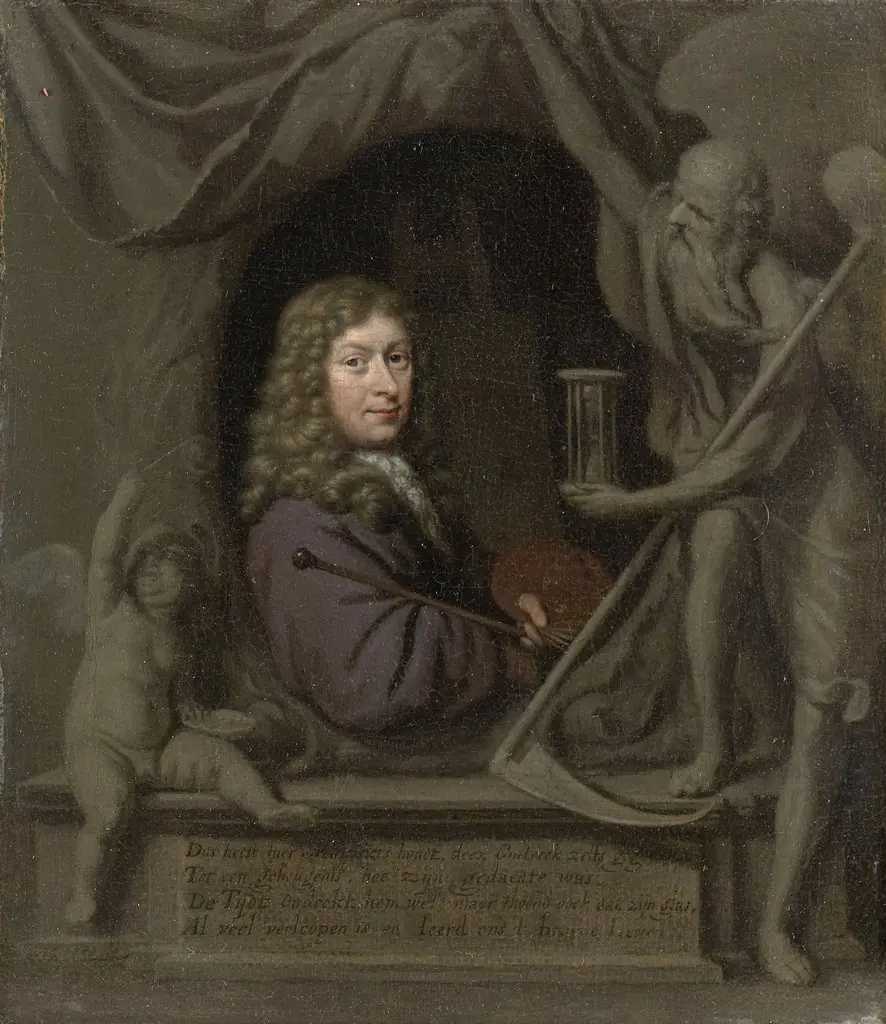 Self portrait
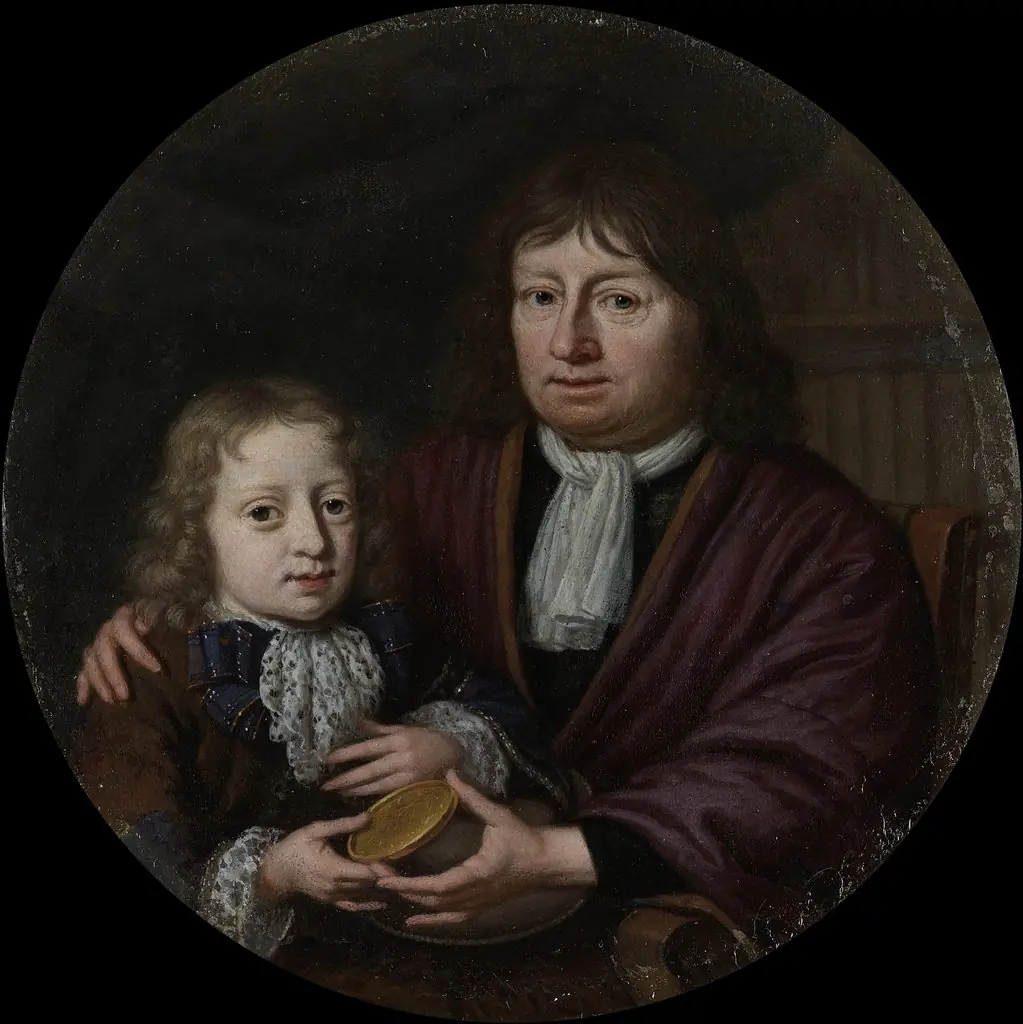 Isaac Pontanus Giving a Gold Medal to his Grandson Hendrik van Beek
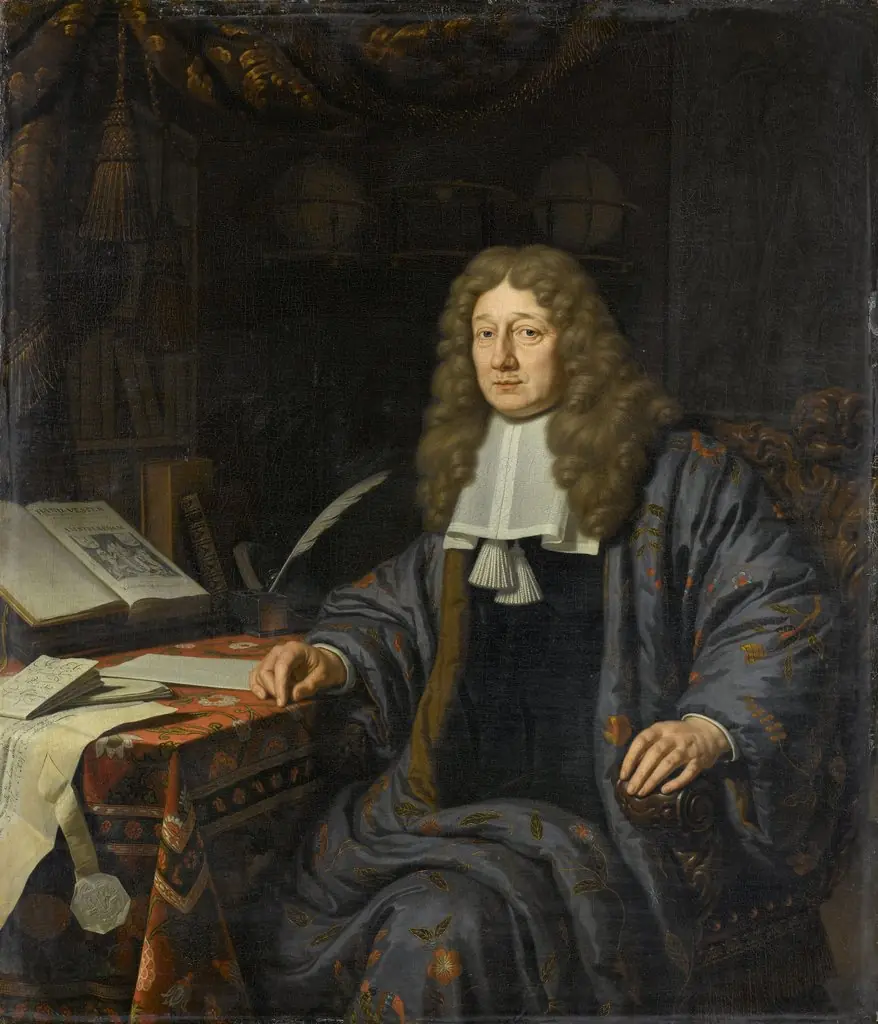 Portrait of Johannes Hudde (1628-1704), burgomaster of Amsterdam
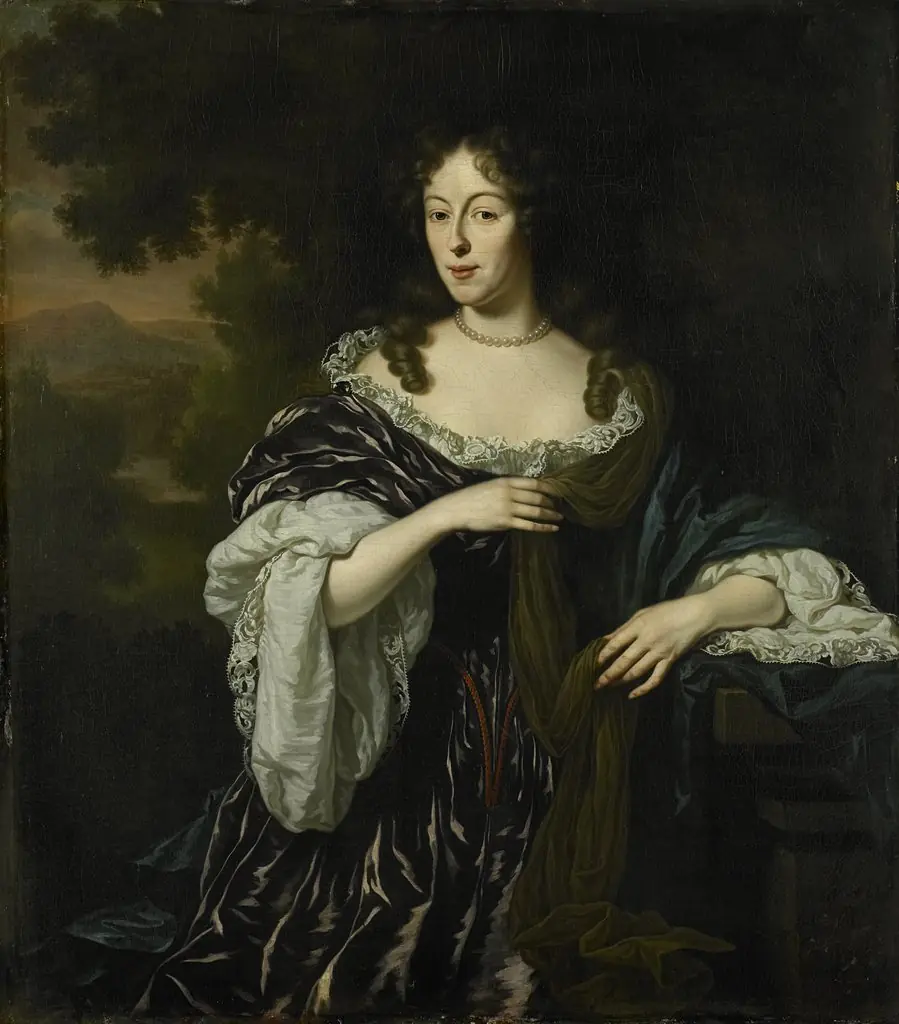 Portrait of Maria Schaep (1658-1725), wife of Hendrick Bicker
- Portrait of David van Mollen and Son-in-Law Jacob Sydervelt with his Family
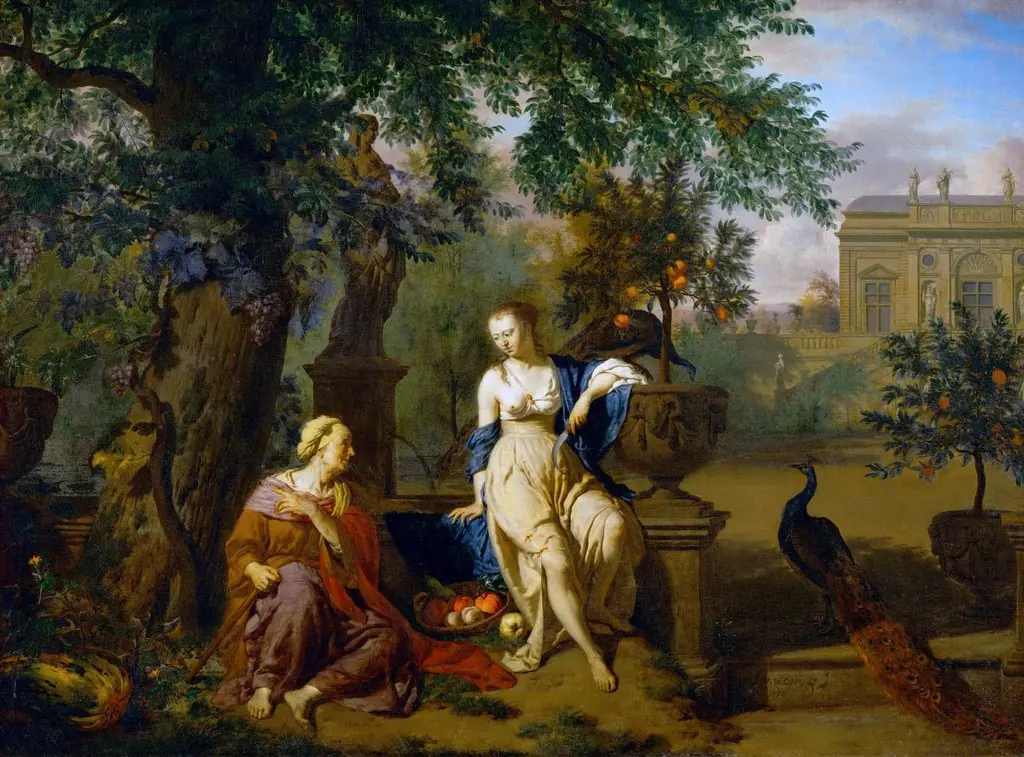 Vertumnus and Pomona
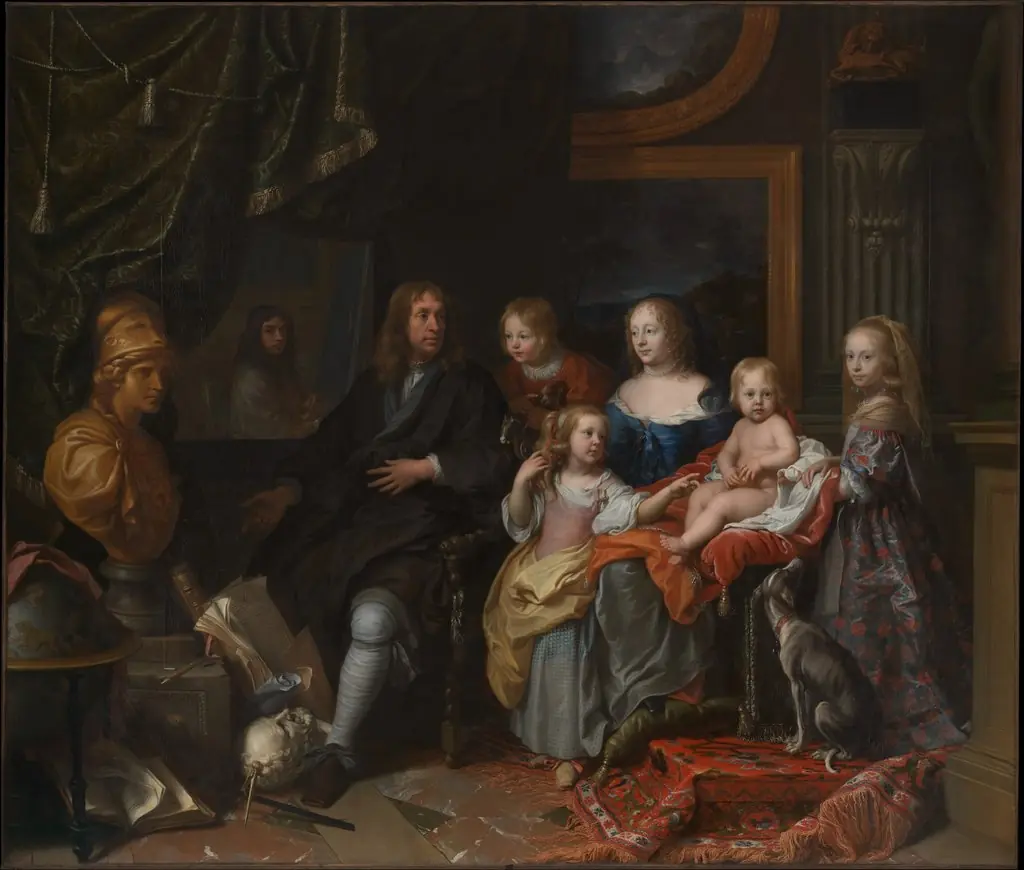 Everhard Jabach (1618–1695) and His Family
 Rest on the Flight into Egypt
 Amarillis kruunaa Mirtillon (Kohtaus pastoraalinäytelmästä Il Pastor Fido)
 Madonna and Christ Child, with St John the Baptist and Angels
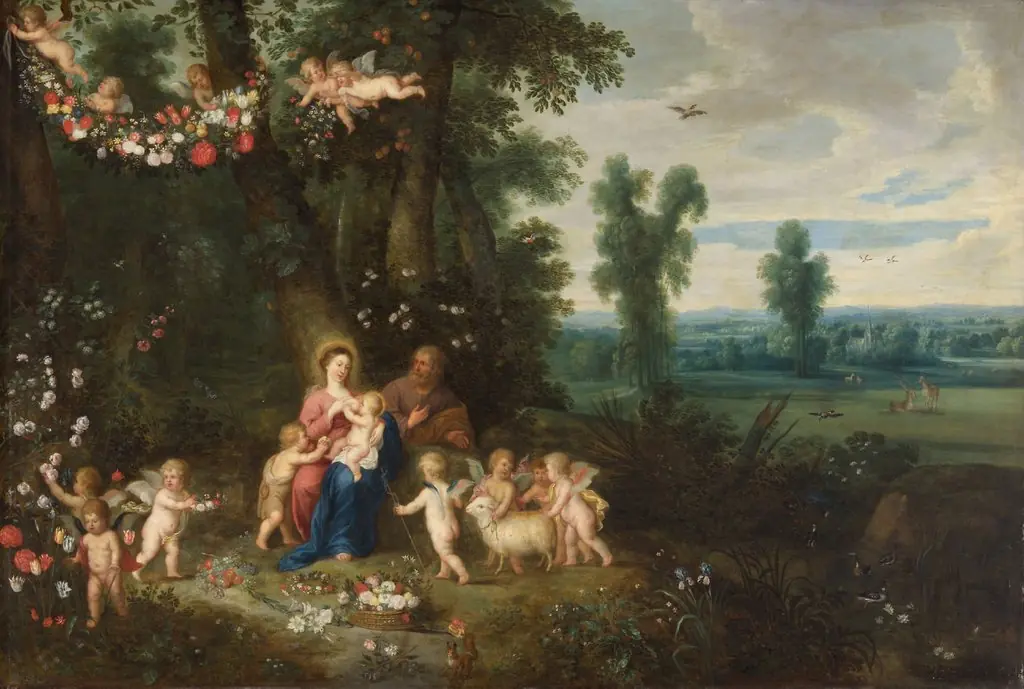 Madonna and Child, St John the Baptist and Angels
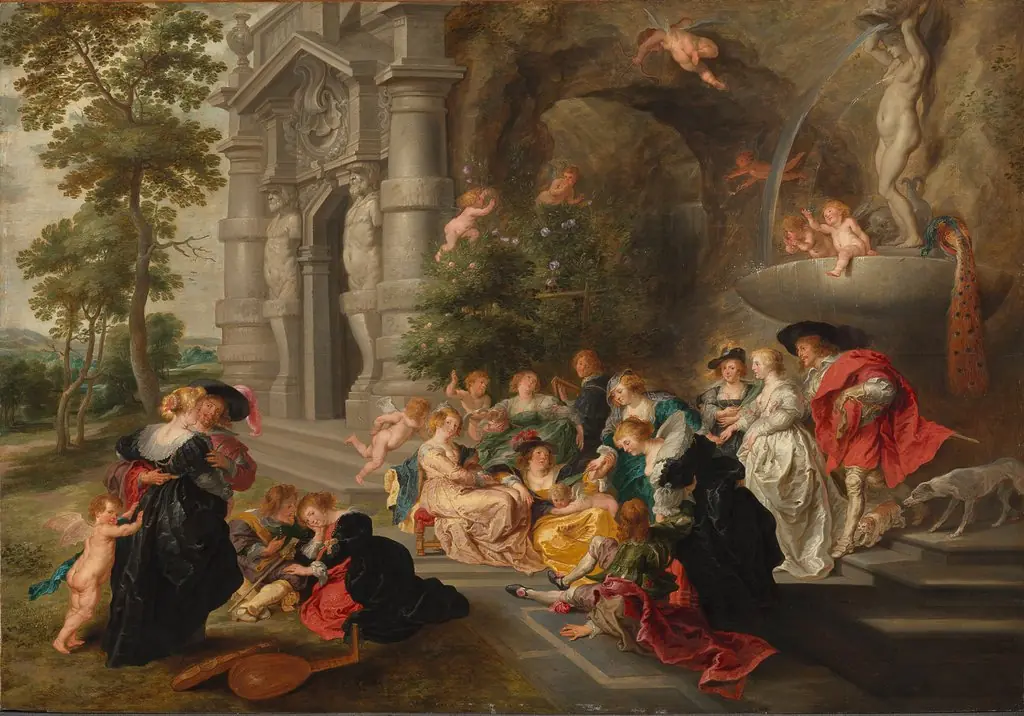 Liebesgarten
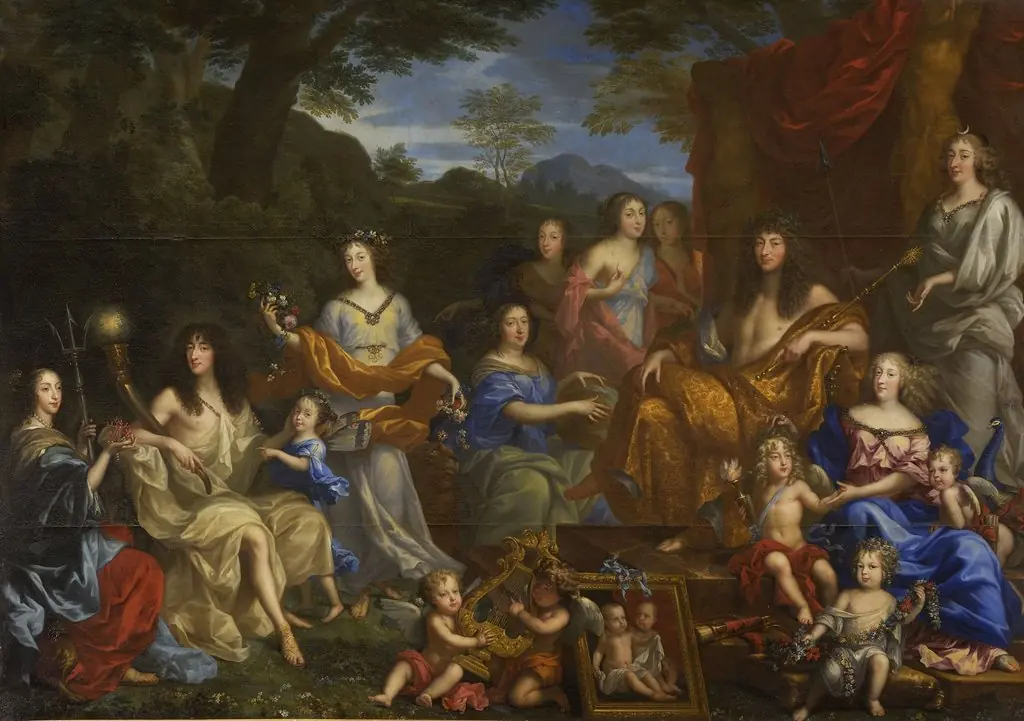 Mythological portrait of Louis XIV and the royal family
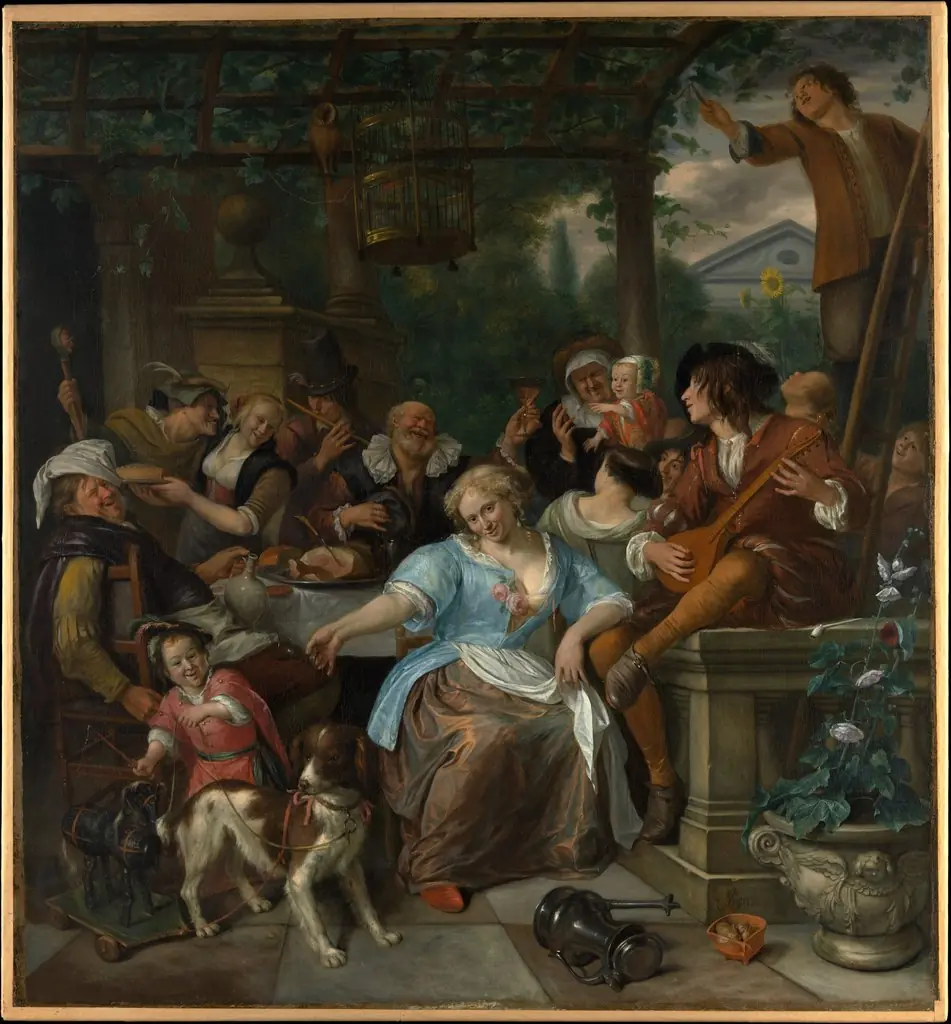 Merry Company on a Terrace
 Spring
 The Amsterdam Merchant Jeremias van Collen (1608-1676), with his Wife and their Twelve Children