Artwork
Still Life
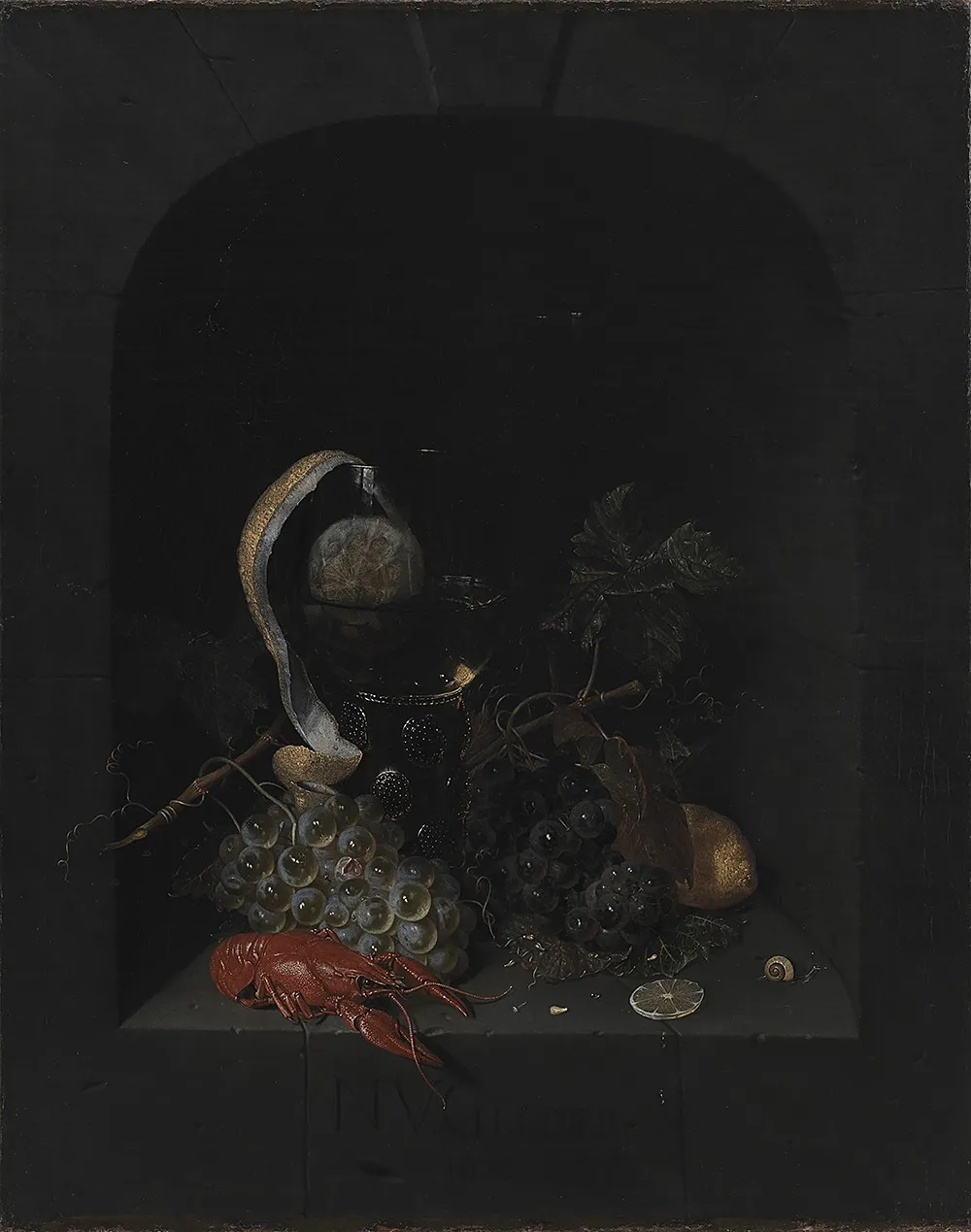
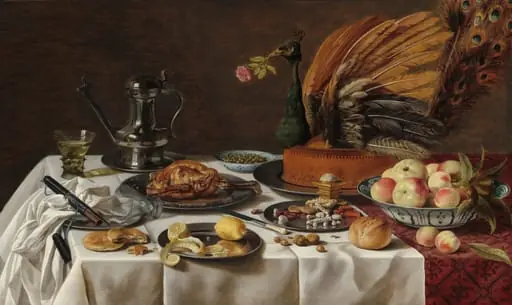
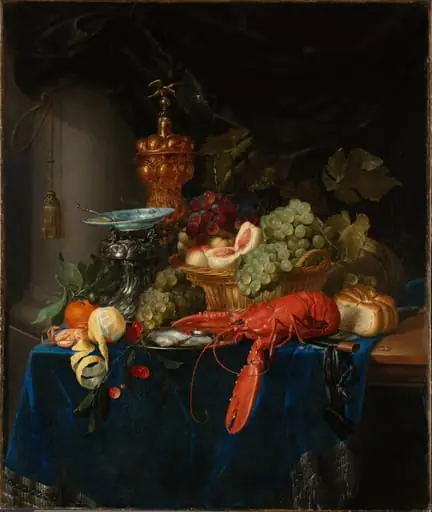
Still Life is an oil painting by the Dutch Golden Age artist Nicolaes van Gelder. It dates from 1672 and is held in the collection of the Statens Museum for Kunst.
About this work
Subject & Meaning
Together these motifs embody the still life's broader meaning as a meditation on abundance, sensory pleasure, and the transience of worldly goods.
Nicolaes van Gelder's 1672 still life arranges a modest feast of edible luxury on the canvas: grapes, a lemon, a lobster, and a roemer (a type of green-tinted drinking glass). The pairing of fruit and shellfish reflects a classic Dutch convention in which costly, imported delicacies signaled prosperity and the reach of global trade, while the roemer alluded to convivial drinking.
The lemon's bright yellow rind and the lobster's vivid red shell introduce chromatic accents against the darker palette typical of the genre, lending visual richness to objects whose value lay as much in their rarity as in their appearance. Together these motifs embody the still life's broader meaning as a meditation on abundance, sensory pleasure, and the transience of worldly goods.
Technique & Style
The painting is executed in oil on canvas, a standard support for Dutch still-life works of the late seventeenth century. Handling shows careful layering typical of vanitas compositions, with smooth glazes for luminous fruit surfaces and more opaque passages for the lobster’s textured shell and the reflective glass of the rummer. The palette emphasizes deep reds and golds against dark backgrounds, while the lobster’s claw and citrus fruit are rendered with heightened realism to signal abundance and transience.
The composition’s central grouping of grape, lemon, and lobster on a draped table edge, framed by a shadowed void, adheres to the pronkstillevens tradition, though without overt luxury goods.
History & Provenance
Still Life was painted by Nicolaes van Gelder in 1672 using oil on canvas, measuring 67 cm by 53 cm. The work belongs to the still‑life genre and depicts a grape, a lemon, a lobster and a rummer. It entered the collection of the Statens Museum for Kunst at Rosenborg Castle, where it has been displayed since its creation. The painting’s provenance is tied to the museum’s holdings, which record its inception on 1 January 1672. No earlier owners or commissioning details are documented in the available sources.
The painting is held by Statens Museum for Kunst (SMK), Copenhagen, where it is accessioned as KMS1518.
It was included in the museum’s holdings as of the documented record in 2022, with dimensions recorded at 67 cm in height and 53 cm in width.
Overview
Nicolaes van Gelder, a Dutch painter of the Golden Age, produced the oil on canvas work titled Still Life in 1672. The composition presents a modest arrangement of everyday items, a grape bunch, a lemon segment, a red lobster, and a silver rummer, set against a deep, almost black background.
Context
The work reflects the Dutch still‑life genre’s interest in detailed observation and moral symbolism, common in the mid‑17th century. Its inclusion of luxury items such as a silver rummer aligns with contemporary tastes for displaying wealth and refined domestic culture.
Artist & collection
Artist
Nicolaes van Gelder or Claes Gelder (1636 – 1676) was a Dutch Golden Age painter.

- Still Life
 Still Life
 Oysters, Fruit and a Wineglass on a Stone Table
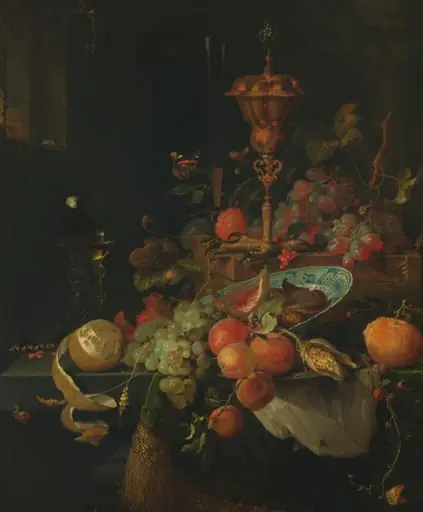 Still Life with Fruit and a Beaker on a Cock's Foot
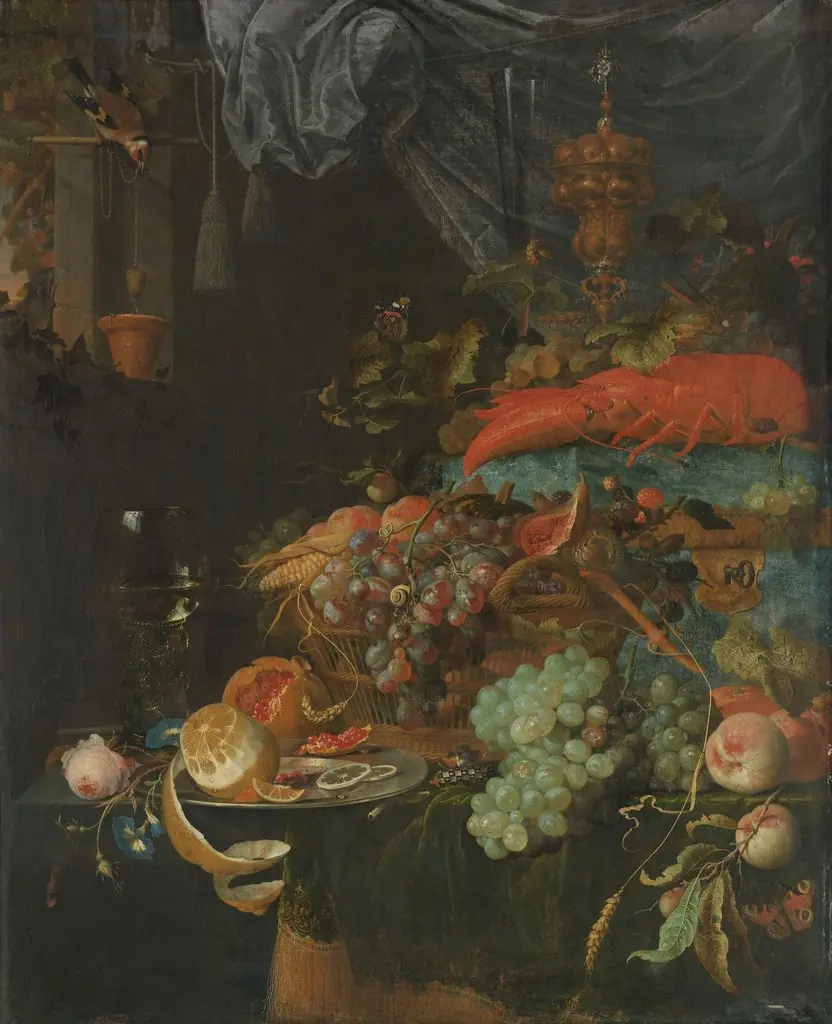 Still life with fruit and a finch drawing water
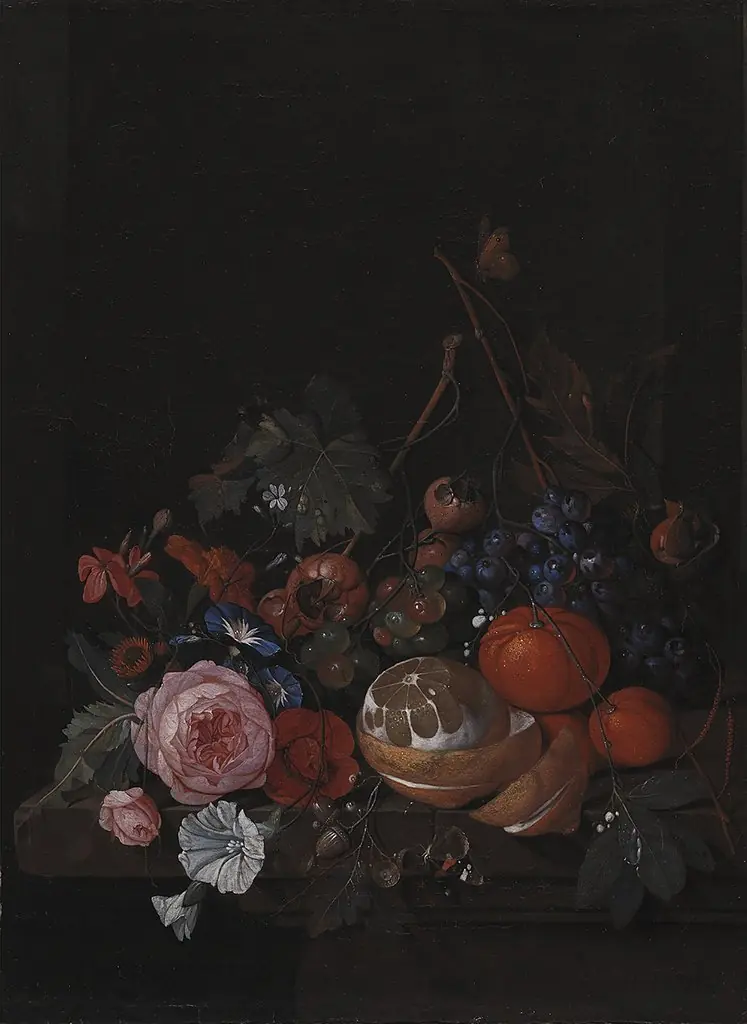 Flowers and Fruit
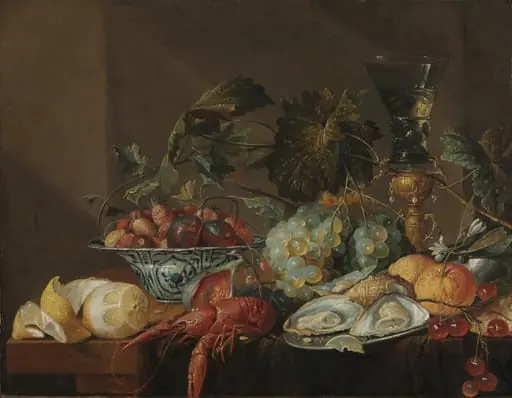 Still-Life with Crayfish, Oysters, and Fruit
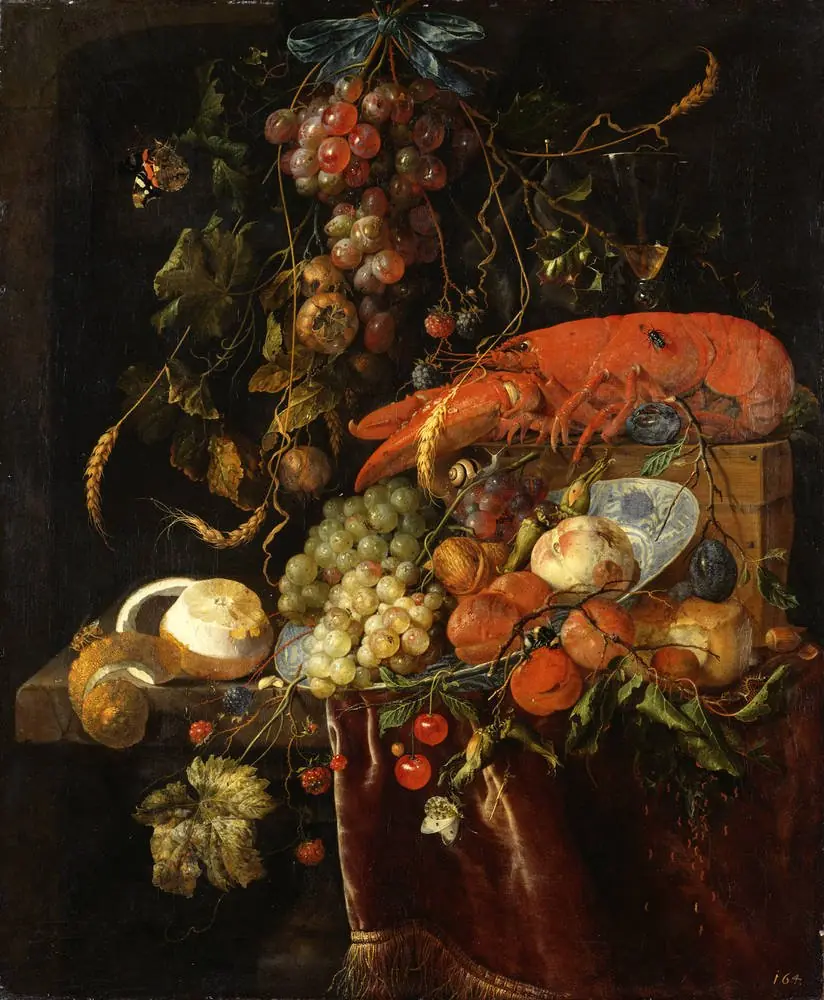 Still Life with a Lobster
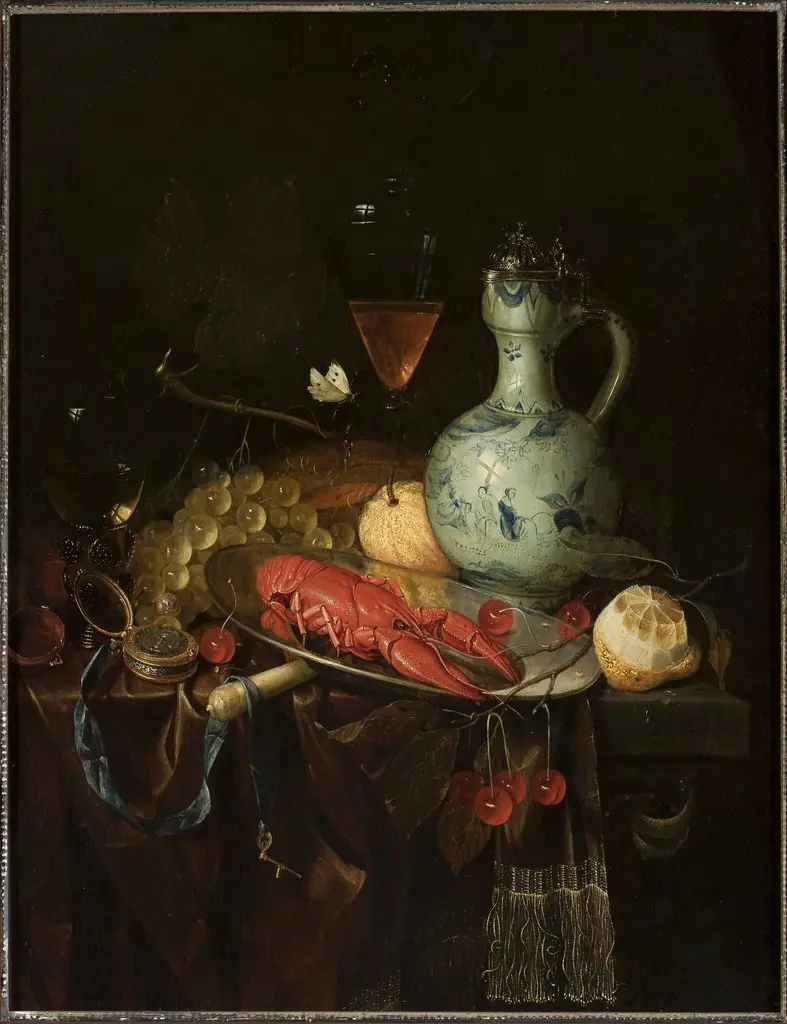 Still life with a watch
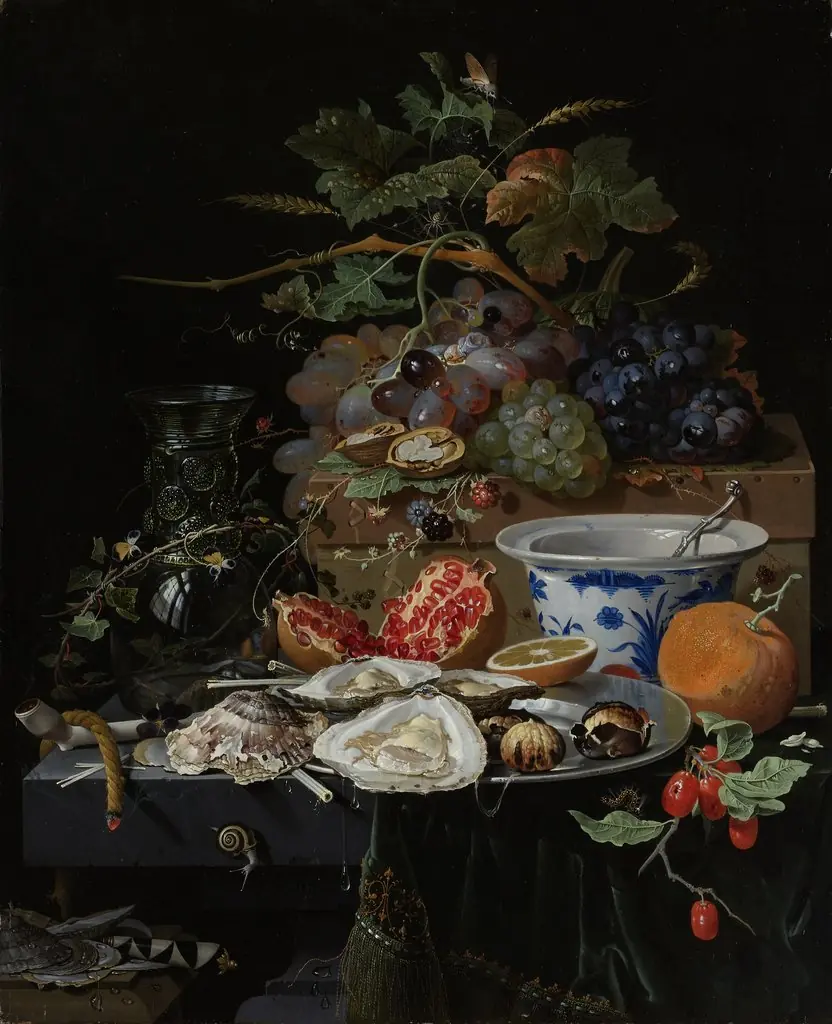 Still Life with Fruit, Oysters and a Porcelain Bowl
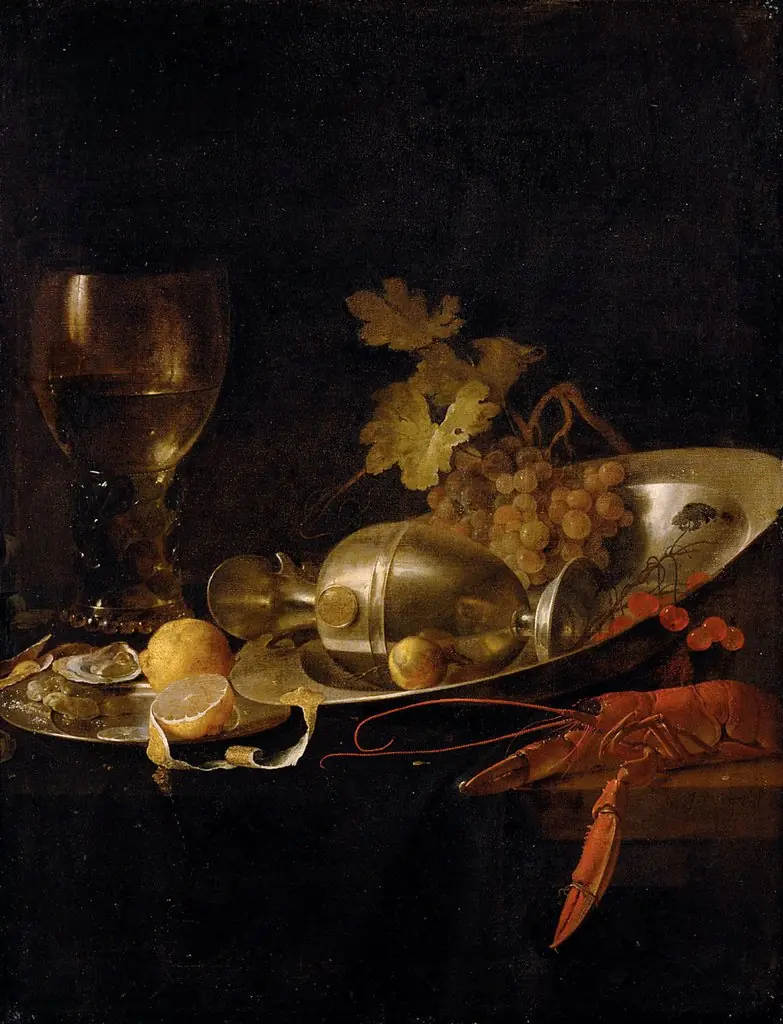 Still life with a "roemer", a fallen jug and a lobster
 Untitled