Artwork
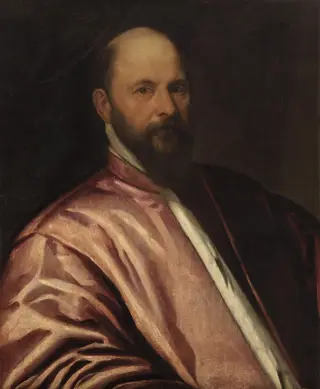
Portrait of Daniele Barbaro
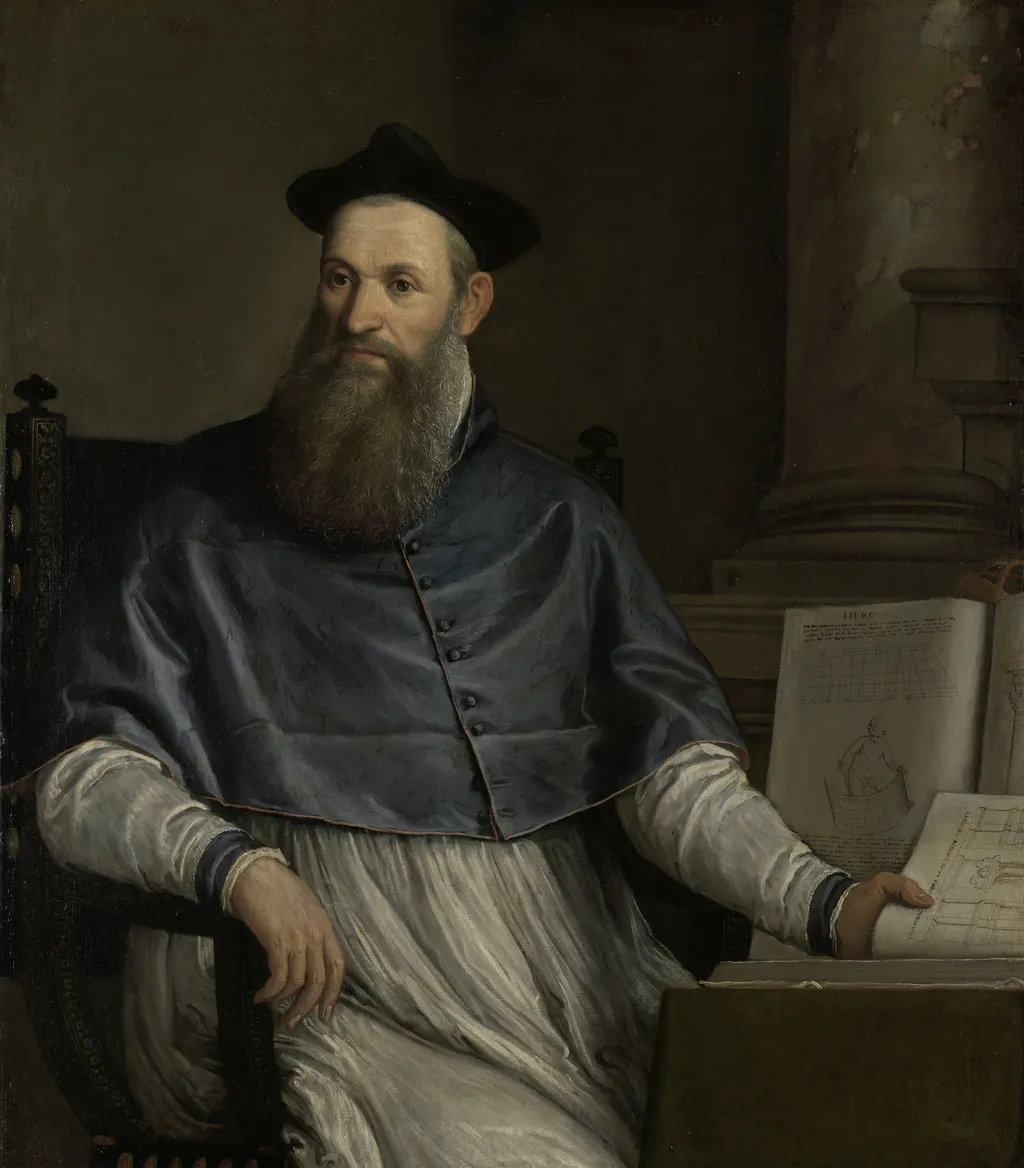
Portrait of Daniele Barbaro is an oil painting by the Mannerist artist Paolo Veronese. It dates from 1565 and is held in the collection of the Rijksmuseum.
About this work
Subject & Meaning
The painting depicts Daniele Barbaro, a Venetian aristocrat, humanist, and prelate who served as Patriarch of Aquileia and was later appointed cardinal.
The painting depicts Daniele Barbaro, a Venetian aristocrat, humanist, and prelate who served as Patriarch of Aquileia and was later appointed cardinal. Barbaro is portrayed in the seated posture of an audience, a stance typically reserved for popes and cardinals, reflecting his high ecclesiastical rank despite the absence of a cardinal's hat. His attire and setting emphasize his dual identity as both a church leader and a scholar of architecture and science.
Two books on the table symbolize his intellectual contributions: one displays his commentary on Vitruvius' De architectura, illustrated by Andrea Palladio, while the standing volume references his treatise on perspective. An armillary sphere visible behind the books alludes to his fascination with astronomy and cosmology, underscoring his role as a leading figure in Renaissance cultural life.
Technique & Style
Executed in oil paint on canvas, the work measures 118 cm in height and 104 cm in width. Created by Paolo Veronese, the painting belongs to the Venetian school and Mannerist movements. The artist rendered the subject, Daniele Barbaro, with notable precision, capturing the face of the prelate who was in his late forties at the time of the likely creation period between 1559 and 1562.
The composition features specific attributes of the sitter's scholarship, including an open book displaying illustrations from his commentary on Vitruvius and a standing volume on perspective. A brass armillary sphere is partially visible behind the standing book, referencing Barbaro's interests in astronomy and cosmology. The figure is depicted in a seated audience posture typical of high-ranking clergy, wearing ecclesiastical vestments despite the absence of a cardinal's hat.
History & Provenance
Paolo Veronese painted the Portrait of Daniele Barbaro in Venice, with scholarly dating ranging from c. 1556–1557 to between 1559 and 1562. The later dating, proposed by Duncan Bull, is supported by the depicted books, Barbaro's Commentary on Vitruvius, first published in 1556, and his treatise La Practica della Perspettiva, though an earlier date remains possible. The portrait may commemorate a Latin edition of the Vitruvius commentary in the 1560s.
The provenance traces from Samuel Hensler in Basel by 1726, then to the Sarasin collection in Riehen. Professor Dr. Otto Lanz acquired it in Amsterdam in 1922; his widow Anna Theresia Elisabeth Lanz-Willi inherited it in 1935. Hans Posse purchased it in 1941 for Hitler's planned Führermuseum in Linz.
Following World War II, it was transferred to the Stichting Nederlands Kunstbezit in The Hague on 20 November 1945, lent to the Rijksmuseum in 1952, and finally transferred to the museum in 1960, where it remains today.
The painting is held in the Rijksmuseum in Amsterdam. Its ownership history includes Samuel Hensler in Basel (1726), followed by acquisition by Otto Lanz in 1922. After passing to his wife Anna Theresia Elisabeth Lanz-Willi in 1935, it was sold in 1941 to Hans Posse for the Führermuseum.
Recovered in 1945, it entered the collection of the Stichting Nederlands Kunstbezit before being loaned to the Rijksmuseum in 1952 and formally transferred in 1960.
In 2015, the work was exhibited in Venice alongside Titian's portrait of Barbaro to commemorate the subject's 500th birth anniversary.
Context
Scholarship positions this portrait as a testament to the collaboration between Paolo Veronese, the humanist Daniele Barbaro, and the architect Andrea Palladio. The work reflects Barbaro's dual role as a prelate and architectural theorist, specifically referencing his 1556 commentary on Vitruvius and his treatise on perspective through the books depicted. Art historian Duncan Bull dates the painting to between 1559 and 1562, correlating this period with Veronese's fresco work at the Villa Barbaro in Maser and arguing that later editions of Barbaro's texts would have featured different illustrations than those shown.
The painting's significance in art history was highlighted in 2015 when it was exhibited alongside Titian's earlier portraits of Barbaro to commemorate the subject's 500th birth anniversary. This reunion underscored the subject's prominence in Venetian intellectual circles and the distinct approaches taken by two masters of the Venetian school in portraying the same influential figure.
Legacy
The portrait’s later influence has centered on its role in commemorative exhibitions and scholarly reassessments of Veronese’s portraiture. In 2015, the Rijksmuseum reunited Veronese’s painting with Titian’s earlier portraits of Daniele Barbaro for the exhibition Remember Me, Portraits of Daniele Barbaro by Titian and Veronese in Venice, marking the 500th anniversary of Barbaro’s birth.
Its canonical status is reinforced by frequent reproduction and citation in studies of Venetian Mannerism and in catalogues raisonnés of Veronese, where it is cited as a defining example of the artist’s late style and of the ceremonial portrait in sixteenth-century Venice.
Overview
Created around 1556‑1557, this oil on canvas depicts Daniele Barbaro, a Venetian nobleman who held the ecclesiastical office of Patriarch of Aquileia. The work is attributed to Paolo Veronese, a leading painter of the Italian Renaissance, and is presently displayed in the Rijksmuseum in Amsterdam.
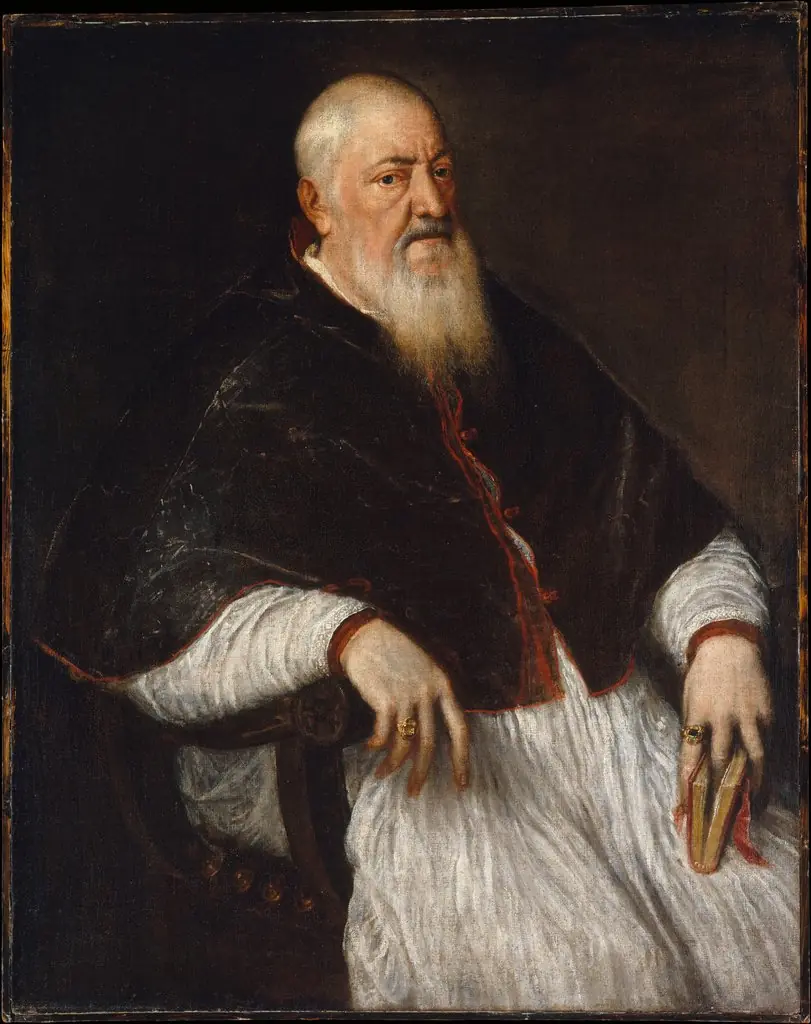
Own this work as a print
Artist & collection
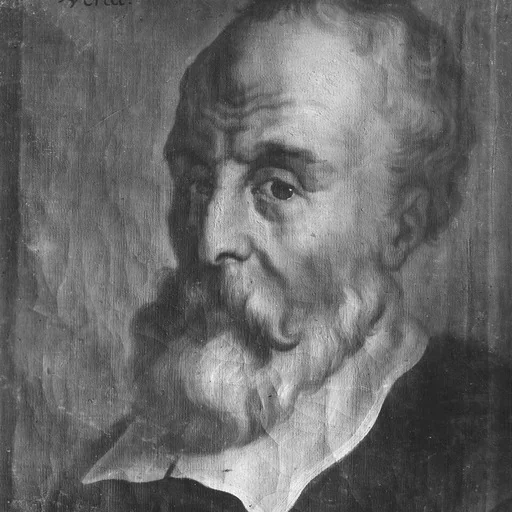
Artist
Paolo Caliari (1528 – 19 April 1588), known as Paolo Veronese ( VERR-ə-NAY-zay, -zee, US also -see; Italian: ), was an Italian Renaissance painter based in Venice, known for extremely large history paintings of…


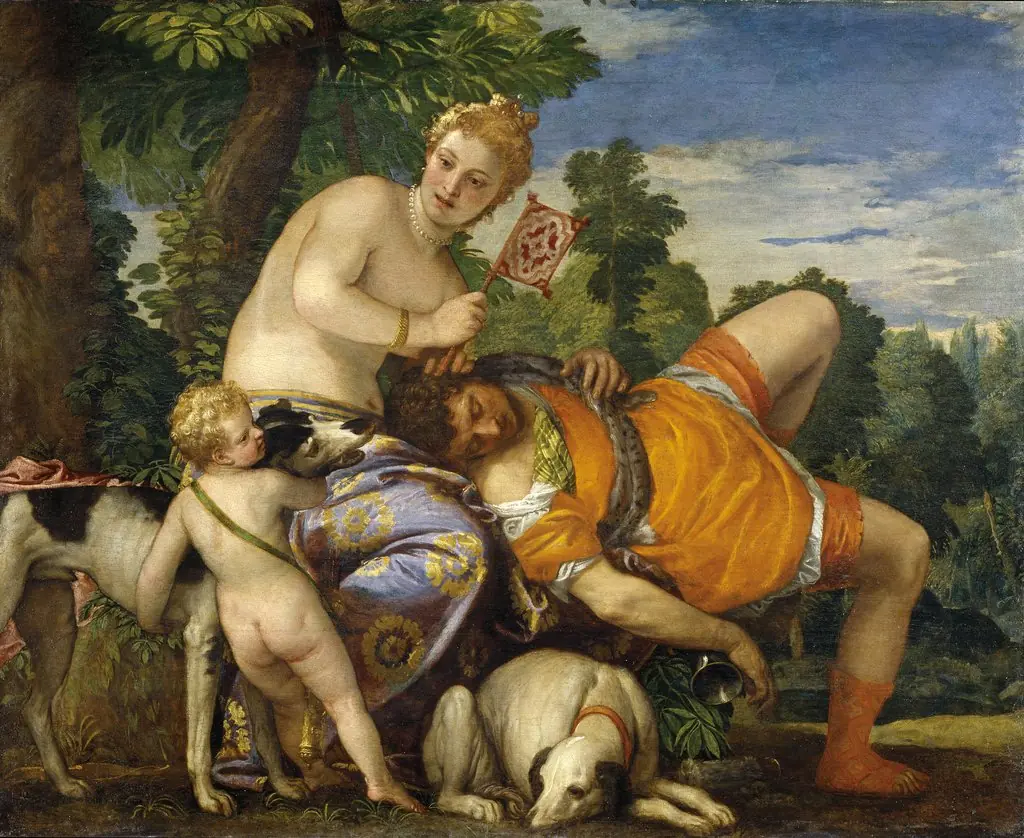
- Portrait of Cardinal Filippo Archinto
 Cardinal Pietro Bembo
 Pope Clement VII
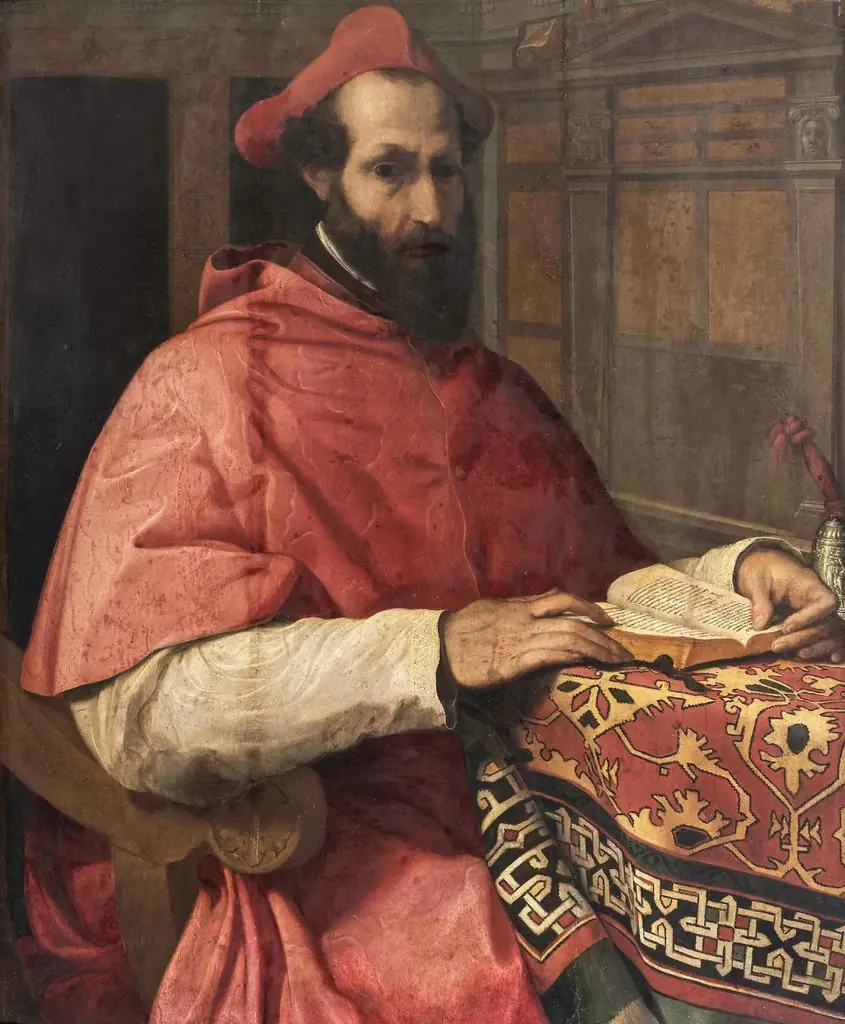 Portrait of Cardinal Marcello Cervini degli Spannocchi
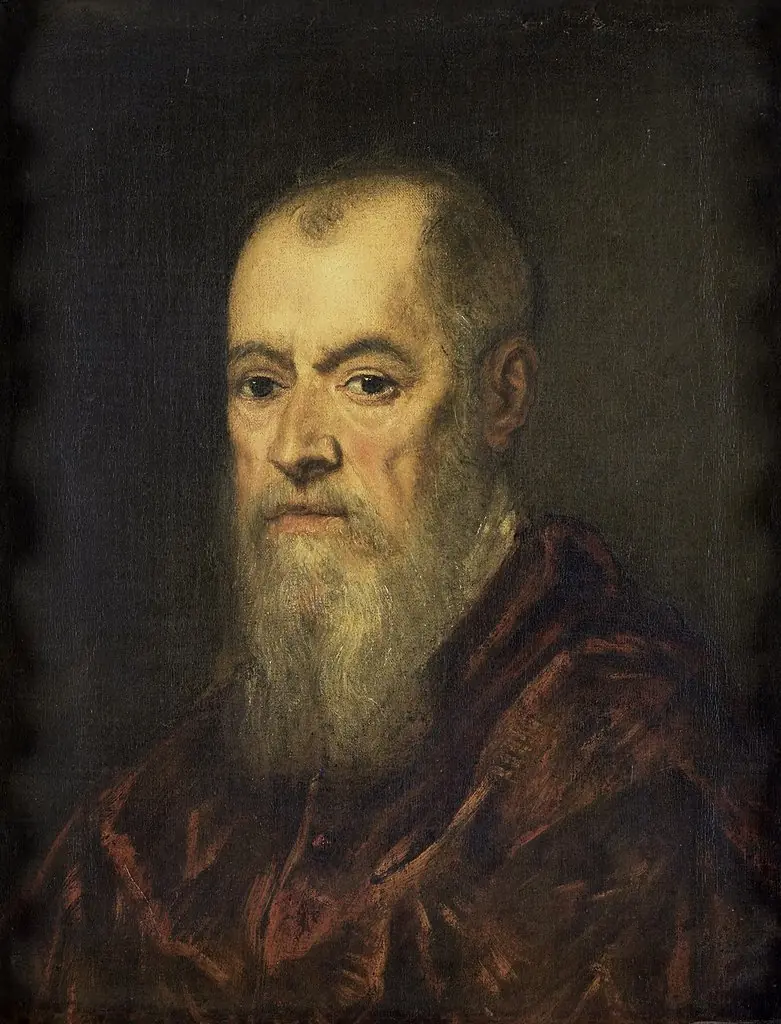 Portrait of a Man with a Red Cloak
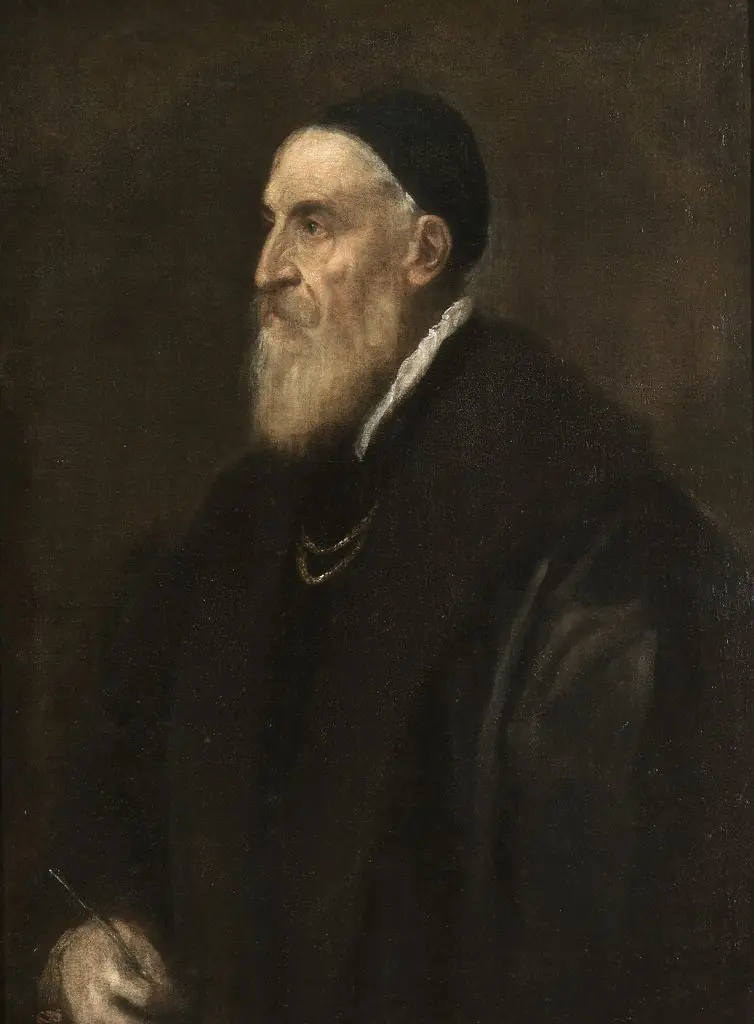 Self-Portrait
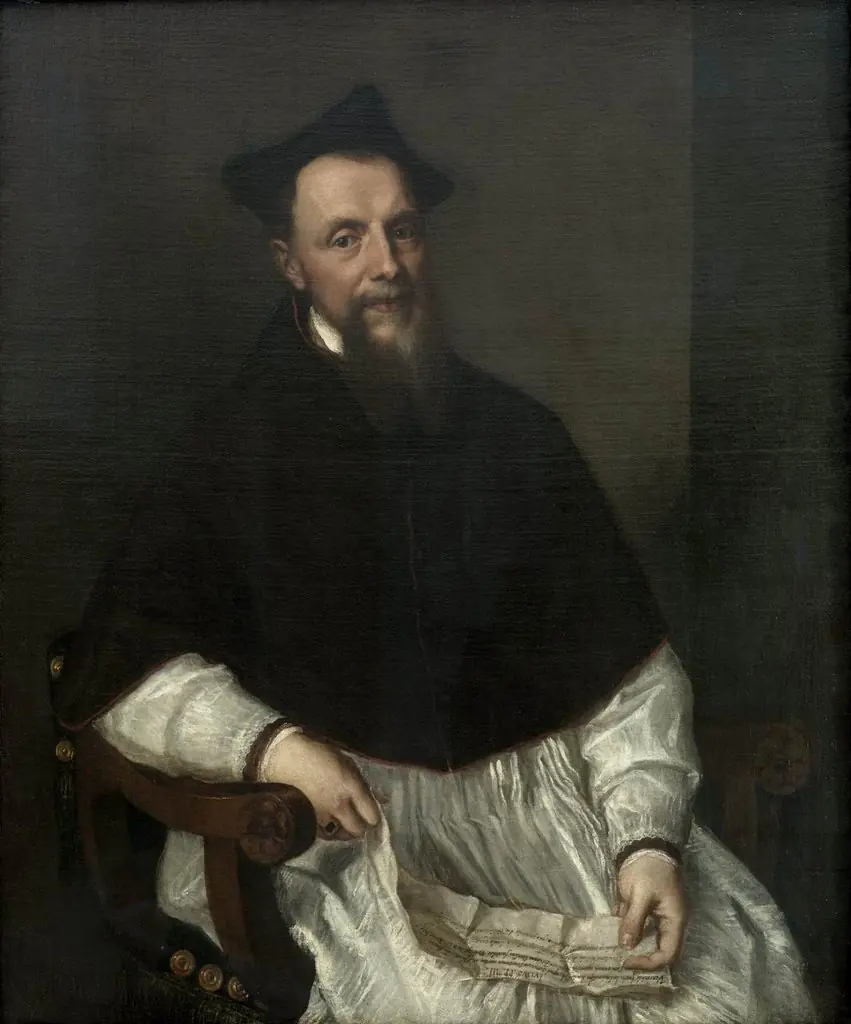 Portrait of Bishop Ludovico Beccadelli
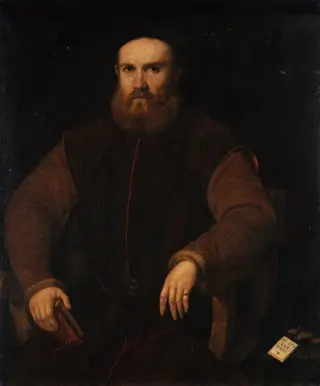 Portrait of a Man
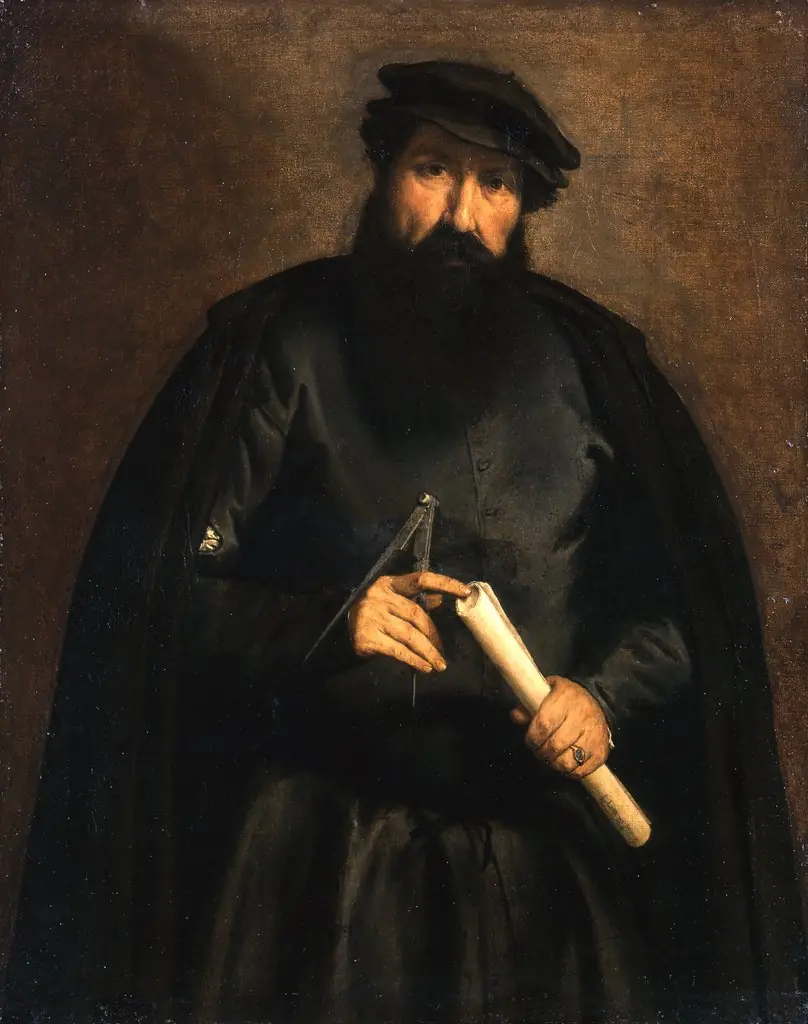 Portrait of an man with circle and paper roll
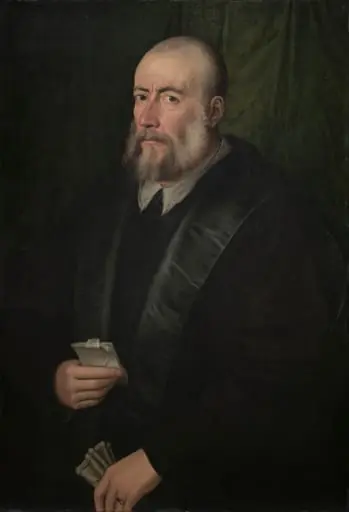 Portrait of an Old Man
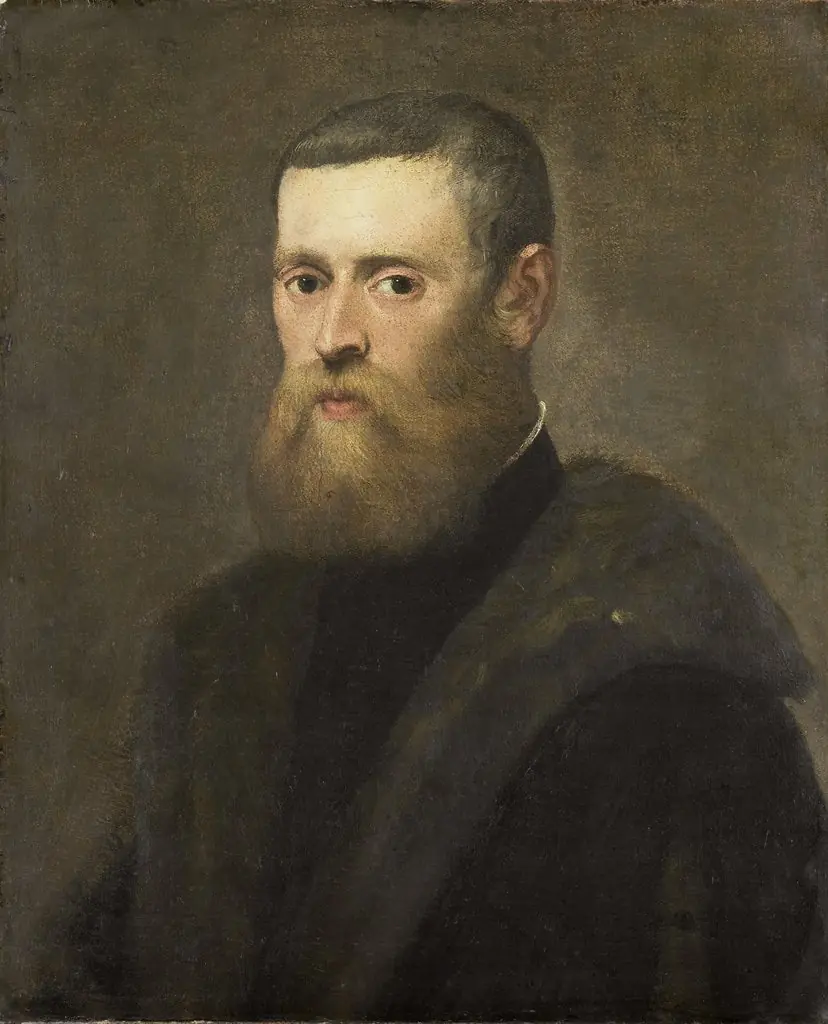 Portrait of a Man
 Bildnis eines Prokurators