Artwork
Boy in a Red Vest
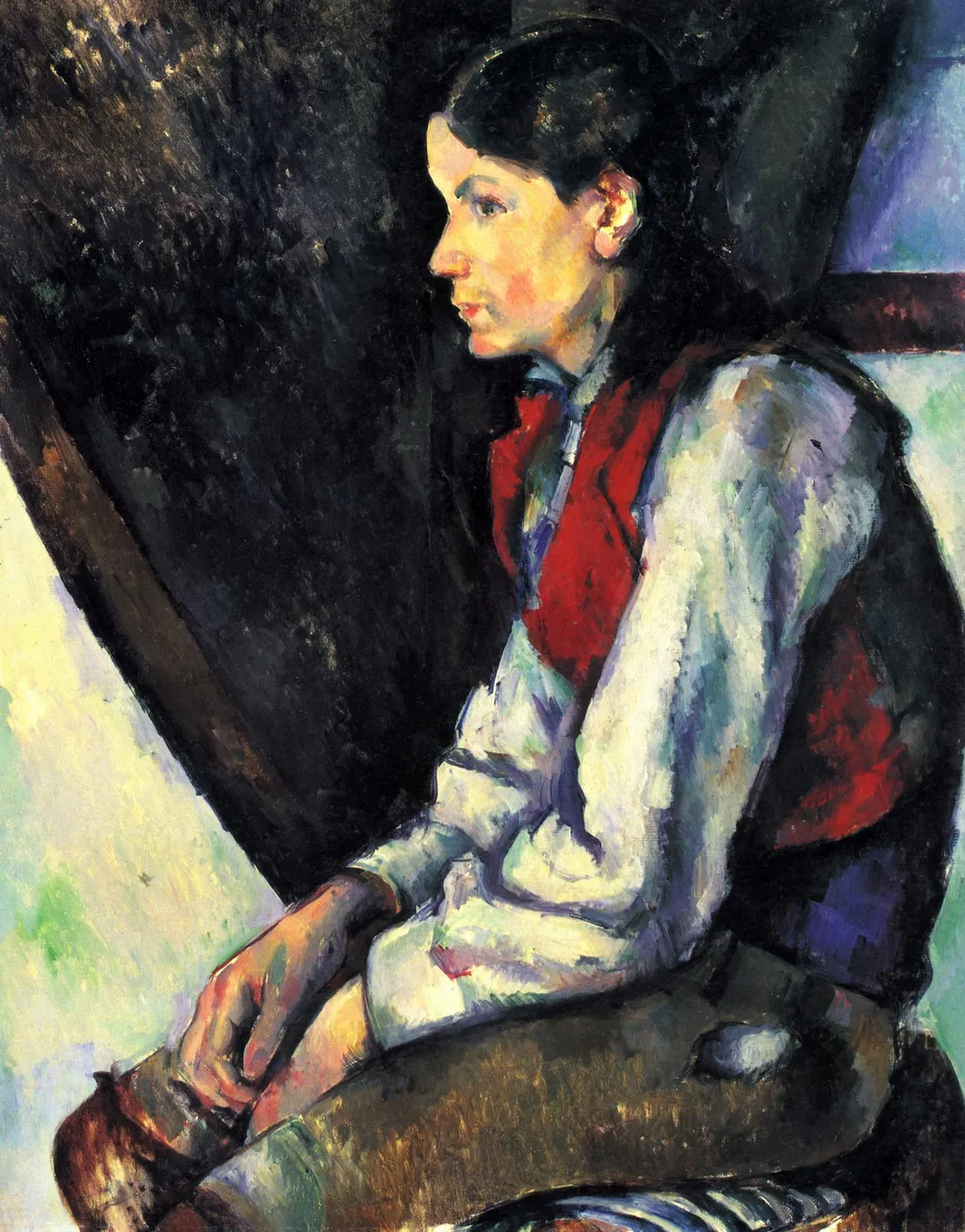
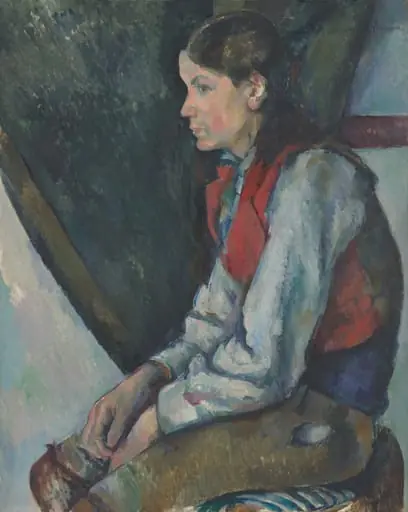
Boy in a Red Vest is an oil painting by the Post-Impressionist artist Paul Cézanne. It dates from 1894 and is held in the collection of the Museum of Modern Art.
About this work
Overview
Painted in 1894, Boy in a Red Vest is an oil portrait by Paul Cézanne that captures a young boy seated in a simple chair. The work belongs to Cézanne’s mature period, where he moved beyond Impressionism’s transient light effects to explore structure and volume through color and brushwork. It is now part of the Museum of Modern Art’s collection in New York.
Subject & Meaning
The subject is a boy dressed in a red vest and white shirt, his dark hair neatly combed and his gaze directed leftward. His stillness and formal attire suggest a posed portrait, likely commissioned. Cézanne avoids emotional dramatization, presenting the figure with quiet dignity. The absence of narrative context shifts focus to the boy’s presence and the painting’s formal qualities.
Technique & Style
Cézanne applied oil paint with deliberate, modulated brushstrokes, building form through planes of color rather than linear contour. The red vest contrasts with the muted background, while thick applications of paint create subtle texture. He avoided soft blending, instead using distinct patches of hue to define volume and spatial relationships, a hallmark of his Post-Impressionist approach.
History & Provenance
The painting was completed in 1894 during Cézanne’s time in Aix-en-Provence. It passed through private collections before entering the Museum of Modern Art’s holdings in the 20th century. Its documented history reflects growing recognition of Cézanne’s influence, particularly among modernist artists who valued his structural innovations over traditional realism.
Context
In the 1890s, Cézanne was refining a method that prioritized geometric order and color harmony over atmospheric effects. While contemporaries like Monet pursued fleeting impressions, Cézanne sought enduring structure. This painting exemplifies his effort to reconcile observation with composition, influencing later artists who would dismantle form entirely, as in Cubism.
Legacy
The painting’s emphasis on geometric simplification and color-based modeling became foundational for early 20th-century modernism. Artists such as Picasso and Braque studied Cézanne’s treatment of form, seeing in works like this a path toward abstraction. Boy in a Red Vest stands as a quiet but pivotal step in the transition from 19th-century representation to modern visual language.
Own this work as a print
Artist & collection

Artist
Paul Cézanne ( say-ZAN, UK also siz-AN, US also say-ZAHN; French: ; Occitan: Pau Cesana; 19 January 1839 – 22 October 1906) was a French Post-Impressionist painter whose work introduced new modes of representation,…

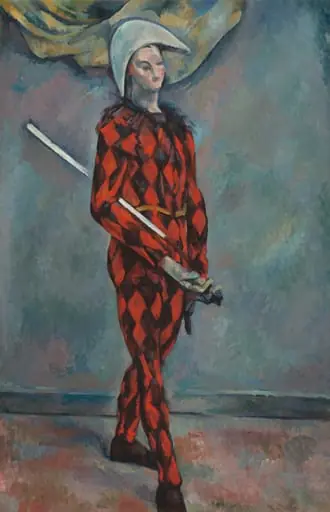 Harlequin
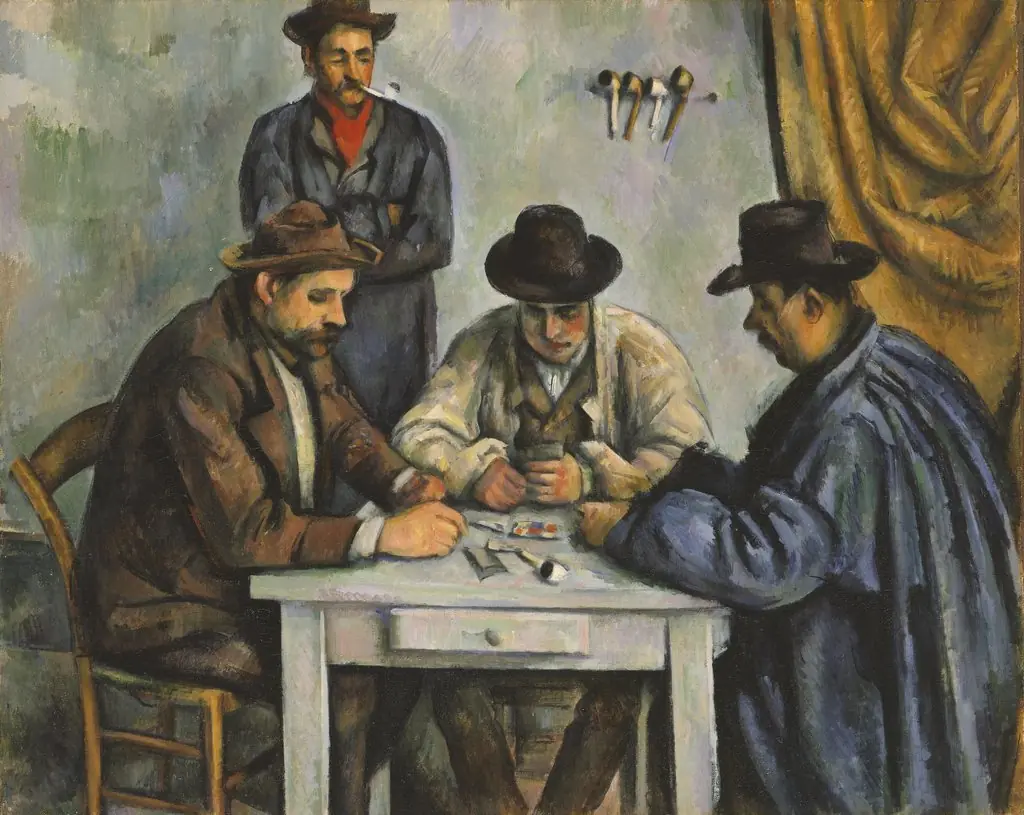 The Card Players
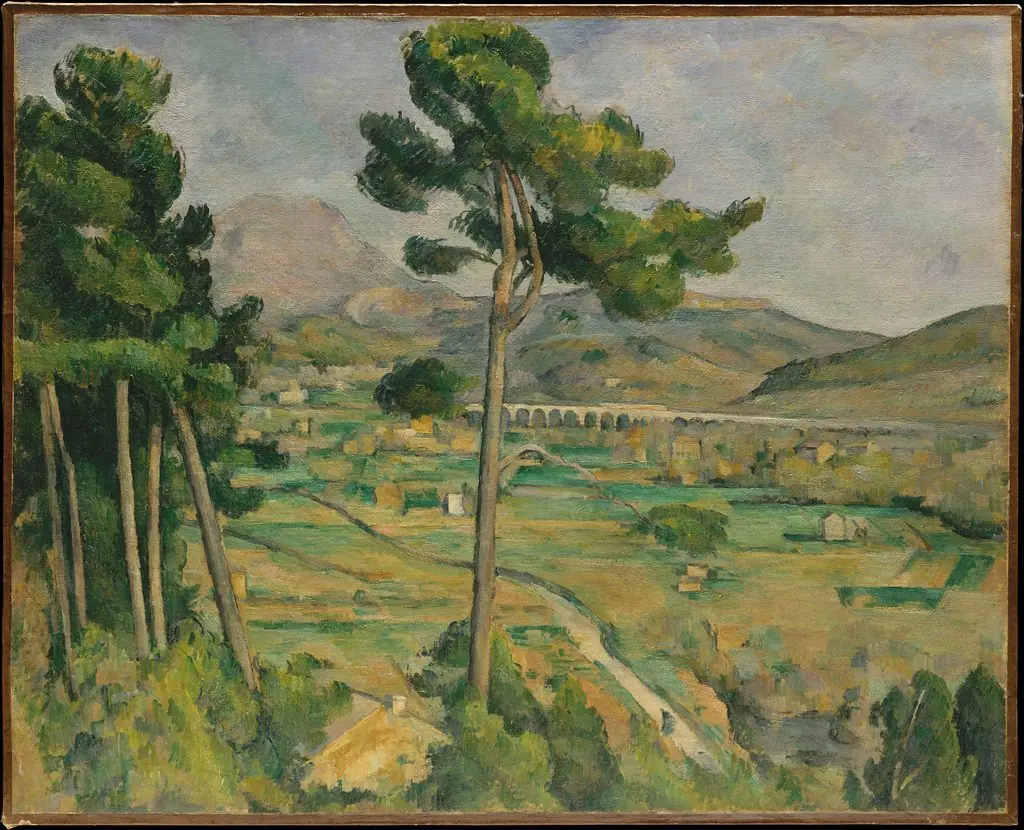 Mont Sainte-Victoire and the Viaduct of the Arc River Valley
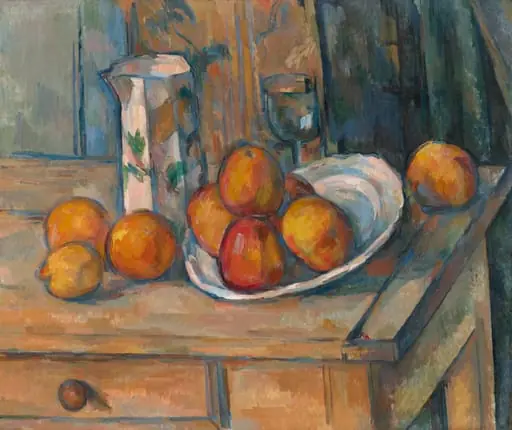 Still Life with Milk Jug and Fruit
 Le Golfe de Marseille vu de l'Estaque (The Gulf of Marseille Seen from L'Estaque)
 Houses in Provence: The Riaux Valley near L'Estaque
 Louis Guillaume
 Still Life with Jar, Cup, and Apples