Artwork
Christ in the House of Martha and Mary
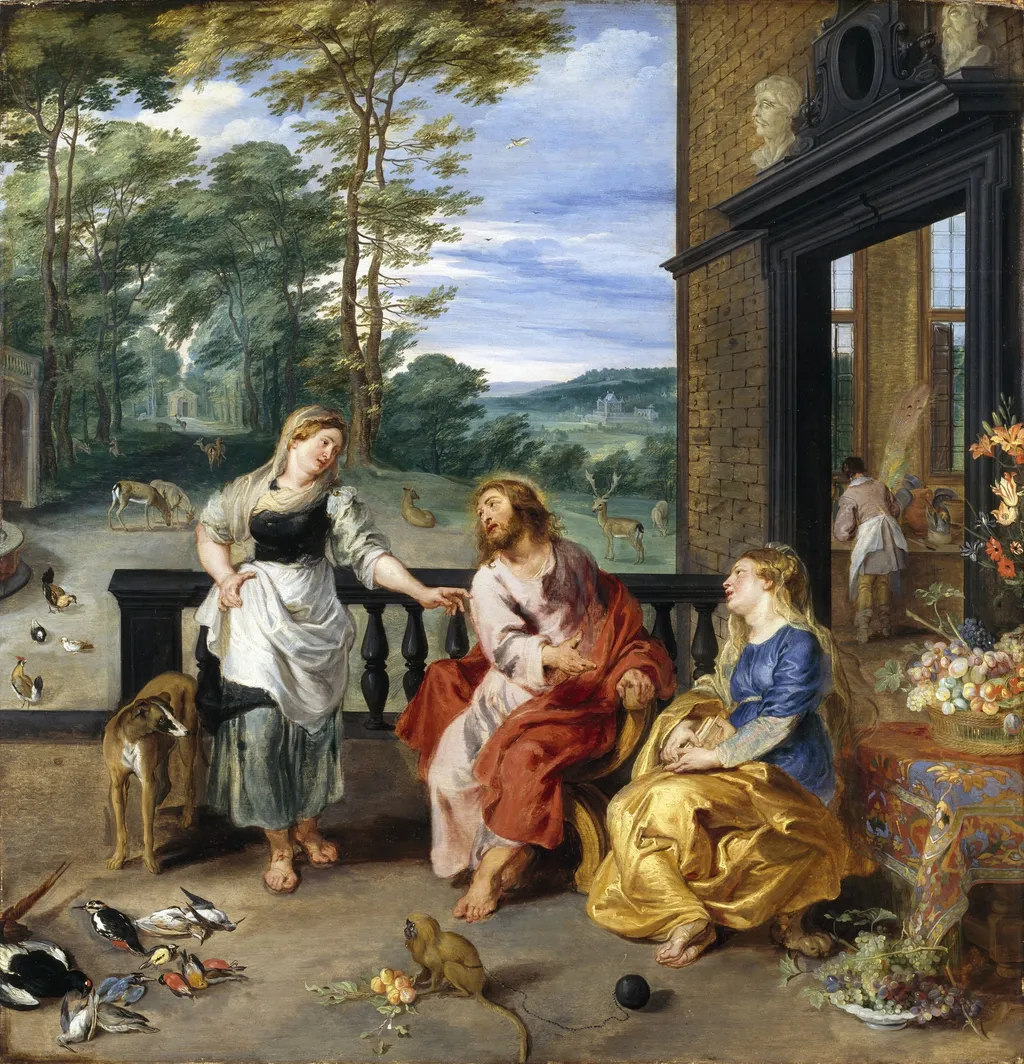
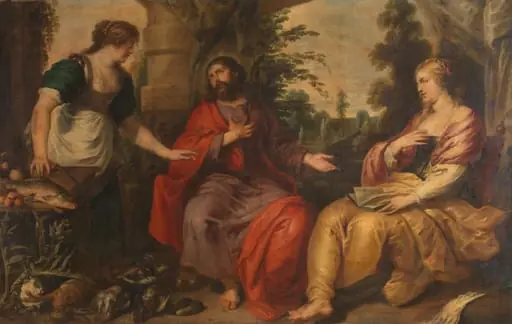
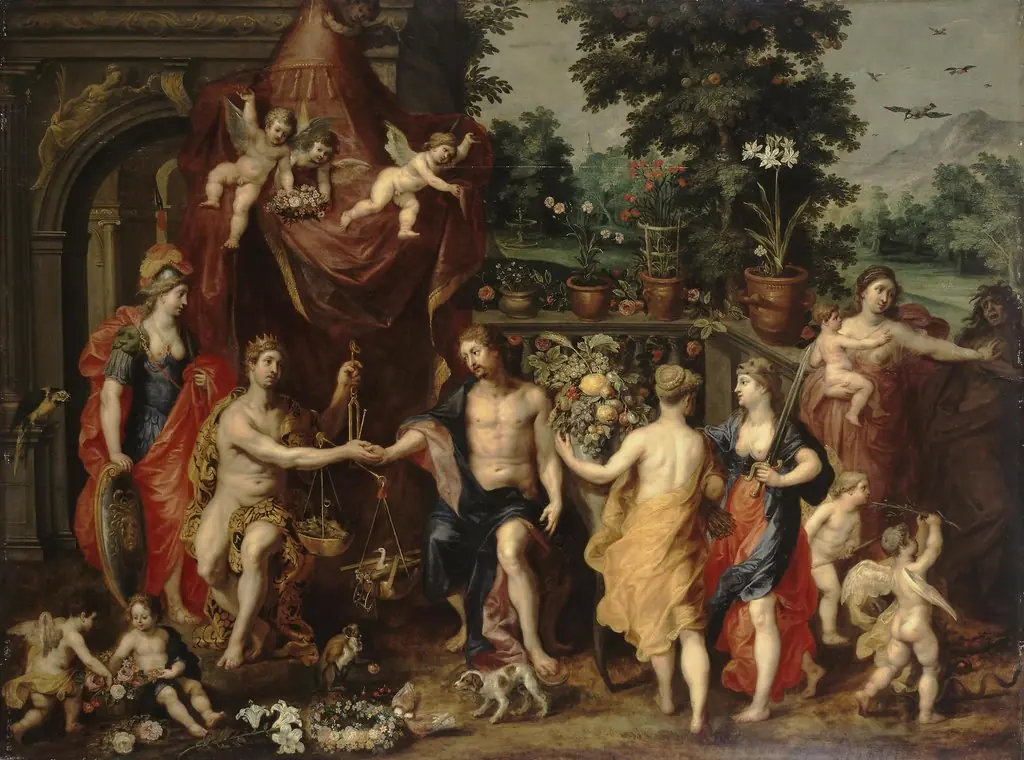
Christ in the House of Martha and Mary is an oil painting by the Flemish Baroque painting artist Peter Paul Rubens. It dates from 1628 and is held in the collection of the National Gallery of Ireland.
About this work
Subject & Meaning
As a piece of religious art created in 1628, the image illustrates the specific encounter between the man and the two women within a domestic setting.
The painting depicts the biblical narrative of Jesus at the home of Martha and Mary, a scene drawn from religious tradition. The composition features the central figure of Jesus alongside the two sisters, Martha and Mary, who are identified as the main subjects of the work. As a piece of religious art created in 1628, the image illustrates the specific encounter between the man and the two women within a domestic setting.
The work serves as a visual representation of this scriptural episode, focusing on the interaction between the figures.
Technique & Style
Christ in the House of Martha and Mary is executed in oil paint on a wooden panel, a support consistent with the collaborative practice of Peter Paul Rubens and Jan Brueghel the Younger. The work measures 64 cm in height by 61.9 cm in width, a modest scale suited to a cabinet panel rather than a large altarpiece.
The painting is classified as a religious work and depicts the New Testament episode of Jesus at the home of Martha and Mary, with figures of men and women arranged within an interior setting. The handling reflects the joint authorship typical of Rubens–Brueghel collaborations, in which one artist typically contributed the figures and the other the surrounding still-life or architectural elements, though the specific division of labor is not detailed in the available sources. No condition report or stylistic analysis is provided beyond the medium, support, and dimensions.
History & Provenance
Created in 1628, this oil painting on panel is a collaborative work by Peter Paul Rubens and Jan Brueghel the Younger. The piece depicts the biblical scene of Jesus visiting the home of Martha and Mary.
The artwork's ownership history includes possession by Charles Alexandre de Calonne, Michael Bryan, James Pourtales-Gorgier, John Smith, and George Venables-Vernon, 5th Baron Vernon. Subsequent owners included Hugh Andrew Johnstone Munro and Sir Henry Page-Turner Barron, 2nd Bt. The painting is currently held in the collection of the National Gallery of Ireland.
The painting Christ in the House of Martha and Mary is held in the collection of the National Gallery of Ireland. Created in 1628 by Peter Paul Rubens and Jan Brueghel the Younger, the work has passed through several notable private hands prior to its current institutional ownership. Its provenance includes ownership by Sir Henry Page-Turner Barron, Charles Alexandre de Calonne, Michael Bryan, James Pourtales-Gorgier, John Smith, George Venables-Vernon (5th Baron Vernon), and Hugh Andrew Johnstone Munro. The provided sources do not list specific inventory numbers or details regarding public exhibitions.
Context
Rubens’s Christ in the House of Martha and Mary (1628) has been situated within his broader output of religious compositions executed in the 1620s, a period marked by Counter-Reformation commissions and an intensified engagement with narrative clarity and affective piety. The work’s collaboration with Jan Brueghel the Younger reflects the Antwerp tradition of collaborative cabinet pictures, aligning it with genre-inflected religious scenes that were prized by elite collectors such as Sir Henry Page-Turner Barron and later Charles Alexandre de Calonne. Scholarship has emphasized the painting’s integration of domestic interior and sacred subject, situating it within a broader European interest in rendering biblical scenes through contemporary Dutch and Flemish interiors.
Its later provenance, passing through Michael Bryan, James Pourtales-Gorgier, and George Venables-Vernon before entering the National Gallery of Ireland, anchors the work in the transnational market for Old Master pictures in the nineteenth century, underscoring its status as a collectible rather than a cult object.
Overview
Created in 1628 by the Flemish painter Peter Paul Rubens, this oil on canvas portrays a domestic interior where Christ is seated among the sisters Martha and Mary. The scene unfolds in a luminous room that opens onto a tranquil garden, populated by everyday objects, a dog, and scattered fruit, all rendered with the vigor characteristic of Rubens’s mature period.
Own this work as a print
Artist & collection
Artist
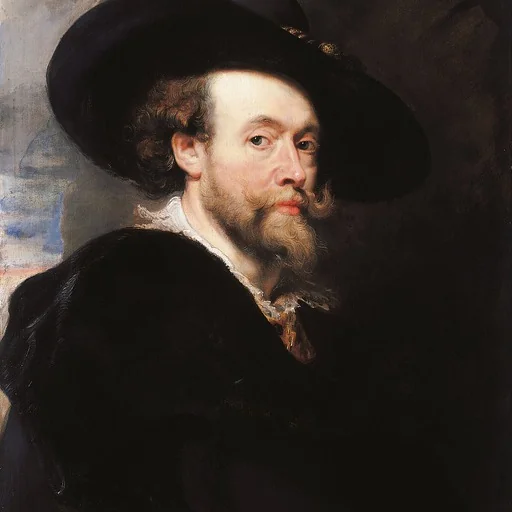
Sir Peter Paul Rubens ( ROO-bənz; Dutch:; 28 June 1577 – 30 May 1640) was a Flemish artist and diplomat.