Artwork
Ildefonso Altarpiece (central panel)
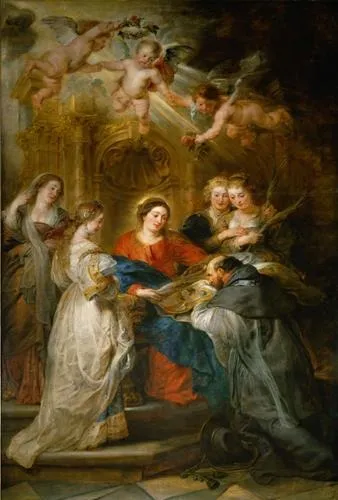
Ildefonso Altarpiece (central panel) is an unspecified painting by the Flemish Baroque painting artist Peter Paul Rubens. It dates from 1630 and is held in the collection of the Kunsthistorisches Museum.
About this work
Subject & Meaning
The enthroned Virgin is attended by female saints while Ildefonso kneels to receive the vestment.
The central panel of Rubens's Ildefonso Altarpiece depicts the vision of Saint Ildefonso of Toledo, in which the Virgin Mary appears to the seventh-century archbishop and presents him with a chasuble as a reward for his defense of her perpetual virginity. The enthroned Virgin is attended by female saints while Ildefonso kneels to receive the vestment. As a work of religious art created around 1630, the panel celebrates Marian devotion and the sanctity of the priesthood, themes well suited to its original function as the centerpiece of a confraternity altarpiece.
History & Provenance
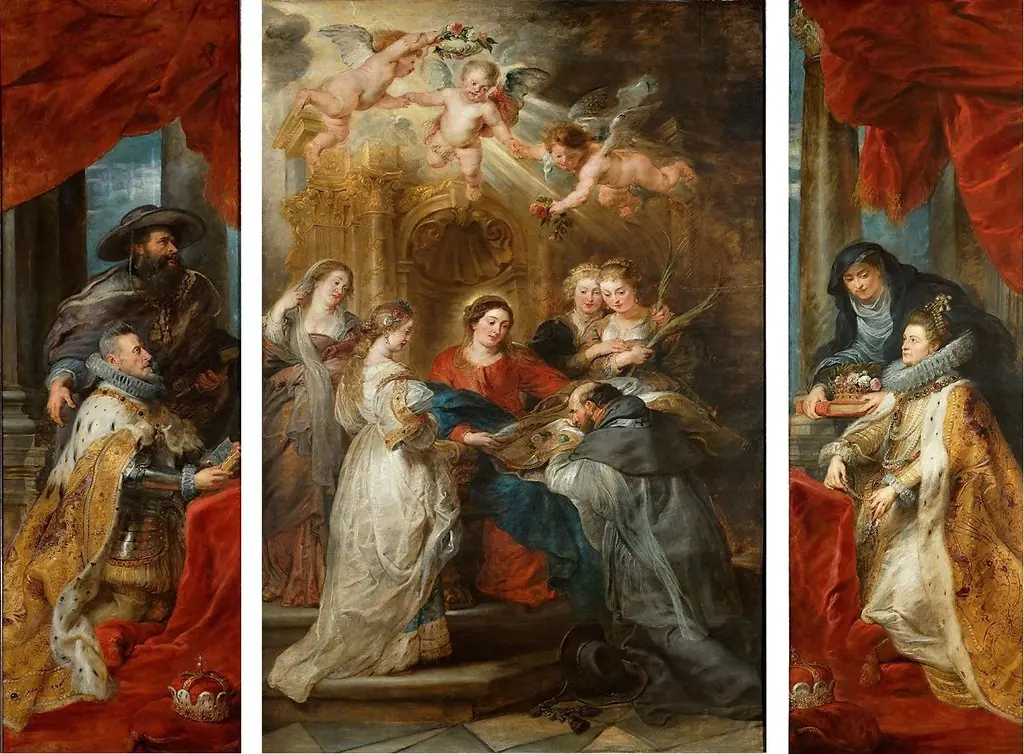
The central panel of the Ildefonso Altarpiece was painted by Peter Paul Rubens around 1630. It was commissioned by the Infanta Isabella Clara Eugenia for the chapel of the Confraternity of Saint Ildefonso in the church of Saint James on the Coudenberg in Brussels. The triptych later entered the collection of the Kunsthistorisches Museum, Vienna, where it remains.
The available sources do not list a specific inventory or accession number for the panel, nor do they record an exhibition history for the work.
Legacy
The Ildefonso Altarpiece is regarded as one of Rubens's major late religious commissions, admired for its luminous color and the monumental grace of its figures. The central panel remains part of the permanent collection of the Kunsthistorisches Museum, Vienna, where it is studied as a key example of the artist's mature ecclesiastical work and his impact on Baroque devotional painting.
Overview
The central panel of the Ildefonso Altarpiece was executed by Peter Paul Rubens in 1630. Created during the height of the Flemish Baroque, the painting serves as the focal point of a larger devotional ensemble, presenting a compact, illuminated scene that draws the viewer’s attention to its central figures.
Technique & Style
Rubens employs a pronounced chiaroscuro, allowing the faces to glow against a dim interior while a soft golden light bathes the central figure in a red robe. The contrast of luminous flesh and deep shadows, combined with fluid movement, exemplifies the dramatic vigor characteristic of Baroque painting.
Context
Rubens, both a court painter and diplomat, was a leading exponent of the Flemish Baroque, a style promoted by the Catholic Church to inspire devotion through emotional intensity. The altarpiece reflects this agenda, using dynamic composition and vivid coloration to engage the faithful.
Artist & collection
Artist
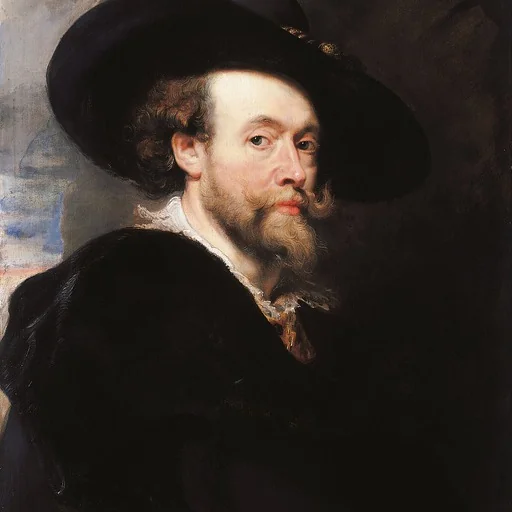
Sir Peter Paul Rubens ( ROO-bənz; Dutch:; 28 June 1577 – 30 May 1640) was a Flemish artist and diplomat.

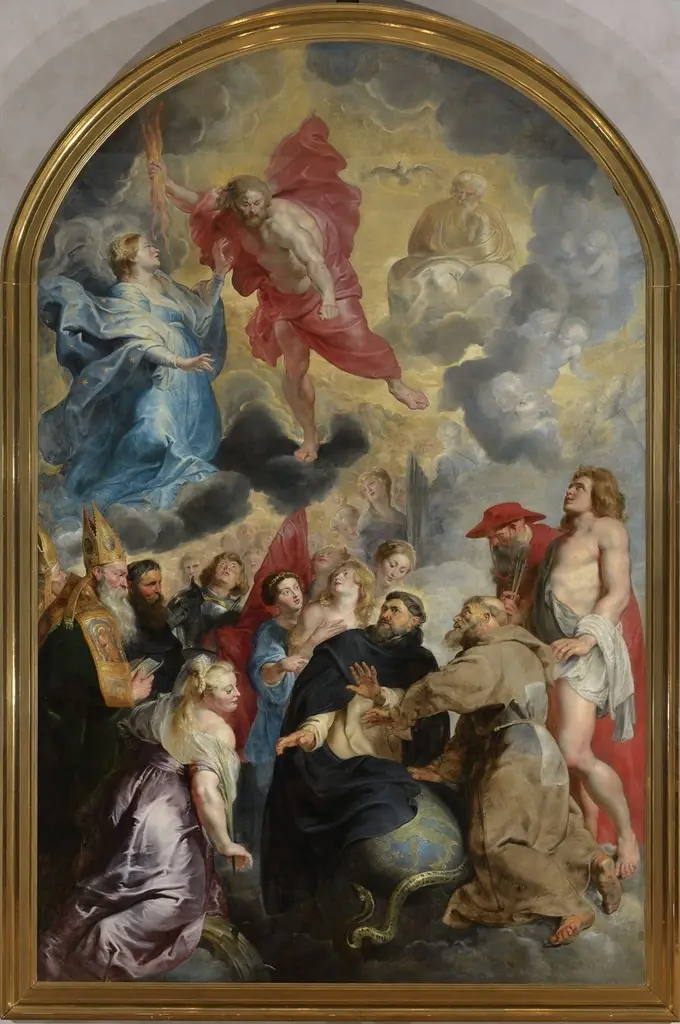 Saint Dominic and Saint Francis Protecting the World from the Wrath of Christ
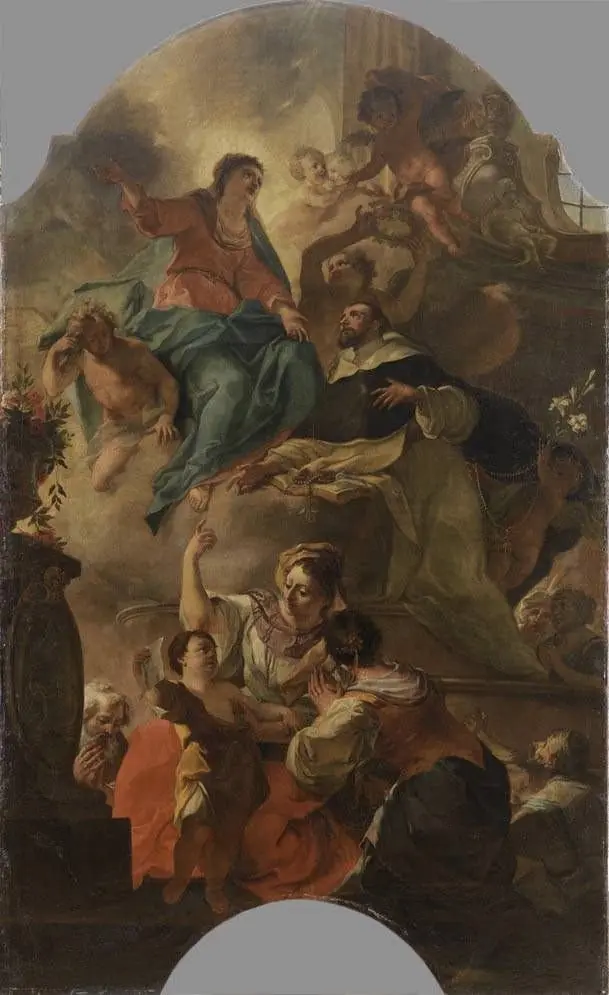 Hl. Dominikus als Fürbitter bei Maria
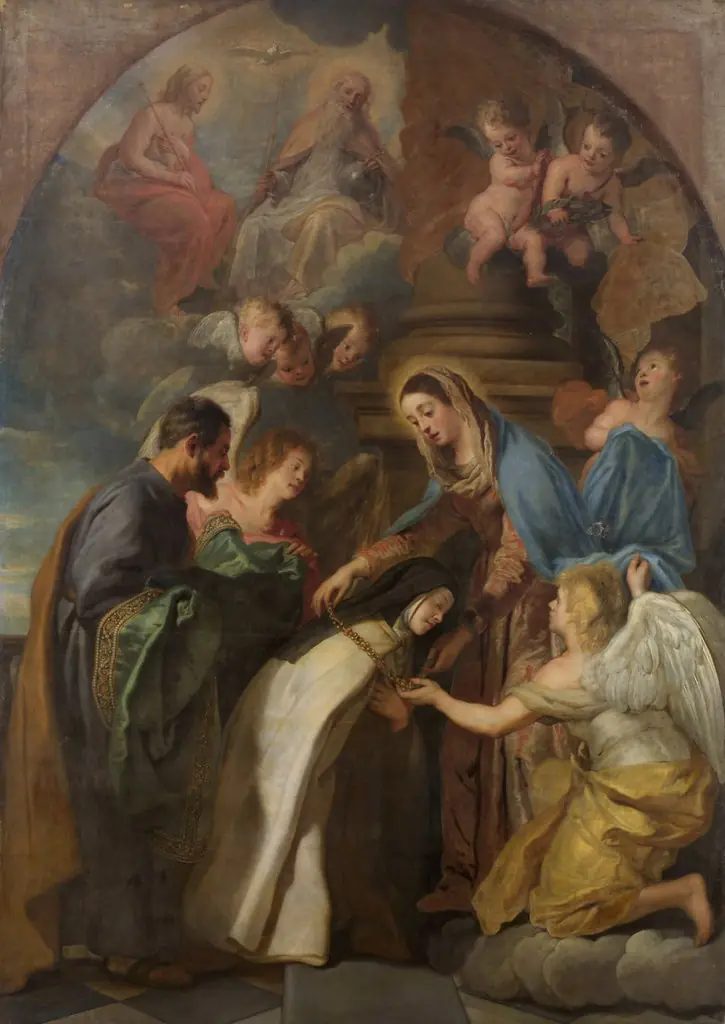 St Theresa receiving a gold chain and a mantle embroidered with gold from the Virgin
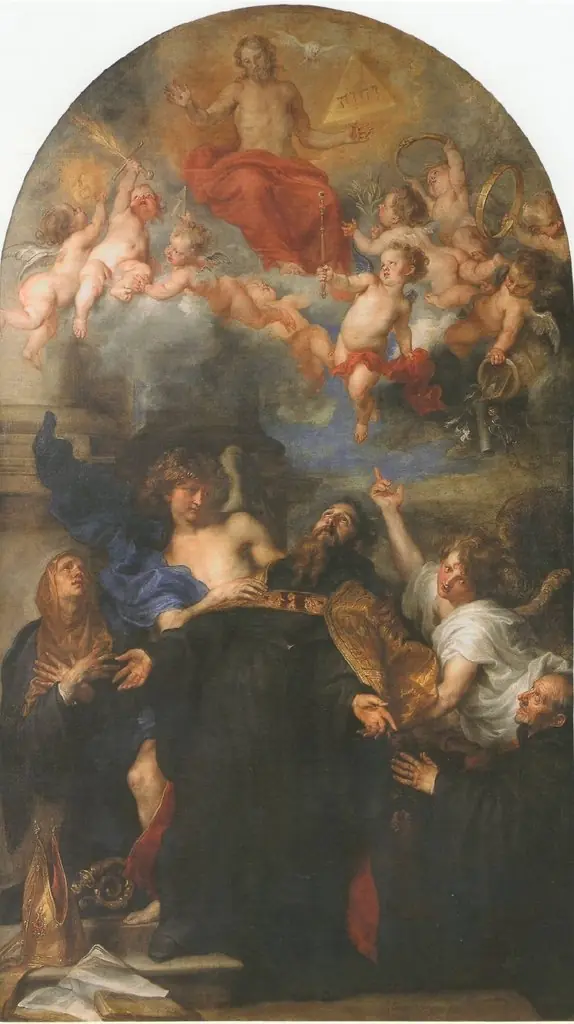 St Augustine in Ecstasy
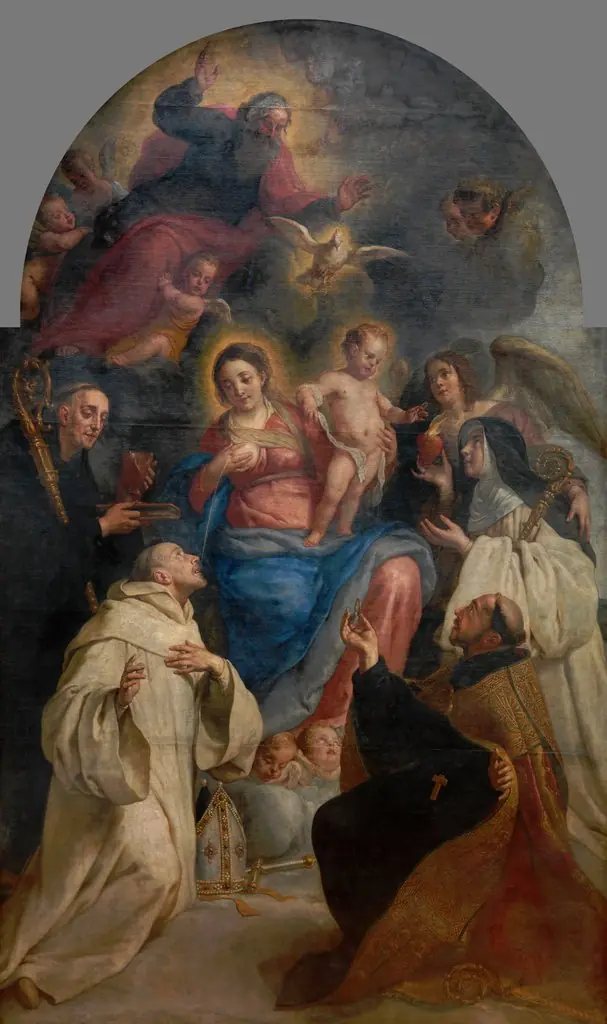 Lactatio of Saint Bernard of Clairvaux
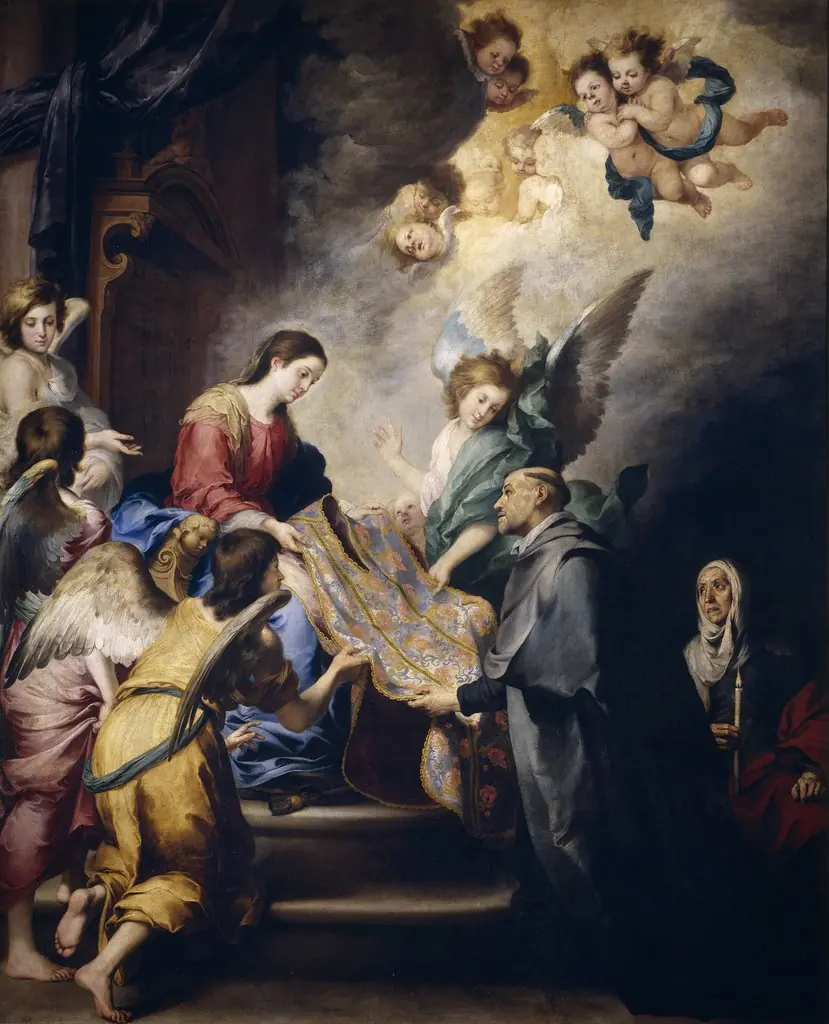 The Apparition of the Virgin to Saint Ildefonso
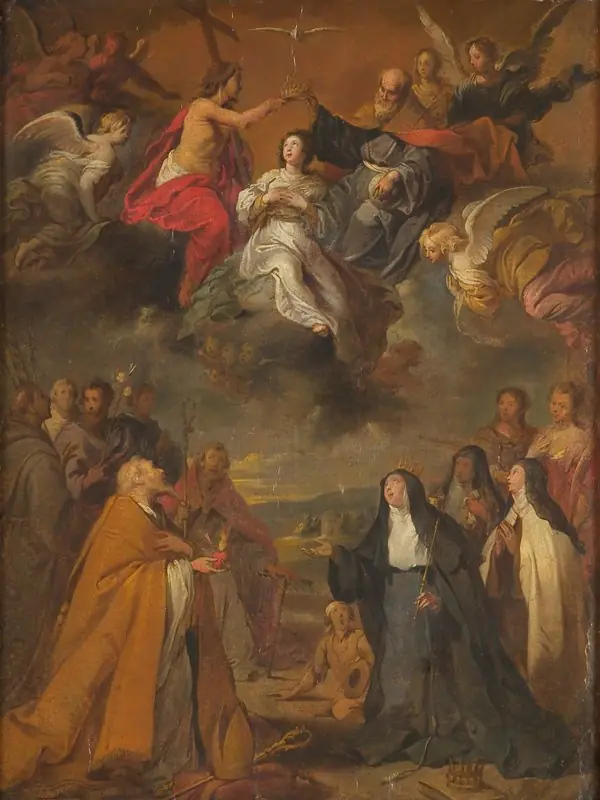 The Coronation of the Virgin
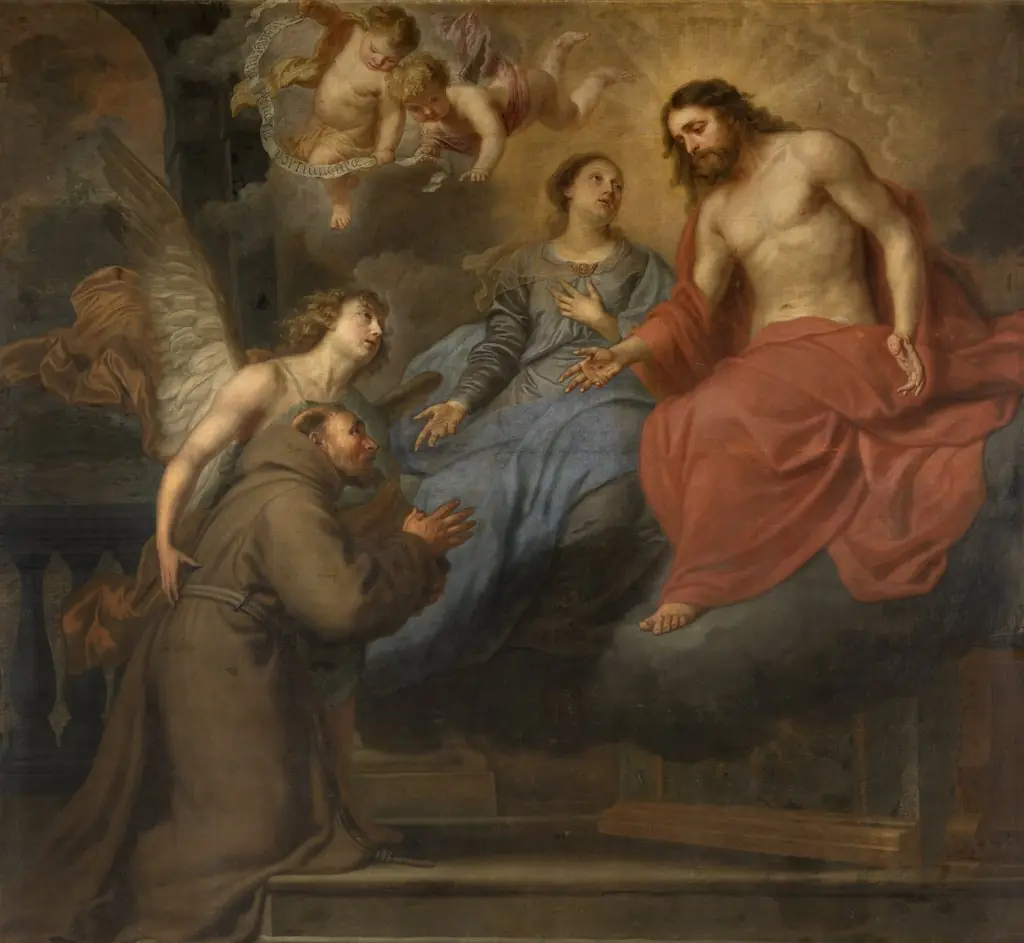 Portiuncula
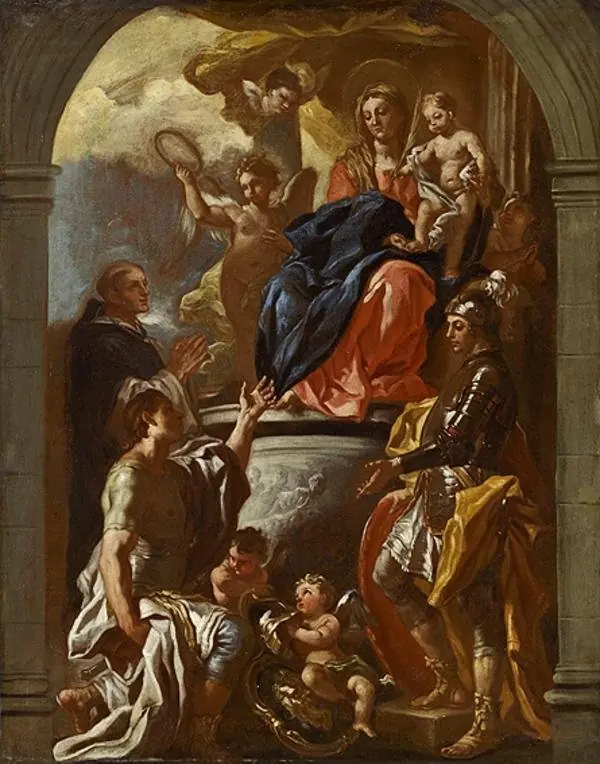 Madonna and Child Enthroned with Saint Peter Martyr and Two Warrior Saints
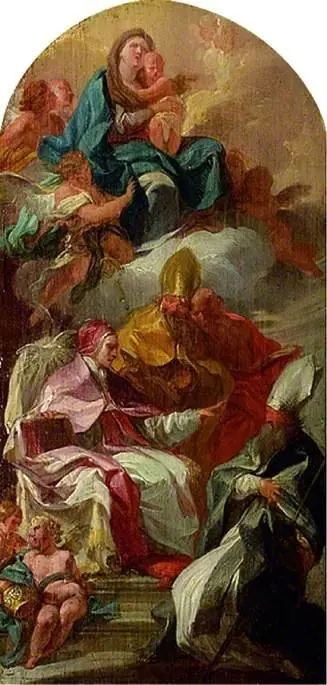 The Virgin and Child in Glory and the four Latin Fathers of the Church
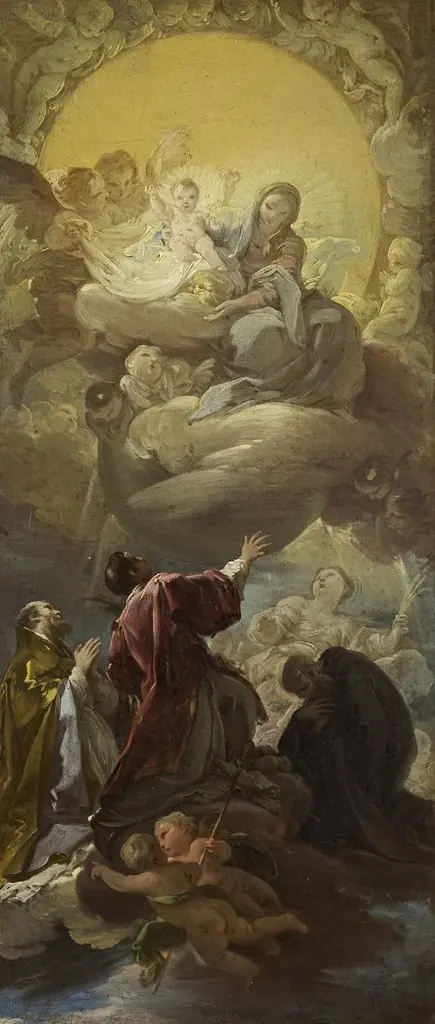 Madonna and Child in Glory appearing to St Stephen and three other Saints
- Ildefonso Altarpiece