Artwork
Ildefonso Altarpiece
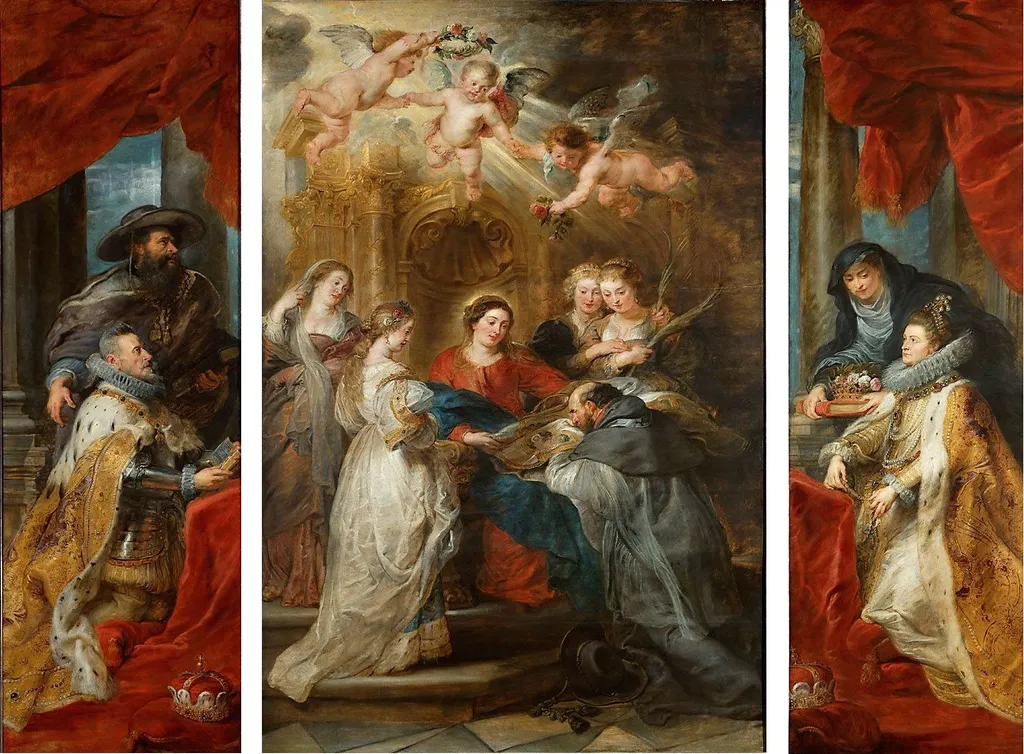
Ildefonso Altarpiece is an oil painting by the Flemish Baroque painting artist Peter Paul Rubens. It dates from 1630 and is held in the collection of the Kunsthistorisches Museum.
About this work
Technique & Style
The work comprises a central panel measuring 352 cm in height by 236 cm in width, flanked by two side panels each 352 cm high and 109 cm wide.
The Ildefonso Altarpiece is a triptych executed in oil paint on panel, created by Peter Paul Rubens between 1630 and 1631. The work comprises a central panel measuring 352 cm in height by 236 cm in width, flanked by two side panels each 352 cm high and 109 cm wide. Stylistically, the altarpiece functions as a religious composition depicting a sacra conversazione.
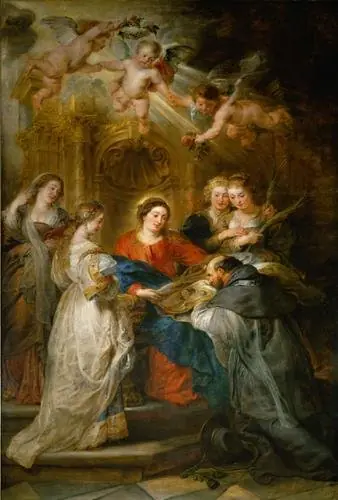
The central panel illustrates the visionary moment where the Virgin Mary presents a chasuble to Saint Ildefonso, while the lateral wings portray the kneeling donors, Archduke Albert and Isabella Clara Eugenia, accompanied by their patron saints. This formal arrangement integrates the earthly patrons with the divine intervention, characteristic of Rubens' late religious commissions.
History & Provenance
The Ildefonso Altarpiece was commissioned by Archduke Albert VII of Austria for the Ildefonso Brotherhood of St. James Church in Brussels, shortly after his death in 1630. It was created by Peter Paul Rubens between 1630 and 1631 and originally installed in the church before being acquired by the Kunsthistorisches Museum in Vienna. The work remains in the museum's collection today.
The Ildefonso Altarpiece is held by the Kunsthistorisches Museum in Vienna, where it has been housed since at least the late twentieth century, having been transferred from its original ecclesiastical setting. It was originally commissioned for the Ildefonso Brotherhood in the Church of St. James on Coudenberg in Brussels, founded by Archduke Albert VII to promote loyalty to the Habsburg dynasty. After Albert's death, his widow, Isabella Clara Eugenia, donated the triptych to the brotherhood shortly thereafter.
No specific inventory or accession number is recorded in the available sources. Likewise, no discrete exhibition history beyond its long-term placement at the Kunsthistorisches Museum is documented in the provided material.
Context
The Ildefonso Altarpiece occupies a distinct place within Rubens’s late oeuvre, produced during his return to Antwerp after diplomatic service in France and the Spanish Netherlands. Commissioned by Isabella Clara Eugenia following her husband Albert VII’s death, the triptych channels Counter-Reformation devotional imagery while serving a political program: it honors the Ildefonso Brotherhood founded by Albert to reinforce Habsburg loyalty in the Spanish Netherlands. The central panel’s sacra conversazione, Saint Ildefonso receiving the chasuble from the Virgin, was a recurring subject in Habsburg patronage, underscoring dynastic piety.
Scholars note the altarpiece’s alignment with Rubens’s mature style, marked by dynamic composition and luminous color, yet its explicit commemoration of the deceased regents distinguishes it from purely religious panels of the period.
Its later reception situates the work within Habsburg cultural memory: after transfer to Vienna’s imperial collections, the altarpiece became part of the Kunsthistorisches Museum’s holdings, where it remains. The triptych’s iconography and patronage have informed studies of Rubens’s courtly networks and the intersection of Counter-Reformation iconography with dynastic representation in the early seventeenth century.
Overview
The Ildefonso Altarpiece is a three‑panel oil painting executed by Peter Paul Rubens around 1630–31. Today it belongs to the collection of the Kunsthistorisches Museum in Vienna. The central image portrays Saint Ildefonsus receiving a vestment from the Virgin Mary, while the flanking panels depict the former Spanish Netherlands governors, Isabella Clara Eugenia and Albert VII, accompanied by their respective patron saints.
Subject & Meaning
The work illustrates the legendary vision of Saint Ildefonsus, in which the Virgin bestows a ceremonial mantle, symbolising divine approval. The inclusion of the Habsburg rulers alongside the saints of Albert and Elisabeth of Hungary links the religious narrative to contemporary political loyalty, emphasizing the patron’s role as a defender of the Catholic faith and the Habsburg dynasty.
Artist & collection
Artist
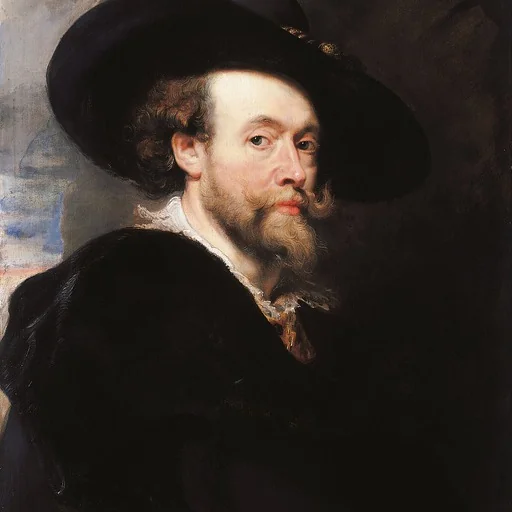
Sir Peter Paul Rubens ( ROO-bənz; Dutch:; 28 June 1577 – 30 May 1640) was a Flemish artist and diplomat.

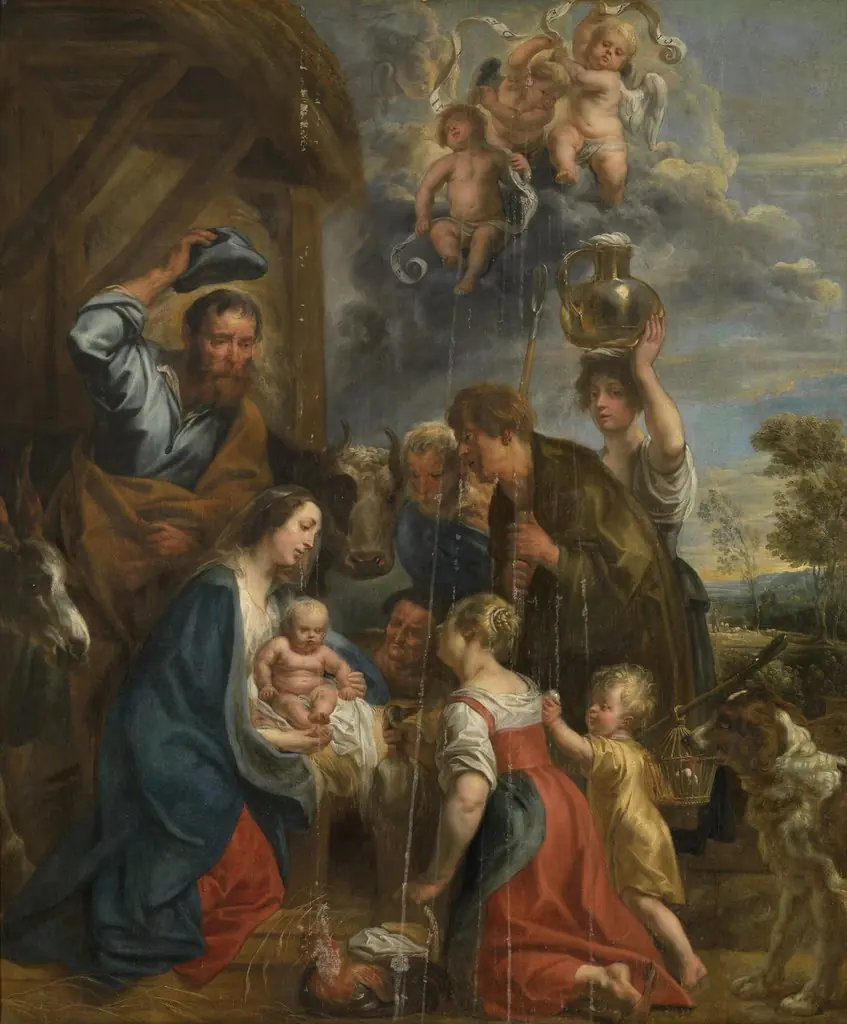 The Adoration of the Shepherds
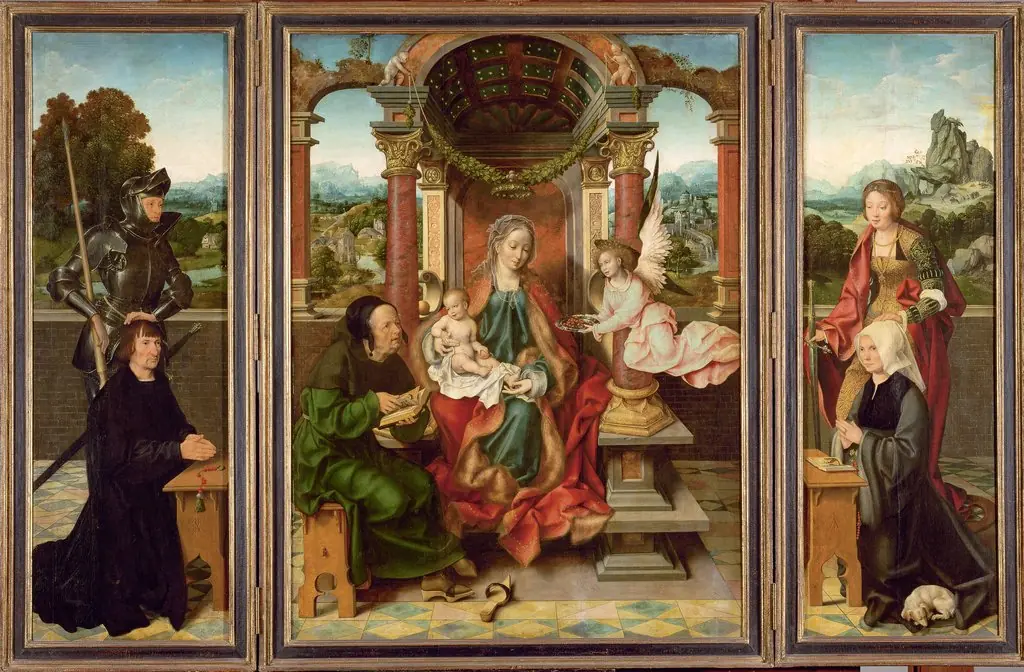 Winged Altar
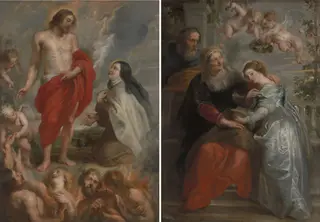 Saint Theresa and the Education of Mary
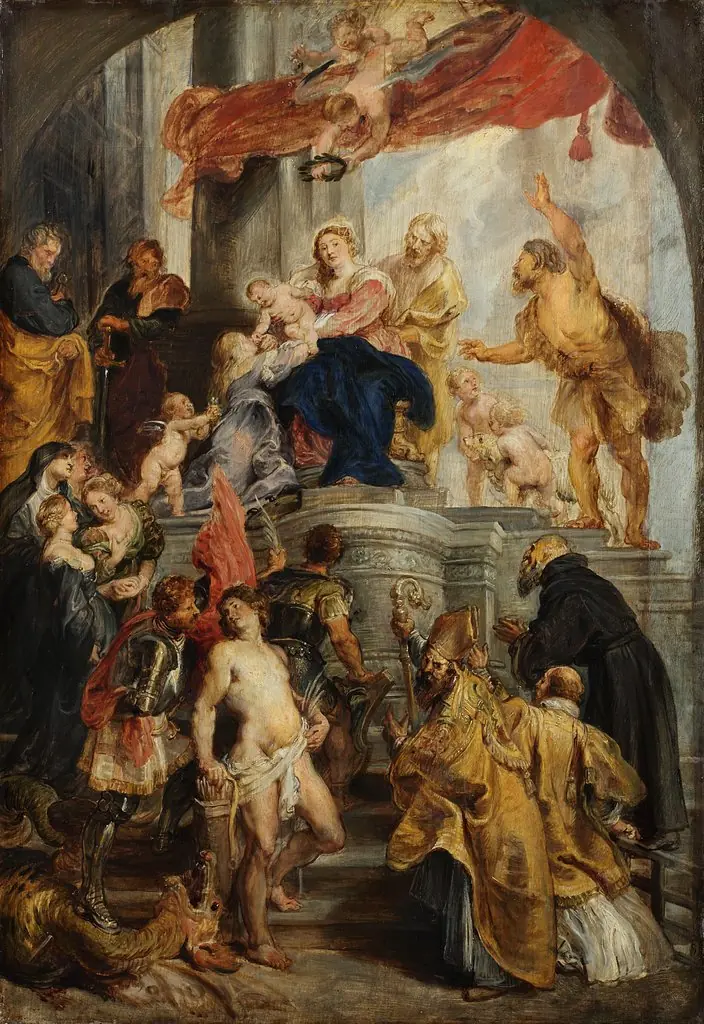 The Virgin and Child Enthroned with Saints by Peter Paul Rubens
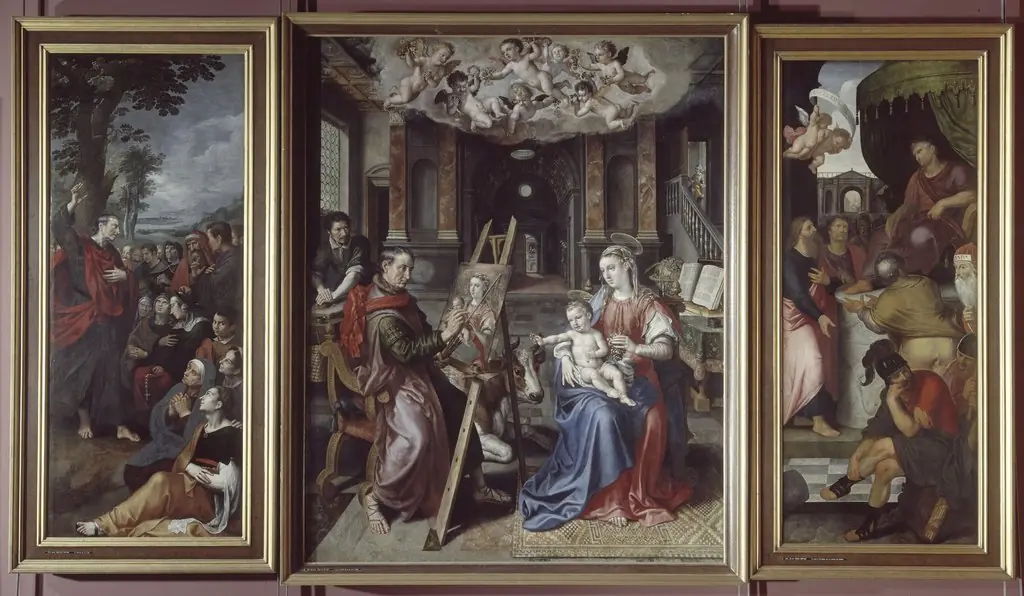 Altarpiece of the Guild of Saint Luke
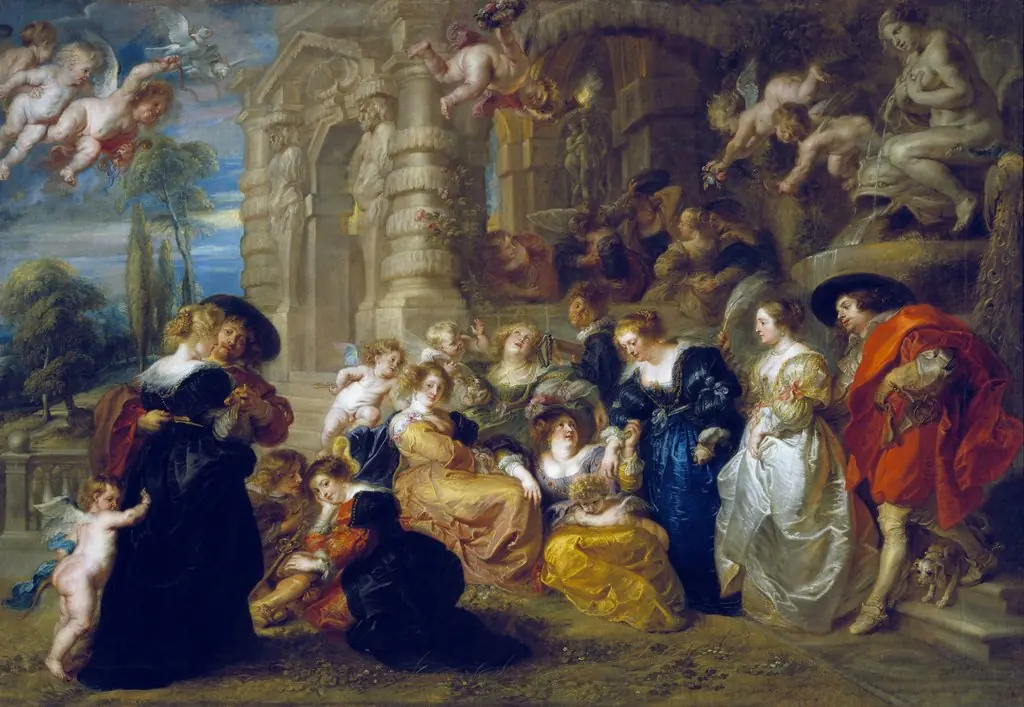 The Garden of Love
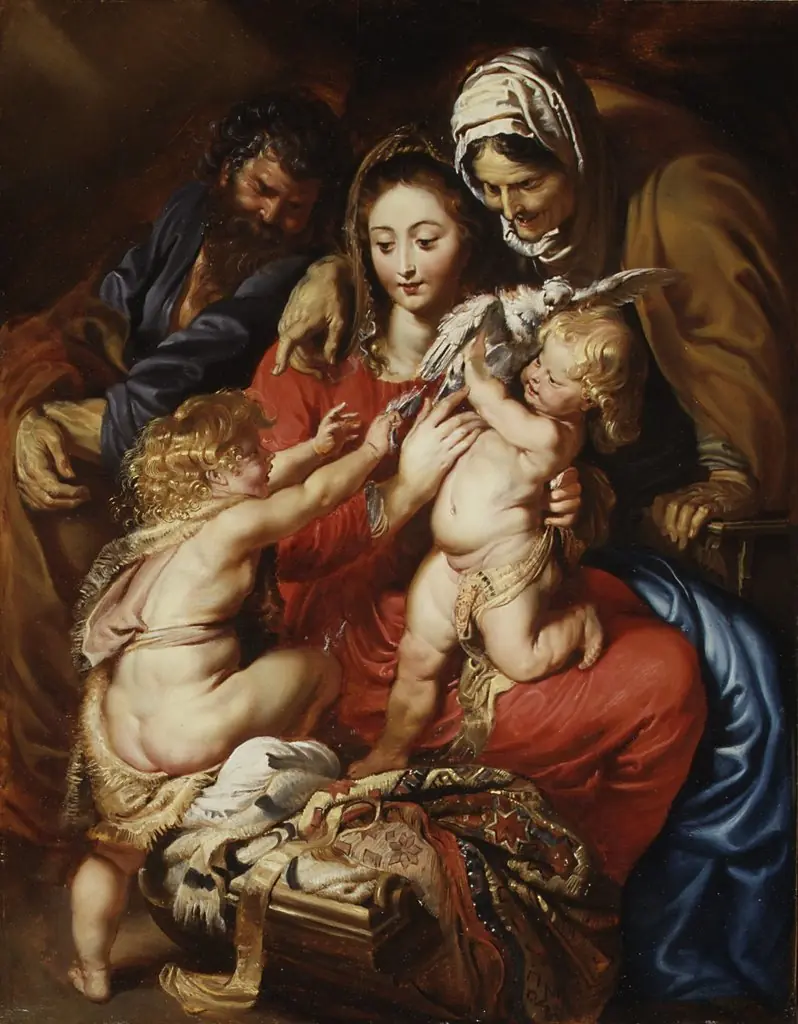 The Holy Family with Saint Elizabeth, Saint John, and a Dove
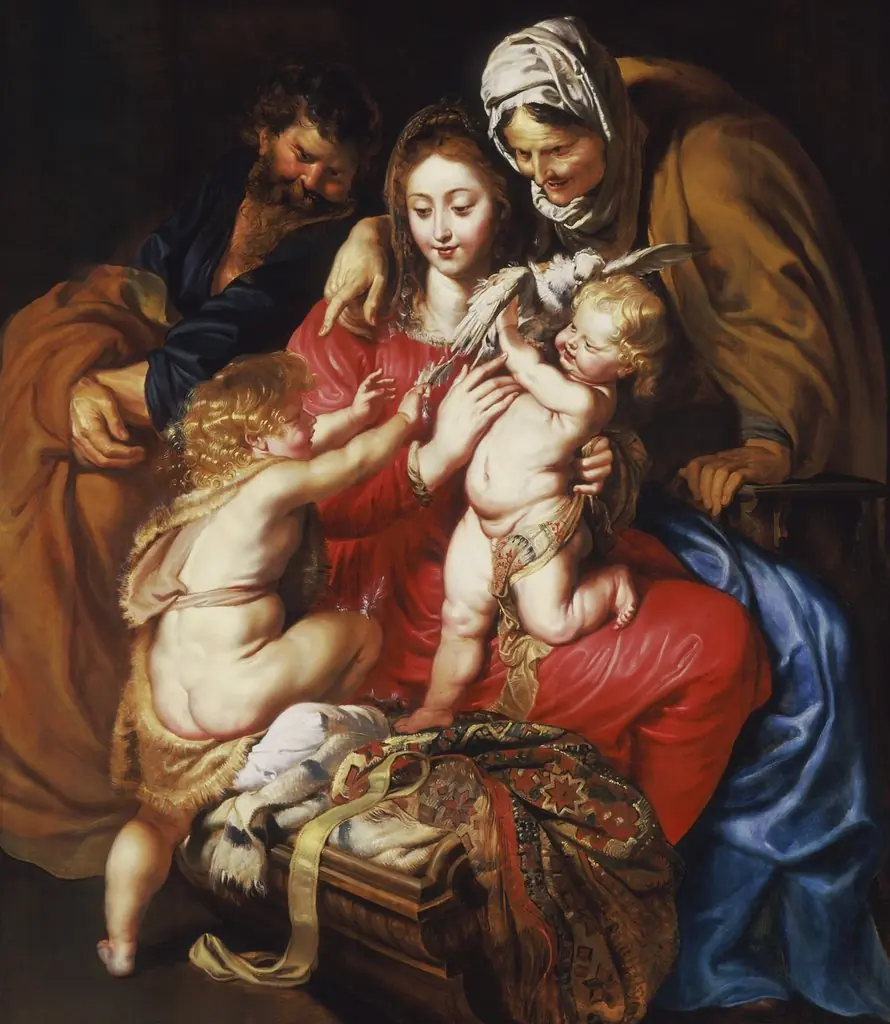 The Holy Family with St. Elizabeth, St. John, and a Dove
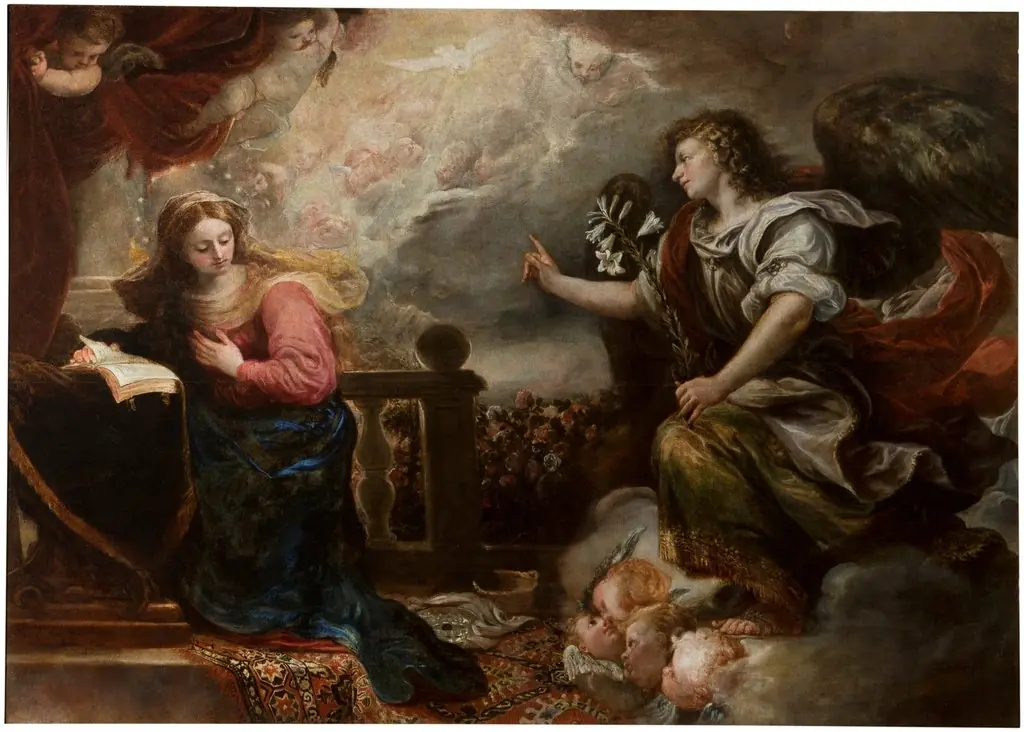 The Annunciation
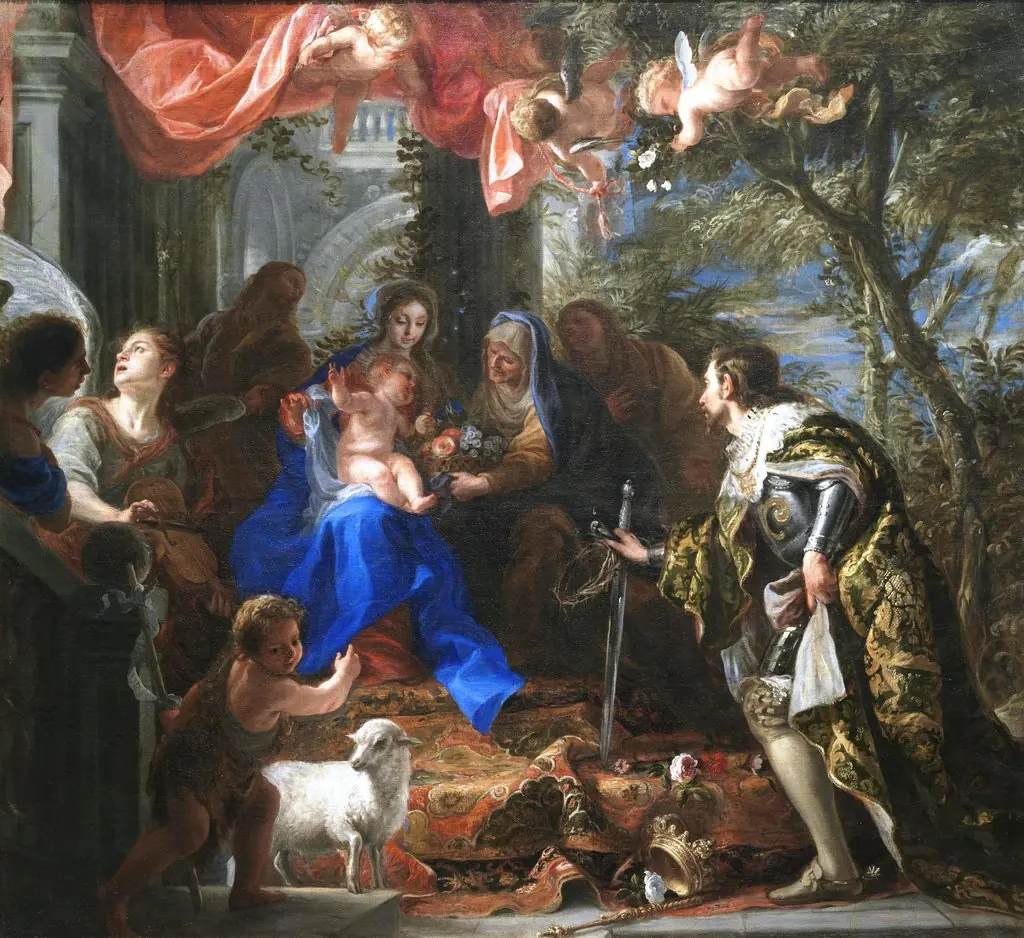 The Virgin and Child adored by Saint Louis, King of France
 Flügelaltar; Mittelbild: Anbetung der Könige; linker Flügel: Anbetung der Hirten; rechter Flügel: Ruhe auf der Flucht nach Ägypten
- Ildefonso Altarpiece (central panel)