Artwork
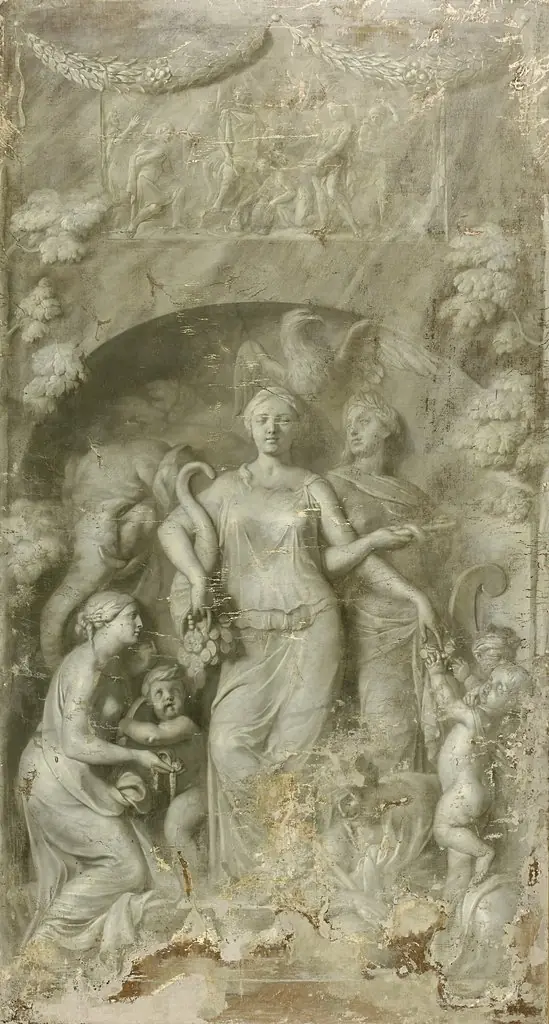
Marie de' Medici as Athena Pallas
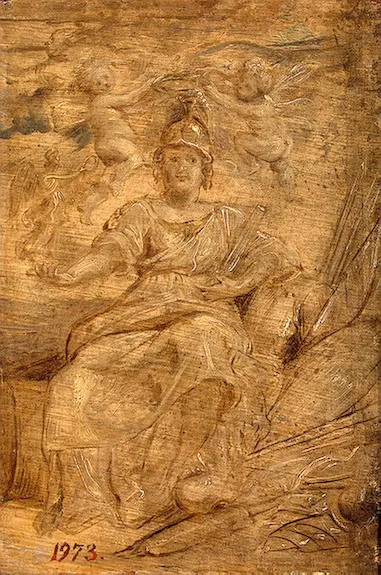
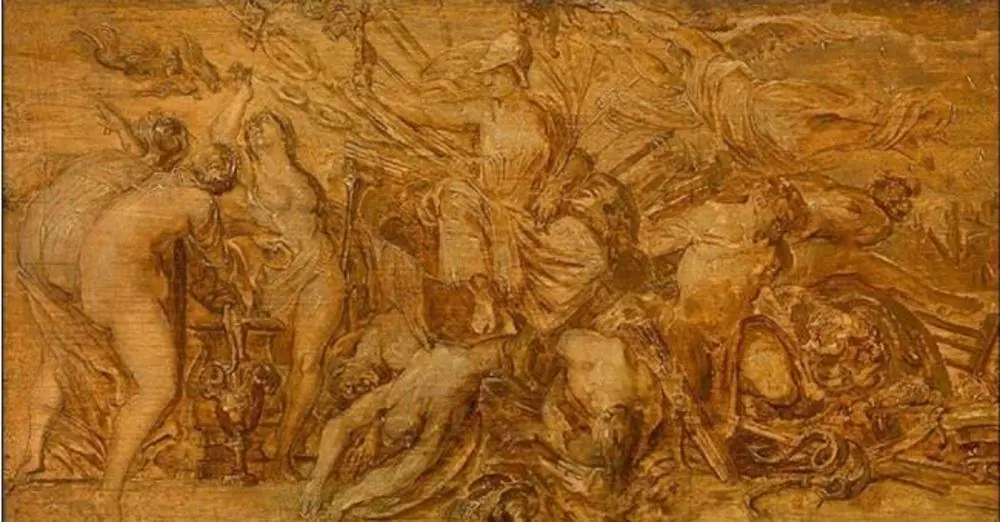
Marie de' Medici as Athena Pallas is an unspecified painting by the Flemish Baroque painting artist Peter Paul Rubens. It dates from 1622 and is held in the collection of the Hermitage Museum.
About this work
Subject & Meaning
By equating the French queen with the Greek goddess, Rubens elevates her political authority and frames her governance as enlightened and divinely sanctioned.
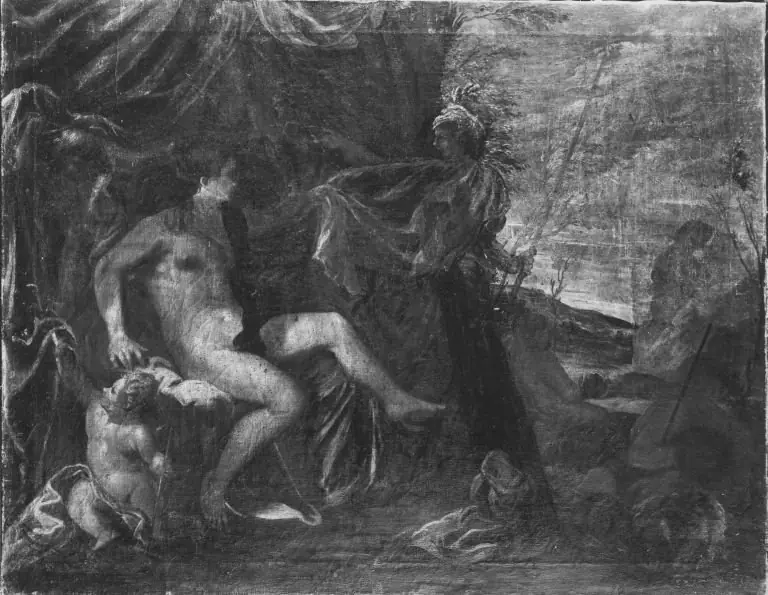
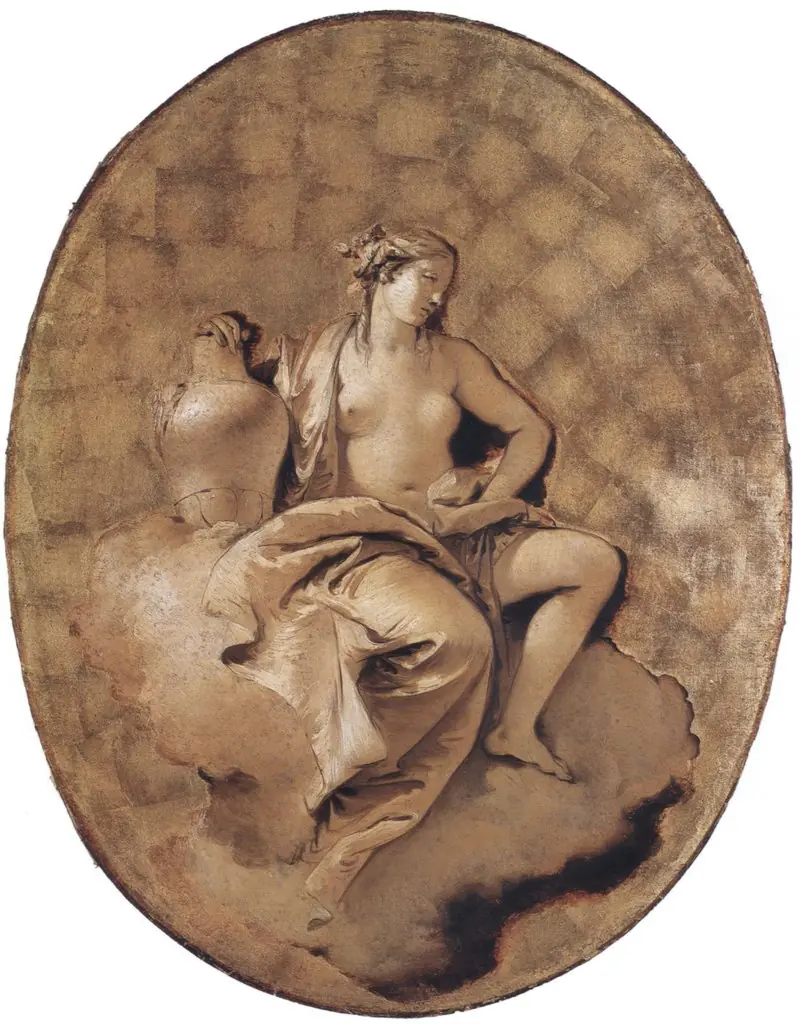
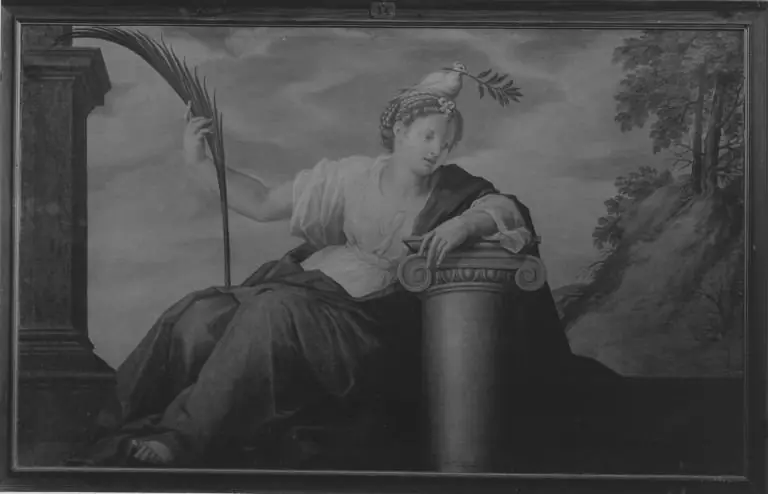
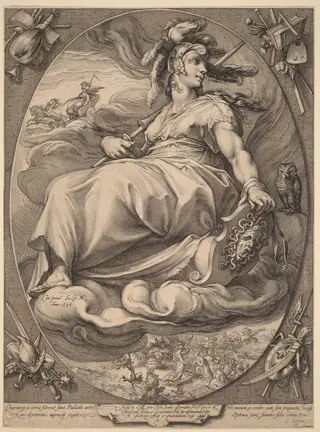
The painting portrays Marie de' Medici cast in the role of Athena Pallas, a symbolic representation of wisdom and statecraft drawn from classical mythology. By equating the French queen with the Greek goddess, Rubens elevates her political authority and frames her governance as enlightened and divinely sanctioned. The work functions as both propaganda and allegory, emphasizing Marie's ambition to legitimize her power through associations with timeless, heroic virtues.
Its historiated portrait genre underscores the fusion of political narrative with mythological idealization, reflecting the Baroque era's use of art to shape dynastic image and legacy.
History & Provenance
The painting was commissioned by Marie de' Medici to depict her as the classical figure Athena Pallas, reflecting her political ambitions and association with wisdom and warfare. Executed in 1622 in Flanders, it remained in the collection of Louis Antoine Crozat before entering the Hermitage Museum, where it has been housed since its acquisition.
The work measures 22.5 cm in height and 15 cm in width and is classified as a historiated portrait. It was created by Peter Paul Rubens and is part of the Hermitage Museum's collection in Saint Petersburg.
The painting's provenance traces its ownership from the original patron Marie de' Medici through Crozat to the Hermitage Museum, documenting its continuous presence in European art collections.
The painting is housed in the Hermitage Museum in Saint Petersburg, with inventory number 1852. The work entered the collection from the Crozat family holdings and was first exhibited publicly in 1852 as part of the museum's inaugural display of European masterpieces.
Exhibition history includes its presentation in the 1869 Russian Imperial Exhibition of Western Art and again in the 1999 exhibition 'Rubens and the Baroque' at the Hermitage.
The canvas measures 22.5 cm in height and 15 cm in width, reflecting its modest scale within Rubens' broader oeuvre.
Context
The painting Marie de' Medici as Athena Pallas, executed by Peter Paul Rubens in 1622, occupies a significant place within his mature oeuvre and the broader Baroque tradition of allegorical portraiture. Originally part of the collection of Louis Antoine Crozat, it was later acquired by the Hermitage Museum, where it remains on display. Scholars have examined its synthesis of classical mythology and dynastic propaganda, situating it within Rubens' diplomatic art practice for the Medici family.
Its historiated portrait genre and iconography reflect early 17th-century Flemish artistic conventions while engaging with contemporary political narratives. The work's composition and execution demonstrate Rubens' mastery of color and movement, influencing later interpretations of mythological subjects in portraiture.
Its inclusion in major exhibitions and conservation efforts has reinforced its status as a key example of Rubens' artistic legacy and Baroque visual culture.
Legacy
The painting Marie de' Medici as Athena Pallas by Peter Paul Rubens has been recognized for its allegorical synthesis of political ambition and classical virtue, influencing later Baroque representations of sovereign iconography. Its composition informed subsequent artists' portrayals of allegorical personifications of state power, particularly in the 17th and 18th centuries. The work's presence in the Hermitage Museum since acquisition has cemented its reputation as a benchmark for integrating dynastic propaganda with mythological narrative in European art history.
The painting is currently housed in the Hermitage Museum collection.
Overview
Marie de' Medici as Athena Pallas is a 1622 painting by Peter Paul Rubens, depicting the queen as the Greek goddess of wisdom, blending mythological and portraiture elements in the Flemish Baroque style.
Technique & Style
Rubens employed his characteristic Flemish Baroque techniques: vivid color, dynamic movement, and sensuality, alongside meticulous realism in attire and accessories, utilizing chiaroscuro to create depth.
Artist & collection
Artist
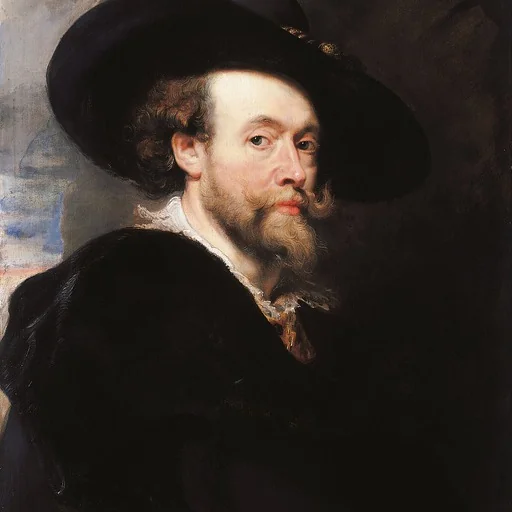
Sir Peter Paul Rubens ( ROO-bənz; Dutch:; 28 June 1577 – 30 May 1640) was a Flemish artist and diplomat.