Artwork
Portrait of Lady-in-Waiting to the Infanta Isabella
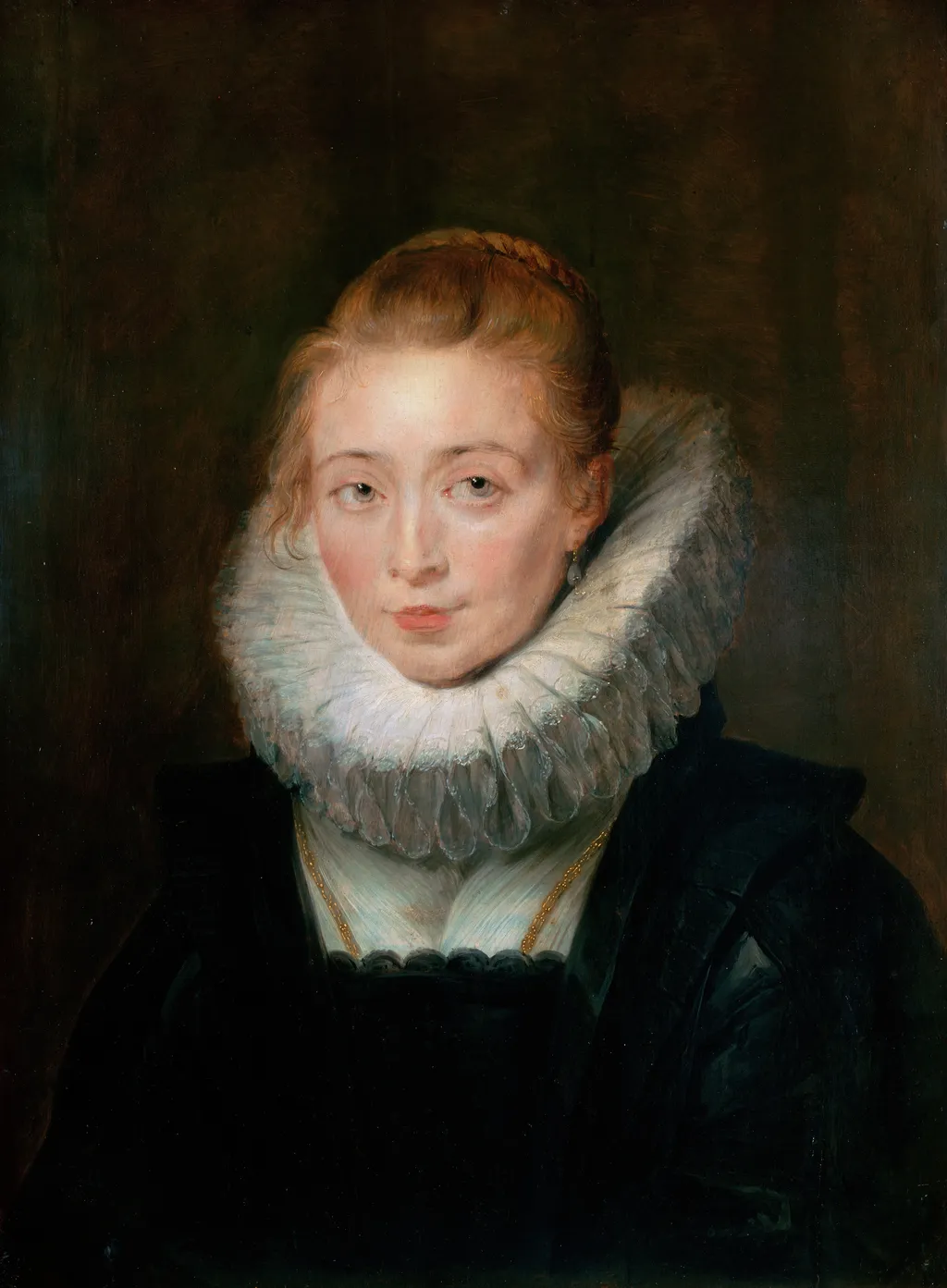
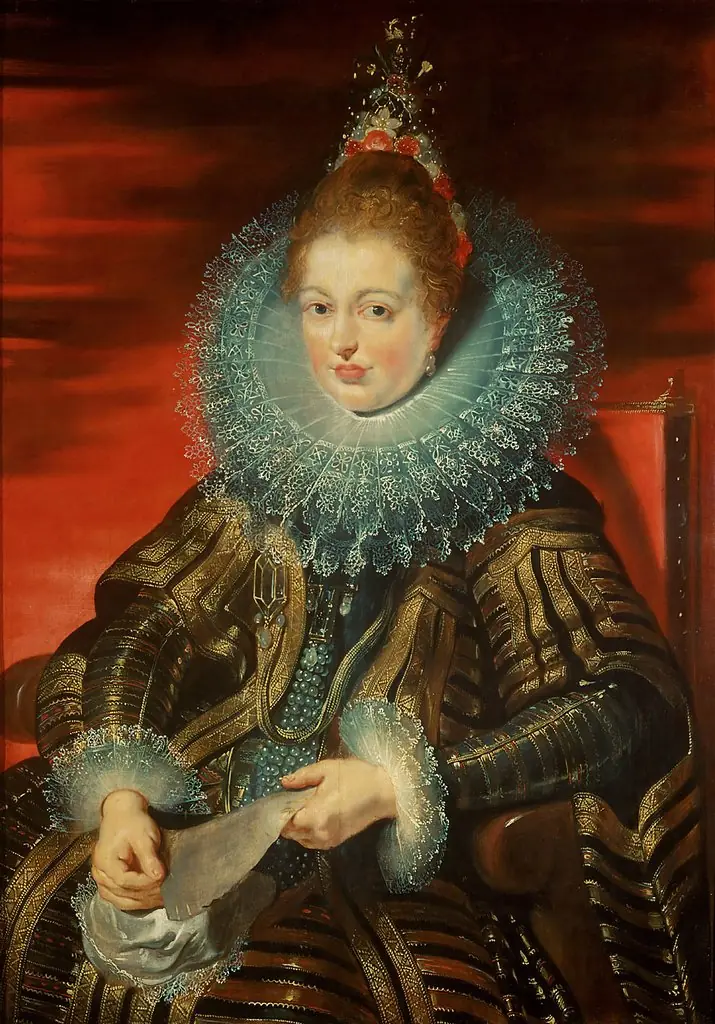
Portrait of Lady-in-Waiting to the Infanta Isabella is an oil painting by the Flemish Baroque painting artist Peter Paul Rubens. It dates from 1625 and is held in the collection of the Hermitage Museum. Created in 1625, this oil painting presents a young woman rendered in the Flemish Baroque idiom.
About this work
The artist's use of chiaroscuro, a technique that emphasizes contrasts between light and dark, adds depth and dimension to the portrait.
This portrait depicts a woman with a serious expression, her gaze directed at the viewer. She wears a dark dress with a white ruffled collar and a gold necklace. Her hair is styled in an updo, and she has a subtle smile. The background of the painting is dark, which helps to accentuate the subject's features.
The woman's attire and hairstyle suggest that the painting was created during the early 17th century. The artist's use of chiaroscuro, a technique that emphasizes contrasts between light and dark, adds depth and dimension to the portrait.
If you're interested in learning more about the artist behind this painting, you might want to look up Peter Paul Rubens.
Subject & Meaning
The painting shows a young woman identified as Clara Serena Rubens, who served as a lady-in-waiting to Infanta Isabella. She gazes directly at the viewer, dressed in a black gown with a prominent ruff, set against a dark background. The portrait, created by Peter Paul Rubens around 1625 in Flanders, is executed in oil on panel and measures 64 cm by 48 cm. It belongs to the portrait genre and is housed in the Hermitage Museum in Saint‑Pétersbourg, Russia, having entered the collection from the Crozat collection in 1772.
Technique & Style
The work is an oil painting executed on a wooden panel, measuring 64 cm in height by 48 cm in width. It depicts a half‑length portrait of a lady‑in‑waiting to the Infanta Isabella, rendered in dark clothing with a white collar and a subtle gray‑blue veil. The composition shows the sitter turned toward the viewer, her gaze meeting that of the observer, while the background remains a muted dark tone that emphasizes the figure.
Executed in the mid‑1620s in Flanders, the piece exemplifies Rubens’s characteristic handling of chiaroscuro and rich, textured brushwork, conveying both psychological presence and an elegant, courtly poise.
History & Provenance
The painting was likely created in the mid-1620s, during Rubens’s Brussels period, when he served as court painter to the Infanta Isabella Clara Eugenia, governor of the Southern Netherlands. Its traditional identification as a portrait of a lady-in-waiting to the Infanta has also been linked to an alternative hypothesis identifying the sitter as Rubens’s daughter, Clara Serena.
It entered the Hermitage Museum’s collection in 1772 after being acquired from the Crozat collection in Paris. Louis Antoine Crozat’s holdings were dispersed that year, and the work was subsequently transferred to Saint Petersburg, where it remains in the museum’s holdings.
Overview
Created in 1625, this oil painting presents a young woman rendered in the Flemish Baroque idiom. The work is attributed to Sir Peter Paul Rubens, a prominent painter and diplomat of the early seventeenth century. It currently belongs to the collection of the State Hermitage Museum in Saint Petersburg.
Context
During the early 1600s, portraiture served both familial and courtly functions, often reinforcing social status. Rubens, active as a diplomat, frequently painted members of the Spanish Habsburg court, and this work reflects the cross‑cultural ties between Flanders and the Spanish Netherlands, illustrating contemporary fashions in dress and hairstyle.
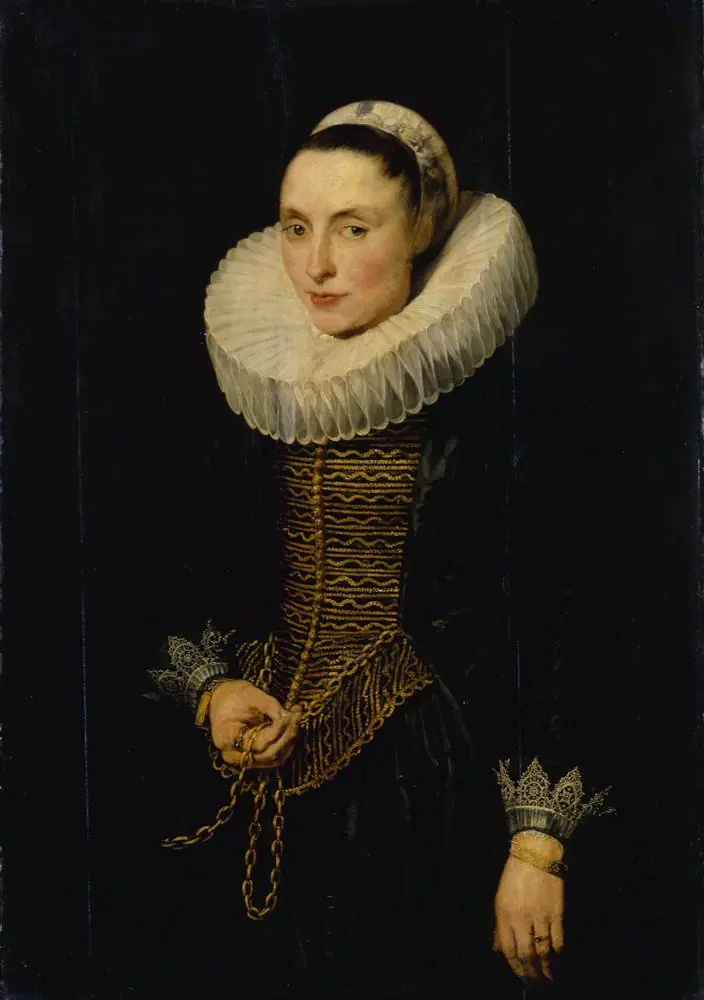
Own this work as a print
Artist & collection
Artist
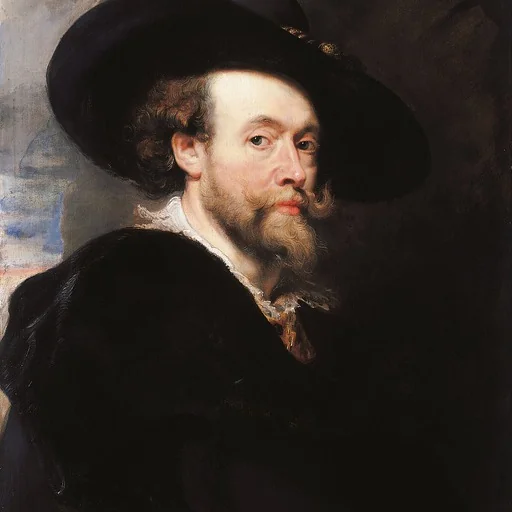
Sir Peter Paul Rubens ( ROO-bənz; Dutch:; 28 June 1577 – 30 May 1640) was a Flemish artist and diplomat.

- Portrait of a Lady
 Isabella Clara Eugenia, wife of Albrecht VII
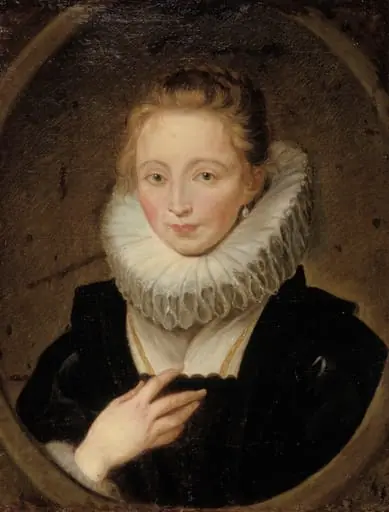 Ärkehertiginna Isabellas kammarjungfru
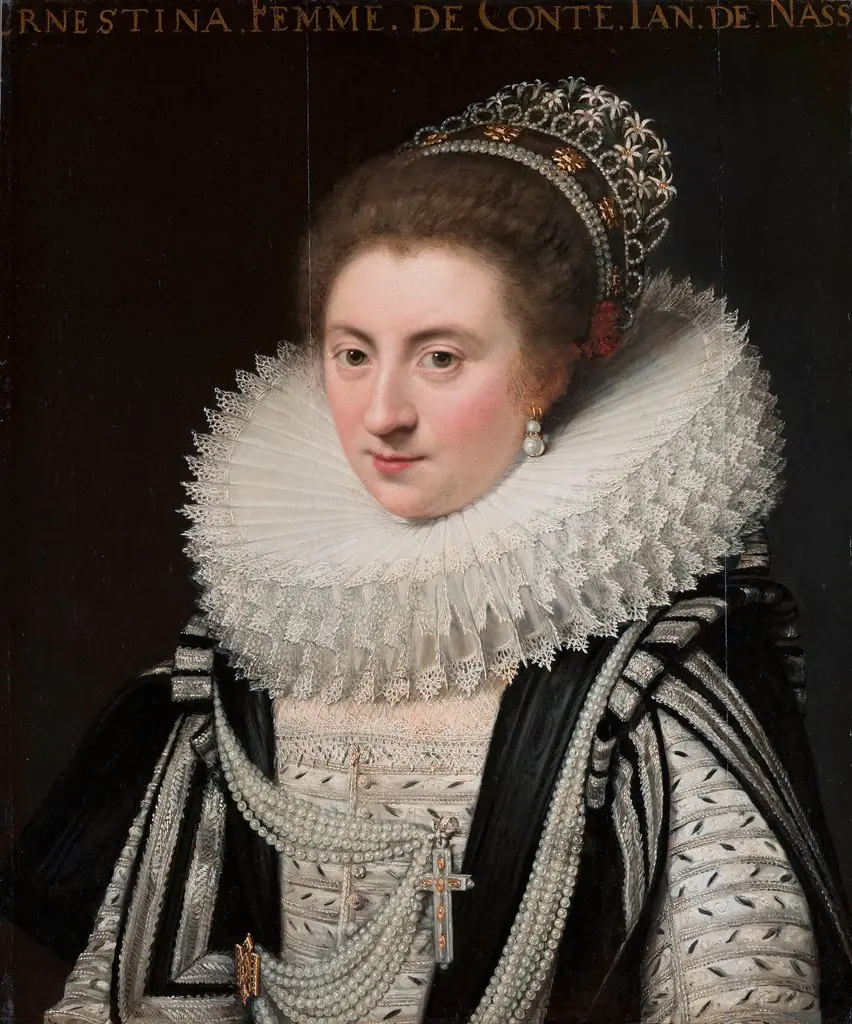 Portrait of Ernestine Yolande (1594-1663), Princess of Ligne
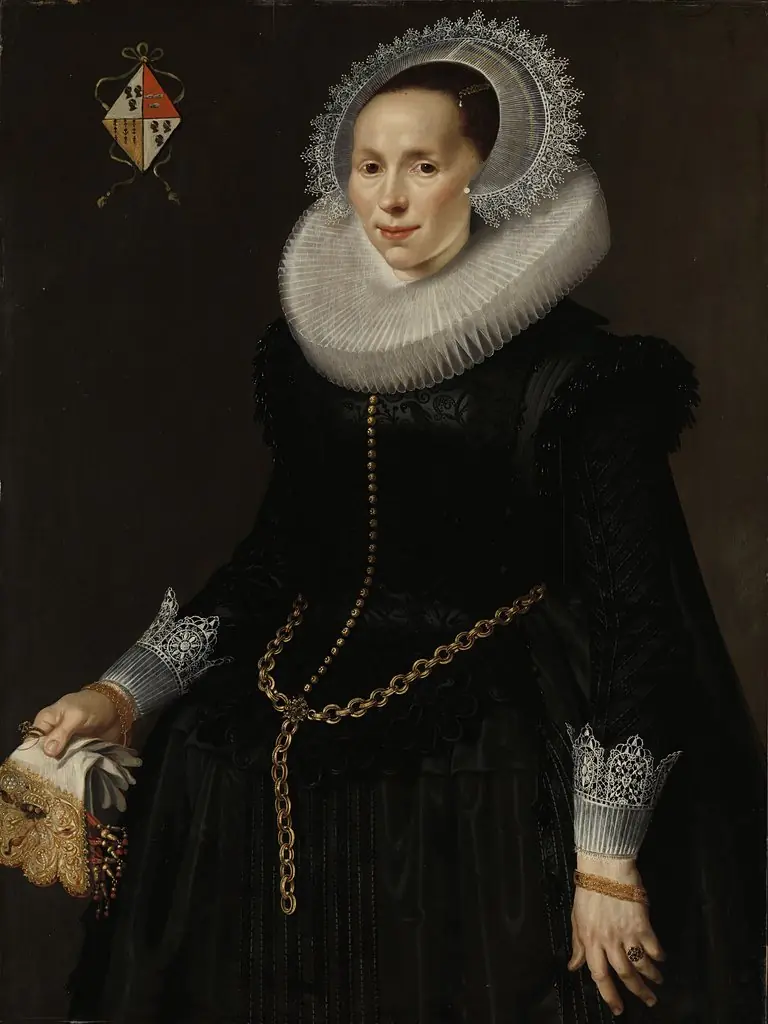 Portrait of Johanna Le Maire (c. 1601-60)
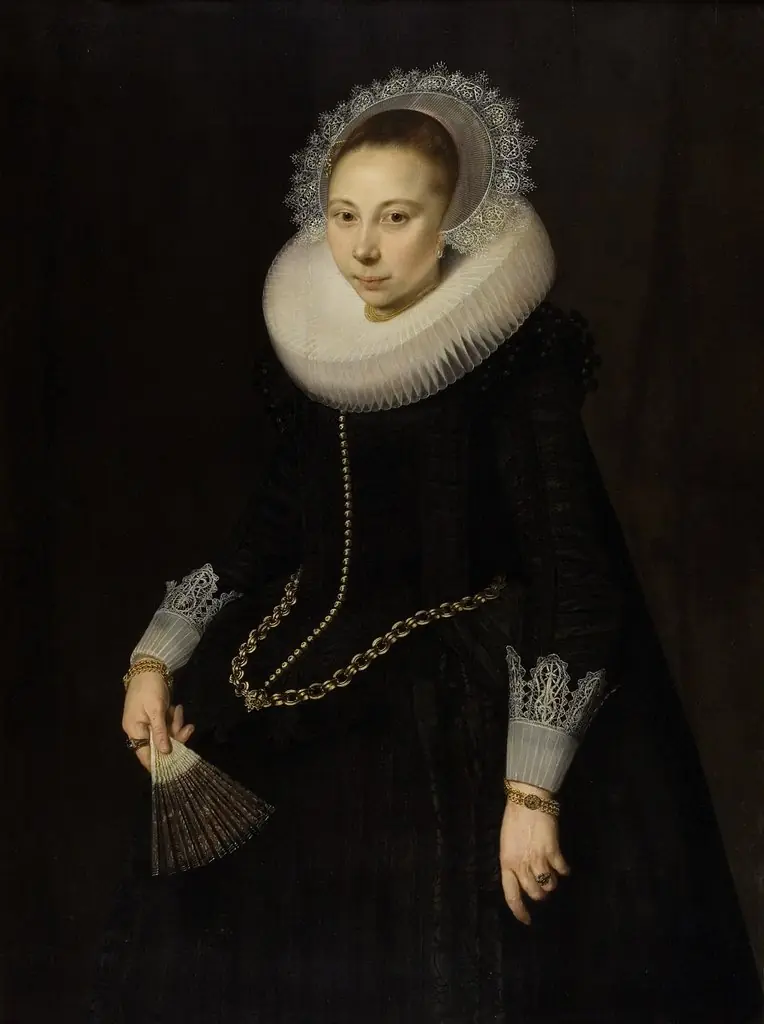 Portrait of Maria Overrijn van Schoterbosch (1599/1600-1638)
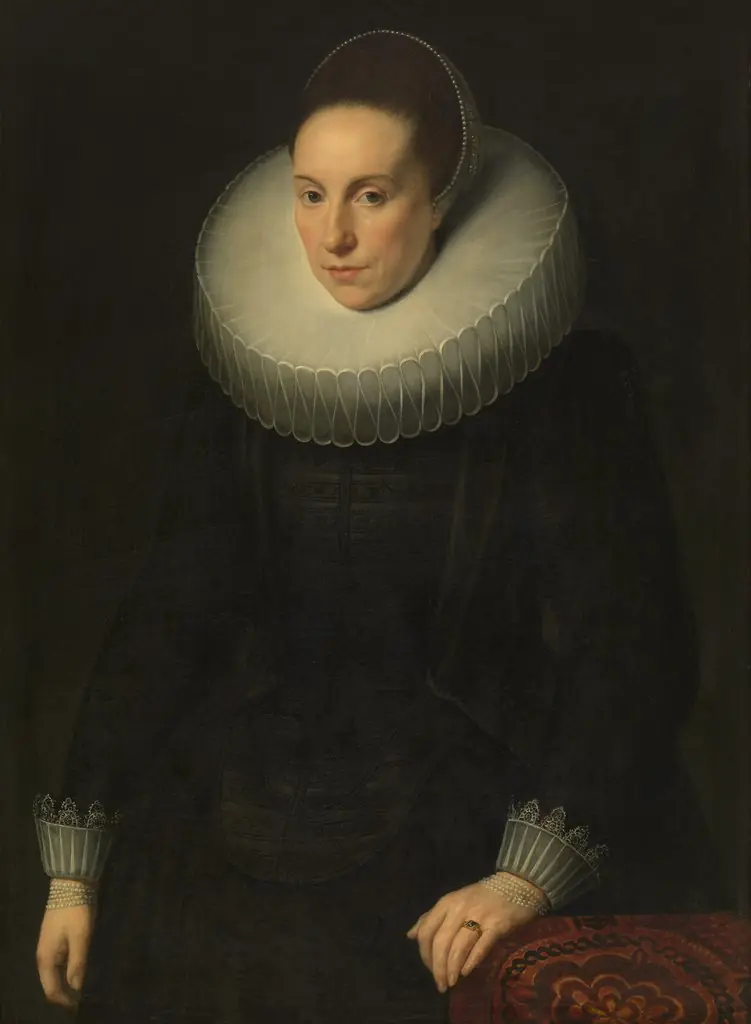 Portret van een vrouw
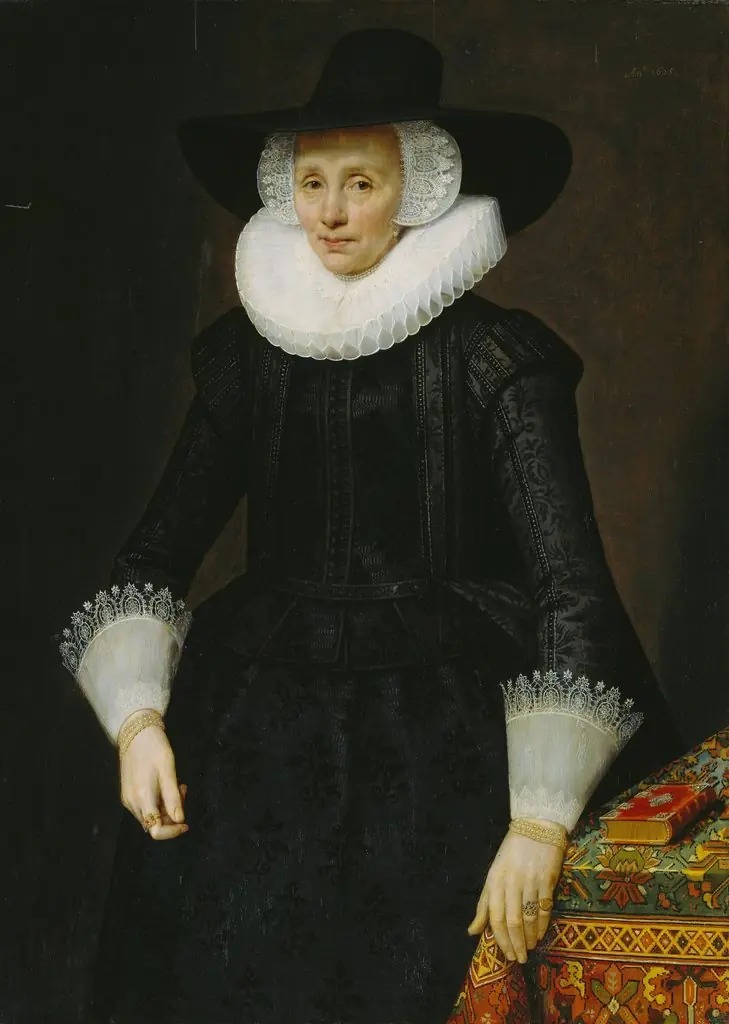 Portrait of Margarita Courten (1564-1640)
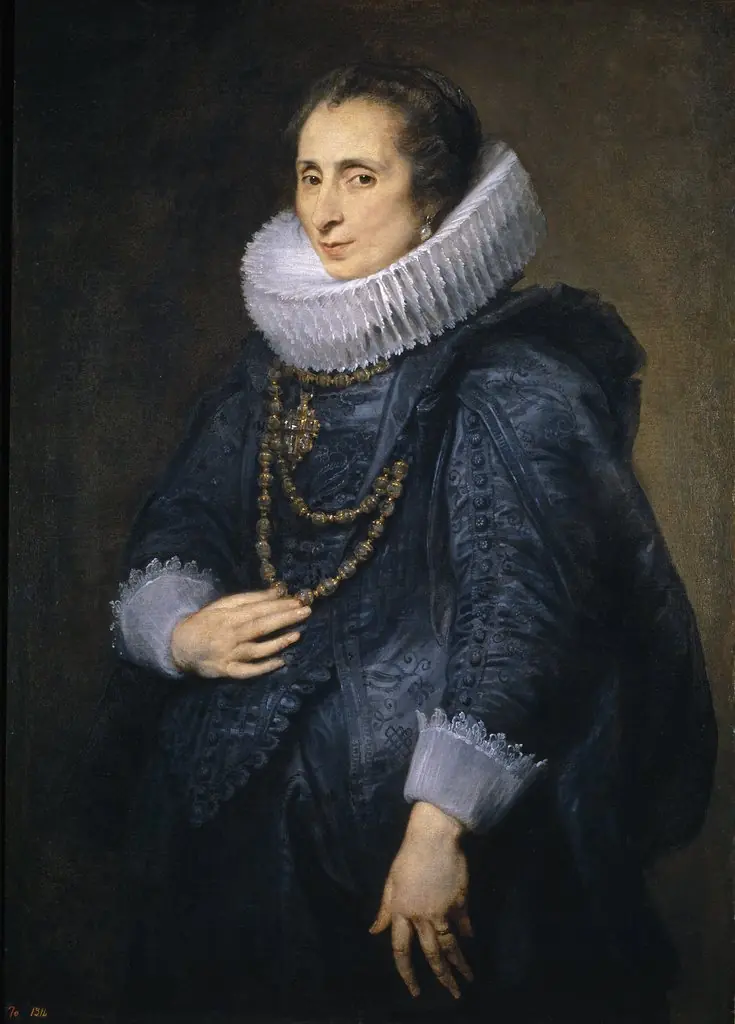 Unknown Lady
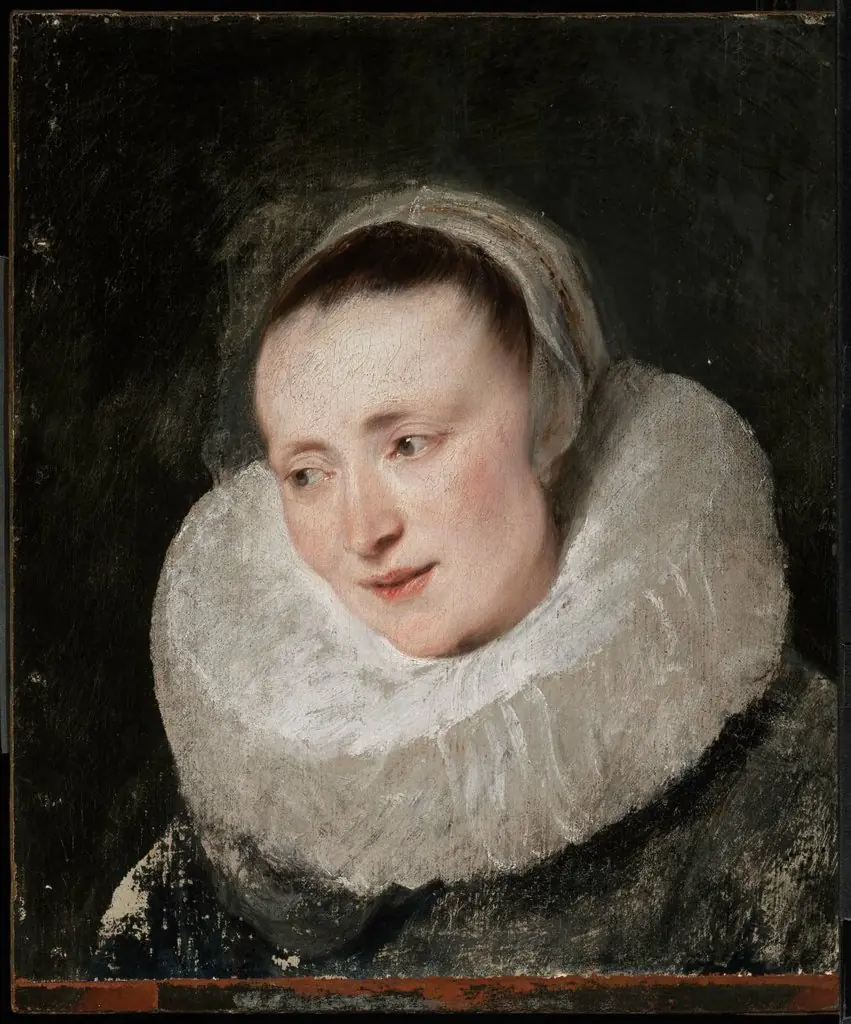 Margareta Snyders (Born de Vos)
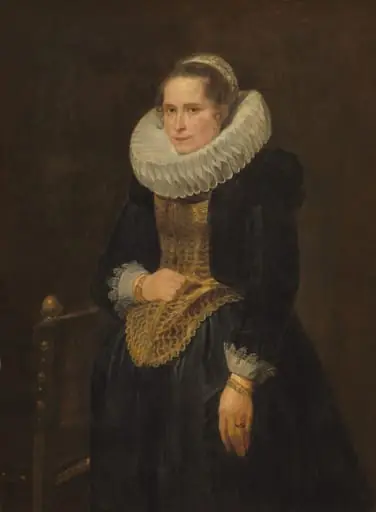 Portrait of a Flemish Lady
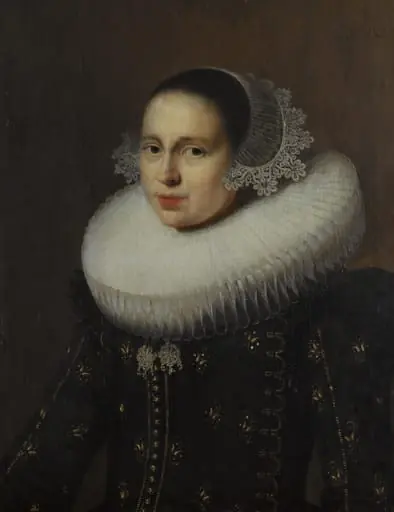 Portrait of Hendrickje Uylenburgh (1600-c. 1682)