Artwork
The Dance of the Villagers
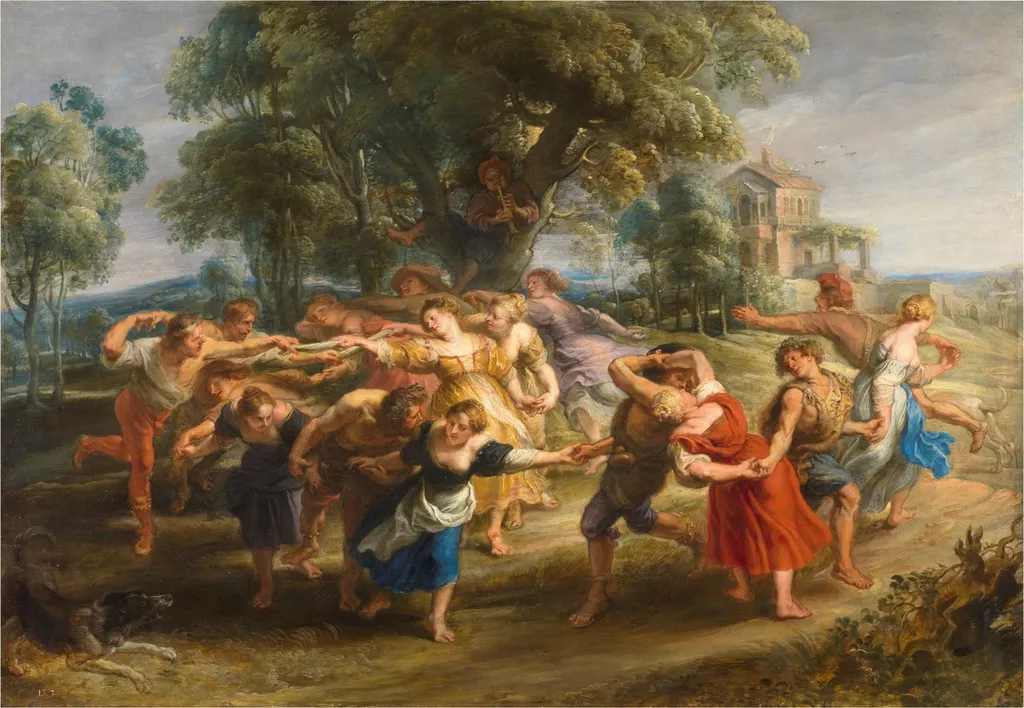
The Dance of the Villagers is an oil painting by the Flemish Baroque painting artist Peter Paul Rubens. It dates from 1630 and is held in the collection of the Museo del Prado.
About this work
The Dance of the Villagers is a painting by Peter Paul Rubens. It was created in 1635.
The painting is closely related to another work, The Village Fête, which has a similar date and subject. This suggests that Rubens was exploring themes of village life and celebrations during this time.
To learn more about the artist's style and techniques, look up the artist: Peter Paul Rubens.
Subject & Meaning
Villagers exuberantly hold hands, with some using their neckerchiefs to form a tunnel for others to duck under, while certain men wear bells on their legs.
The painting portrays a lively, circular village dance set in a sunny Italianate landscape with a Palladian villa. Villagers exuberantly hold hands, with some using their neckerchiefs to form a tunnel for others to duck under, while certain men wear bells on their legs. A flutist perched in a tree centrally orchestrates the dancers' movement, and two dogs leap along in the same direction, enhancing the dynamic composition.
The scene blends genre art with mythology. A dancer wearing a leopard skin and ivy crown, traditional attributes of Bacchus, dances alongside a bare-chested, ivy-crowned figure attempting to steal a kiss, identifying them as mythological satyrs. These figures appear to have descended to celebrate with mortals, merging a peasant kermis with a bacchanal. The vibrant colors and joyous atmosphere reflect Rubens's celebration of life and sensuality during his later years.
Technique & Style
Created in 1635, *The Dance of the Villagers* is an oil painting executed on canvas. The work exemplifies Rubens' late style, characterized by a dynamic composition and the application of vivid, lively colors without sharp contours. The figures are rendered in foreshortening, depicting villagers and mythological figures engaged in a spirited circular dance within a sunlit landscape featuring a Palladian villa. The handling of paint conveys a sense of movement and energy, reinforced by the inclusion of jumping dogs and the central placement of a flutist in a tree. Atmospheric perspective is employed to blur distant objects, while the luminous, cheerful local costumes contrast with the traditional attributes of Bacchus and satyrs present in the scene. The painting reflects the sensual and joyful themes of the artist's later years, despite his physical ailments.
History & Provenance
Peter Paul Rubens painted *The Dance of the Villagers* in 1635, during his later years, reflecting his continued vitality despite health struggles. The work remained in Rubens’ personal collection until his death in 1640, listed as *Vne danse des paysans Italiens* in the inventory of his Antwerp home (source 4).
Following Rubens’ death, Philip IV of Spain dispatched his ambassador, Francisco de Rochas, to acquire paintings from the artist’s estate. The king purchased the work for 800 florins, displaying it in the summer dining room of the Royal Alcázar of Madrid (sources 3, 4, 5). The painting later entered the collection of Ferdinand VII of Spain before becoming part of the Museo del Prado’s holdings (source 2).
The work is held in the Museo del Prado, Madrid, where it is inventoried as oil on canvas, 73 cm high by 106 cm wide.
It entered the Spanish royal collection after Philip IV sent an ambassador to purchase paintings from Rubens’s estate; the king paid 800 florins and installed it in the summer dining room of the old Royal Alcázar of Madrid. Following the Alcázar’s destruction in 1734, the painting was transferred to the Prado.
Context
Scholarship situates The Dance of the Villagers within Rubens’s late Italianate genre scenes, painted near the end of his career and shortly after his second marriage to Hélène Fourment. The work’s bacchic undercurrents align it with broader Flemish Baroque interest in mythological revelry and peasant festivity, while its compositional energy reflects Rubens’s late, vigorous handling despite physical infirmity. The painting’s acquisition by Philip IV of Spain from Rubens’s estate in 1640 situates it within Habsburg collecting practices and the Prado’s early holdings, underscoring its status as a prized example of Rubens’s late style.
Critical reception emphasizes the painting’s synthesis of genre and myth, noting how the dancers’ rustic exuberance merges with classical references such as Bacchus’s attributes and Titianic bacchanalia. Dutch and Spanish encyclopedic accounts of the 17th and 20th centuries describe the work as a spirited evocation of communal joy, with its loose brushwork and aerial perspective signaling Rubens’s influence on later genre traditions.
Legacy
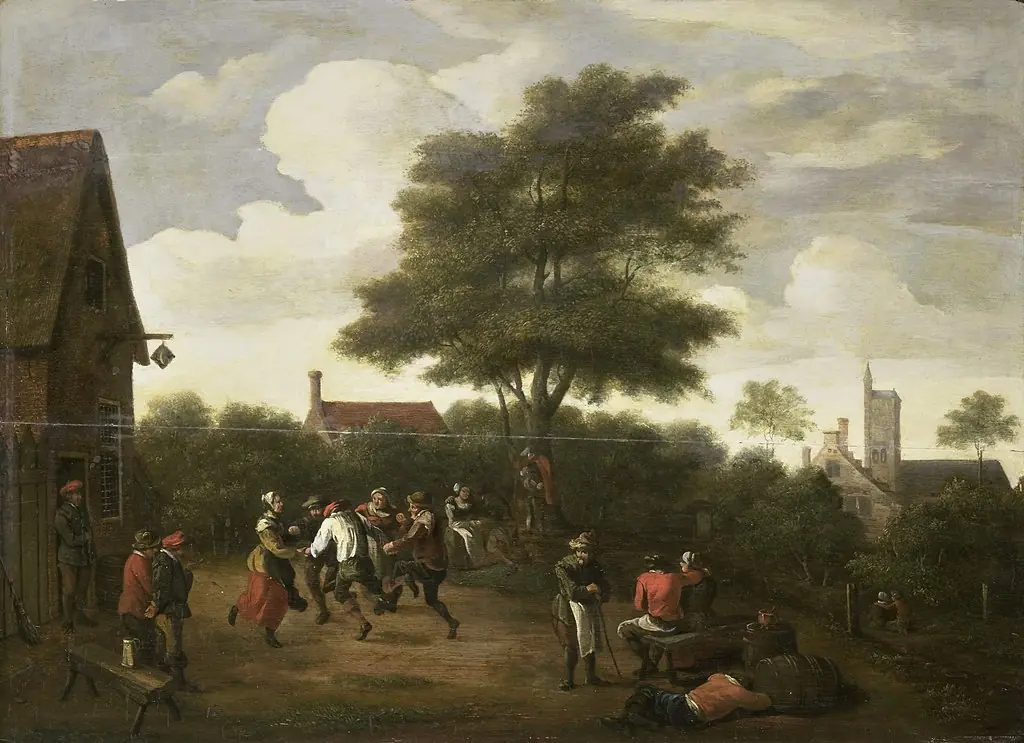
Although Rubens retained the painting during his lifetime, its composition achieved early dissemination through prints and adaptations. Schelte à Bolswert produced an engraving of the work around 1638, while Brussels artist Leo van Heil later created his own interpretation. The composition also inspired parody, notably by Frisian painter Johannes Hilarides, who reimagined the dancers as monkeys circa 1700.
Critics regard the work as a quintessential example of seventeenth-century Flemish Baroque art. Created during the artist's sensual late period following his marriage to Hélène Fourment, the painting demonstrates Rubens' enduring energy despite his physical decline from gout. The piece is frequently analyzed alongside thematically similar works such as The Village Fête and Kermis, highlighting the artist's engagement with peasant festivities and bacchanalian themes derived from predecessors like Bruegel, Titian, and Poussin.
Own this work as a print
Artist & collection
Artist
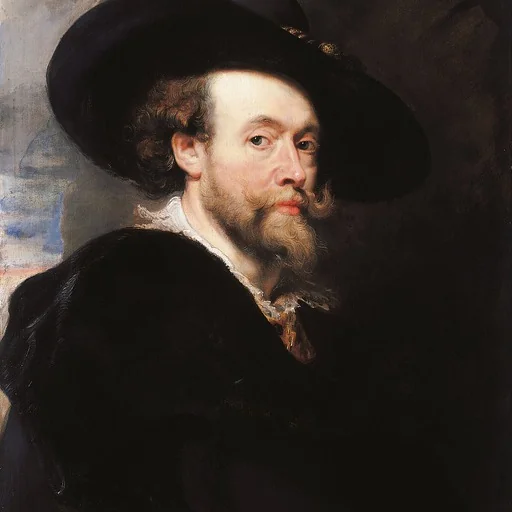
Sir Peter Paul Rubens ( ROO-bənz; Dutch:; 28 June 1577 – 30 May 1640) was a Flemish artist and diplomat.

 Triumph Davids (nach dem Sieg über Goliath)
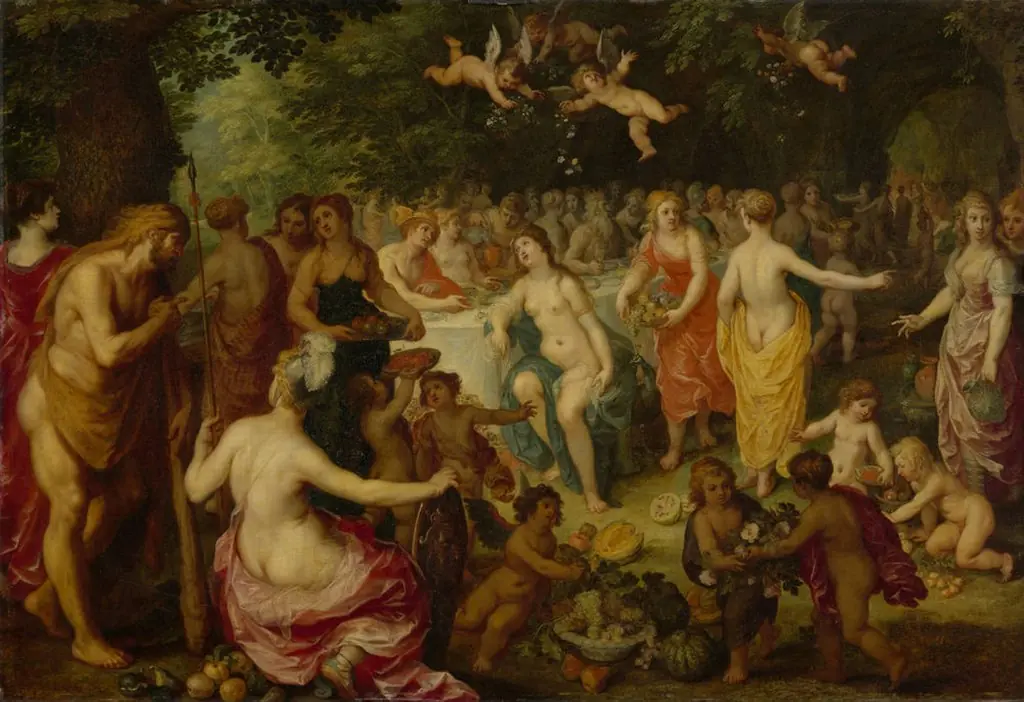 The Feast of the Gods
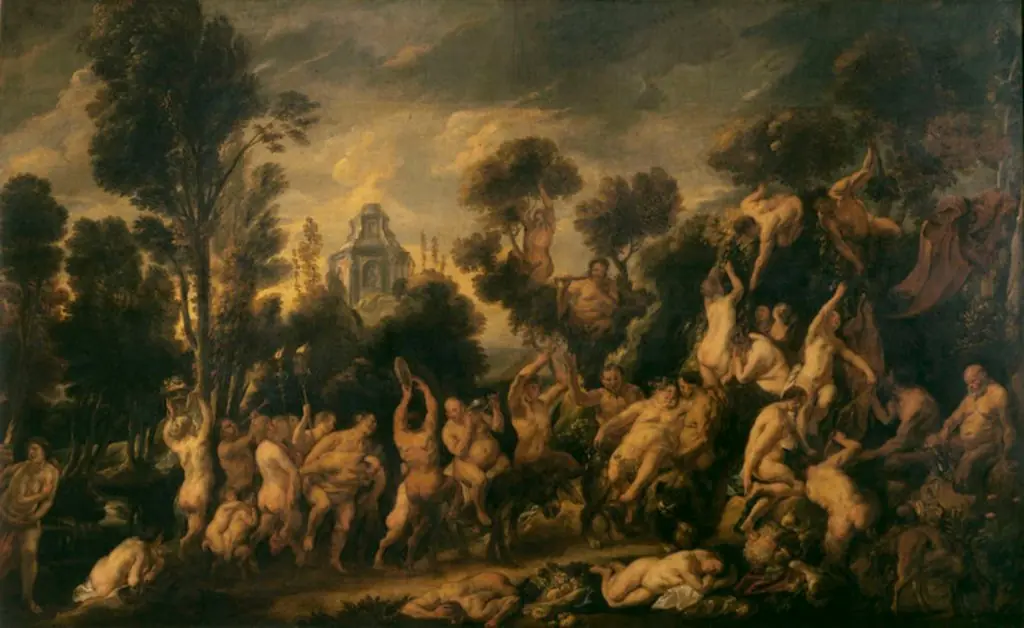 The Triumph of Bacchus
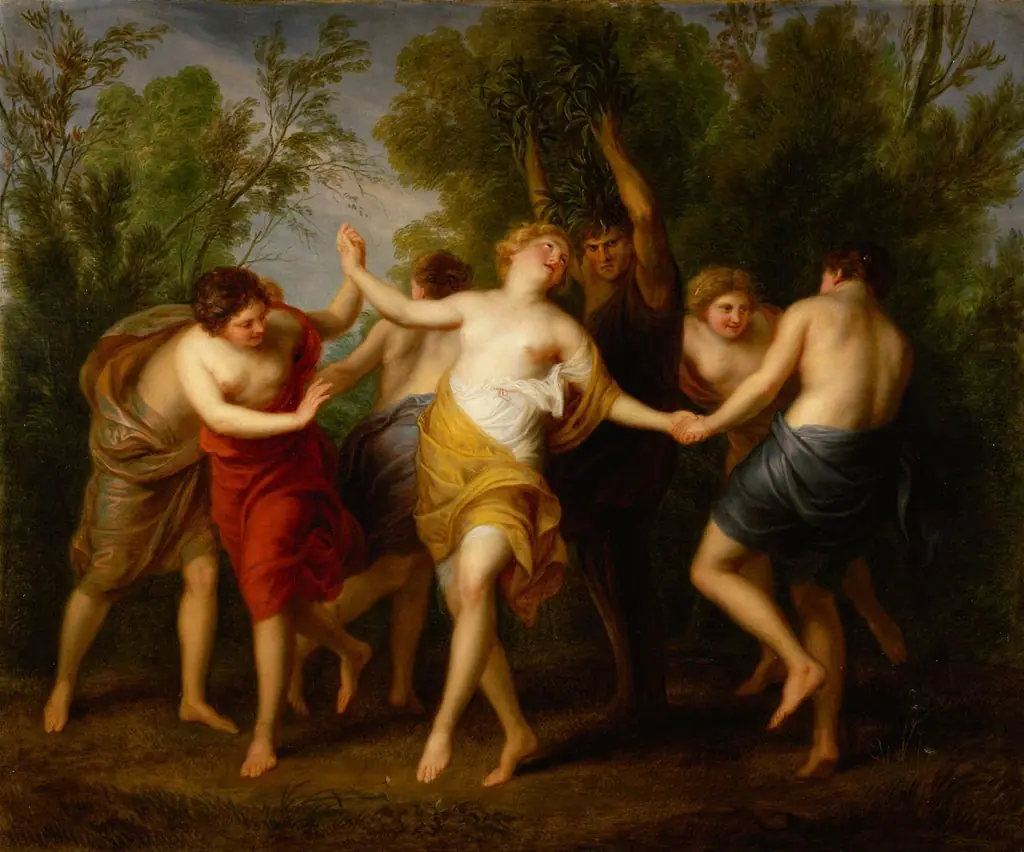 Verwandlung des Apulus in einen Ölbaum
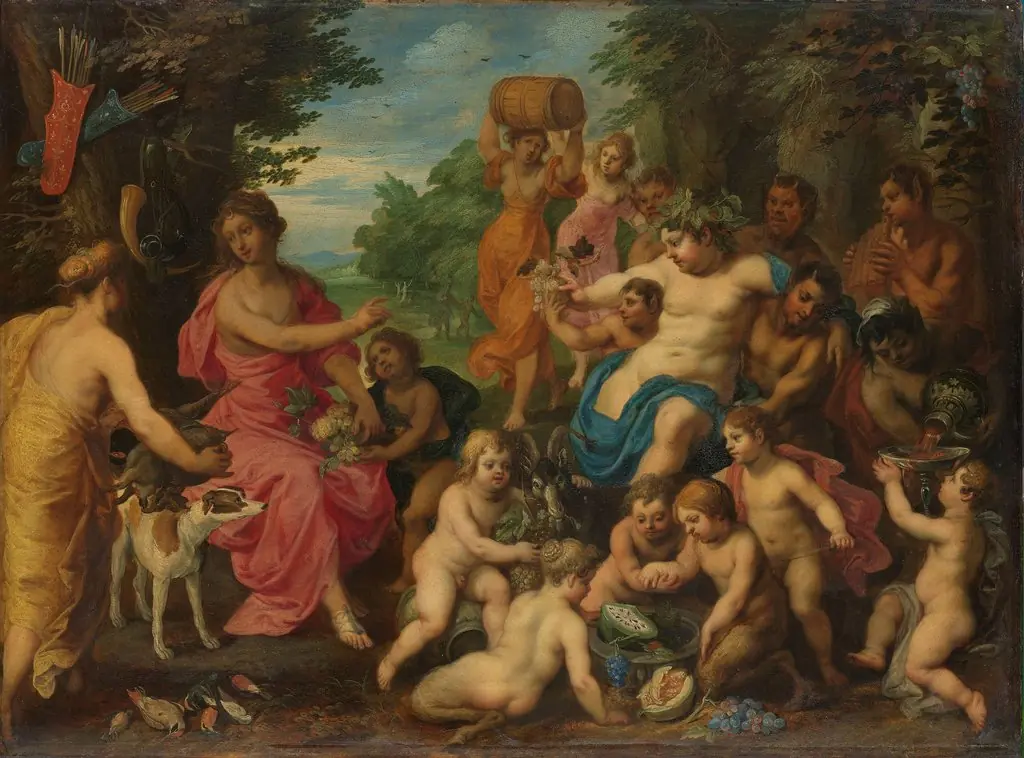 Diana Offered Wine and Fruit by the Young Bacchus and his Retinue
 Minerva Visits the Muses
 Adoration of the Golden Calf
 The Feast of Venus
 Diana Offered Wine and Fruit by Bacchus and his Retinue
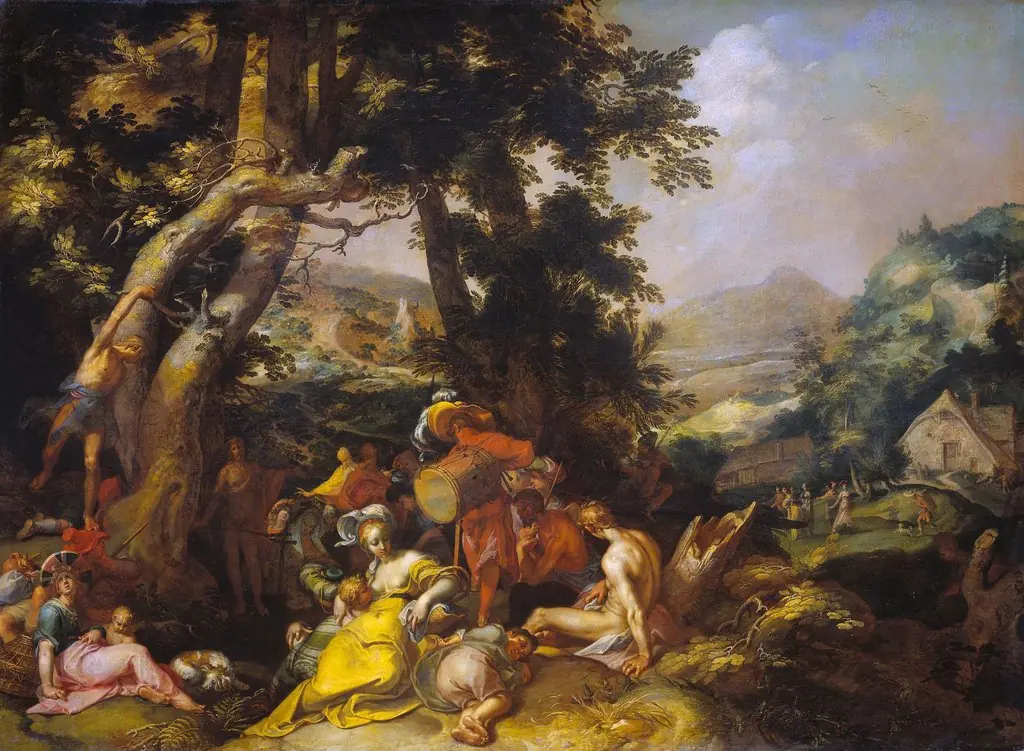 Landscape with the Ministry of John the Baptist
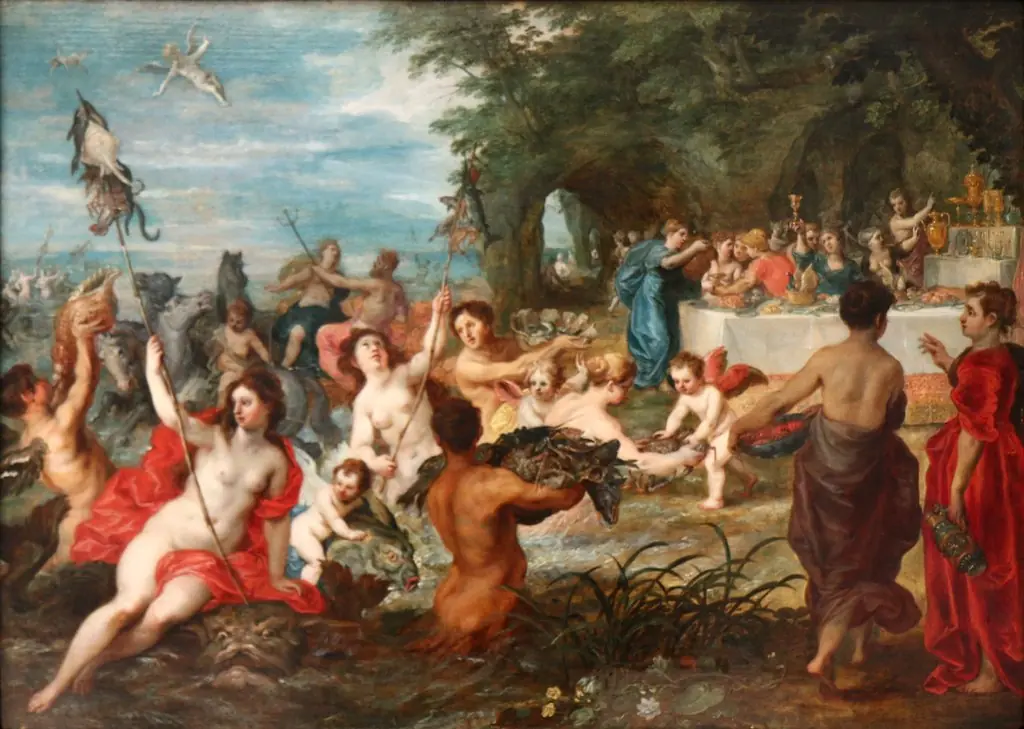 The wedding of Thetis and Peleus
- Peasants dancing