Artwork
The Feast of Acheloüs
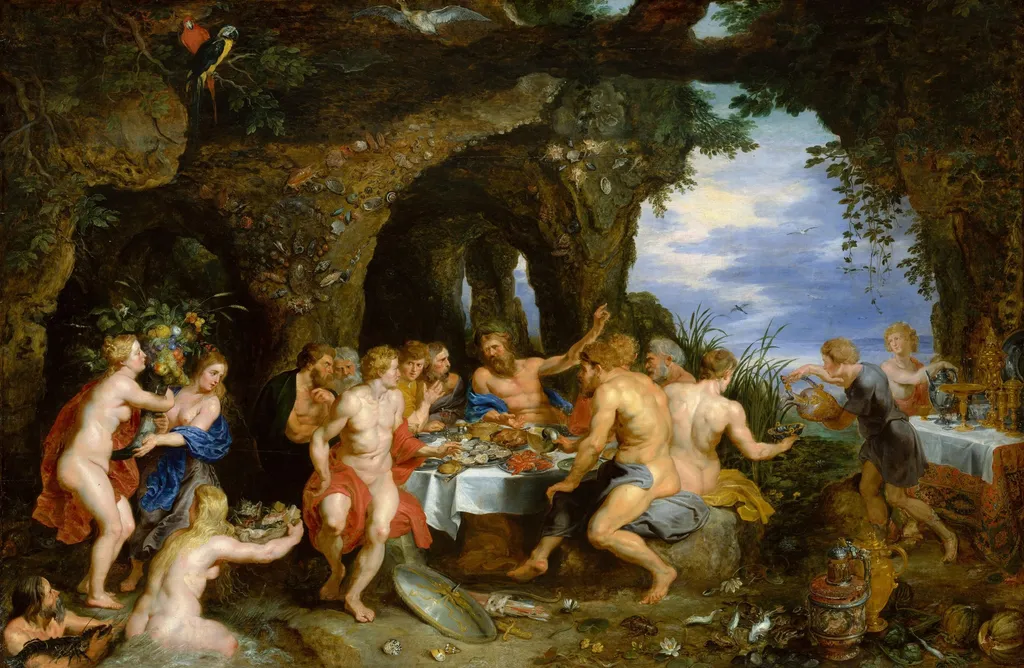
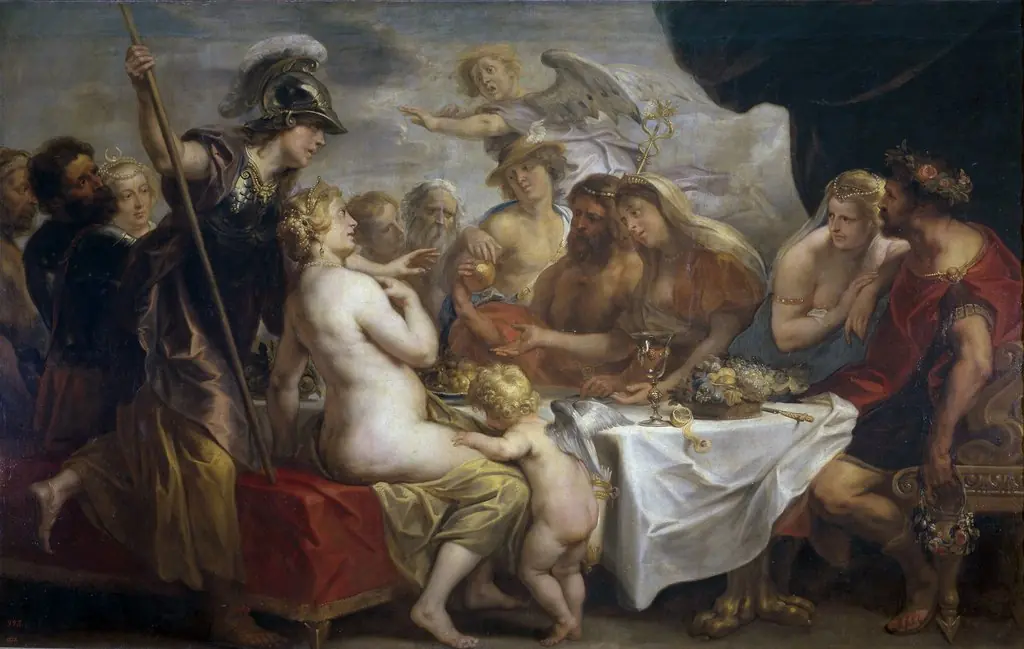
The Feast of Acheloüs is an oil painting by the Flemish Baroque painting artist Peter Paul Rubens. It dates from 1615 and is held in the collection of the Metropolitan Museum of Art.
About this work
Subject & Meaning
Consistent with the genre of mythological painting, the composition features nude figures, emphasizing the classical nature of the narrative.
Created in 1615, this mythological oil painting by Peter Paul Rubens illustrates a banquet scene set within a dining room. The work depicts the Greek hero Theseus participating in a feast, surrounded by provisions of food. Consistent with the genre of mythological painting, the composition features nude figures, emphasizing the classical nature of the narrative.
While the specific allegorical meanings or symbolic interpretations of the gathering are not detailed in the available records, the visual program centers on the interaction between the divine or heroic figures and the act of dining, capturing a moment of mythological hospitality.
Technique & Style
The work is executed in oil paint on a wooden panel, a support typical of early‑17th‑century Flemish practice, and measures roughly 108 cm in height by 163.8 cm in width. It belongs to the mythological genre, portraying the banquet of the river god Acheloüs with figures such as Theseus partaking in a feast, as recorded in contemporary descriptions. The composition reflects Rubens’s characteristic use of dynamic figure arrangement and rich coloration, while the handling of light and shadow creates a vivid, three‑dimensional effect.
The painting has been part of the Metropolitan Museum of Art’s collection since its acquisition, remaining an oil‑on‑panel work from 1615.
History & Provenance
Peter Paul Rubens created the mythological painting The Feast of Acheloüs in 1615. Executed in oil paint on a wooden panel, the work measures 108 cm in height and 163.8 cm in width. The composition depicts a banquet scene featuring Theseus, nude figures, and a dining room setting.
While the specific circumstances of its original commission and the intermediate ownership chain prior to its current location are not detailed in the available records, the artwork is presently held in the collection of the Metropolitan Museum of Art.
Overview
The Feast of Acheloüs, painted by Peter Paul Rubens in 1615, depicts a mythological scene from Ovid's Metamorphoses where the river god Acheloüs hosts a banquet for the hero Theseus. The composition centers on a rustic gathering beneath a rocky archway, crowded with figures including the host, the hero, and various nymphs and satyrs. Acheloüs, identifiable by his beard and commanding gesture, narrates the story of his transformation into a serpent while the guests listen or engage with the abundant spread of fish, fruit, and wine.
A bright parrot perches above, adding a touch of exoticism to the naturalistic setting. Executed in oil paint, the work exemplifies Rubens' mature Baroque style, characterized by dynamic movement, rich coloration, and a synthesis of classical literature with vigorous observation of nature. Created during the artist's Antwerp period, shortly after his return from Italy, the painting reflects his deep engagement with humanist themes and his ability to animate mythological narratives with physical vitality.
The work stands as a significant example of Rubens' mythological output, demonstrating his skill in balancing complex groupings with narrative clarity and emotional intensity.
Own this work as a print
Artist & collection
Artist
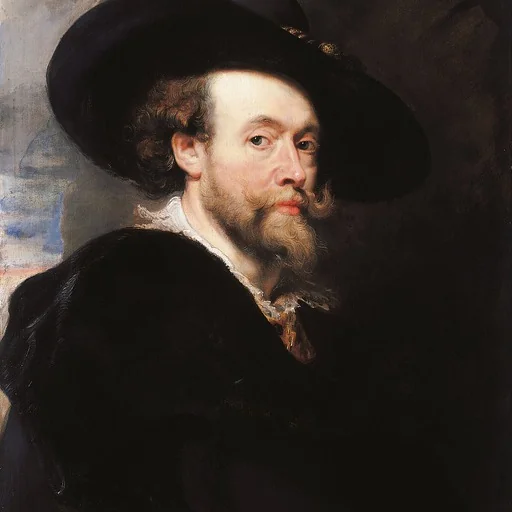
Sir Peter Paul Rubens ( ROO-bənz; Dutch:; 28 June 1577 – 30 May 1640) was a Flemish artist and diplomat.

 The Feast of Bacchus
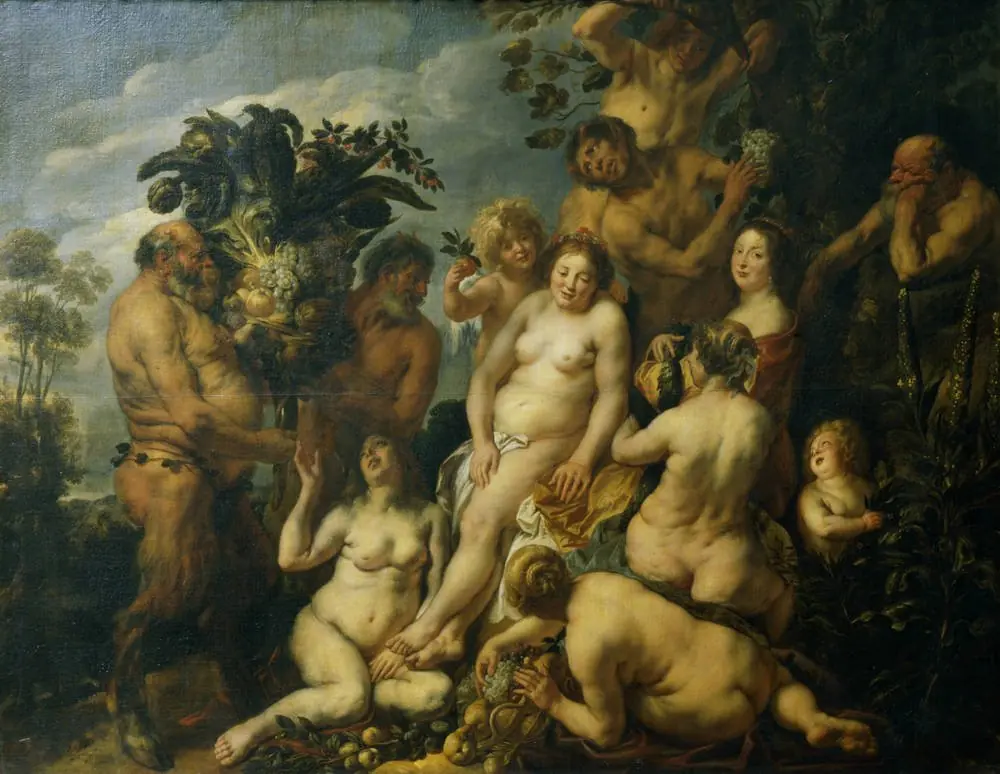 Allegory of Fertility
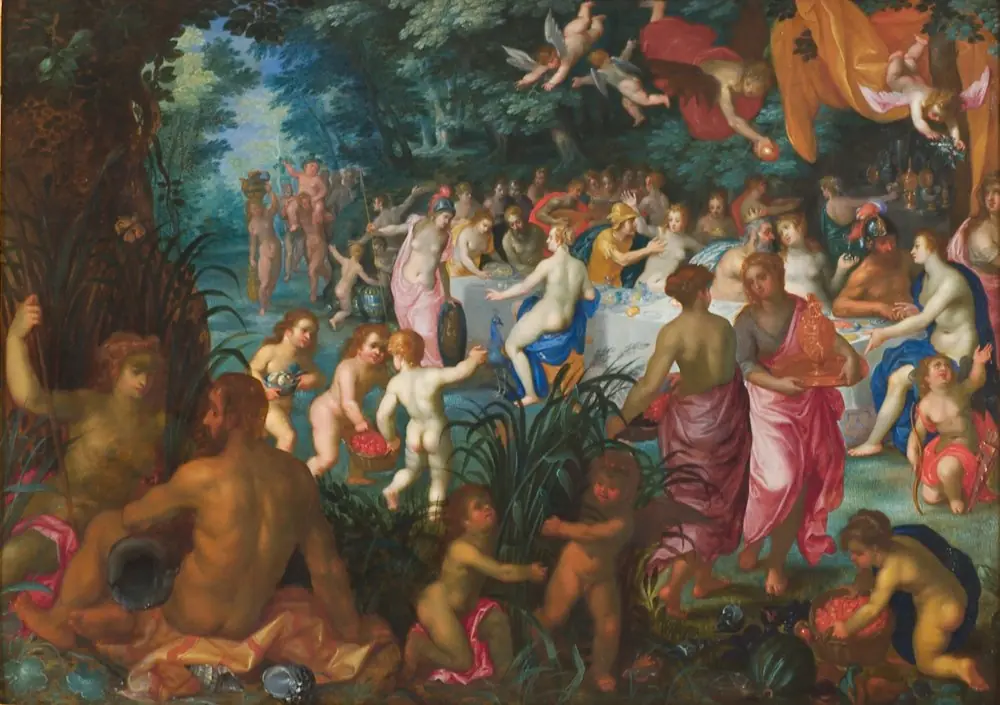 The Marriage of Peleus and Thetis
 The Feast of the Gods. The Wedding of Peleus and Thetis
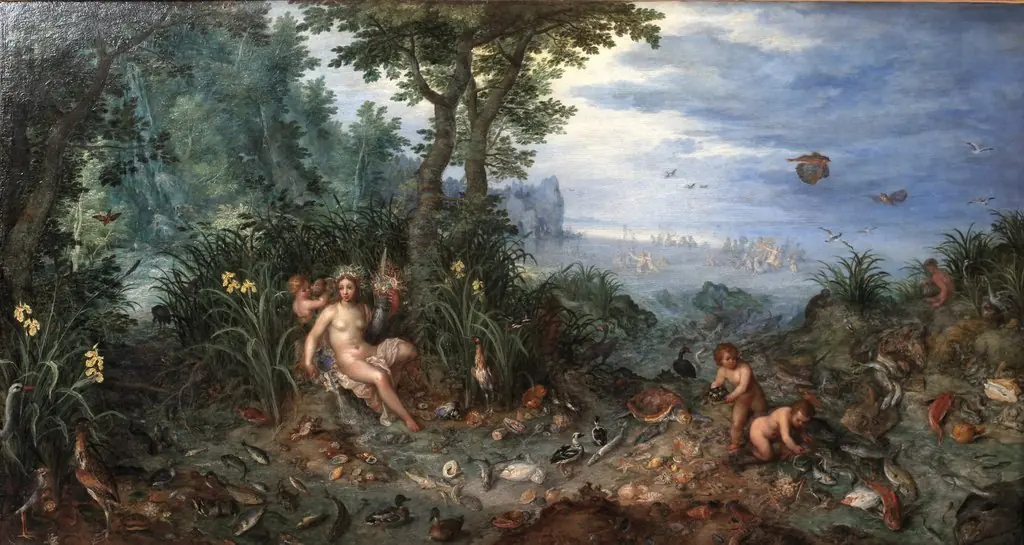 Water
Water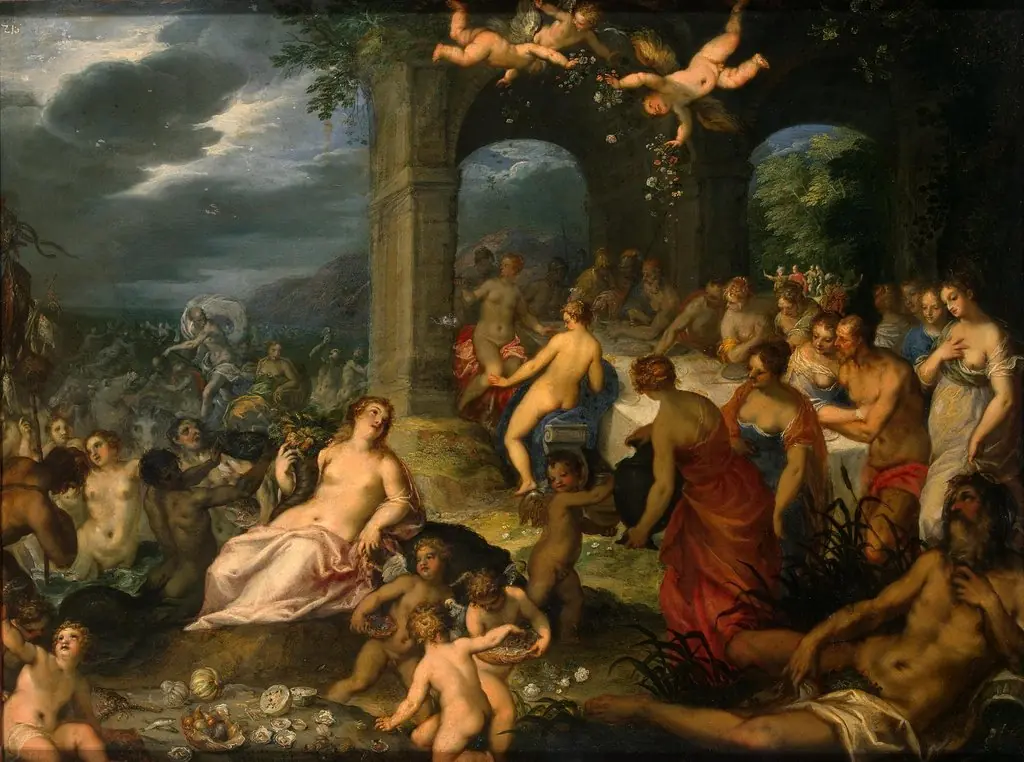 Feast of the Gods (The Marriage of Peleus and Thetis)
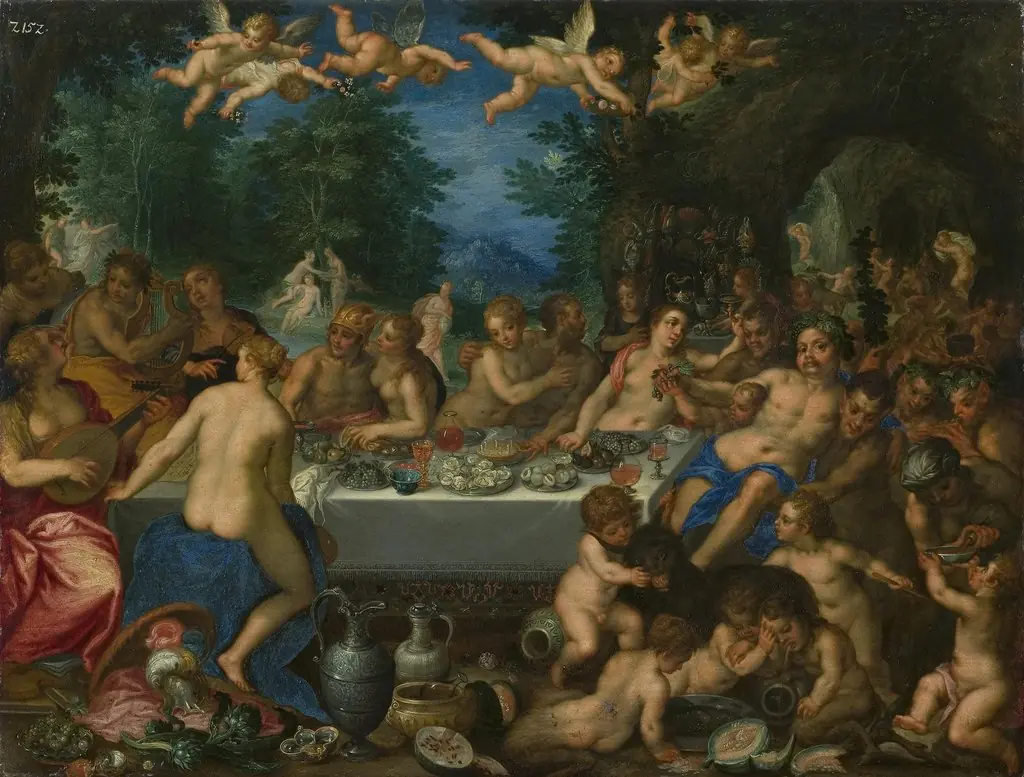 Feast of the Gods - The Marriage of Peleus and Thetis
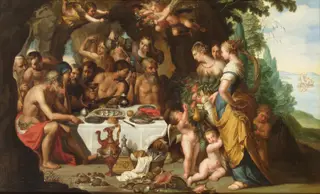 Gastmahl des Achelous
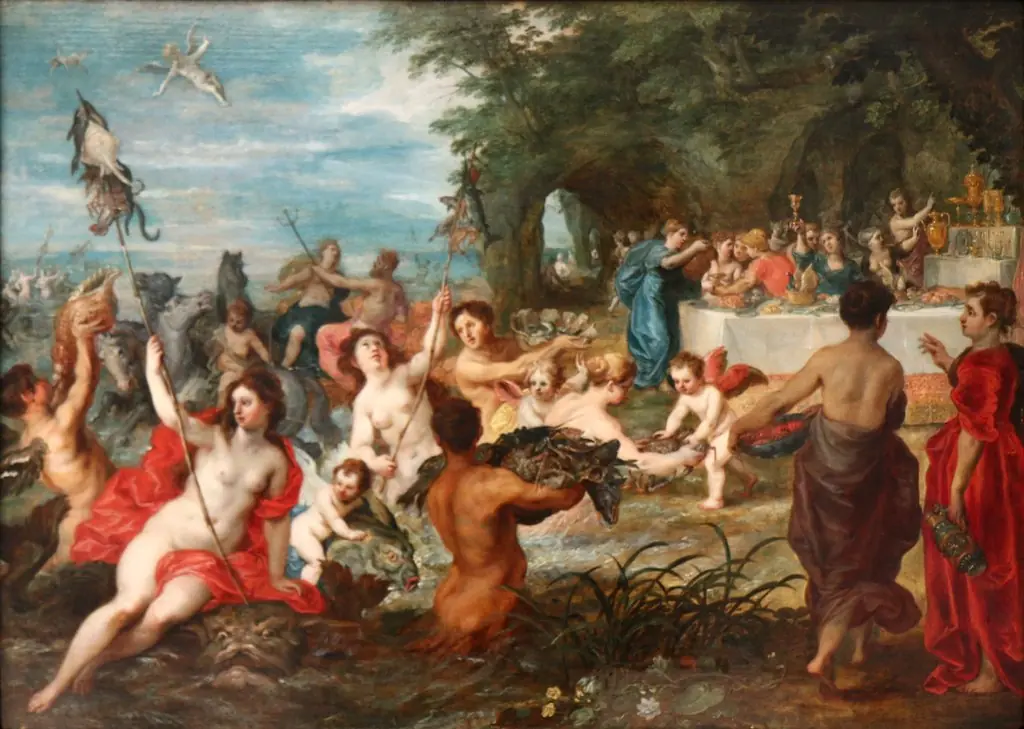 The wedding of Thetis and Peleus
 The wedding of Thetis and Peleus