Artwork
The Succession of the Popes
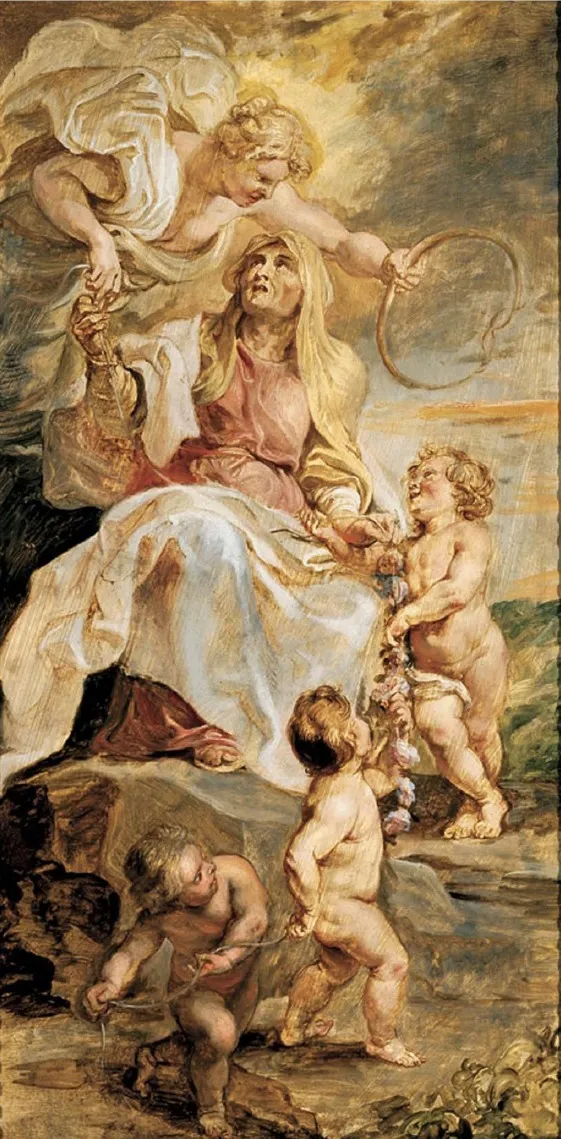
The Succession of the Popes is an oil painting by the Flemish Baroque painting artist Peter Paul Rubens. It is held in the collection of the Hermitage Museum.
About this work
Subject & Meaning
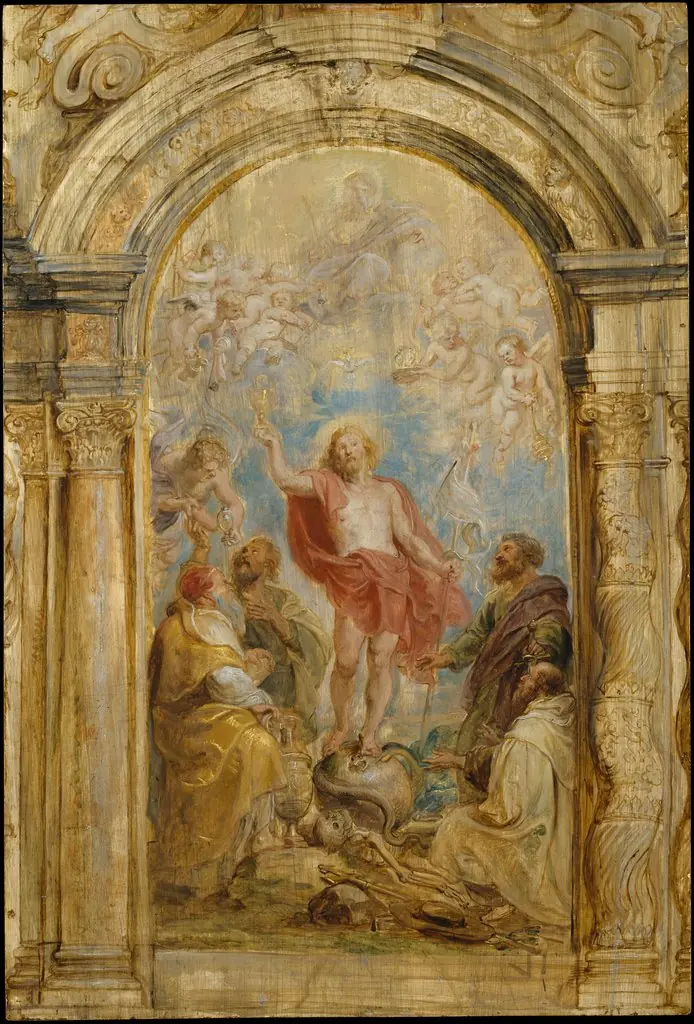
The painting shows a Pope at the center of a celestial succession, surrounded by angels and a cherub that symbolize divine authority and continuity of the papacy. The iconography of the papal figure among heavenly beings underscores the Pope's role as spiritual successor to Saint Peter, representing theological succession and the unity of the Church. This composition conveys the idea of an unbroken line of papal leadership within the heavenly realm, reflecting Counter‑Reformation themes of papal primacy and sacred order.
Technique & Style
No further details regarding Rubens's specific handling, brushwork, surface condition, or stylistic approach are documented in the available sources.
The Succession of the Popes is executed in oil paint, with the work catalogued as an oil-on-panel painting. The composition is small in scale, measuring 34.3 cm in height by 66 cm in width. The religious subject matter is rendered through figural elements including cherubs, a woman, angels, and a pope as the central focus.
No further details regarding Rubens's specific handling, brushwork, surface condition, or stylistic approach are documented in the available sources.
History & Provenance
Peter Paul Rubens painted The Succession of the Popes in 1650 using oil on panel, measuring 34.3 cm by 66 cm. The work entered the collection of Leo Blumenreich before passing through Gallery van Diemen and Arthur Goldschmidt. It is now held by the San Diego Museum of Art and the Hermitage Museum.
The painting is held by the San Diego Museum of Art, where it is recorded under accession number 1939.13.
It was exhibited at the Gallery van Diemen in Berlin in 1930. The work had previously entered the collection from Leo Blumenreich and passed through Arthur Goldschmidt before arriving at its current institution.
Legacy
The Succession of the Popes exerted significant influence on later religious painting, particularly in shaping depictions of papal succession within the Baroque tradition. Its composition informed numerous 17th- and 18th-century interpretations of ecclesiastical hierarchy, with the work frequently cited as a key reference for narrative cycles of papal succession. The painting's presence in major collections including the Hermitage Museum and San Diego Museum of Art underscores its enduring reputation in museum histories.
Its legacy persists through scholarly analyses of Rubens' innovative approach to papal iconography and its impact on subsequent religious art genres.
Overview
Created circa 1650 by the Flemish painter Peter Paul Rubens, this oil on canvas belongs to the Baroque period and is part of the State Hermitage Museum’s collection. The composition centers on a solemn, long‑haired woman in a white robe seated on a rocky ledge, cradling an infant while four nude children play nearby. An angel hovers above, holding a round mirror, against a softly clouded sky.
Context
During the mid‑17th century Rubens was both an artist and a diplomat, and his religious commissions often blended theological narrative with political symbolism. This painting reflects the broader Counter‑Reformation interest in visualizing ecclesiastical authority and lineage.
Artist & collection
Artist
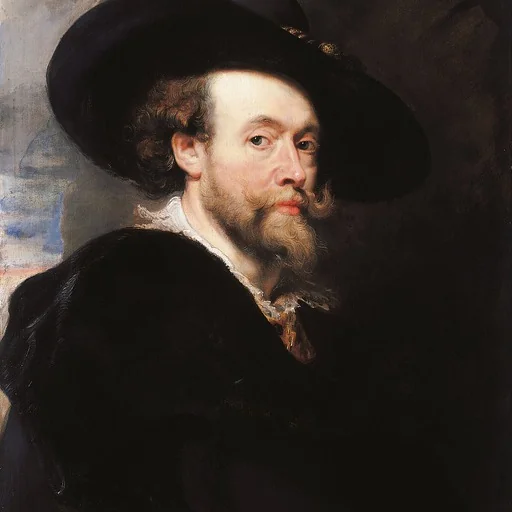
Sir Peter Paul Rubens ( ROO-bənz; Dutch:; 28 June 1577 – 30 May 1640) was a Flemish artist and diplomat.

- The Assumption of the Virgin
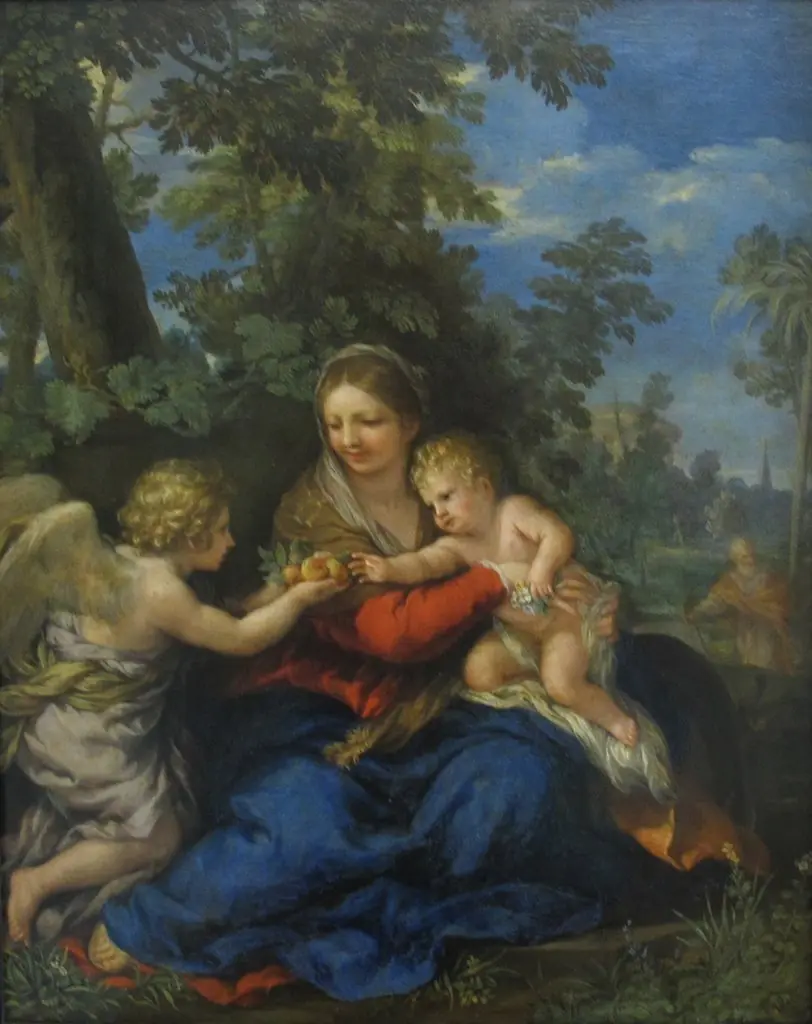 Holy Family Resting on the Flight to Egypt
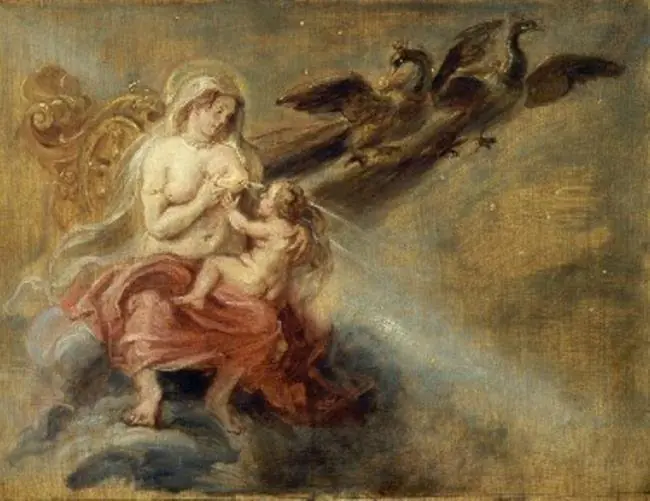 The Origin of the Milky Way (sketch for the Torre de la Parada
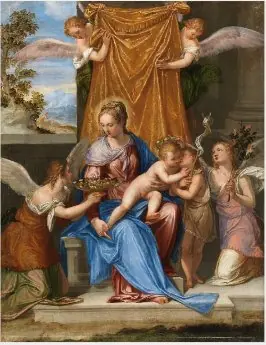 The Virgin and Child with Saint John the Baptist and Angels
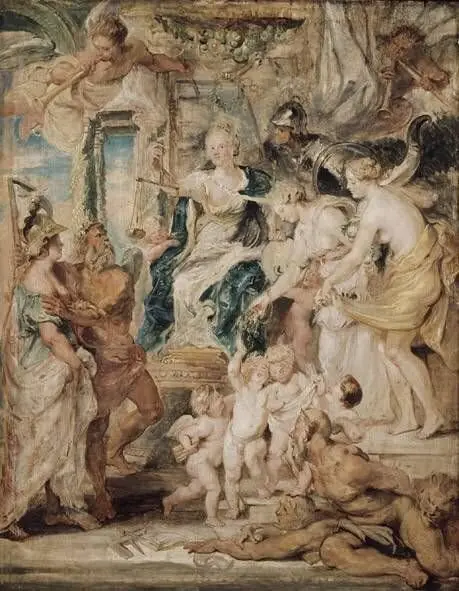 The Felicity of the Regency
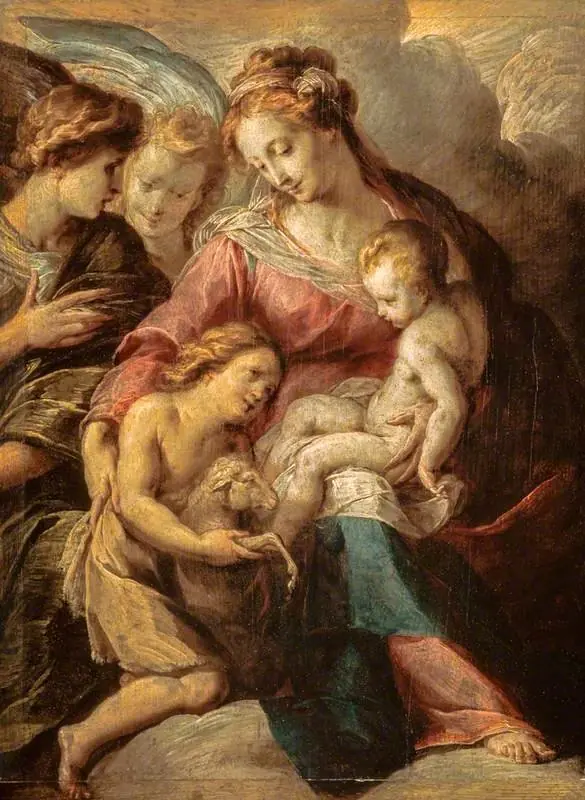 The Virgin and Child with the Infant Saint John and Attendant Angels
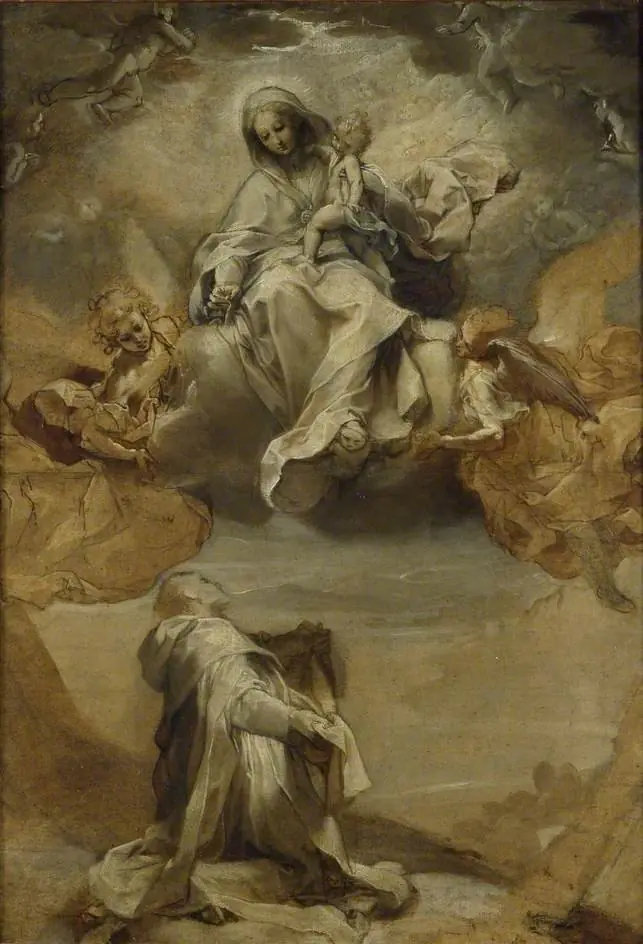 St Dominic de Guzmán receiving the Rosary
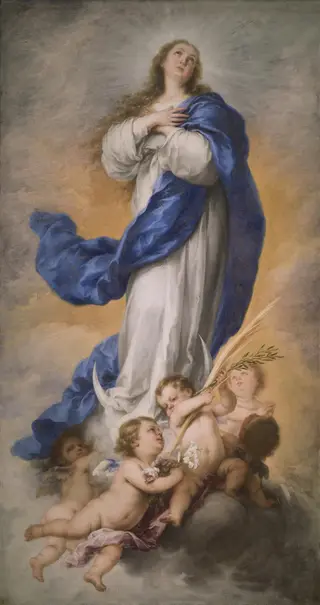 The Aranjuez Immaculate Conception
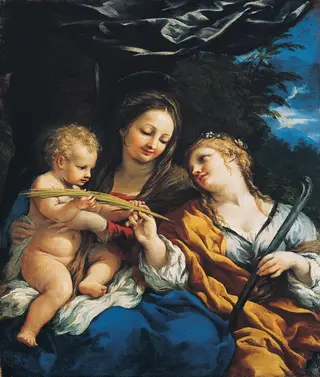 Madonna and Child with Saint Martina
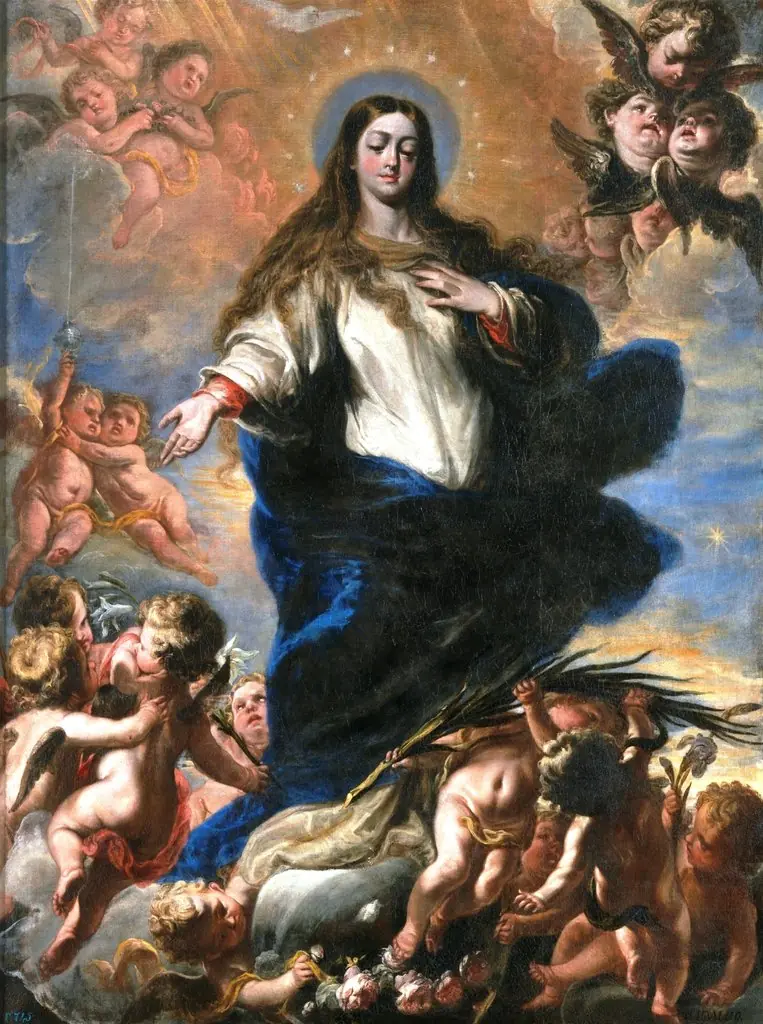 The Immaculate Conception
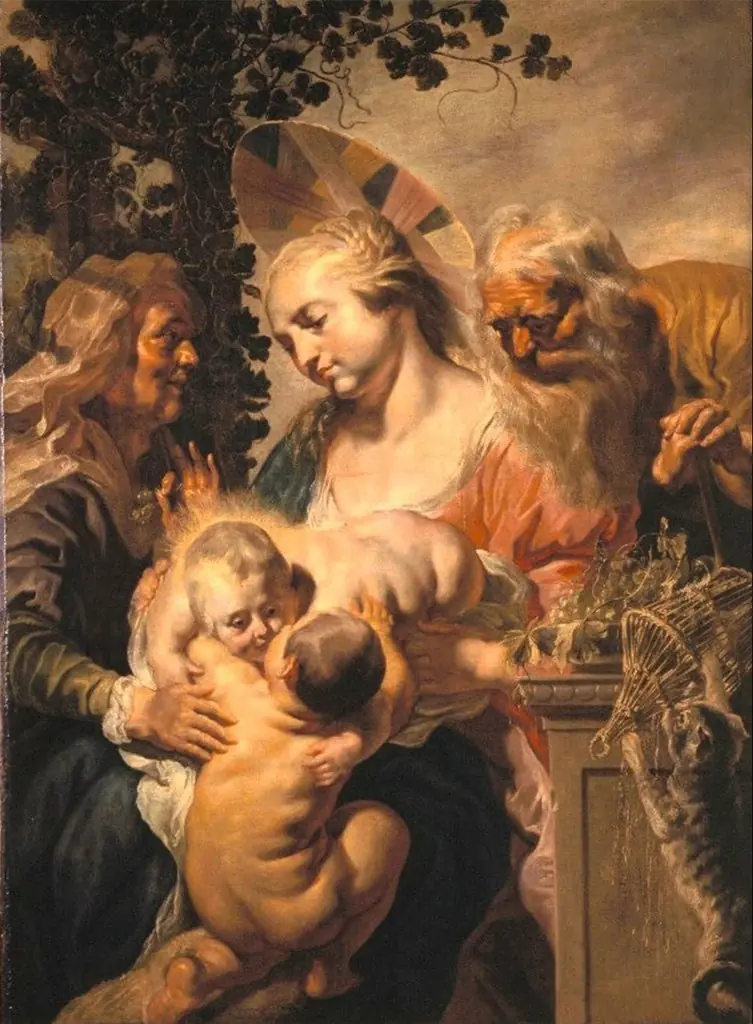 The Holy Family with St. Elizabeth and the Infant St John the Baptist
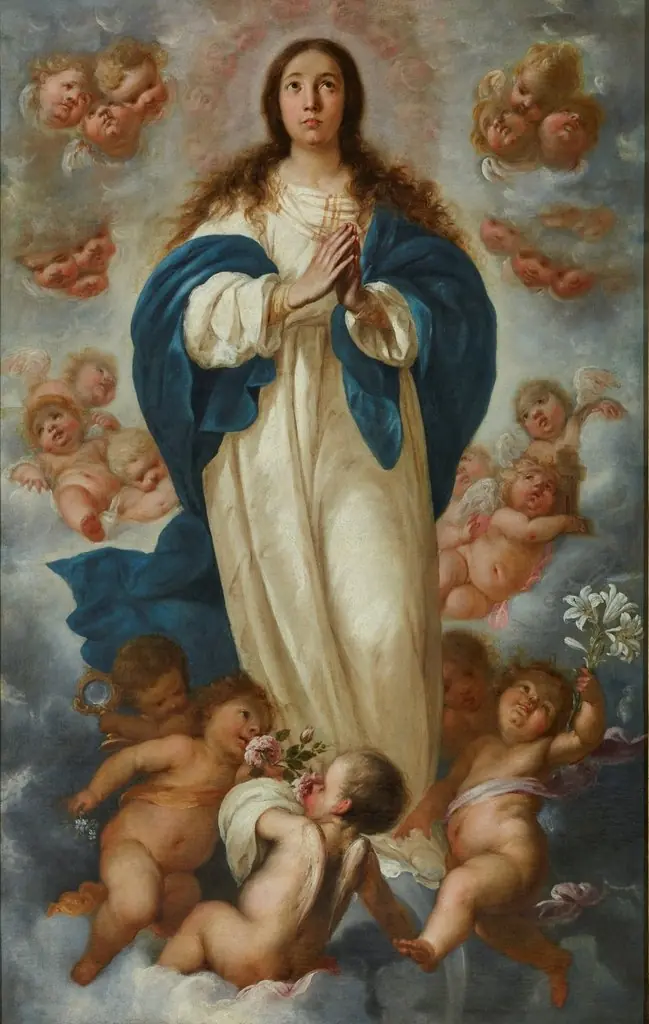 The Immaculate Conception