Artwork
The Wolf and Fox Hunt
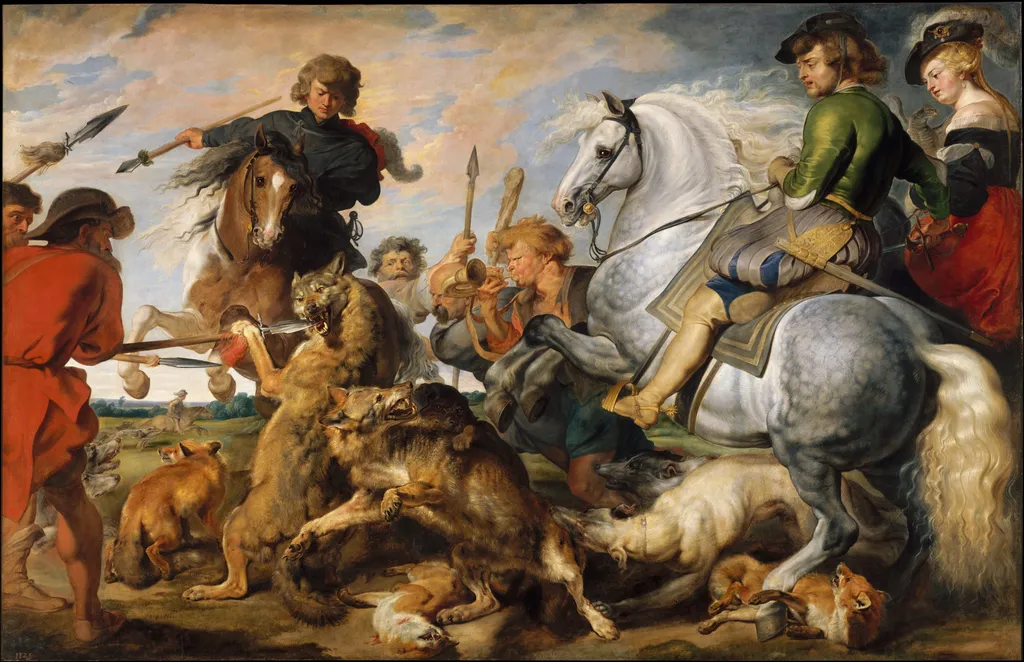
The Wolf and Fox Hunt is an oil painting by the Flemish Baroque painting artist Peter Paul Rubens. It dates from 1616 and is held in the collection of the Metropolitan Museum of Art.
About this work
Subject & Meaning
Among the foxes, one attempts to escape on the left, one lies dead at the center, and another is trampled beneath a horse on the right.
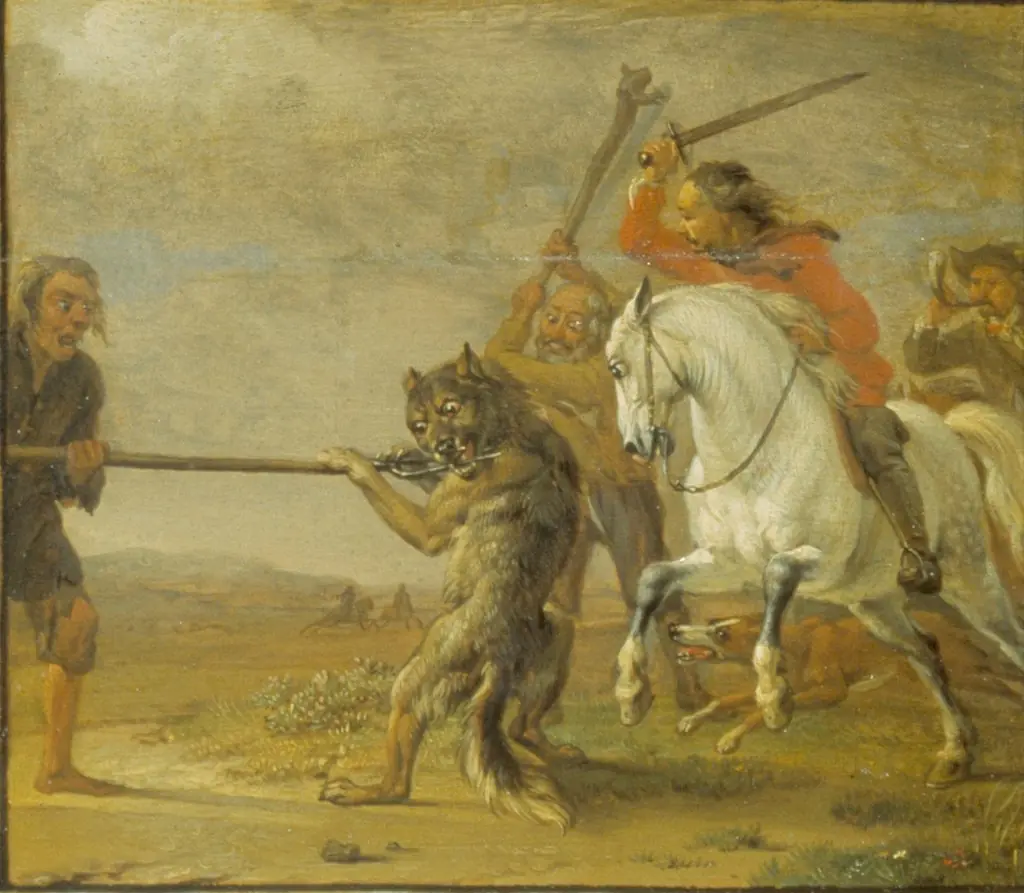
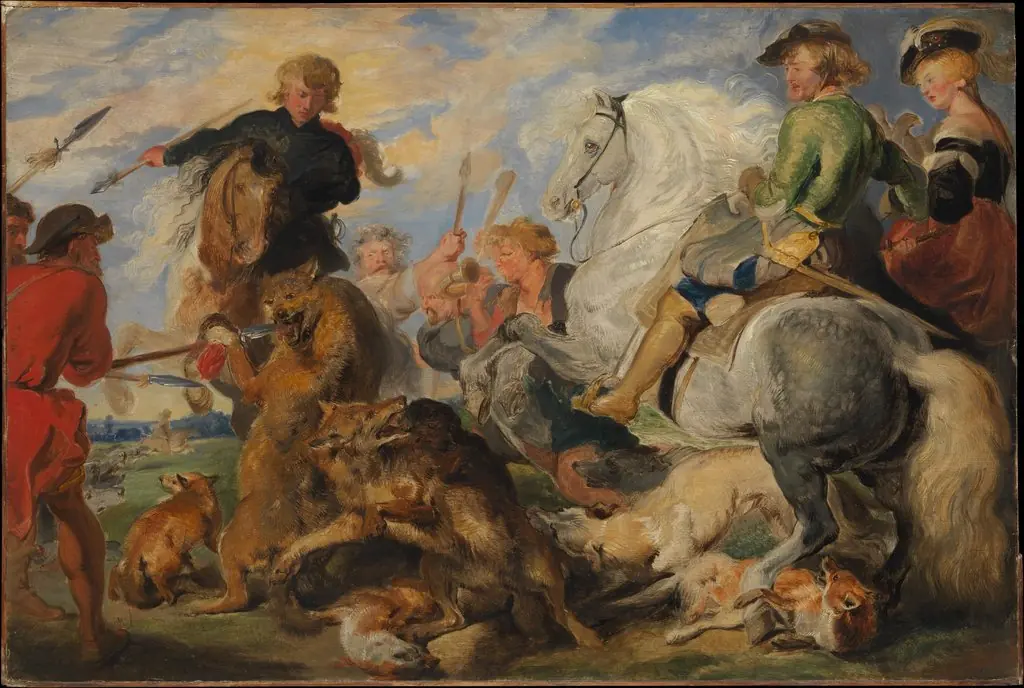
The Wolf and Fox Hunt depicts a dynamic hunting scene in which mounted and walking hunters pursue two wolves and three foxes, with the quarry encircled by men, women, and hounds. The composition includes beaters driving the wolves back with pikes on the left, a young rider galloping toward the viewer with a lance, and at the right foreground two riders, one holding a sword, the other a woman riding sidesaddle and carrying a falcon, closing in on the wolves. Among the foxes, one attempts to escape on the left, one lies dead at the center, and another is trampled beneath a horse on the right.
Hunting served as a marker of aristocratic status, implying ownership of extensive lands, and was a favored pursuit of European sovereigns; Rubens deliberately adopted the visual codes of court painters to glorify the nobility. The work thus inaugurates an intensive phase of Rubens's hunting imagery, in which the chase functions both as a celebration of noble privilege and as a vehicle for dynamic action.
Technique & Style
The Wolf and Fox Hunt is an oil-on-canvas painting by Peter Paul Rubens, dated to 1616. The work employs a dynamic composition to depict a chaotic hunting scene, with mounted and walking hunters pursuing two wolves and three foxes. Rubens executed the wolves entirely himself, while assistants contributed to other elements, reflecting studio practice typical of his workshop.
The canvas was later trimmed at the top and left to fit a private client’s space, indicating minor adjustments to its original dimensions. Stylistically, the painting exemplifies Rubens’s early creative phase, characterized by vigorous movement and dramatic contrasts, with figures and animals rendered in loose, energetic brushwork that conveys motion and urgency.
History & Provenance
Peter Paul Rubens executed The Wolf and Fox Hunt on oil on canvas circa 1616, marking the commencement of an intensive creative phase dedicated to hunting themes. While the work was completed with assistance from studio helpers, the depiction of the wolves was painted entirely by Rubens himself. By 1683, the original canvas had been trimmed at the top and left edges to accommodate a specific client's domestic setting.
The painting's ownership history includes Philippe-Charles, 3rd Count of Arenberg, and Diego Felipez de Guzmán, 1st Marquis of Leganés. It subsequently passed through the collections of Joseph Bonaparte, Alexander Baring, 1st Baron Ashburton, his son Bingham Baring, 2nd Baron Ashburton, and Louisa Baring before entering the collection of the Metropolitan Museum of Art in New York.
Executed circa 1616, The Wolf and Fox Hunt is currently held in the collection of the Metropolitan Museum of Art in New York. While specific inventory or accession numbers are not detailed in the provided records, the work's location at this institution is consistently documented. The painting's history includes ownership by several notable figures prior to its museum acquisition, such as Joseph Bonaparte and members of the Baring family, including Alexander Baring, 1st Baron Ashburton.
Although the sources confirm its current residence and trace a line of previous owners, they do not list specific past exhibitions or loan history for the work.
Context
The Wolf and Fox Hunt (1616), an oil‑on‑canvas work by Peter Paul Rubens now in the Metropolitan Museum of Art, belongs to a series of hunting scenes that the artist developed intensively between 1616 and 1621, marking the start of a distinct creative phase focused on the chase. Scholarship, especially Arnout Balis, interprets this painting as the opening of that phase and notes its dynamic composition and the artist’s growing awareness of the commercial potential of aristocratic patronage. The canvas depicts a complex arrangement of hunters, dogs, wolves and foxes, with later attributions suggesting Rubens, his wife Isabella Brant and son Albert among the figures, though this identification is regarded as doubtful. Its provenance through several European aristocrats underscores the work’s appeal to elite collectors.
Legacy
The Wolf and Fox Hunt is regarded as the starting point of Peter Paul Rubens’ intensive focus on hunting themes, marking the beginning of a creative phase that produced a series of dynamic hunting scenes between 1616 and 1621, with technique and composition improving from this work to culminate in his Lion Hunt. It is also noted as part of Rubens’ renewal of the hunting genre since the Renaissance. The painting entered the Metropolitan Museum of Art’s collection and passed through the hands of notable collectors including Philippe‑Charles, 3rd Count of Arenberg, Diego Felipez de Guzmán, 1st Marquis of Leganés, Joseph Bonaparte, and the Baring family.
Its early position in Rubens’ oeuvre helped establish his reputation as a master of vivid, aristocratic hunting subjects.
Overview
Peter Paul Rubens's oil-on-canvas painting, The Wolf and Fox Hunt, created around 1616, depicts a dramatic pursuit involving hunters and wild animals. This work, now housed at the Metropolitan Museum of Art, initiated a significant period in Rubens's career during which he frequently explored the theme of hunting. The composition captures a moment of intense action, showcasing the artist's characteristic energy and dynamism.
Own this work as a print
Artist & collection
Artist
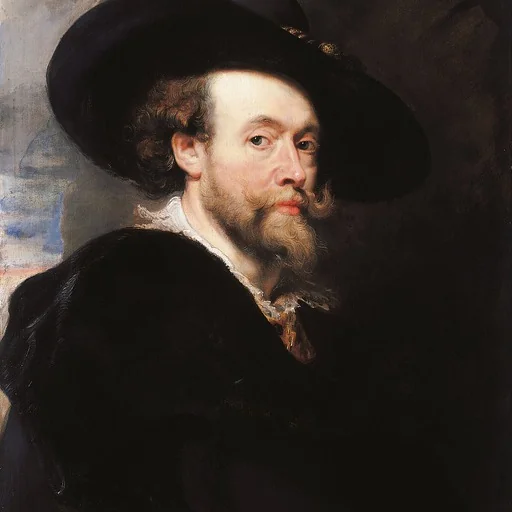
Sir Peter Paul Rubens ( ROO-bənz; Dutch:; 28 June 1577 – 30 May 1640) was a Flemish artist and diplomat.