Artwork
Woman with a Child in a Pantry
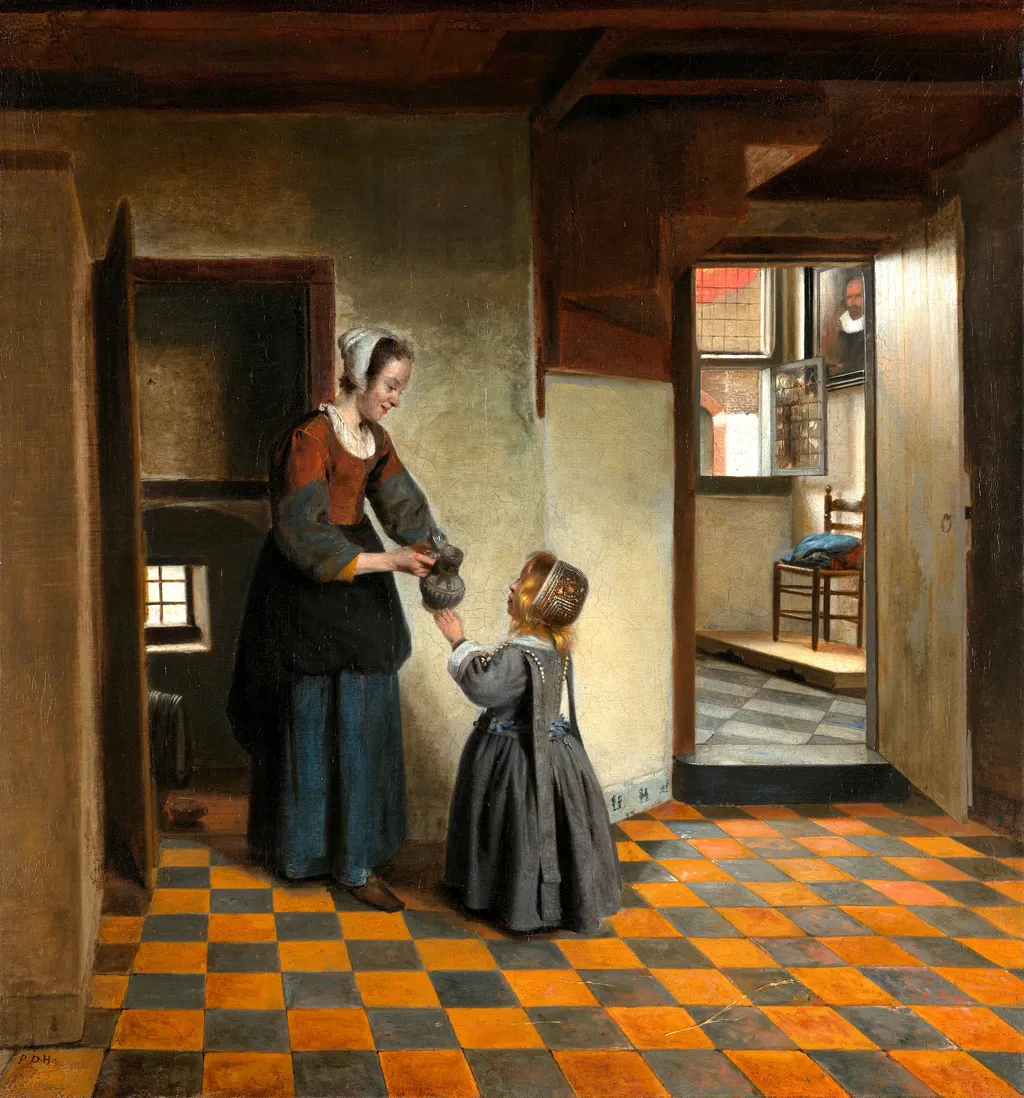
Woman with a Child in a Pantry is an oil painting by the Dutch Golden Age artist Pieter de Hooch. It dates from 1656 and is held in the collection of the Rijksmuseum.
About this work
Subject & Meaning
This arrangement highlights the artist's focus on orderly domestic life, architectural depth, and the interplay of light across different rooms.
The painting depicts a domestic interior scene featuring a young woman and a child standing on a tiled floor near a pantry door. The woman, dressed in a red jacket and blue skirt, smiles as she presents a jug to the child, who reaches out to inspect its contents. Although the child's long hair and dress led earlier observers to identify the figure as a girl, the garment's tailcoats indicate it is a young boy; such attire was standard for toddler boys in the seventeenth century to prevent falls while learning to walk.
The composition utilizes deep perspective, with an open door on the left revealing a cellar containing a cask and a small window, while a second doorway on the right opens into a sunlit sitting room furnished with a cushioned chair and a portrait. This arrangement highlights the artist's focus on orderly domestic life, architectural depth, and the interplay of light across different rooms.
Technique & Style
Woman with a Child in a Pantry is an oil painting executed on a canvas support. The work measures 65 cm in height and 60.5 cm in width, presenting a nearly square, horizontal format. Pieter de Hooch signed the piece with the initials "P.D.H.".
The composition features characteristic Dutch Golden Age elements, including a floor paved with yellow tiles and a distinct use of light and spatial depth created through open doorways. Through a door on the left, a pantry with a small window and a cask is visible, while a doorway on the right reveals a sitting room containing a cushioned chair and a portrait. Faint traces of a different painting, executed by the artist himself, can be seen on the wall above the woman's head, indicating a modification during the creative process.
History & Provenance
Created by Pieter de Hooch, this oil-on-canvas work is dated variously to 1656 or circa 1658–1660. The painting's documented ownership begins with a sale in Amsterdam on June 14, 1712, from the collection of P. van der Lip, where it fetched 66 florins. It subsequently appeared in the October 14, 1765, Amsterdam auction of Isaac Walraven, selling for 450 florins to Jan Jacob de Bruyn.
De Bruyn's collection was dispersed on September 12, 1798, with the work acquiring 2,600 florins from buyer de Vos. On August 1, 1810, it was sold from the estate of Pieter de Smeth van Alphen for 3,025 florins to Smit. The final private owner was Anna Maria Ebeling (later the widow Hogguer); her Amsterdam sale on August 18, 1817, realized 4,010 florins, after which the painting entered the Rijksmuseum collection.
The painting Woman with a Child in a Pantry is held in the Rijksmuseum collection in Amsterdam under inventory number 1248. It was acquired by the museum in 1817 from the estate of Anna Maria Hogguer, née Ebeling. The work entered the collection after being sold by the widow in Amsterdam on August 18, 1817, and was previously owned by Isaac Walraven, Jan Jacob de Bruyn, and Pieter de Smeth van Alphen.
It was first documented by Hofstede de Groot in 1910 and has remained in the Rijksmuseum since its acquisition.
Legacy
The painting Woman with a Child in a Pantry has exerted quiet but enduring influence through its sophisticated handling of interior space and domestic narrative, shaping scholarly views of Pieter de Hooch’s mature style. Its early provenance, documented by Hofstede de Groot in 1910, highlighted its significance as one of the first de Hooch works acquired by a major museum, the Rijksmuseum, in 1903. The work’s frequent reproduction in catalogues and exhibitions, including mentions in French, Dutch, and Spanish Wikipedias, underscores its recognized status within the Dutch Golden Age canon.
The painting’s complex layered composition, particularly its use of open doorways and patterned tile floors, became a compositional model for later genre painters, reinforcing de Hooch’s reputation as a master of domestic perspective and subtle storytelling.
Overview
Pieter de Hooch’s oil painting, dated around 1658, depicts an intimate domestic scene in a modest interior. Executed on canvas, the work now belongs to the Rijksmuseum in Amsterdam, where it is displayed among the museum’s Dutch Golden Age holdings.
Context
The work reflects the period’s interest in genre painting, where artists portrayed ordinary moments with moral undertones. De Hooch’s focus on orderly interiors and the interplay of light and space aligns with contemporary trends championed by peers such as Vermeer.
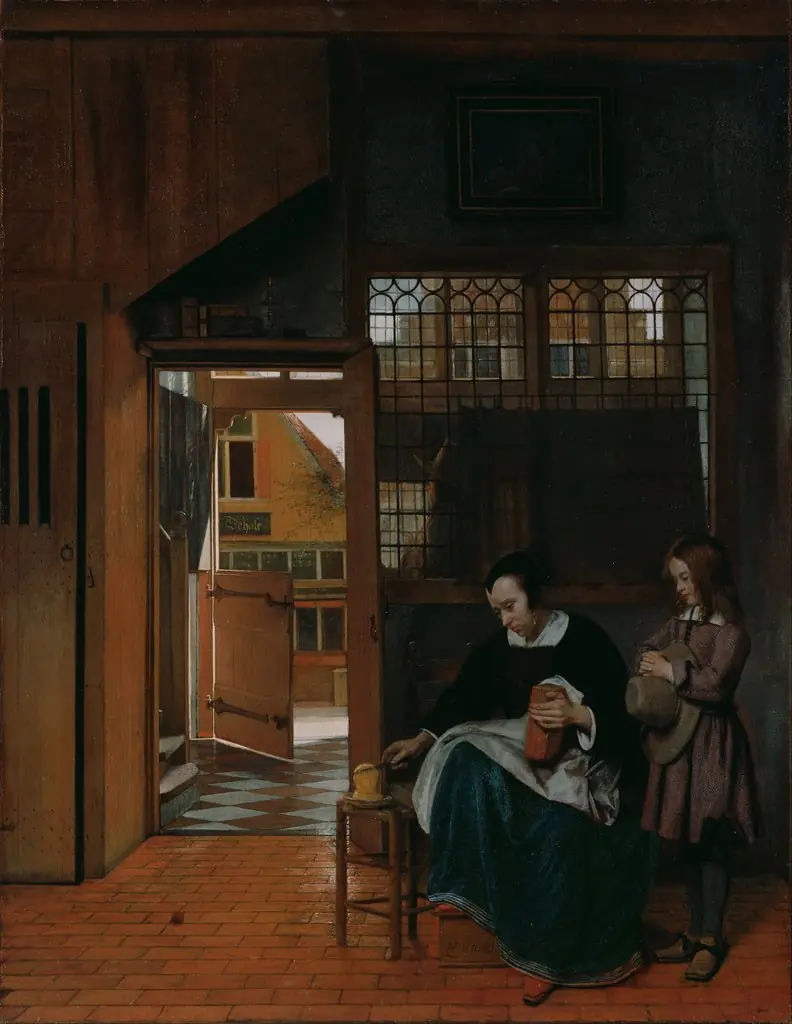
Own this work as a print
Artist & collection
Artist
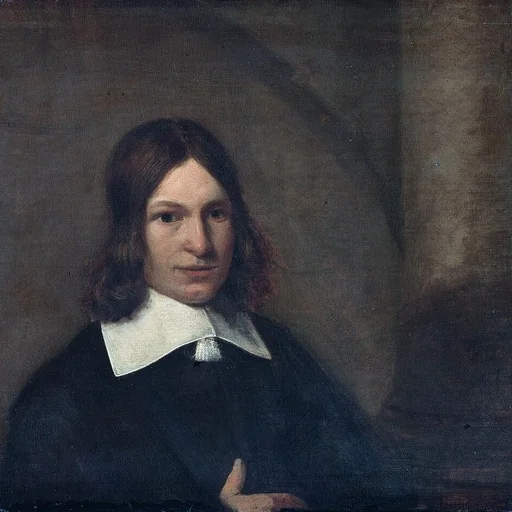
Pieter Hendricksz. de Hooch (Dutch:; also spelled Hoogh or Hooghe; bapt. 20 December 1629 – after 1683), was a Dutch Golden Age painter famous for his genre works of quiet domestic scenes with an open doorway. He was a…

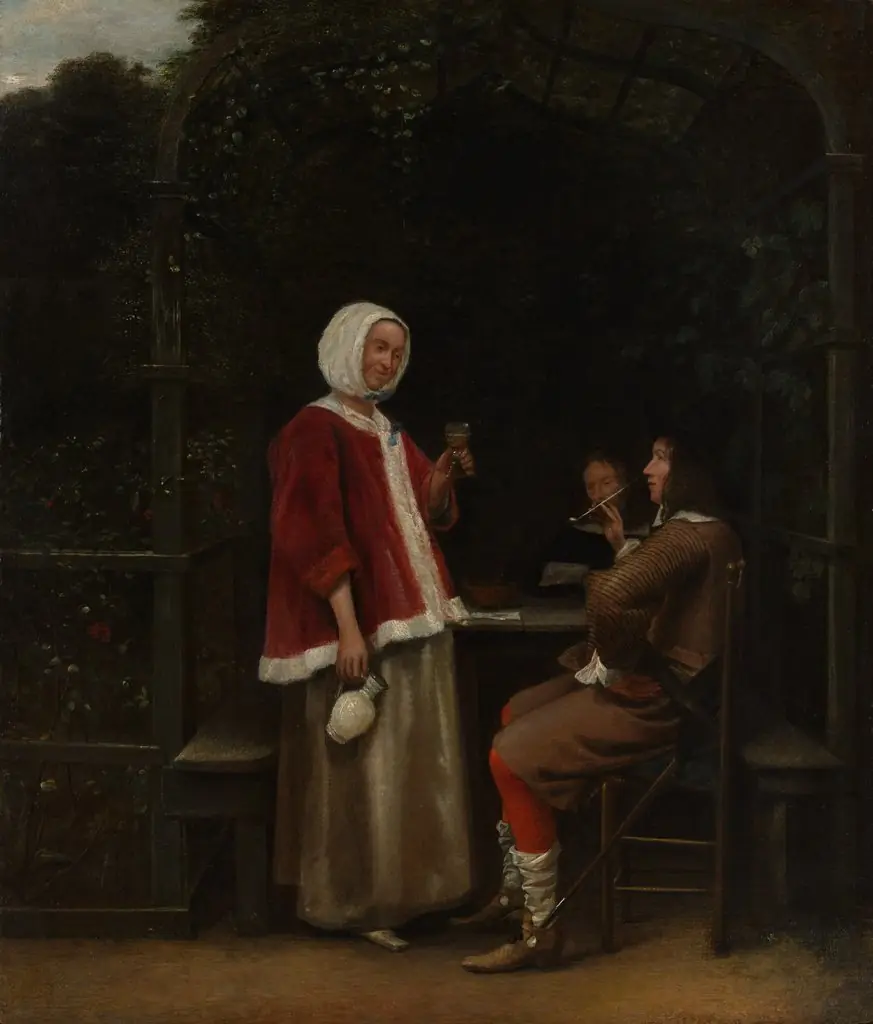
- A Woman Preparing Bread and Butter for a Boy
 The Bedroom
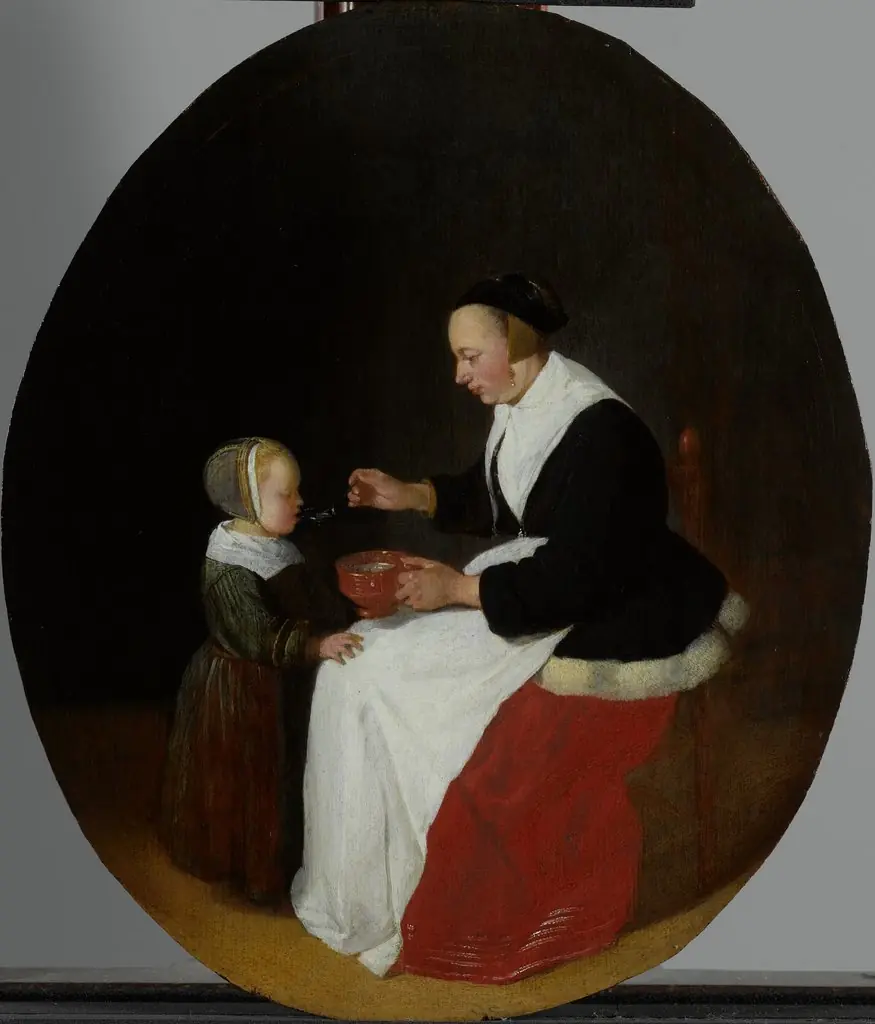 A mother feeding porridge to her child
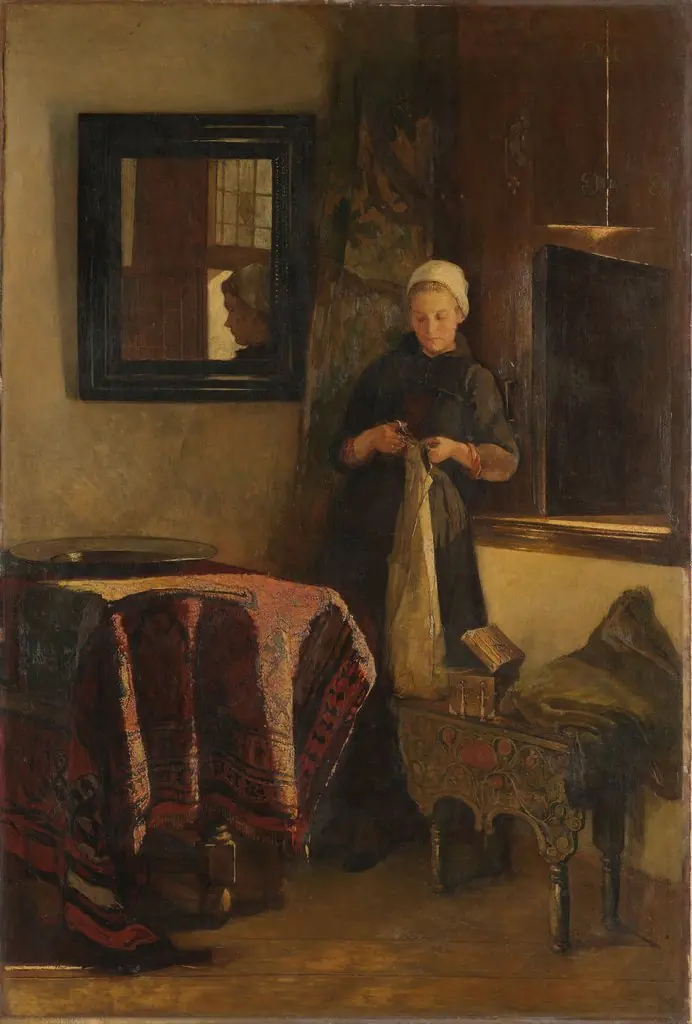 A Sunny Corner
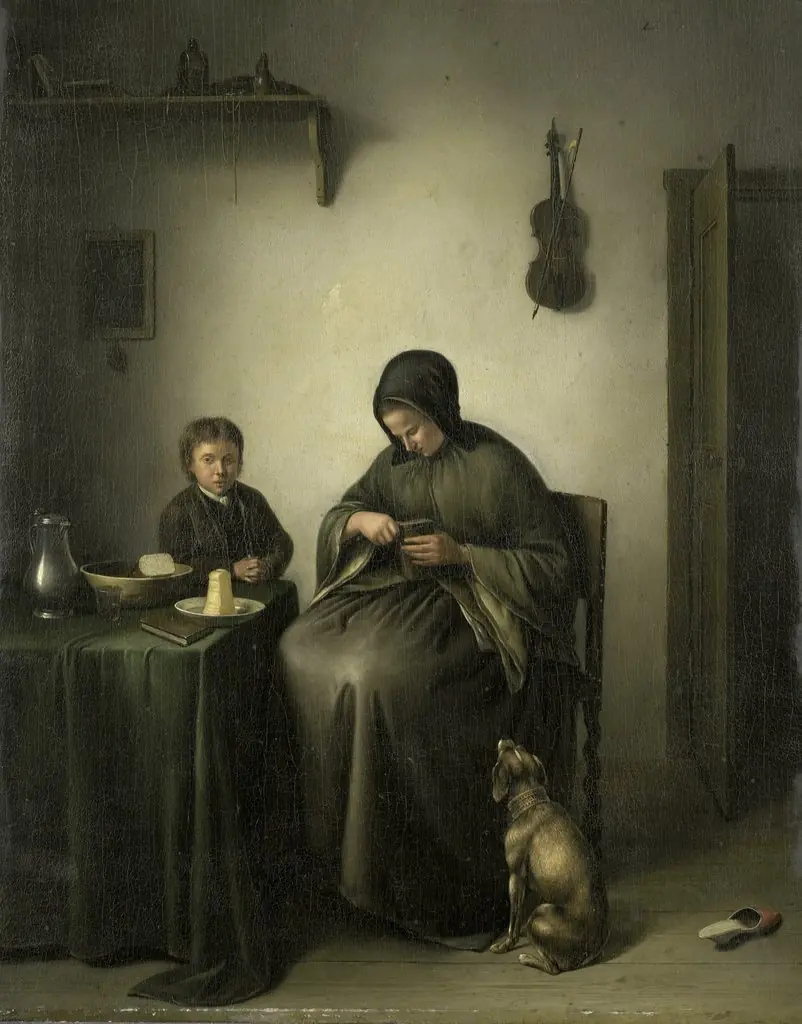 A Woman Slicing Bread
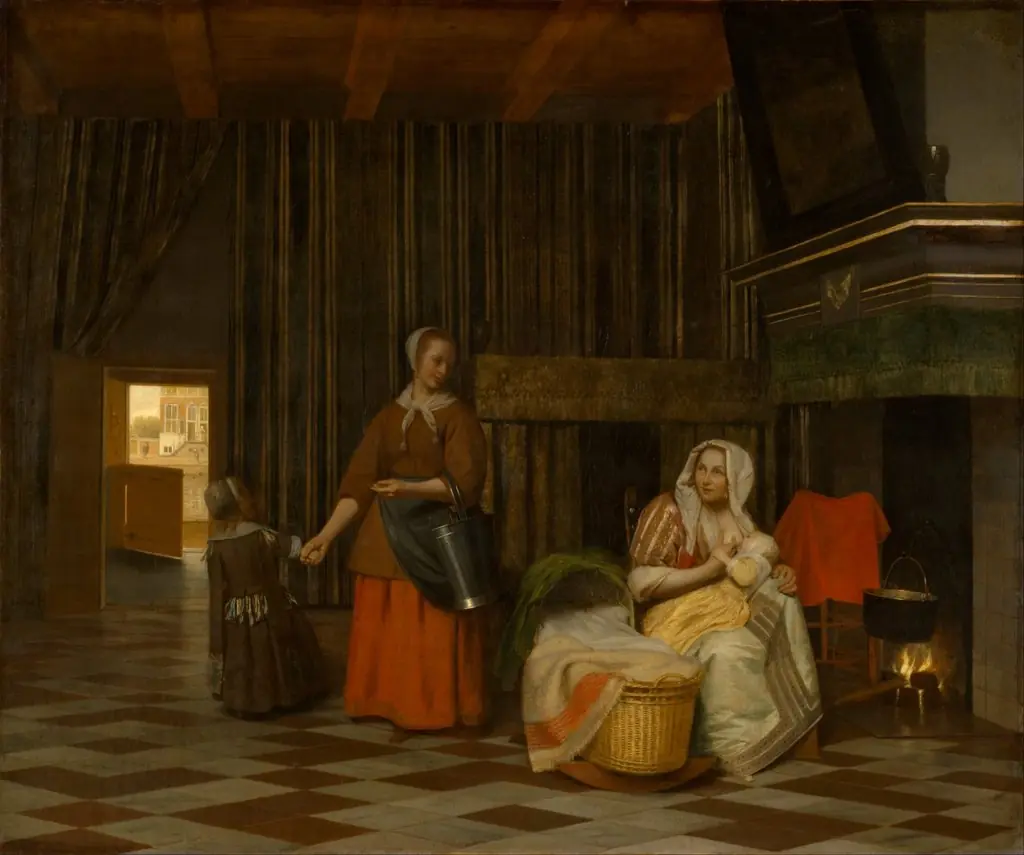 Nursing Mother, and Child with Serving Maid
 Kitchen Scene
 A Sunny Spot
 Man Handing a Letter to a Woman in the Entrance Hall of a House
 Grandmother with her granddaughter
 A Mother Feeding her Child (The Happy Mother)