Artwork
Man Handing a Letter to a Woman in the Entrance Hall of a House
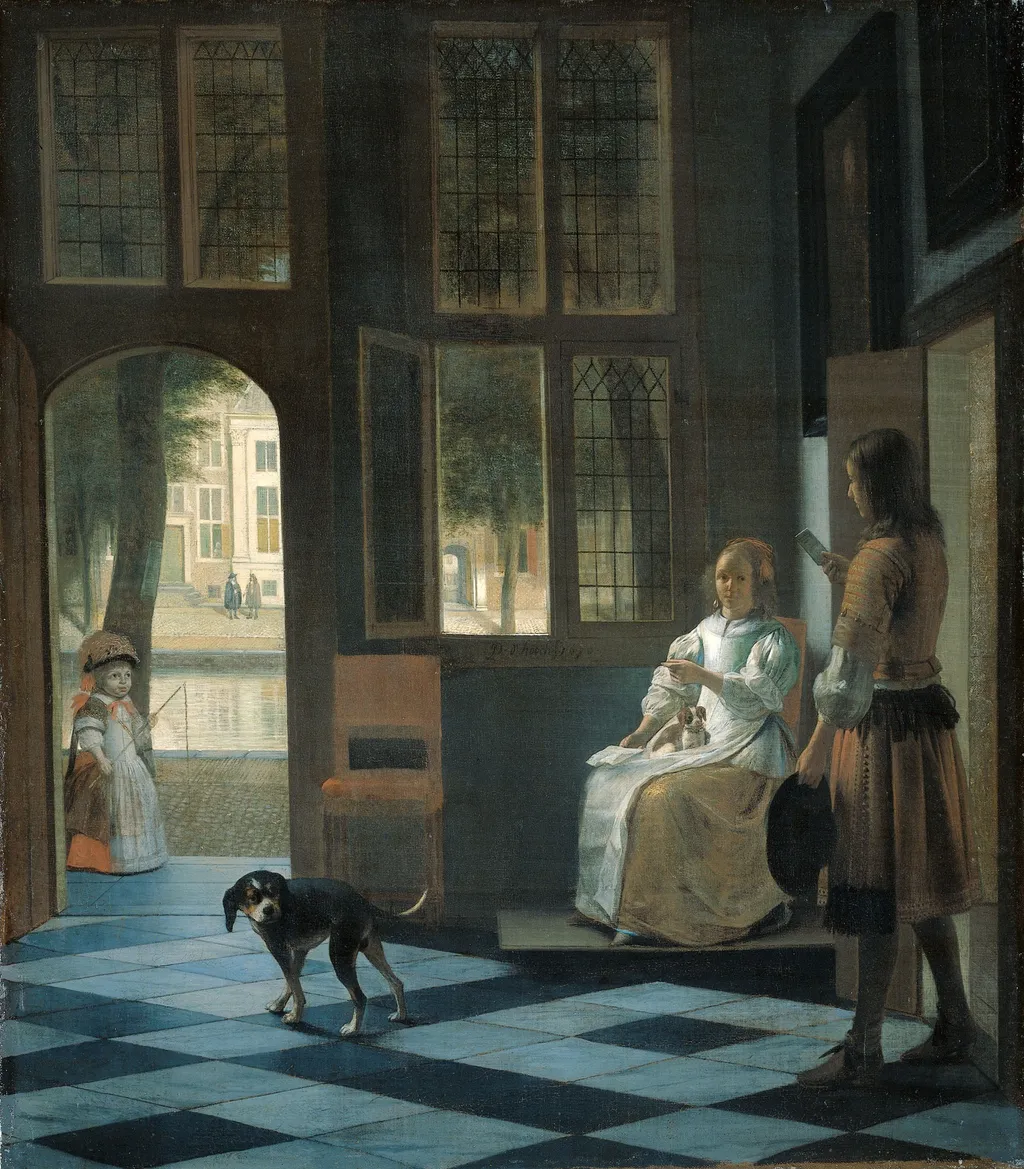
Man Handing a Letter to a Woman in the Entrance Hall of a House is an oil painting by the Dutch Golden Age artist Pieter de Hooch. It dates from 1670 and is held in the collection of the Rijksmuseum.
About this work
Subject & Meaning
The painting's provenance includes ownership by Adriaan van der Hoop, who bequeathed it to the Rijksmuseum, and it was documented by Hofstede de Groot in 1908.
The painting depicts a domestic interior scene where a man delivers a letter to a seated woman, symbolizing communication within bourgeois domestic life. The composition emphasizes the boundary between interior and exterior spaces, with an open doorway revealing a street view and sunlight illuminating the external world. Two dogs, one resting on the woman's lap and the other near the doorway, represent the contrast between domestic tranquility and the outside world. The work reflects 17th-century Dutch Protestant values, portraying the woman's role in managing the household in the father's absence. This theme aligns with Pieter de Hooch's recurring exploration of spatial divisions and domestic rituals, as noted by art historian William E. Wallace. The letter serves as a narrative device linking family members across physical and temporal distances, embodying the importance of correspondence in merchant-class households. The woman's elevated position and the empty chair suggest vigilance over domestic space, while the child with a whip outside the door reinforces the tension between private and public spheres. The painting's provenance includes ownership by Adriaan van der Hoop, who bequeathed it to the Rijksmuseum, and it was documented by Hofstede de Groot in 1908. The artwork measures 68 cm by 59 cm and is painted in oil on canvas, signed by the artist in 1670. Its subject matter and symbolism reflect the interplay of light and shadow characteristic of De Hooch's style, as well as the cultural emphasis on domestic order and familial duty in the Dutch Golden Age.
Technique & Style
Created in 1670, the work is an oil painting executed on a canvas support. The artist signed the piece "P. de Hooch f. 1670" on the lower portion of the window frame. The composition is defined by a sophisticated handling of light, where sunlight enters through a window and an open street door to illuminate the interior vestibule and the canal-side buildings visible outside. This interplay creates a distinct contrast between the shadowed interior and the bright exterior, a stylistic hallmark of De Hooch's approach to domestic space. The scene depicts a vestibule paved with tiles, featuring figures and dogs that emphasize the boundary between private and public realms through their positioning and the direction of the light.
History & Provenance
Pieter de Hooch completed this oil-on-canvas work in 1670, signing it "P d' hooch f. 1670" on the lower window frame. The painting entered the historical record through several potential early sales, including a 1809 Amsterdam auction involving J. Caudri and an 1827 sale in Leyden belonging to Madame Camper, where it was bought in for 4,000 florins. It subsequently appeared in the 1838 Meijnders sale, realizing 3,311 florins. By the late nineteenth century, the work belonged to the collection of Adriaan van der Hoop in London and later Amsterdam. Upon Van der Hoop's death, the painting was bequeathed to the city of Amsterdam and transferred to the Rijksmuseum, where it has remained part of the national collection since at least 1876.
The painting is held by the Rijksmuseum in Amsterdam, where it forms part of the former collection of Adriaan van der Hoop. It currently carries the inventory number 1249, having been previously cataloged as number 682 in the 1905 edition of the museum's records. The work entered the institution's holdings through the Van der Hoop bequest, having been listed as item number 50 in the 1876 catalogue of that private collection. Prior to its arrival in the Rijksmuseum, the painting was documented in several sales, including those at Leyden in 1827 and by Meijnders in 1838.
Context
The painting exemplifies Pieter de Hooch's exploration of spatial boundaries and domestic interiority in 17th-century Dutch genre painting, reflecting broader scholarly interest in how artists represented private and public spheres within bourgeois households. Art historians such as William E. Wallace have interpreted the work as depicting a narrative of correspondence and familial responsibility, aligning with Protestant values of domestic stewardship in the Dutch Golden Age. The composition's manipulation of light and architectural framing, documented in contemporary accounts like Hofstede de Groot's 1908 cataloguing, highlights De Hooch's technical influence on contemporaries and later movements, particularly in his nuanced treatment of interior-exterior transitions and symbolic domestic rituals.
Legacy
The painting has been recognized as an early example of domestic genre scenes that explore the boundary between interior and exterior spaces, a theme central to De Hooch's mature oeuvre. Art historian William E. Wallace notes its significance in portraying bourgeois domestic life in 17th-century Holland, where a woman receives a letter symbolizing familial communication and duty. The work's composition, featuring layered spatial depth and careful play of light, influenced later Dutch interior painters and contributed to scholarly discussions of domestic ritual in Dutch art. It remains part of the Rijksmuseum's collection, originating from the Adriaan van der Hoop bequest, and continues to be cited in studies of Dutch Golden Age painting.
Own this work as a print
Artist & collection
Artist
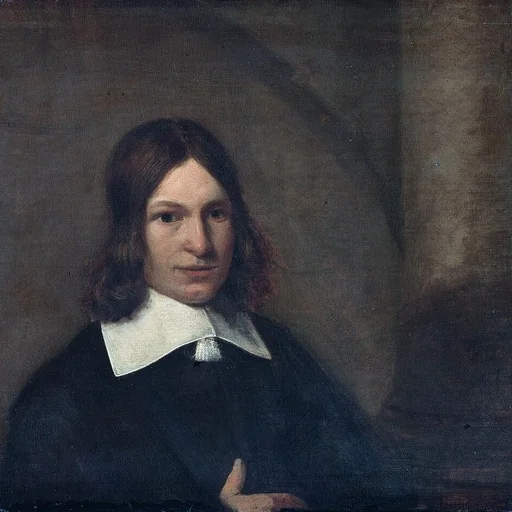
Pieter Hendricksz. de Hooch (Dutch:; also spelled Hoogh or Hooghe; bapt. 20 December 1629 – after 1683), was a Dutch Golden Age painter famous for his genre works of quiet domestic scenes with an open doorway. He was a…

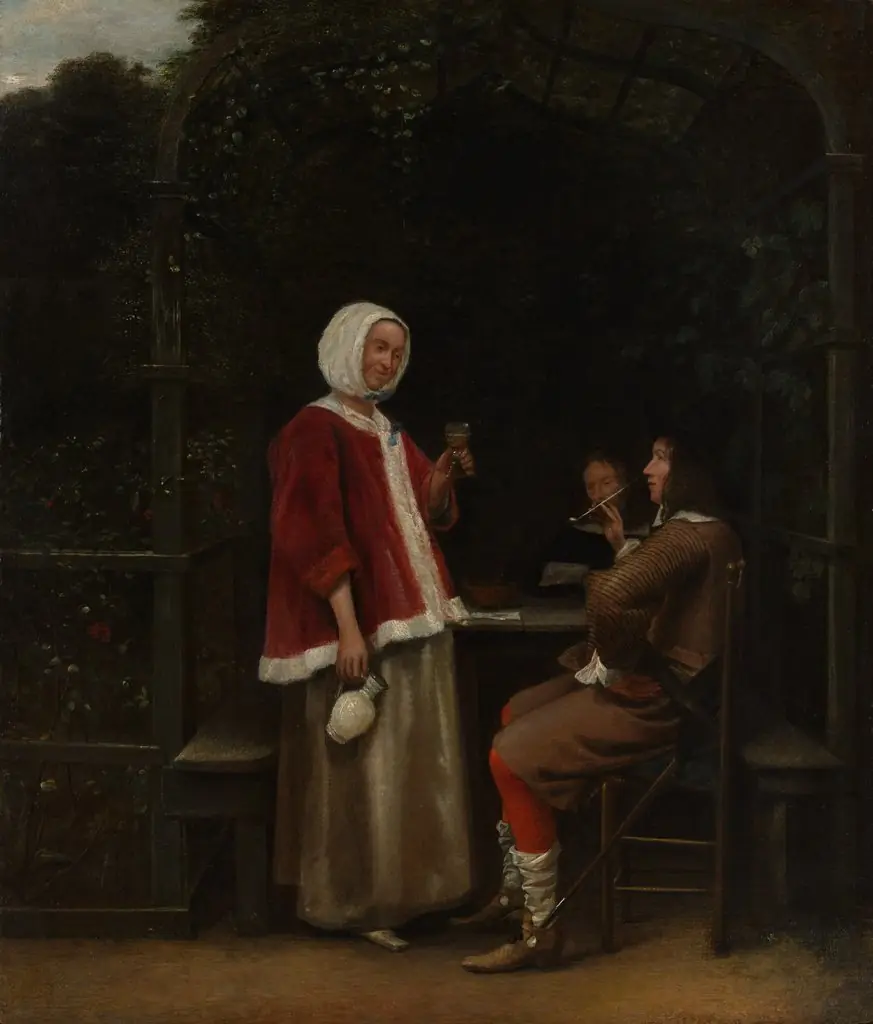
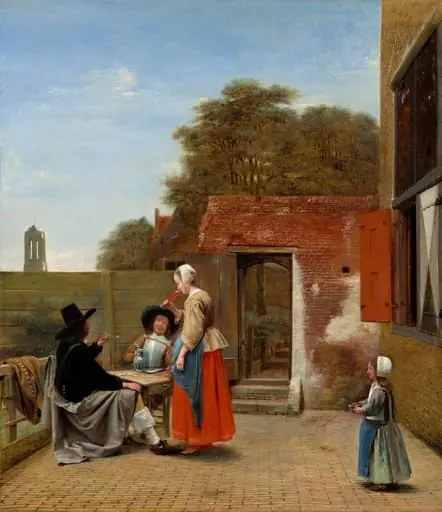
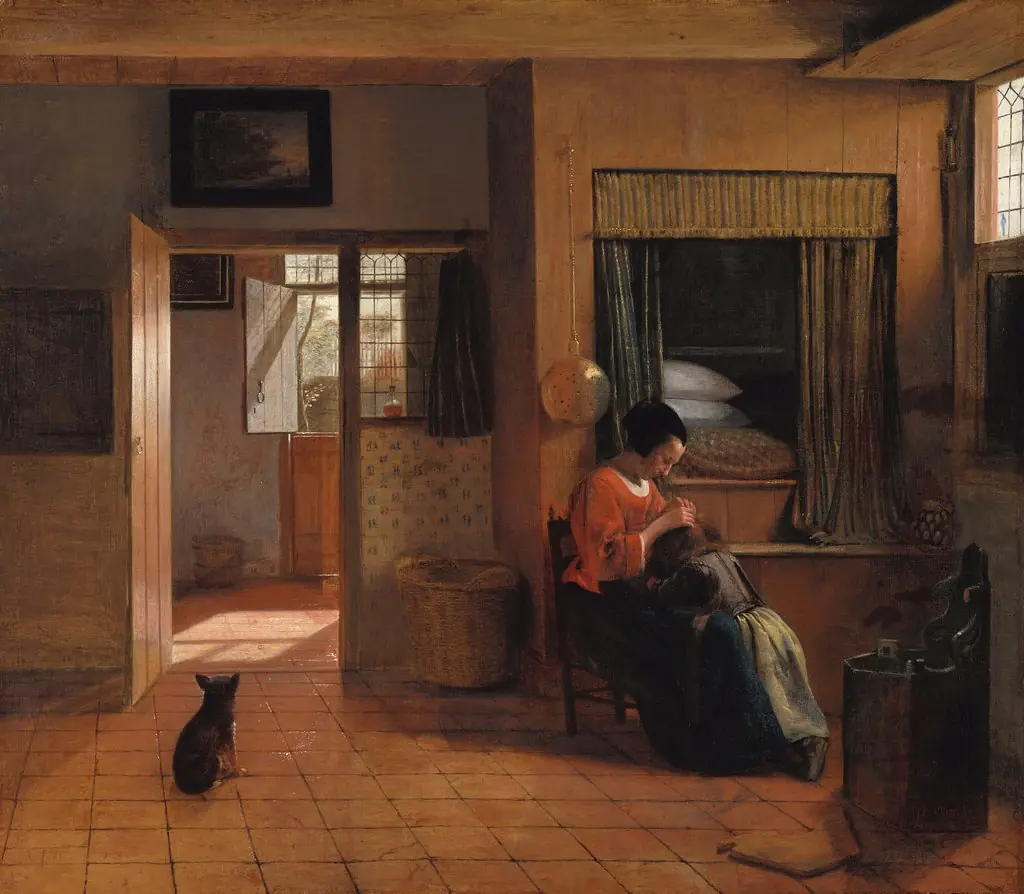
- Figures in a Courtyard behind a House
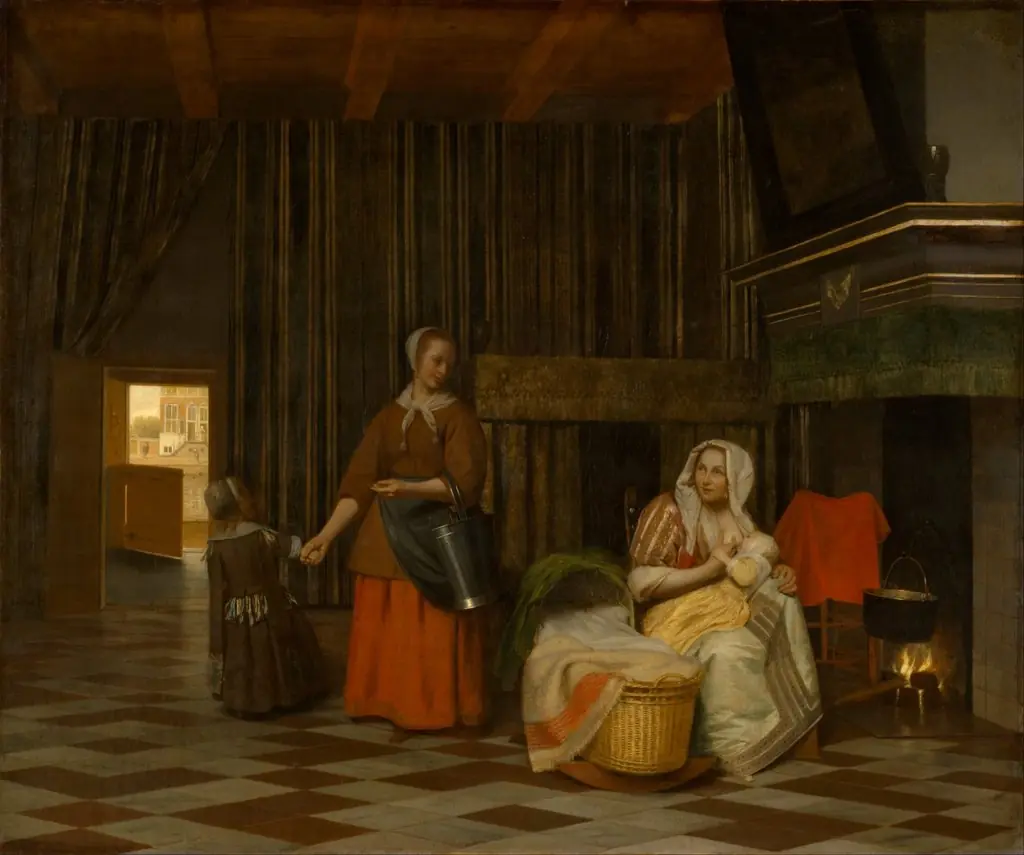 Nursing Mother, and Child with Serving Maid
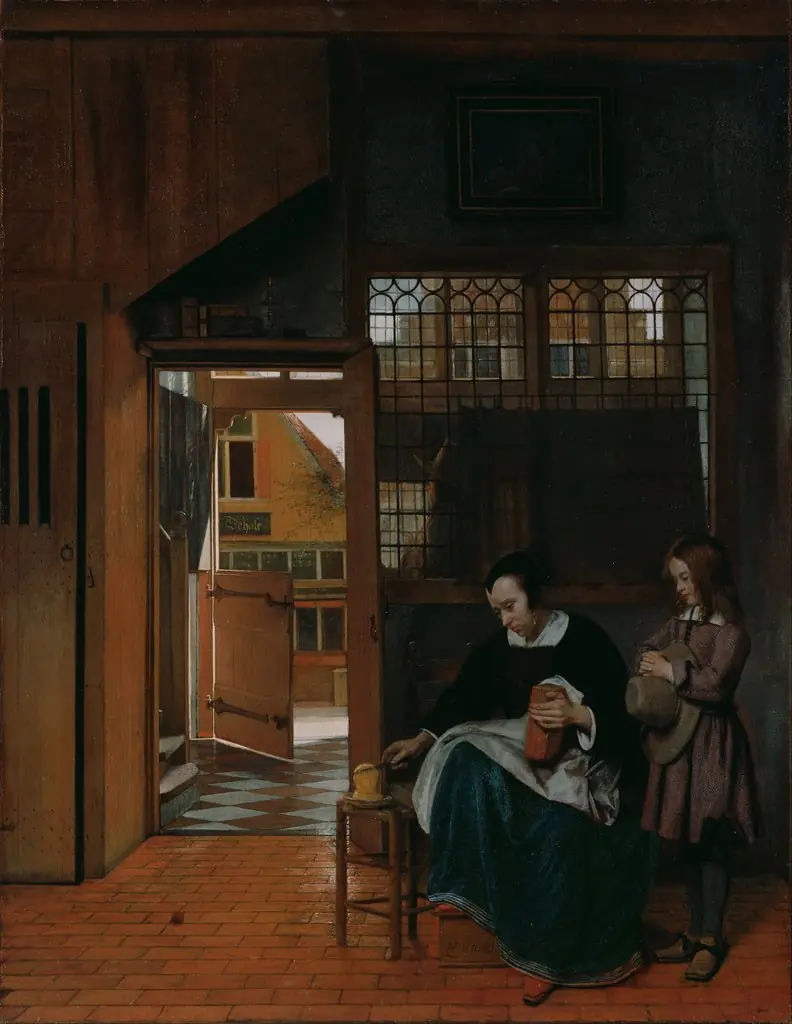 A Woman Preparing Bread and Butter for a Boy
 The Hunter’s Present
 The Visit to the Nursery
 Een gezelschap op de plaats achter een huis
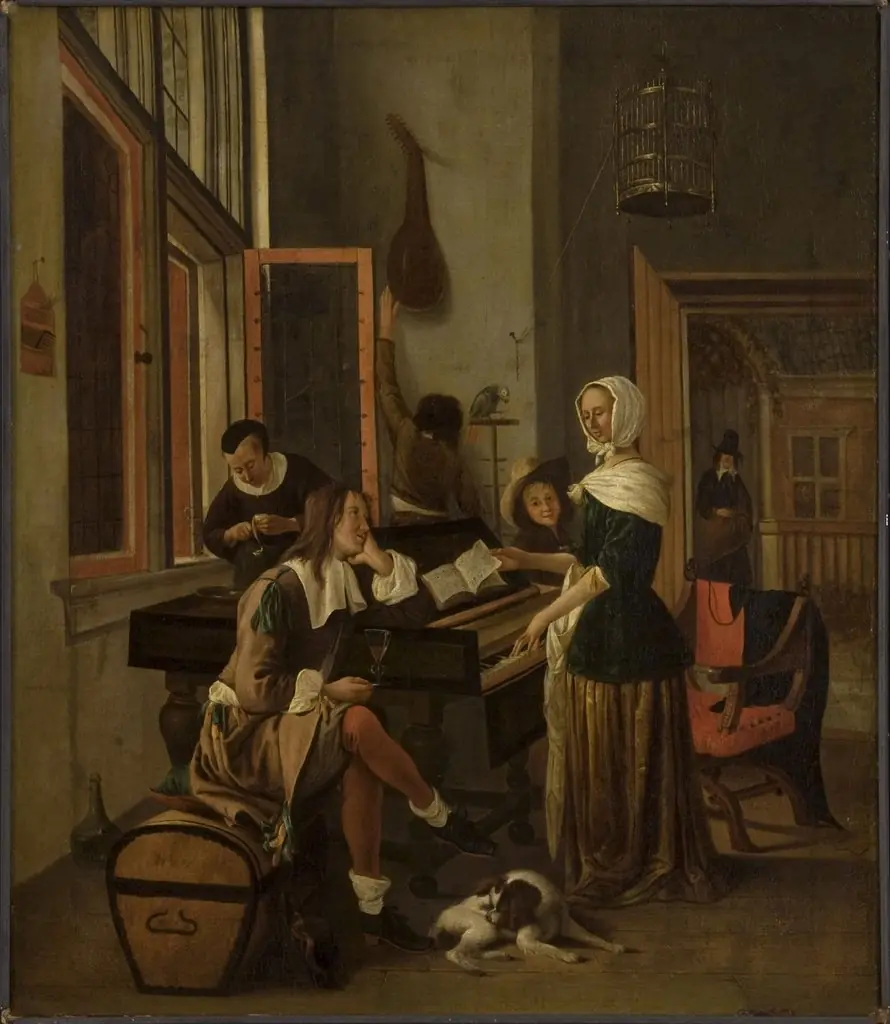 Lady at a Clavichord
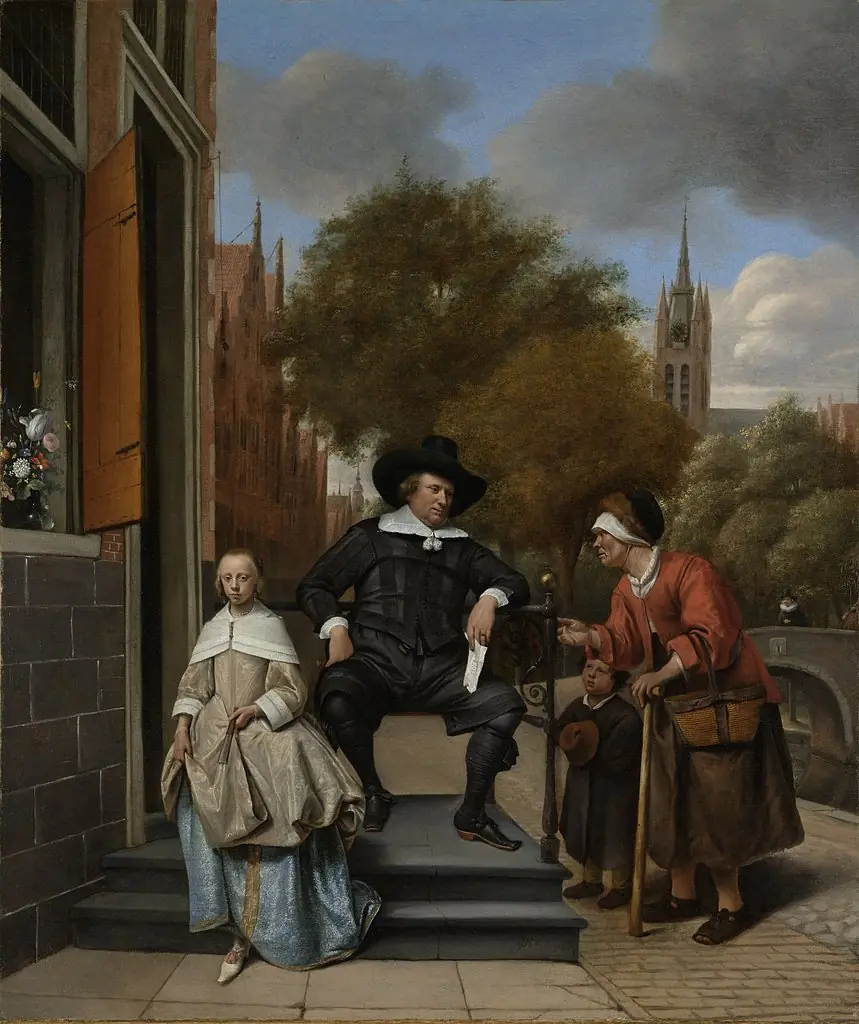 A Mayor of Delft and his Daughter
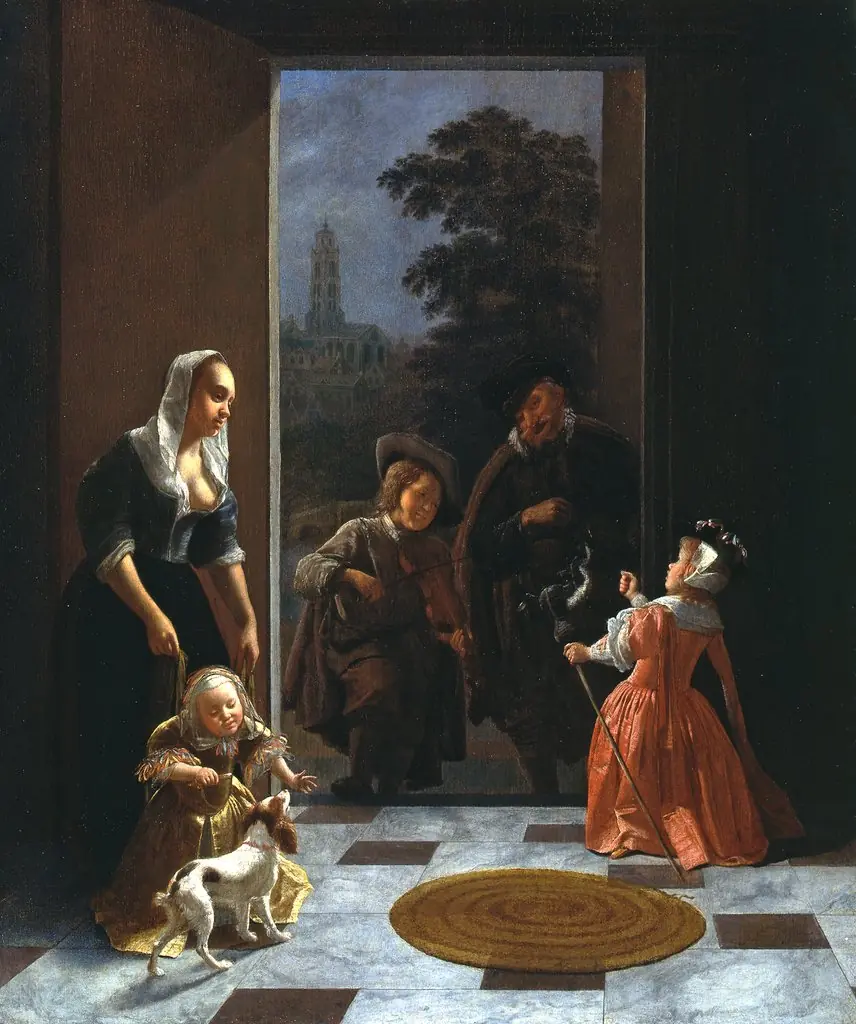 Street musicians at the door
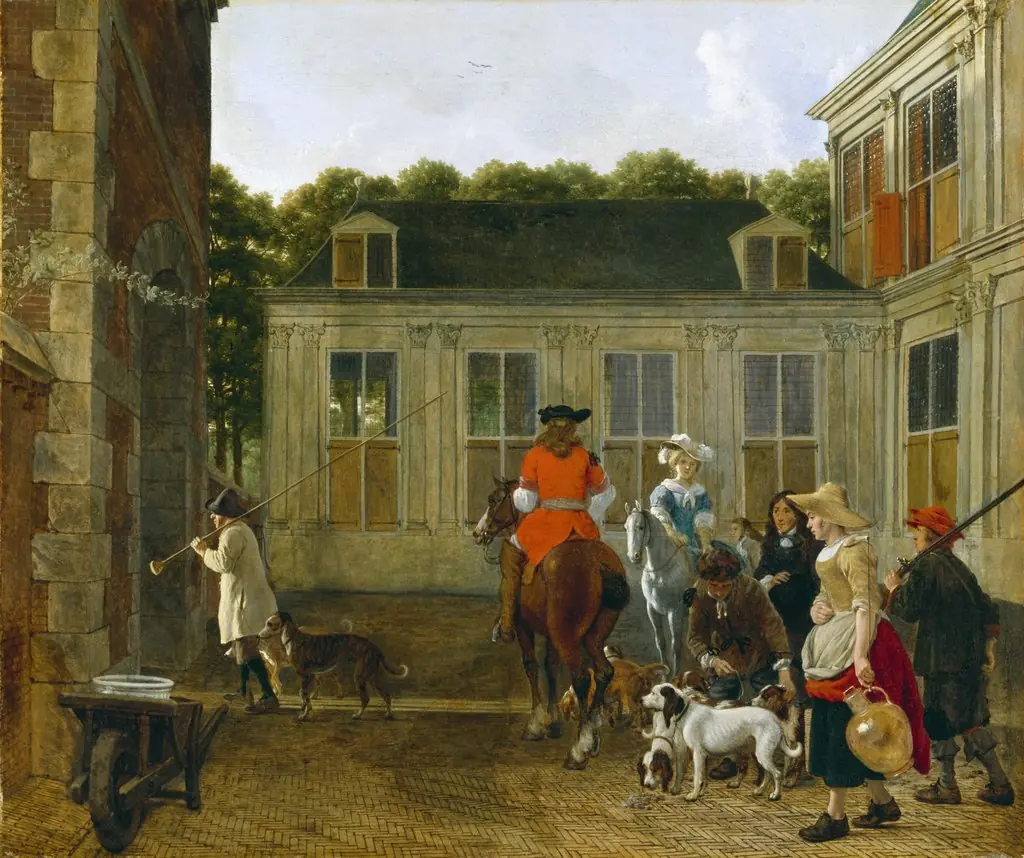 Hunting Party in the Courtyard of a Country House
 Card Game