Artwork
Portrait of a Man at a Writing Desk, possibly Jacob Bruyningh
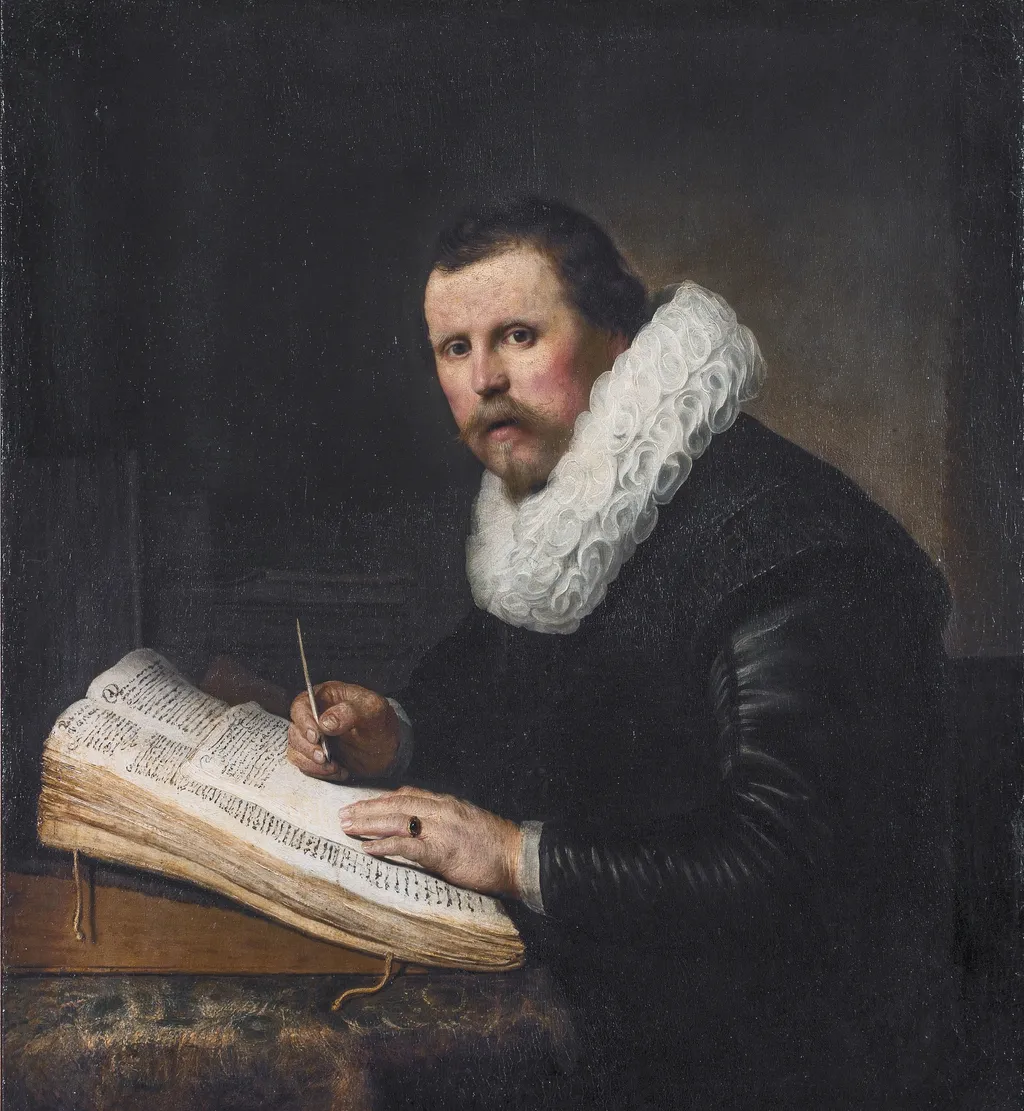
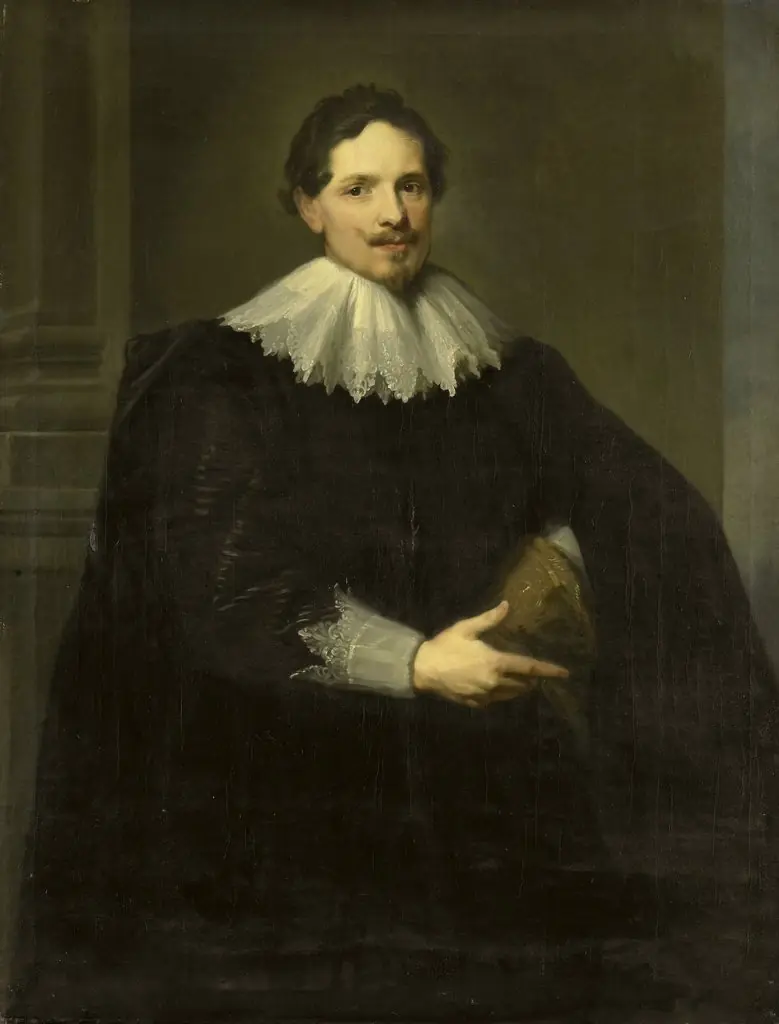
Portrait of a Man at a Writing Desk, possibly Jacob Bruyningh is an oil painting by the Dutch Golden Age artist Rembrandt van Rijn. It dates from 1631 and is held in the collection of the Hermitage Museum. Created in 1631, this oil painting by Rembrandt shows a solitary figure seated at a writing desk.
About this work
Subject & Meaning
The work depicts a man seated at a writing table, holding a quill, which identifies the figure as a scholar or scribe engaged in intellectual labor.
The work depicts a man seated at a writing table, holding a quill, which identifies the figure as a scholar or scribe engaged in intellectual labor. The inclusion of the writing desk and quill serves as iconographic markers of literacy and administrative or literary activity. While the sitter is possibly identified as Jacob Bruyningh, the painting functions primarily as a portrait of a learned individual within the Dutch Golden Age context. The composition emphasizes the subject's connection to the written word through these specific attributes.
Technique & Style
The work is an oil painting executed on canvas, depicting a man seated at a writing desk with a quill. According to the documentation, Rembrandt created the piece in 1631, and it is housed in the Hermitage Museum. The composition shows the sitter engaged in writing, with attention to the handling of light on the desk surface and the rendering of textiles.
The painting measures 104.5 cm in height and 92 cm in width, and its formal qualities include a restrained palette and precise brushwork that emphasize the tactile qualities of the desk and writing implements. The work is classified as a portrait and is part of the Dutch masters exhibition at the Hermitage.
History & Provenance
The painting was created in 1631 by Rembrandt in the Netherlands, executed in oil on canvas. It depicts a man seated at a writing table with a quill, and the sitter has been tentatively identified as Jacob Bruyningh. The work is held in the collection of the Hermitage Museum, where it remains on display.
The painting has been featured in the exhibition "Dutch masters from the Hermitage," reflecting its inclusion in curated displays of Netherlandish art drawn from the museum's holdings.
The painting is held in the collection of the Hermitage Museum in St. Petersburg, Russia. While the specific inventory or accession number is not provided in the available records, the work is cataloged as part of the museum's holdings of Dutch masters. The artwork was included in the exhibition titled "Dutch masters from the Hermitage," which highlights significant works from the museum's collection. The piece, created in 1631, remains a key example of Rembrandt's portraiture within the institution.
Legacy
The painting's legacy is anchored in its attribution to Rembrandt and its display at the Hermitage Museum, where it has been part of exhibitions showcasing Dutch masters. Its technical mastery in rendering light and texture continues to inform studies of 17th-century portraiture, though debates over authorship persist due to stylistic similarities with Rembrandt's workshop.
Overview
Created in 1631, this oil painting by Rembrandt shows a solitary figure seated at a writing desk. The sitter, dressed in a dark coat with a crisp white ruff, holds a quill over a page of dense, slanted script while a partially opened book rests nearby. The work belongs to the Dutch Golden Age portrait tradition and is currently housed in the State Hermitage Museum.
Own this work as a print
Artist & collection

Artist
Rembrandt Harmenszoon van Rijn, known mononymously as Rembrandt, was a Dutch Golden Age painter, printmaker, and draughtsman.

- Kalligrafi Lieven Willemsz van Coppenol, kopio Rembrandtin mukaan
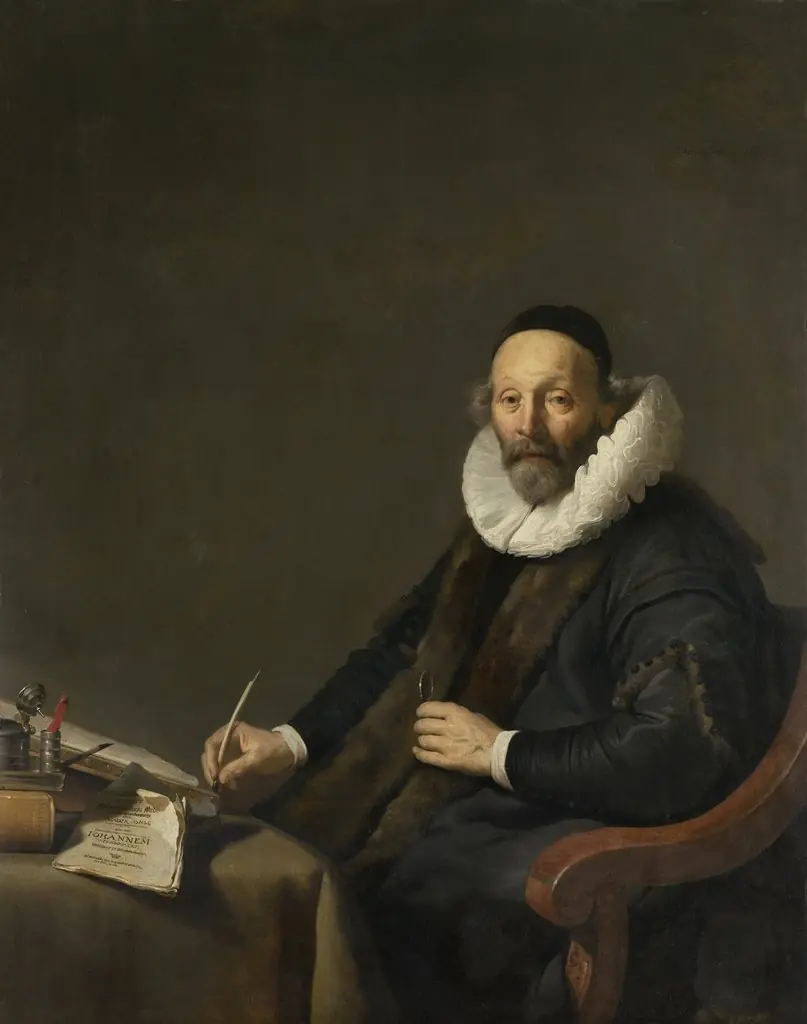 Johannes Uyttenbogaert (1557-1644). Remonstrant minister in The Hague
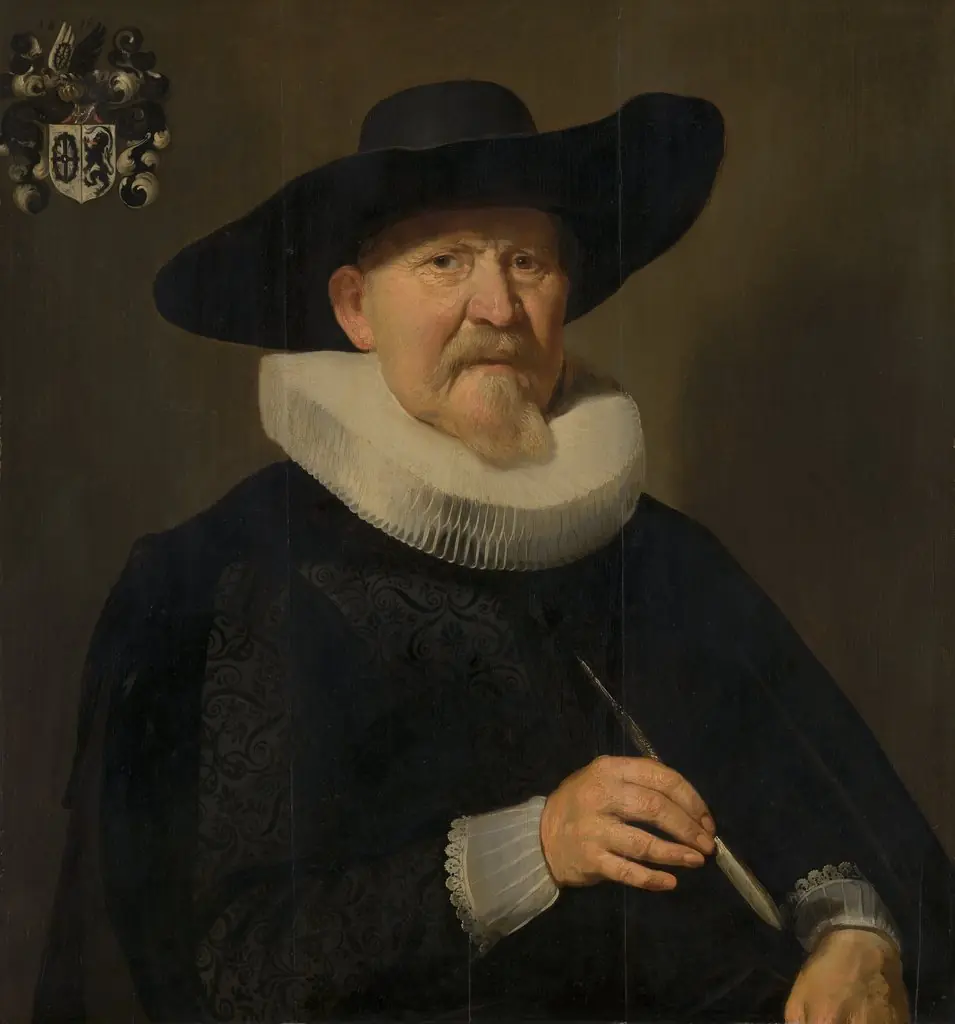 Portrait of a Man, probably Hans van Hogendorp
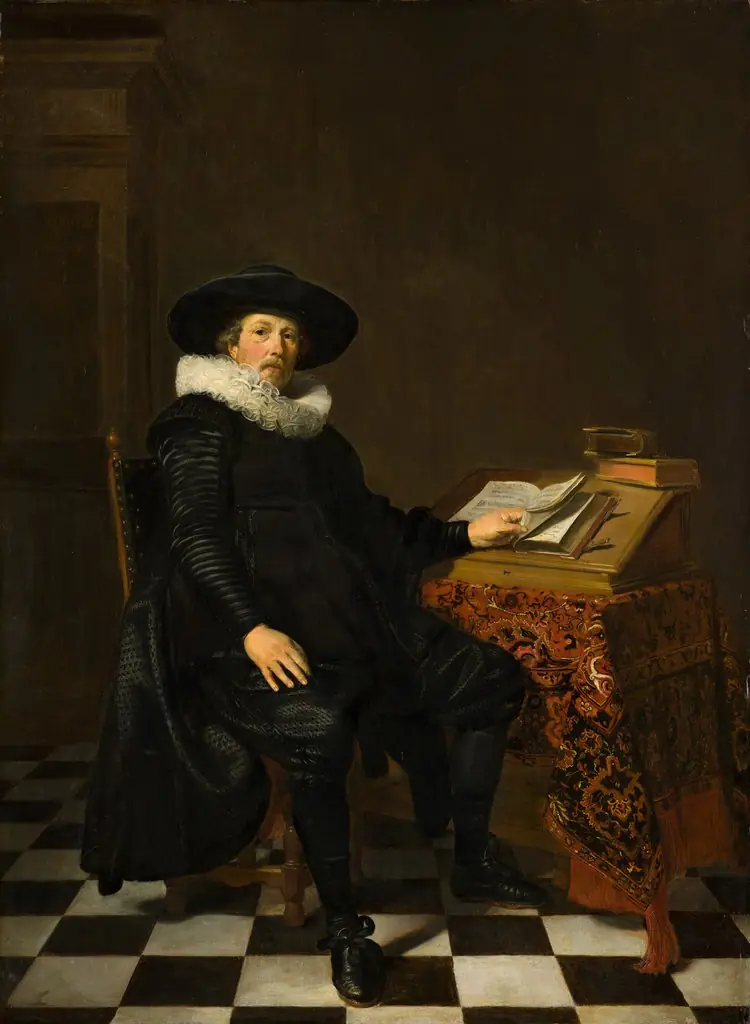 Portrait of a Scholar
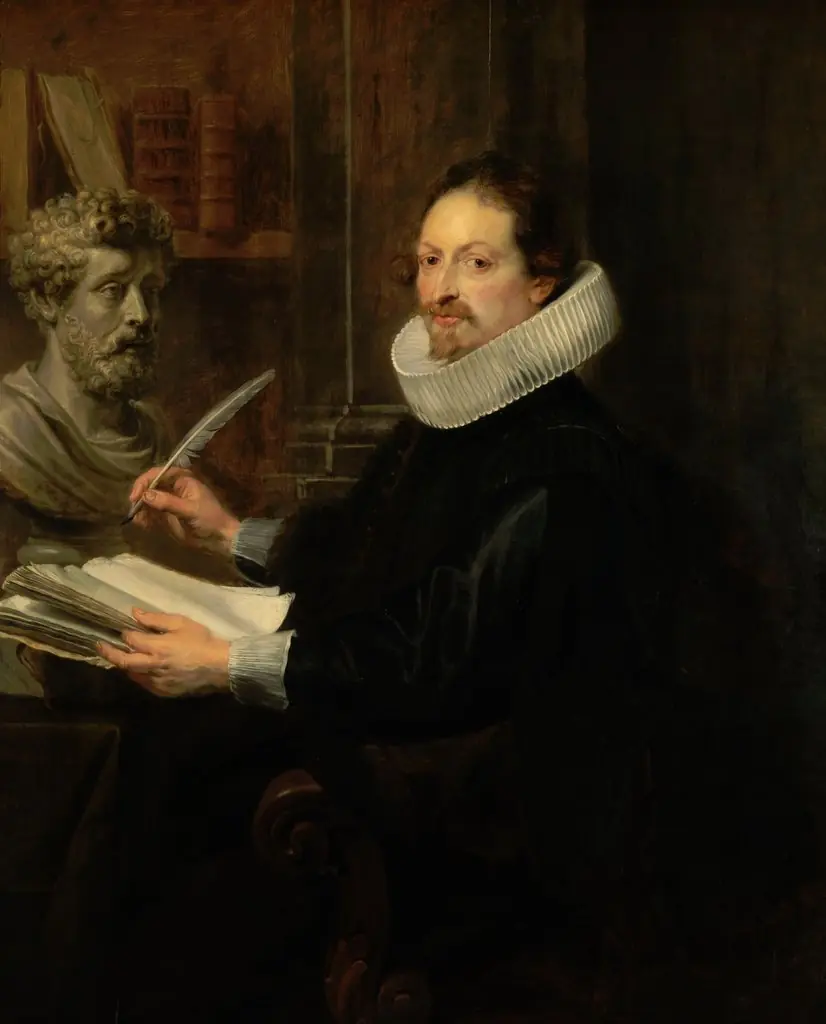 Joannes Gaspard Gevartius, (1593-1666)
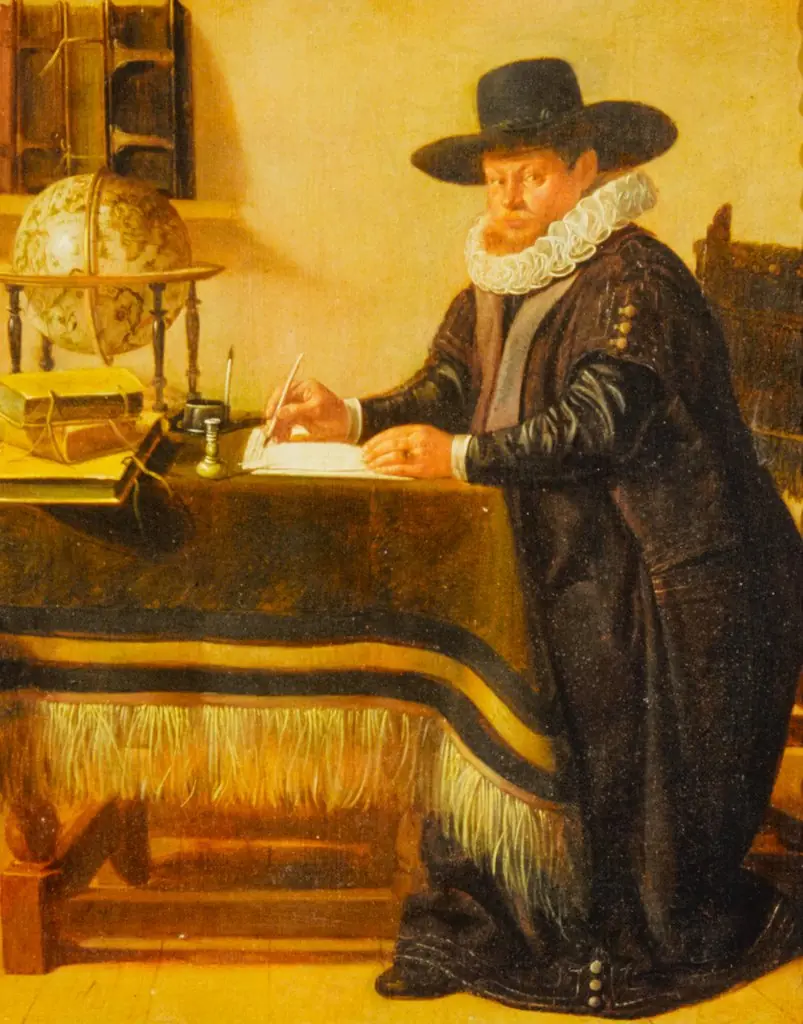 Portrait of Johan van Beverwijck (1594-1647) in his Study
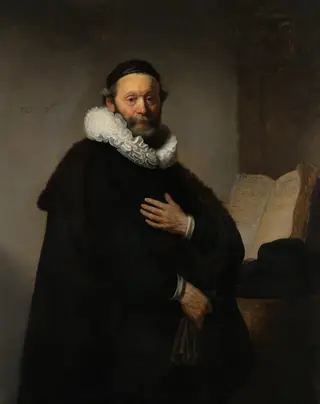 Portrait of Johannes Wtenbogaert
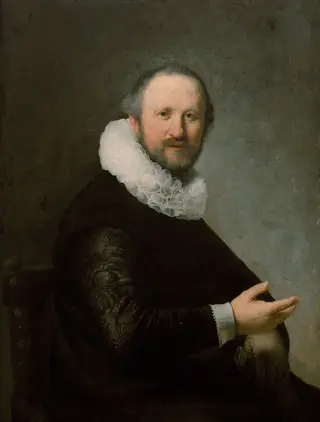 Portrait of a Man Seated
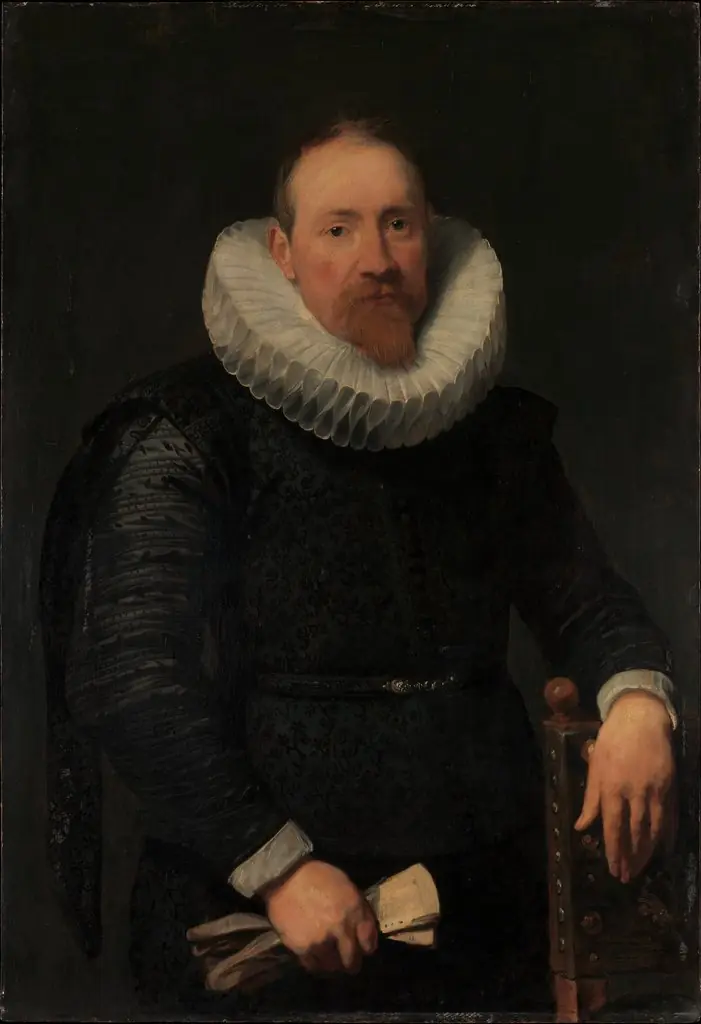 Portrait of a Man
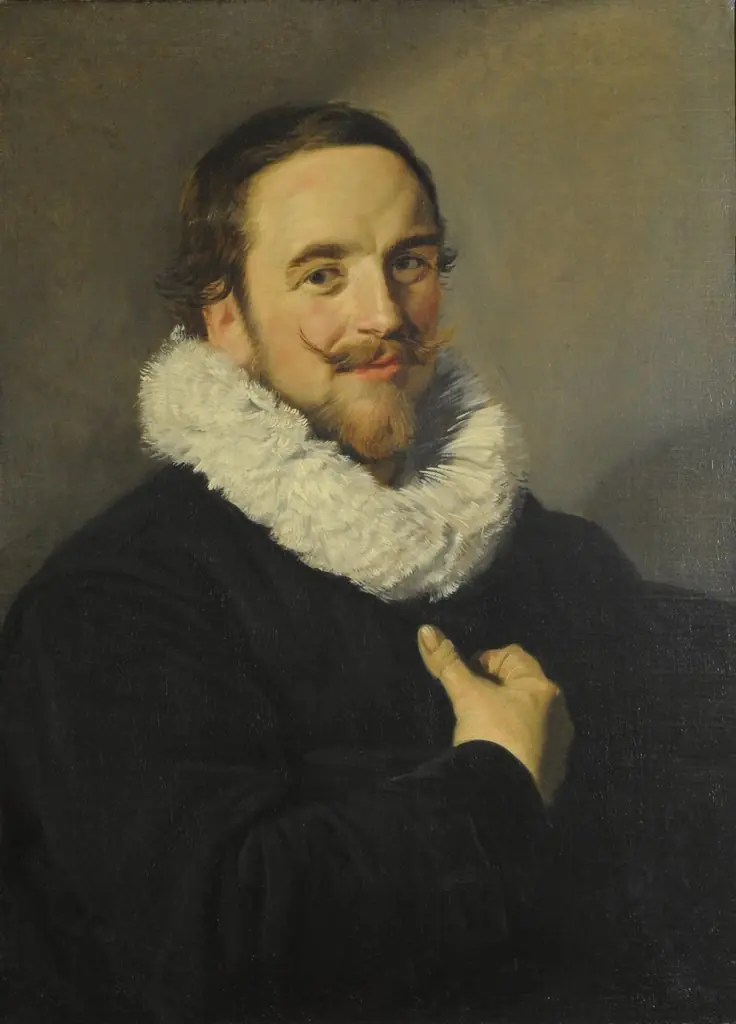 Portrait of a gentleman
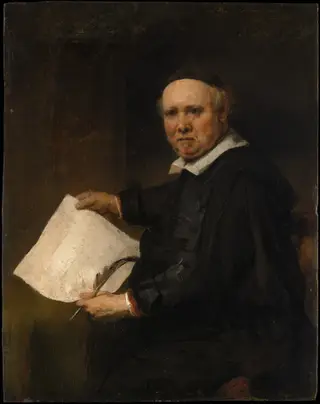 Lieven Willemsz van Coppenol (born about 1599, died 1671 or later)
 Sebastiaan Leerse, Antwerp Merchant