Artwork
Separation of David and Jonathan
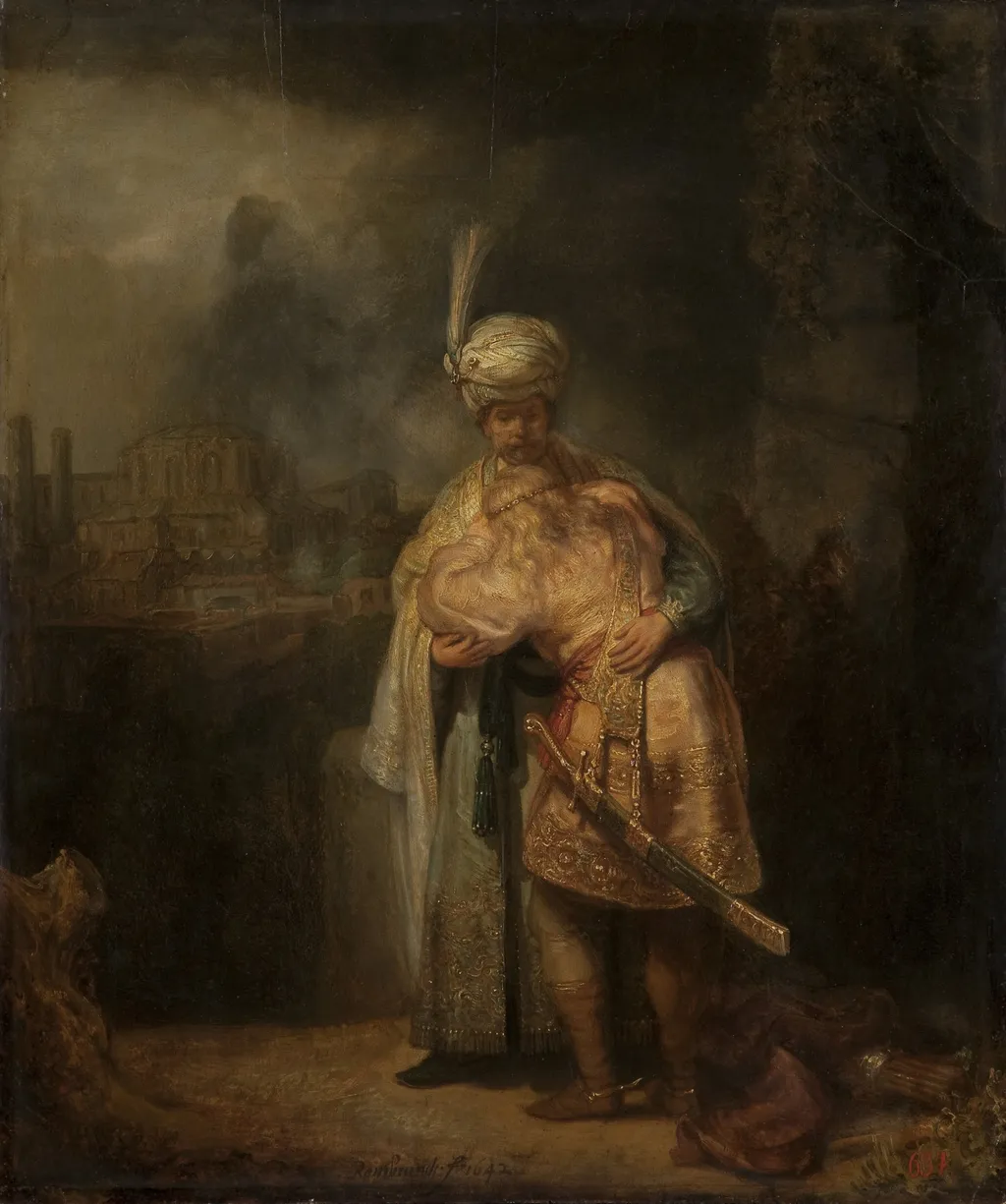
Separation of David and Jonathan is an oil painting by the Dutch Golden Age artist Rembrandt van Rijn. It dates from 1642 and is held in the collection of the Hermitage Museum.
About this work
Subject & Meaning
Rembrandt, ayant récemment perdu Saskia, aurait pu projeter son propre deuil sur ce sujet, faisant de l’émotion partagée le cœur du sens de la composition【3】.
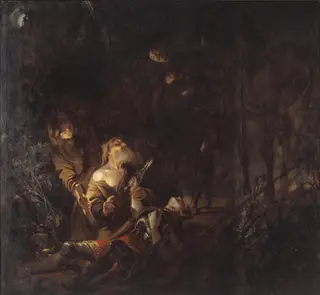
La peinture représente le moment biblique où David, jeune guerrier, est séparé de son ami Jonathan, fils du roi Saül, après que Jonathan a révélé l’intention meurtrière de leur père (1 Sam. 20:35‑42)【3】. Jonathan serre David contre son cœur tandis que David pleure, symbolisant une amitié profonde menacée d’exil【3】. Des éléments iconographiques précis – le turban à aigrette, la robe olivâtre à franges dorées, le harnais contenant une épée, et le carquois d’arrows aux pieds de David – soulignent l’influence orientaliste et la richesse des vêtements royaux, details répertoriés dans la description technique de l’œuvre【2】.
La scène, longtemps identifiée à tort comme un retour du fils prodigue ou une réconciliation, a été reconnue comme la « séparation de David et Jonathan » seulement au XIXᵉ siècle【4】. Rembrandt, ayant récemment perdu Saskia, aurait pu projeter son propre deuil sur ce sujet, faisant de l’émotion partagée le cœur du sens de la composition【3】.
Technique & Style
The work is an oil painting executed on a solid oak panel, measuring 61.5 × 73 cm, and was created in 1642 in the Dutch Republic. Rembrandt employed thick impasto and chiaroscuro to model the figures, using a warm palette and a strong directional light that isolates the central embrace. The composition reflects orientalist motifs, evident in Jonathan’s turban and the domed background, while the handling of the wood support shows typical 17th‑century panel preparation.
The painting’s condition remains stable within the Hermitage’s climate‑controlled display, with no documented restoration since its acquisition in the early 18th century. Stylistically, the piece combines realistic portraiture with symbolic use of arrows and a distant cityscape to convey emotional tension.
History & Provenance
Rembrandt’s Separation of David and Jonathan was painted in 1642 on oak panel, likely in Amsterdam during the Dutch Golden Age. The work was commissioned or created as part of Rembrandt’s exploration of biblical narratives, possibly influenced by the death of his wife Saskia in the same year. The painting remained in Rembrandt’s possession until 1659, when financial difficulties compelled him to sell it to Amsterdam merchant Lodowijck van Ludick.
By 1678, it was owned by Herman Becker, then passed through successive Amsterdam collectors Jan van Beuningen (1716) and L. van der Heem (1713) before being acquired by Osip Solovyëv, chargé d’affaires of Peter the Great, for 80 florins on 13 May 1713. The painting was shipped to Saint Petersburg on 19 June 1713 and installed in the Monplaisir Palace. Since 1882, it has been held by the State Hermitage Museum, where it remains in Gallery 254.
The painting is held in the collection of the Hermitage Museum in Saint Petersburg, Russia, where it has been displayed since 1882 in Room 254, a gallery dedicated exclusively to Rembrandt. The work entered the museum's holdings as part of its foundational collection in the late nineteenth century. Prior to this, the painting passed through several private hands, including the Amsterdam merchant Lodowijck van Ludick, who acquired it from the artist in 1659.
It was subsequently owned by Herman Becker, L. van der Heem, and Jan van Beuningen. In 1713, Osip Solovyëv purchased the work for 80 florins on behalf of Peter the Great, transporting it to Saint Petersburg for placement in the Monplaisir Palace.
Context
Scholarly reception of Rembrandt’s Separation of David and Jonathan (1642) was long delayed by misattribution. Early inventories (1797, 1859) confused the scene with the Prodigal Son or the reconciliation of Jacob and Esau, while Andrei Somov’s 1893 reading proposed a reconciliation between David and Absalom. Only in 1925 did Klaus von Baudissin identify the quiver and arrows as Jonathan’s signal to David, and in 1957 Vladimir Levinson-Lessing linked the episode to the earlier exchange of garments (1 Samuel 18:1-4).
Critics note stylistic parallels with Rembrandt’s later Return of the Prodigal Son (1668–69), particularly in the handling of sorrowful embrace and concentrated light. The painting’s intimate scale and psychological intensity align with Rembrandt’s mid-career focus on human vulnerability, a theme amplified by the artist’s personal loss of Saskia in 1642. Its eventual inclusion in the Hermitage’s Rembrandt gallery (room 254) in 1882 secured its place within the canon of Dutch Golden Age narrative painting.
Legacy
The painting's legacy is marked by a prolonged period of critical misidentification before its correct biblical subject was established. Early inventories from 1797 and 1859 mislabeled the work as a depiction of the Prodigal Son or the reconciliation of Jacob and Esau. It was not until 1925 that Klaus von Baudissin identified the scene as the separation of David and Jonathan, a conclusion solidified in 1957 by Vladimir Levinson-Lessing.
The work also faced an authenticity challenge in 1989 by the Rembrandt Research Project, though this was contested in 2009 by Anna Tummers, who reaffirmed its origin. Since 1882, the painting has been a cornerstone of the Hermitage Museum's collection, displayed in the dedicated Rembrandt hall alongside other masterpieces like The Return of the Prodigal Son, where critics frequently note thematic and stylistic parallels between the two works.
Overview
Rembrandt's 1642 painting, Separation of David and Jonathan, depicts a poignant moment from the Old Testament. Executed on wood, this work is now housed in the Hermitage Museum in Saint Petersburg, Russia. It captures the emotional farewell between the two biblical figures, emphasizing their profound bond and the sorrow of their parting. The scene highlights themes of loyalty and impending loss.
Own this work as a print
Artist & collection

Artist
Rembrandt Harmenszoon van Rijn, known mononymously as Rembrandt, was a Dutch Golden Age painter, printmaker, and draughtsman.

- Joseph accused by Potiphar's wife
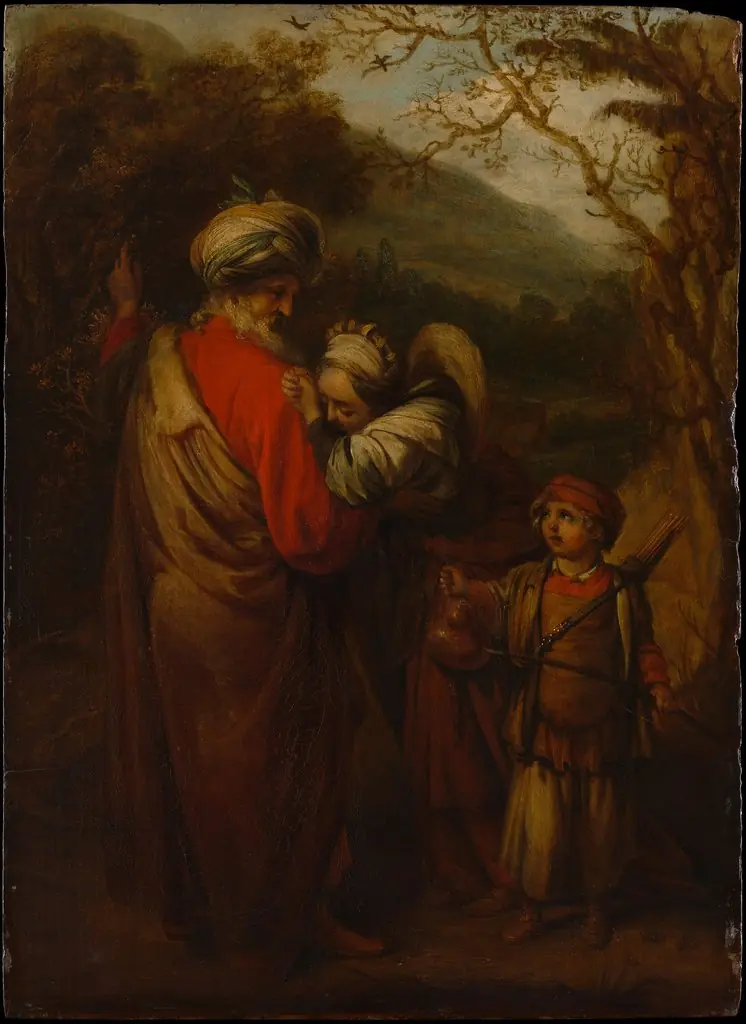 Abraham Dismissing Hagar and Ishmael
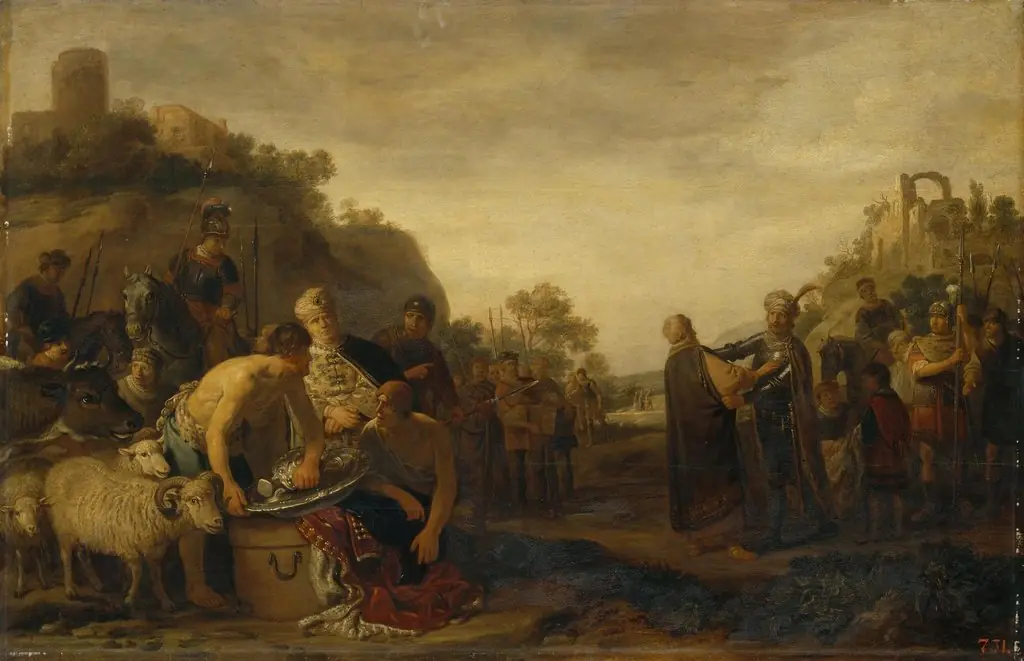 Samuel and Saul
 Episod din lupta lui Saul cu David
 Christ and the Woman Cught in Adultery with Pharisees
 Adoration of the Magi
 The legates of Alexander the Great investing the gardener Abdalonymus with the insignia of the kingship of Sidon
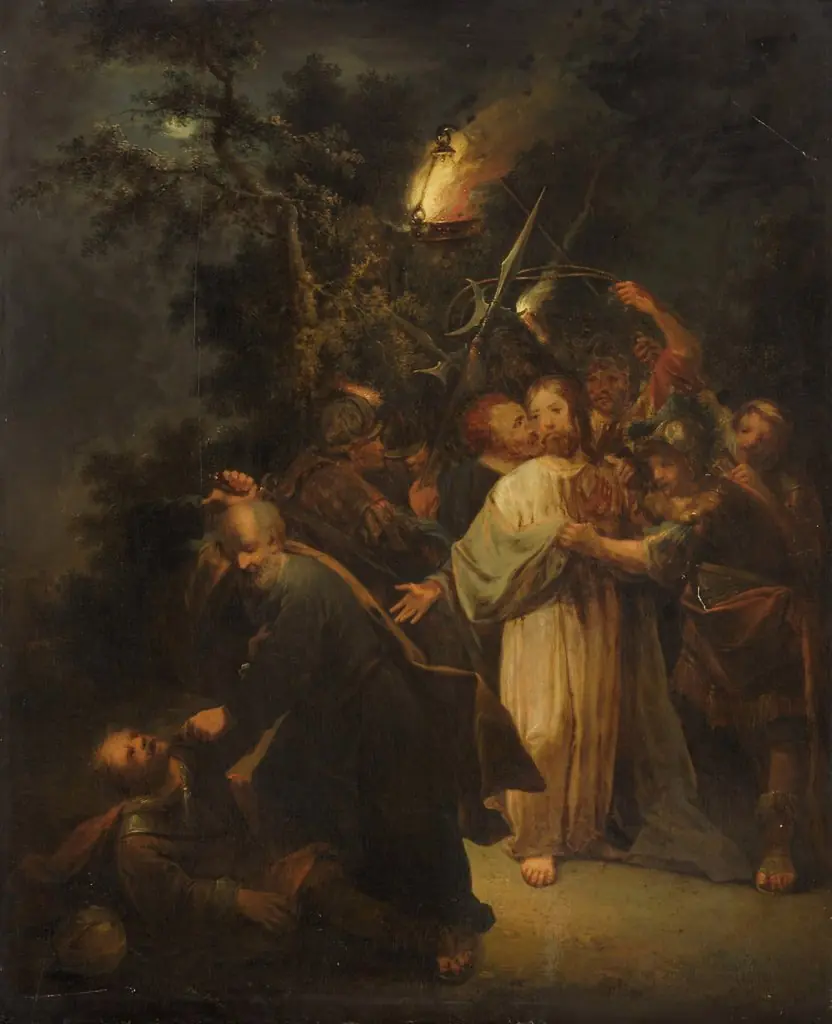 Gefangennahme Christi
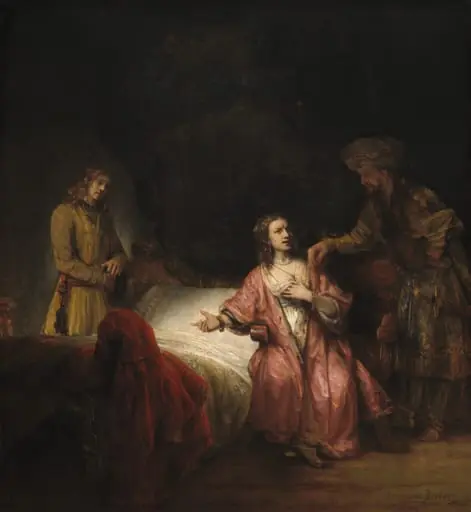 Joseph Accused by Potiphar's Wife
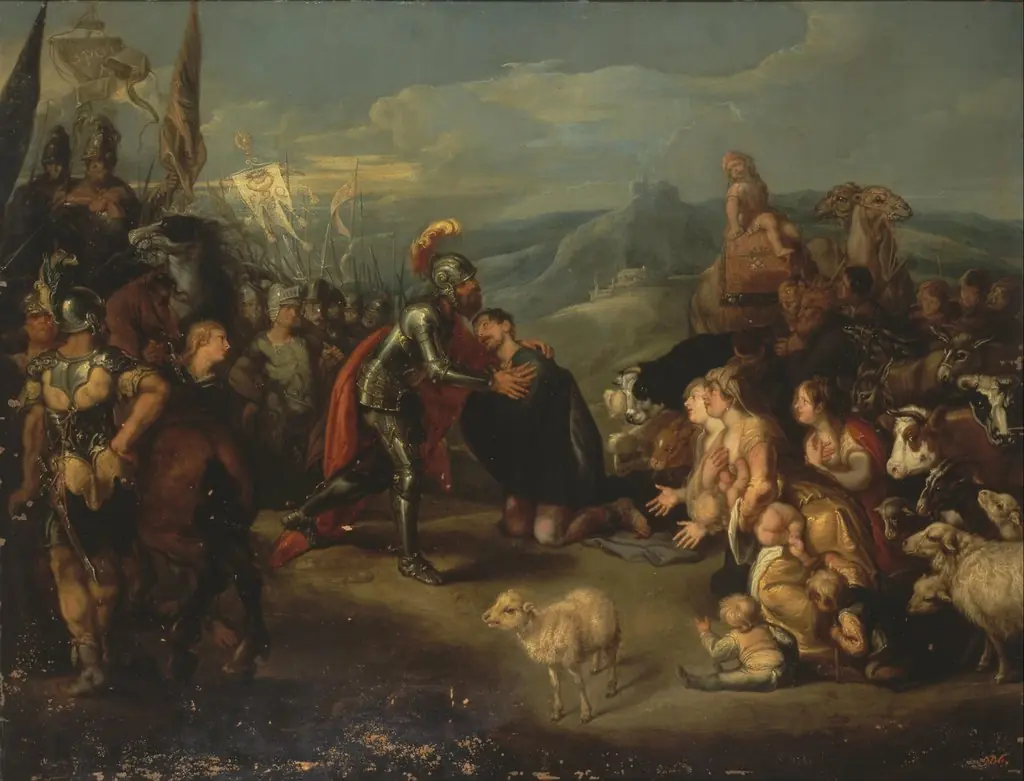 Meeting of Esau and Jacob
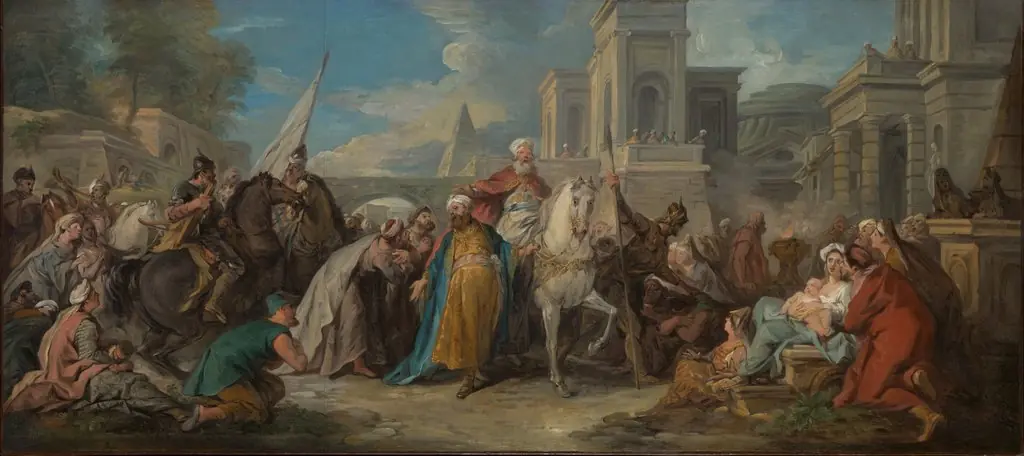 The Triumph of Mordecai
 Prins Svens lig bliver fundet