Artwork
Three Oriental Figures (Jacob and Laban?)
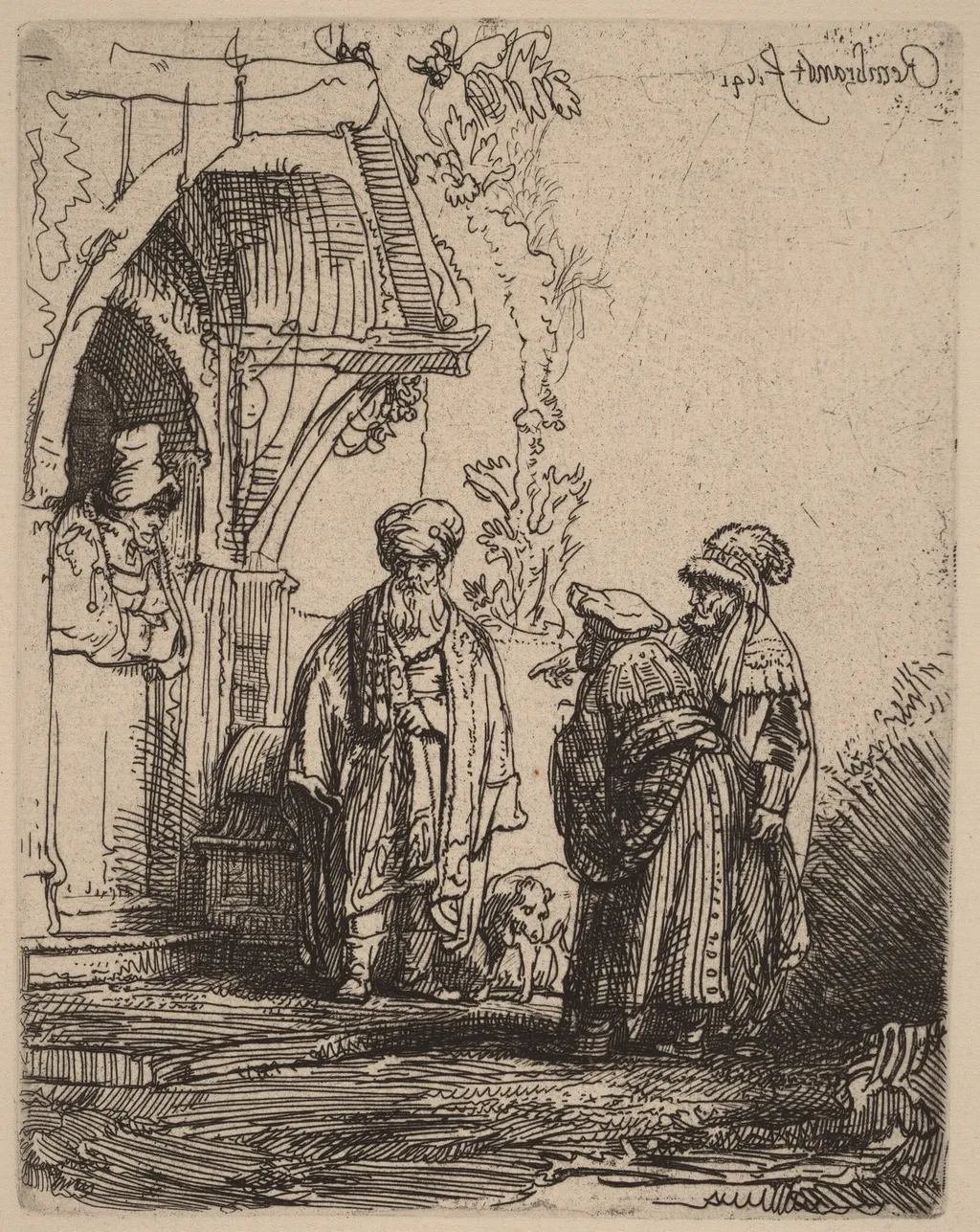
Three Oriental Figures (Jacob and Laban?) is an ink print by the Baroque artist Rembrandt van Rijn. It dates from 1641 and is held in the collection of the National Gallery of Art. Rembrandt’s 1641 etching presents a compact scene of three figures positioned before an unusually angular tent.
- Inscription
- Inscribed:upper left in plate, in reverse: Rembrand f. 1641; by later hand, lower center verso in graphite: Ayers ii/ii; by later hand, lower left verso in graphite: REMBRANDT HIND 183 ii/ii; by later hand, lower right verso in graphite: FINE LATE IMPRESSION
- Markings
- Marked:MA in monogram (not in Lugt)
About this work
Overview
Rembrandt’s 1641 etching presents a compact scene of three figures positioned before an unusually angular tent. The composition is rendered on laid paper, employing the characteristic fine lines of the artist’s printmaking technique. Though the identities are uncertain, the work has been linked to the biblical encounter between Jacob and Laban.
Subject & Meaning
The central group consists of a tall‑hatted figure leaning against a pole, accompanied by two individuals, one grasping a twig‑laden branch, the other gesturing with open hands. A small dog rests at their feet, adding a domestic touch. The ambiguous narrative invites viewers to contemplate themes of travel, encounter, and perhaps the tension of familial negotiation suggested by the Jacob‑Laban association.
Technique & Style
Executed in etching, Rembrandt employed swift, sketch‑like strokes that capture the texture of robes, the fur trim on hats, and the rough ground resembling sand or straw. The tent’s steep, triangular silhouette and the leaning ladder are delineated with minimal yet decisive lines, illustrating the master’s ability to convey depth and movement within the constraints of the medium.
History & Provenance
Created in 1641, the print belongs to the period when Rembrandt explored biblical and exotic subjects through printmaking. While specific ownership records are limited, the work has been catalogued among his lesser‑known etchings and is held in several public collections that specialize in Dutch Golden Age prints.
Context
During the early 1640s Rembrandt produced numerous etchings that combined narrative drama with a keen observation of everyday detail. This piece reflects contemporary European fascination with Oriental motifs and biblical stories, merging them in a compact, almost theatrical tableau.
Own this work as a print
Artist & collection

Artist
Rembrandt Harmenszoon van Rijn, known mononymously as Rembrandt, was a Dutch Golden Age painter, printmaker, and draughtsman.

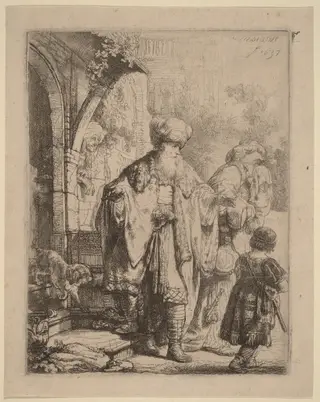 Abraham Casting Out Hagar and Ishmael
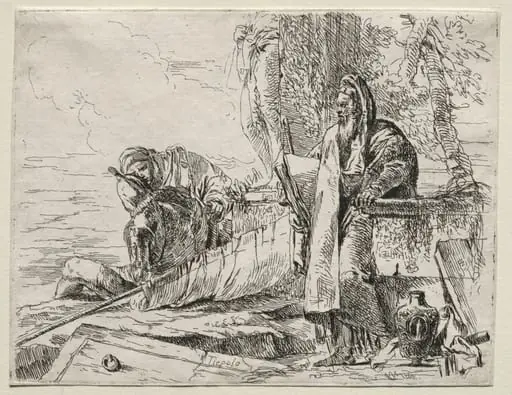 Various Caprices: The Philosopher Holding a Book
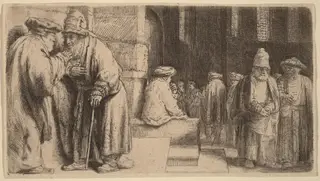 Jews in the Synagogue
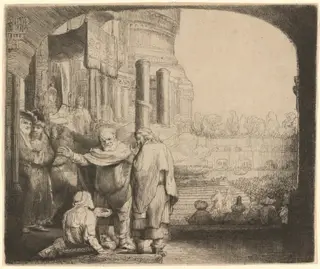 Peter and John Healing the Cripple at the Gate of the Temple
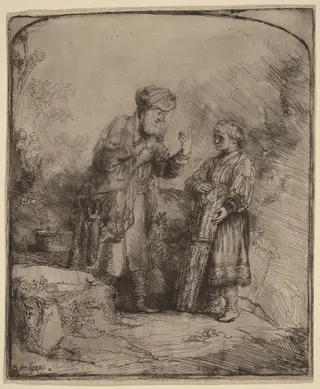 Abraham and Isaac
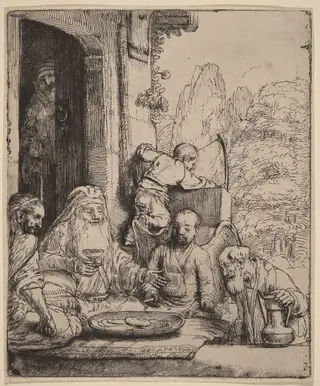 Abraham Entertaining the Angels
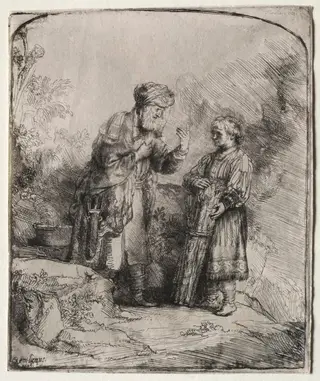 Abraham and Isaac
 The Blindness of Tobit: The Larger Plate
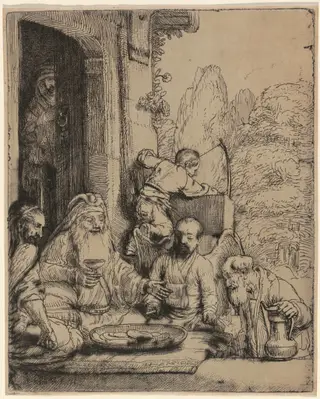 Abraham Entertaining the Angels