Artwork
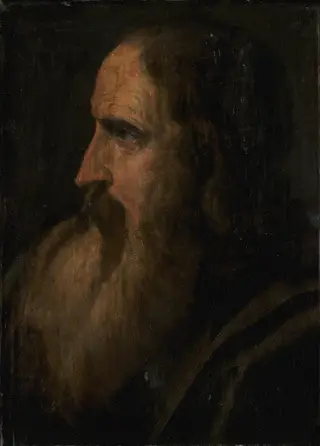
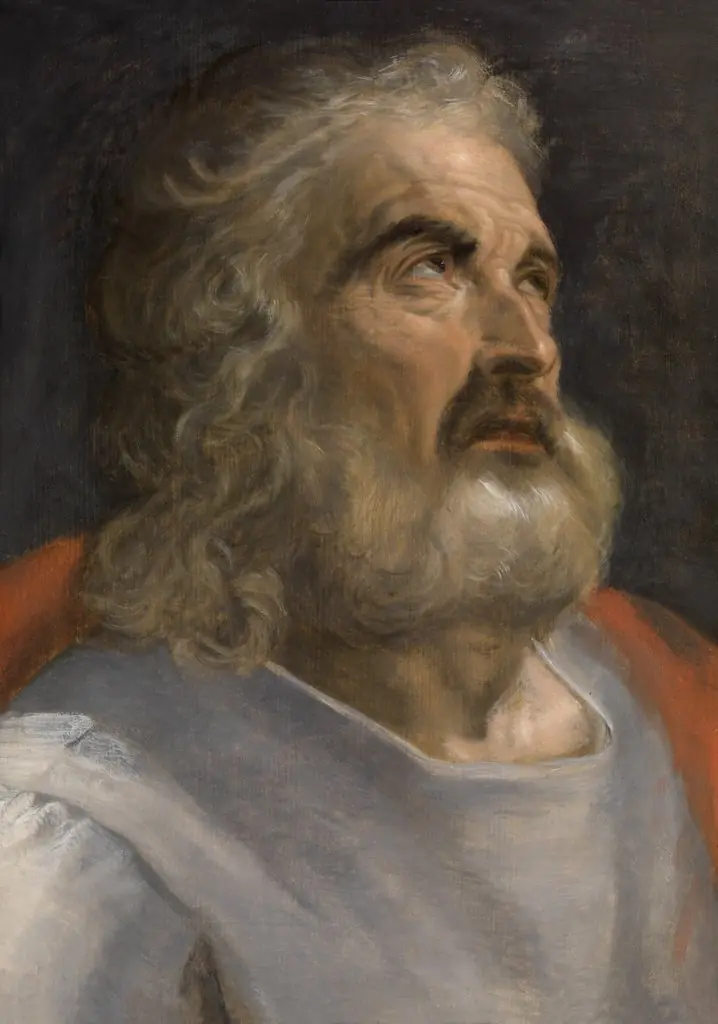
Head of One of the Three Kings: Melchior, The Assyrian King
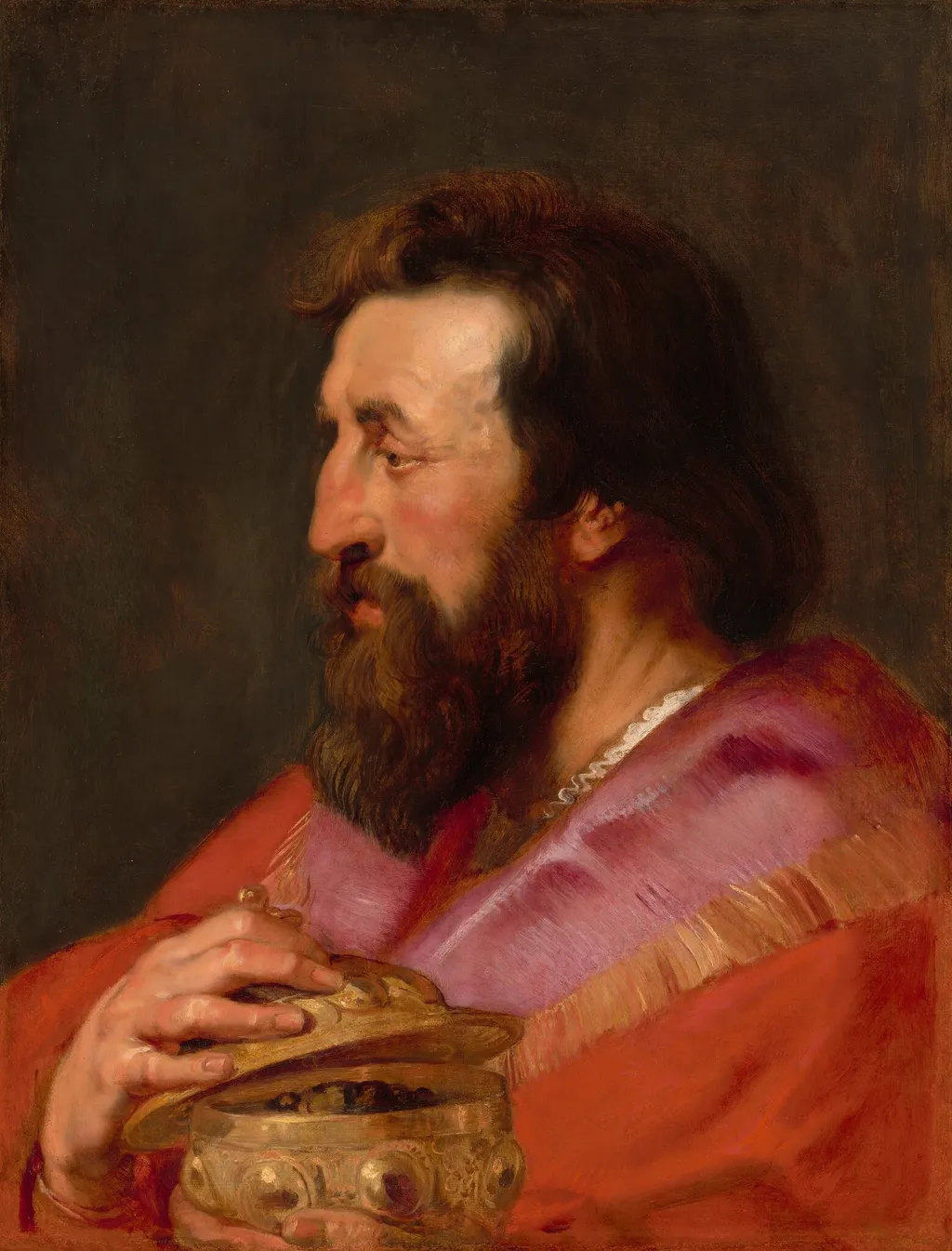
Head of One of the Three Kings: Melchior, The Assyrian King is an oil painting by the Baroque artist Peter Paul Rubens. It dates from 1618 and is held in the collection of the National Gallery of Art.
About this work
Subject & Meaning
Rubens emphasizes this through rich drapery and a dignified pose, linking the portrait to the broader narrative of Epiphany.
The painting presents the figure of Melchior, one of the three Magi who paid homage to the infant Christ. In Christian iconography Melchior embodies the regal aspect of the Magi, often identified by his advanced age and opulent clothing, signifying the offering of gold and the recognition of Christ’s kingship. Rubens emphasizes this through rich drapery and a dignified pose, linking the portrait to the broader narrative of Epiphany. The work thus conveys themes of divine revelation and the universal acknowledgment of Christ’s authority.
Technique & Style
The work is executed in oil on panel, later transferred to canvas, a support change that reflects the painting's long provenance through several European collections before reaching the National Gallery of Art. The medium is oil paint, and the relatively modest dimensions of 66.8 by 51.5 centimeters indicate a closely cropped, head-focused composition rather than a full-figure treatment. Rubens's handling is consistent with his mature Flemish Baroque practice of the period, in which richly modeled flesh tones, deep shadows, and luminous highlights convey both the aged wisdom and the regal bearing of the Assyrian king.
The stylistic emphasis on the head alone, isolated from the broader Adoration composition, suggests the panel was conceived as a focused character study, with the surrounding crown, beard, and facial features rendered in the painterly, tactile manner characteristic of Rubens's oil technique.
History & Provenance
Painted in 1618, the work formed part of a triptych of heads of the Magi commissioned for the Plantin-Moretus printing-office in Antwerp, where it remained in the collection of Balthasar Moretus the Elder and then passed by inheritance to his nephew Balthasar Moretus the Younger. After Moretus, the panel entered the collection of the Graaf Van de Werve de Vosselaer in Antwerp and was sold in his estate sale in March 1781. It descended through the de Roose and de Beauffort families in Antwerp and Paris before being offered at the Hôtel Drouot in Paris on 10 April 1876.
Subsequent owners included John Waterloo Wilson, Léon Gauchez, a London private collection, the Boesch collection, and dealers Durand-Ruel and Bourgeois & Cie. Acquired by Charles H. Senff in 1892, it remained in his family until sold in 1928 and 1929, finally entering the National Gallery of Art, Washington, as a gift from Chester Dale in 1943.
The painting is held in the collection of the National Gallery of Art in Washington, D.C. It entered the museum in 1943 as a gift from Chester Dale, following his acquisition of the work after it was sold at auction in New York in 1929. Prior to Dale, the piece passed through several private collections and sales in Antwerp, Paris, London, Vienna, and New York between the late eighteenth and early twentieth centuries. The provided sources detail this extensive provenance chain but do not list specific public exhibition records or assign a formal inventory accession number beyond its identification within the National Gallery of Art's holdings.
Overview
Head of One of the Three Kings: Melchior, The Assyrian King is an oil painting on panel, later transferred to canvas, executed by Peter Paul Rubens in 1618. The work presents a close-up portrait of Melchior, traditionally identified as the eldest of the Magi and the King of Assyria. The composition focuses tightly on the figure's head and shoulders, isolating him against a dark, indistinct background to emphasize his facial features and regal attire.
Rubens depicts an elderly man with a long, flowing white beard and a prominent golden crown, signifying his royal status. He is dressed in elaborate, richly textured robes that demonstrate the artist's mastery of light and fabric rendering. Created during a period when Rubens was deeply engaged in religious subjects following his return to Antwerp, this study likely served as a preparatory element for a larger altarpiece or a standalone devotional image.
The painting exemplifies the artist's ability to imbue biblical figures with psychological depth and physical presence, utilizing the fluidity of oil paint to capture the subtle nuances of age and authority. This specific depiction of Melchior highlights Rubens' interest in the individual character of the Magi rather than treating them as a uniform group.
Own this work as a print
Artist & collection
Artist
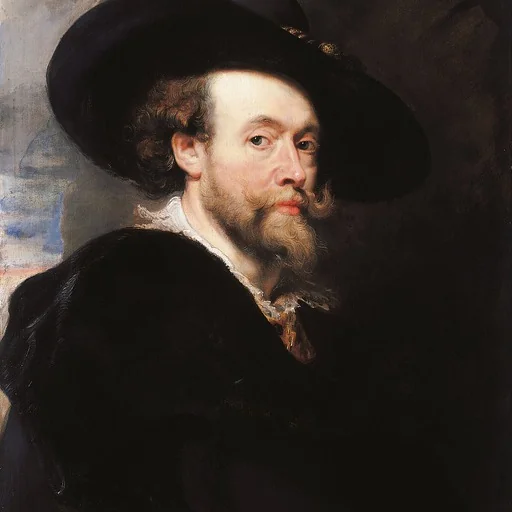
Sir Peter Paul Rubens ( ROO-bənz; Dutch:; 28 June 1577 – 30 May 1640) was a Flemish artist and diplomat.