Artwork
Watercolou, copy after Venus and the Three Graces, Sandro Botticelli in the Musée du Louvre (Paris)
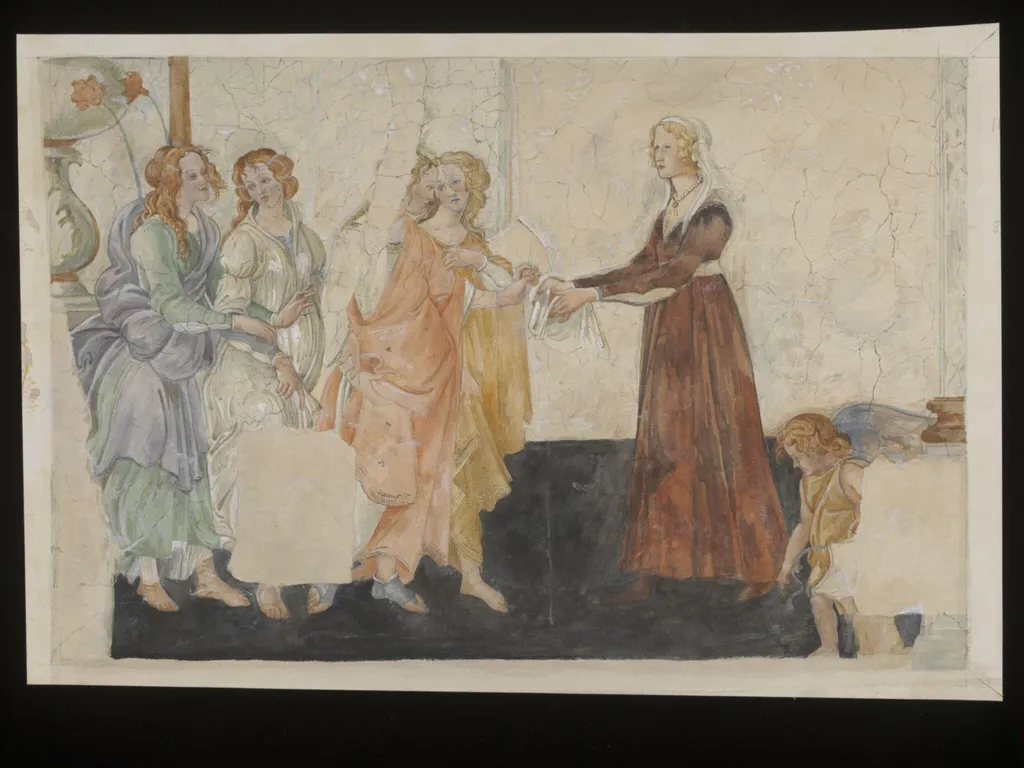
Watercolou, copy after Venus and the Three Graces, Sandro Botticelli in the Musée du Louvre (Paris) is a watercolor work on paper by the Early Renaissance artist Sandro Botticelli. It dates from 1487 and is held in the collection of the Victoria and Albert Museum.
About this work
Overview
This watercolour work is a copy after Sandro Botticelli's 'Venus and the Three Graces', originally housed in the Musée du Louvre, Paris. It portrays a scene of five figures: four women and a winged boy, arranged in a leftward movement towards a central matron.
Subject & Meaning
The subject matter appears to deviate slightly from the original's title, as it depicts four women rather than Venus with the Three Graces. The matron, holding a folded cloth and extending an arm, may symbolize guidance or offering, while the winged boy's presence could allude to a mythological or symbolic element, though his specific role in this copy is ambiguous.
Technique & Style
Executed in watercolour, the piece features soft, blurred facial expressions on the women, imparting a dreamy quality. The color palette is divided, with cool tones (light green, white) on the left and warm hues (orange, yellow, dark brown) on the right, set against a plain background that emphasizes the figures.
History & Provenance
Limited information is available on this specific watercolour copy. It is known to be a reproduction of Botticelli's work in the Louvre, but details on its creation date, artist, and ownership history are not provided.
Context
Understanding this work benefits from familiarity with Sandro Botticelli's original 'Venus and the Three Graces'. Botticelli was a prominent figure in the Italian Renaissance, known for his graceful and lyrical style, often incorporating mythological themes.
Own this work as a print
Artist & collection
Artist
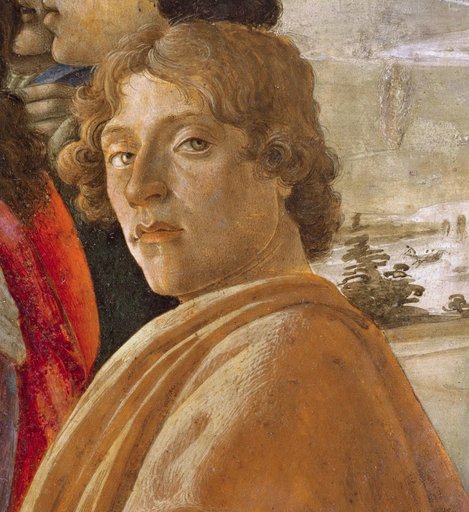
Alessandro di Mariano di Vanni Filipepi, better known as Sandro Botticelli or simply Botticelli, was an Italian painter of the Early Renaissance.

 Study for "Faith" and "Hope"
 Study of Courtesans
 Udkast til freskerne i Viborg Domkirke. Nordre korsarms vægge
 Kristus fører røveren ind i Paradiset
 St. Cecilia
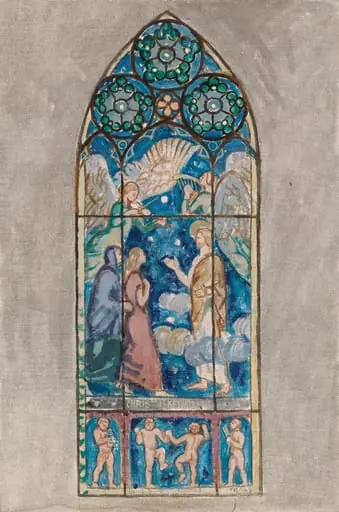 Christus resurrexit, luonnos Porin kirkon lasimaalausta varten
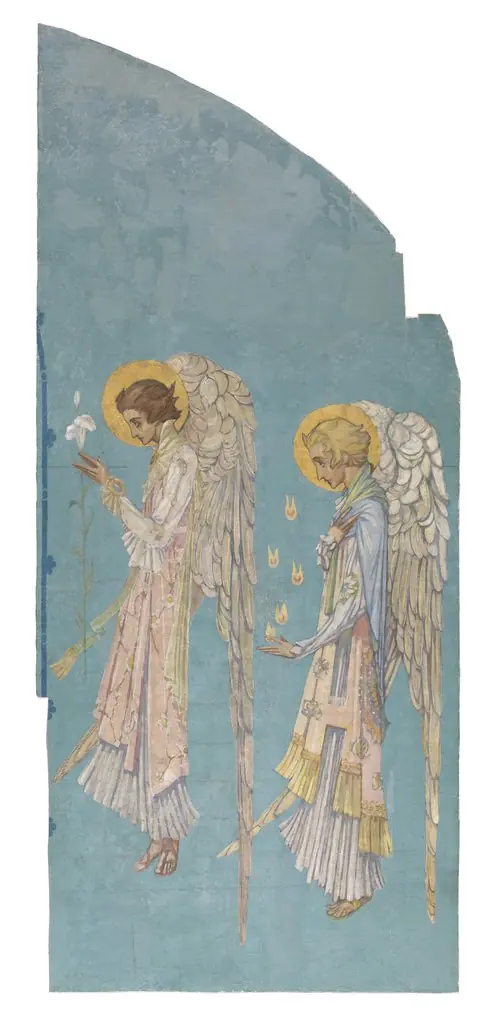 Two Winged Angels in Profile
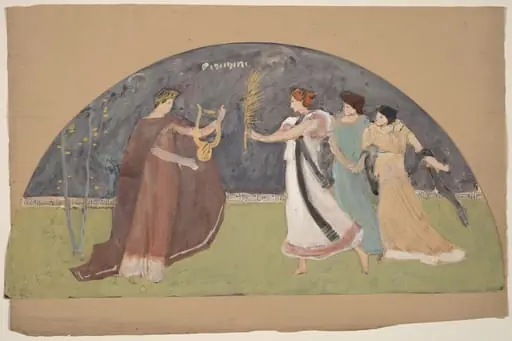 Study for a Lunette
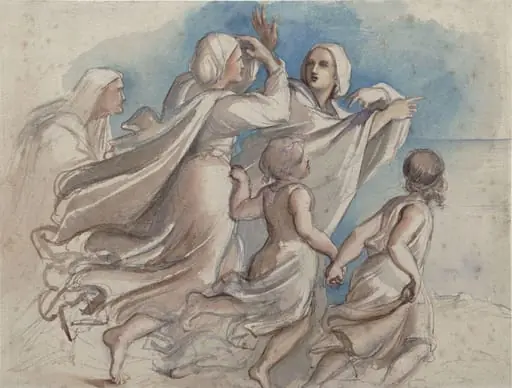 Looking out to Sea
 Three Saints (Alternate Study for Chapel Windows, Caldwell House, Newport)