Artwork
Portrait of a Man with his Dog
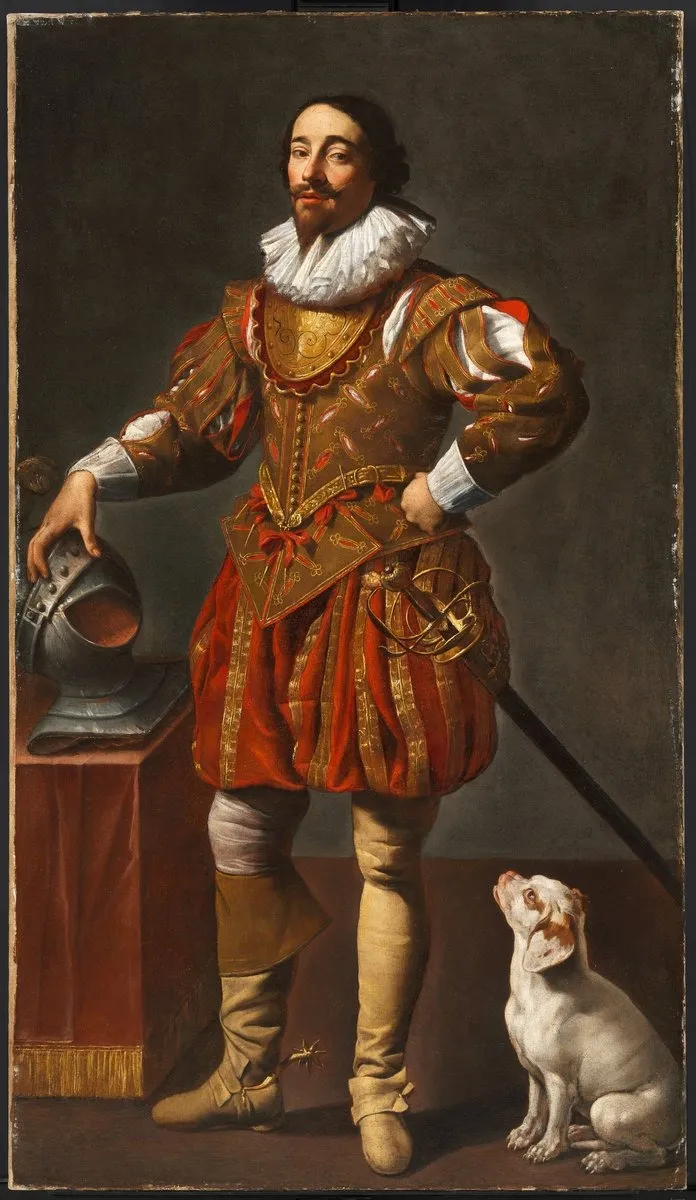
Portrait of a Man with his Dog is an oil painting by the Caravaggisti artist Simon Vouet. It dates from 1629 and is held in the collection of the Museum of Fine Arts, Budapest.
About this work
Overview
Vouet, a French artist shaped by years in Italy, returned to France under royal commission and brought with him the visual language of Italian Baroque painting.
Painted around 1629, this oil portrait by Simon Vouet captures a nobleman beside his small spotted dog. Vouet, a French artist shaped by years in Italy, returned to France under royal commission and brought with him the visual language of Italian Baroque painting. The work exemplifies his early synthesis of Caravaggesque realism and aristocratic portraiture, executed with refined attention to texture and light.
Subject & Meaning
The man stands with composed authority, one hand resting on a helmet, sword at his hip, symbols of military or courtly status. His elaborate attire, rich in red, gold, and white, signals wealth and social rank. The dog, gazing upward, functions not as mere pet but as an emblem of loyalty and companionship, reinforcing the subject’s dignity through quiet, intimate connection.
Technique & Style
Vouet employs strong chiaroscuro to model form and direct focus, isolating the figure against a deep, unbroken background. The textures of fabric, metal, and fur are rendered with precise brushwork, reflecting his Italian training. Light falls sharply across the tunic’s stripes and the dog’s fur, enhancing three-dimensionality without theatricality, grounding the portrait in observed reality.
History & Provenance
The painting entered the collection of the Museum of Fine Arts in Budapest in the early 20th century, though its earlier ownership remains undocumented. It was likely acquired during a period of increased European interest in French Baroque works. Vouet’s rise as Premier peintre du Roi ensured his works were widely sought, though this particular portrait remained outside France until modern times.
Context
In the 1620s, French art was transitioning from Mannerist conventions toward the naturalism and emotional gravity of Italian Baroque. Vouet’s return from Rome coincided with Louis XIII’s push to elevate French court culture. This portrait reflects that shift: a private, intimate image infused with the dramatic lighting and material richness imported from Italy, adapted for French aristocratic taste.
Legacy
Vouet’s fusion of Italian techniques with French portraiture laid groundwork for later generations, including Le Brun. While not as widely known as his royal commissions, works like this portrait demonstrate his role in reshaping French visual culture. The quiet intimacy of subject and animal, rendered with technical precision, marks a subtle but significant evolution in 17th-century French painting.
Artist & collection
Artist
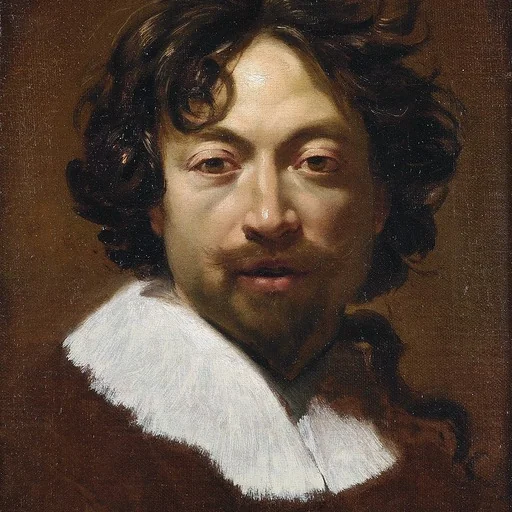
Simon Vouet (French pronunciation:; 9 January 1590 – 30 June 1649) was a French painter who studied and rose to prominence in Italy before being summoned by Louis XIII to serve as Premier peintre du Roi in France.

- Felipe III El Piadoso y El Bueno
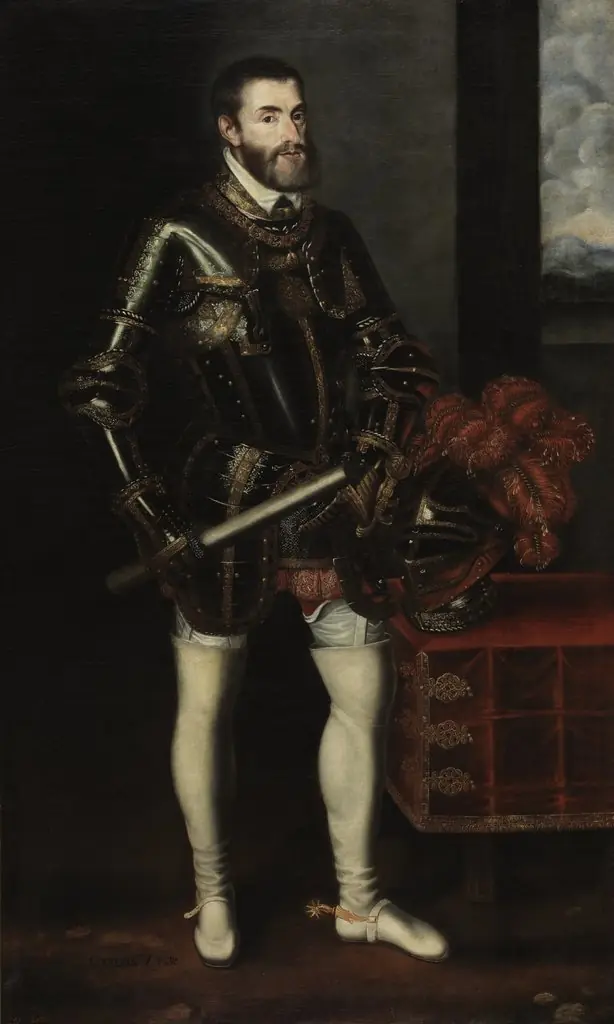 Charles V in Armour
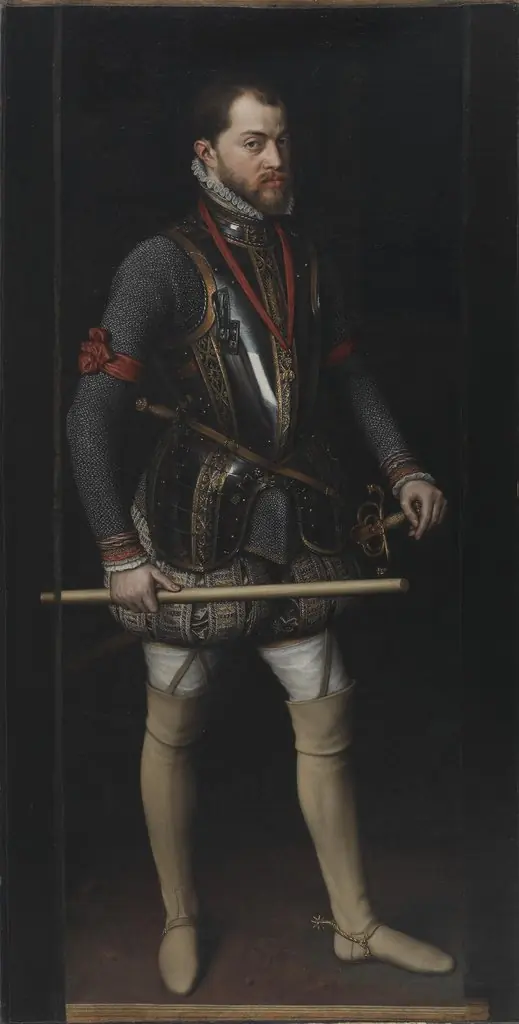 Philip II of Spain
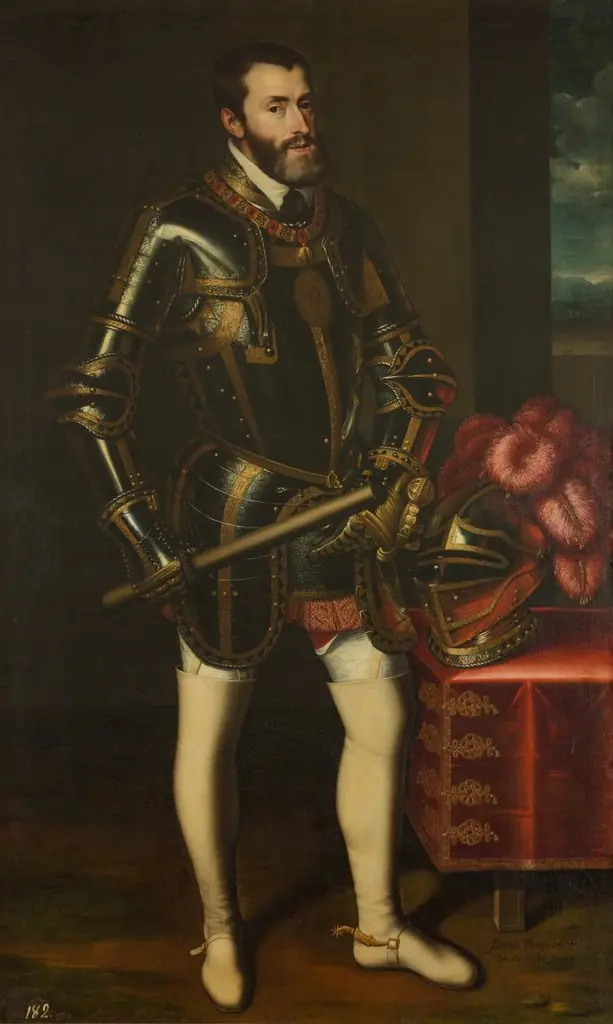 The Emperor Charles V
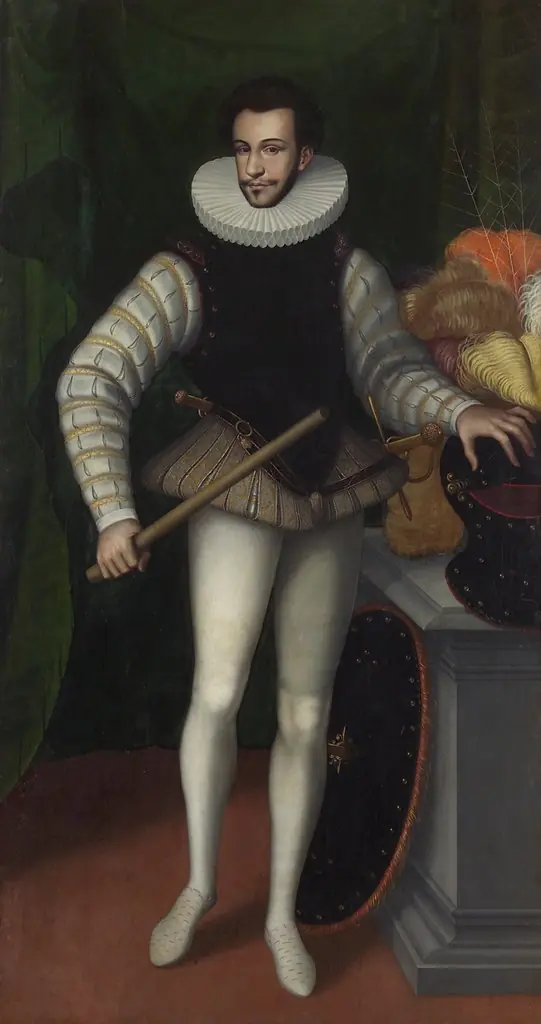 Herzog Francois von Alencon und Anjou (1555-1584)
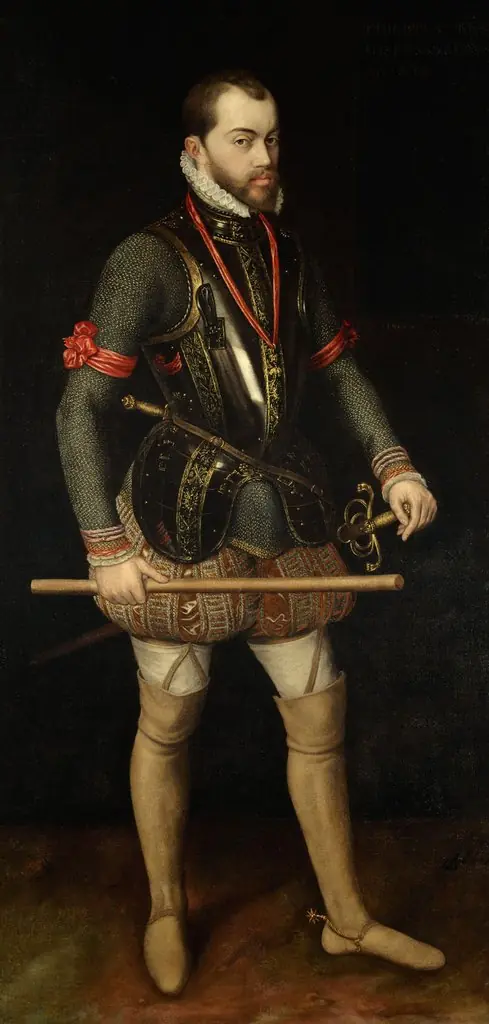 Portrait of Philip II of Habsburg (1527-1598)
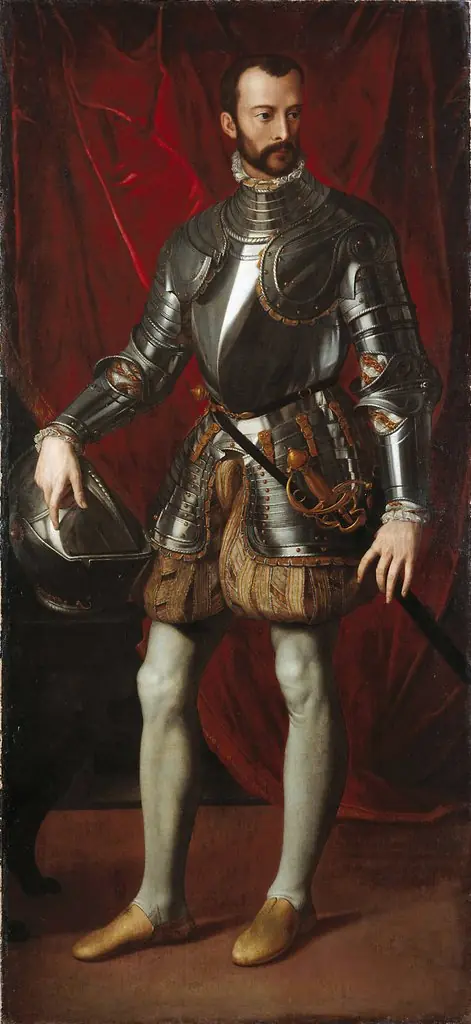 Großherzog Francesco I. (1541-1587) von Toskana
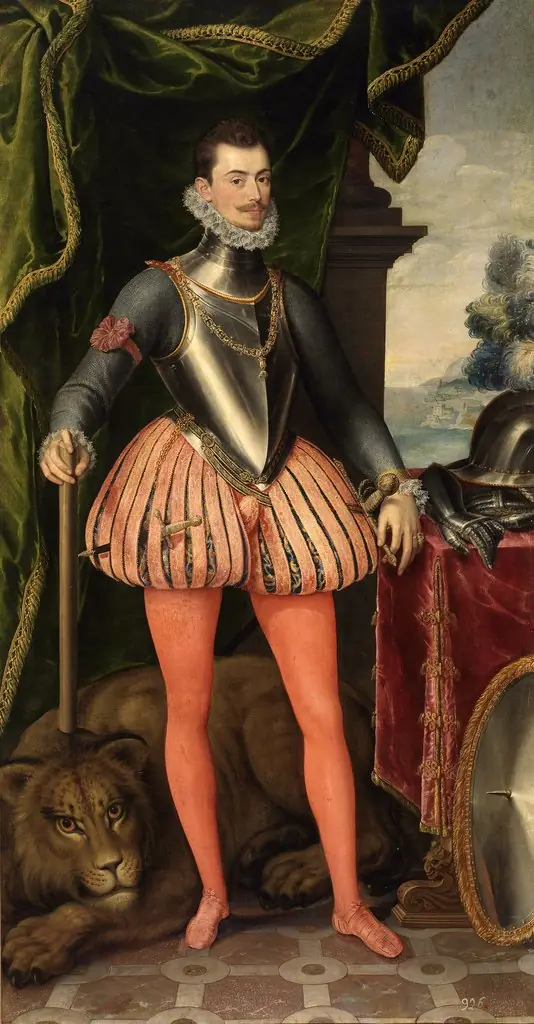 Don Juan de Austria
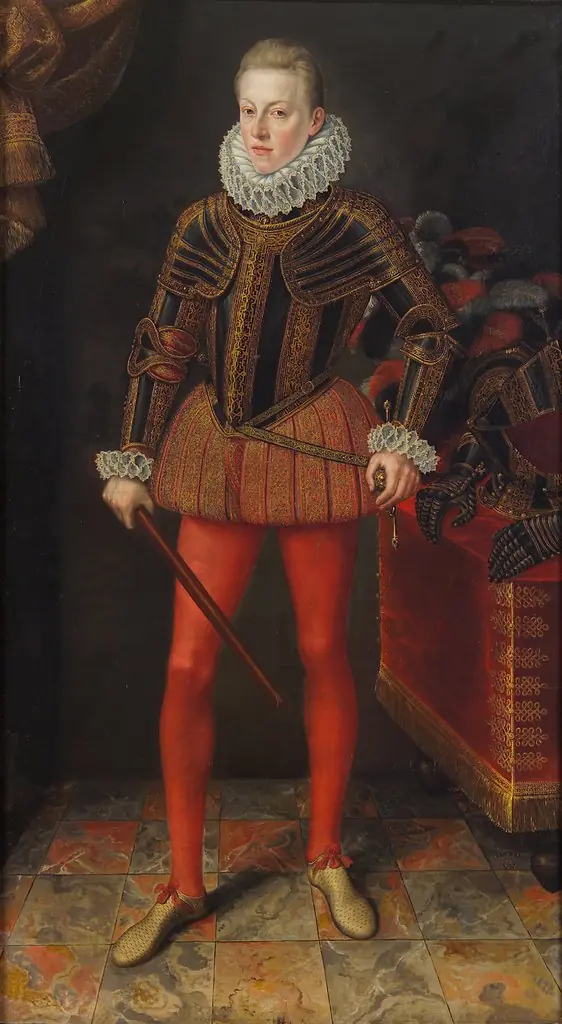 Portrait of Matthias II of Habsburg (1557-1619), the future Holy Roman Emperor
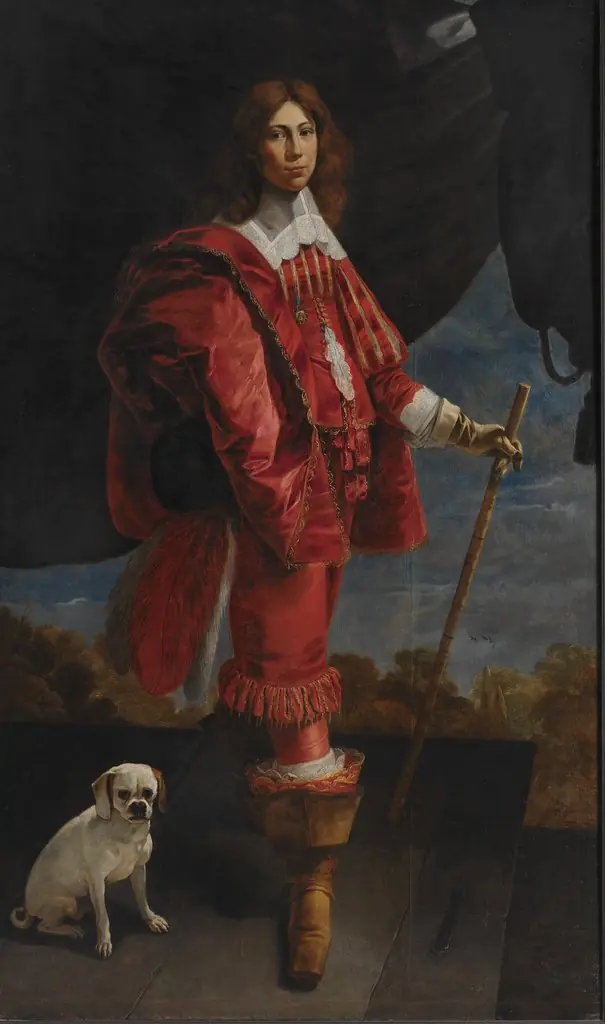 Ulrik Christian Gyldenløve (1630-1658), son of Christian IV and Vibeke Kruse
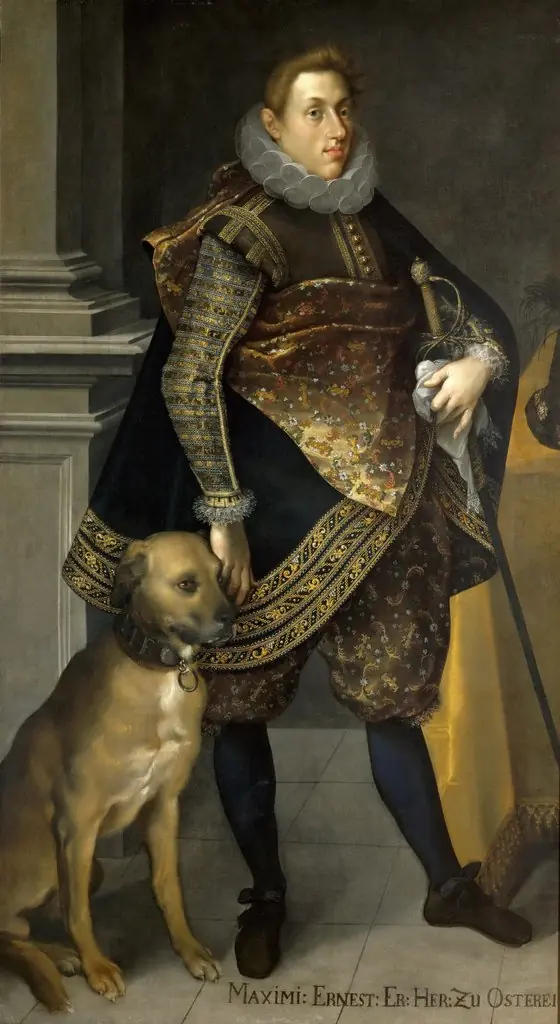 Erzherzog Maximilian Ernst (1583-1616) mit Jagdhund
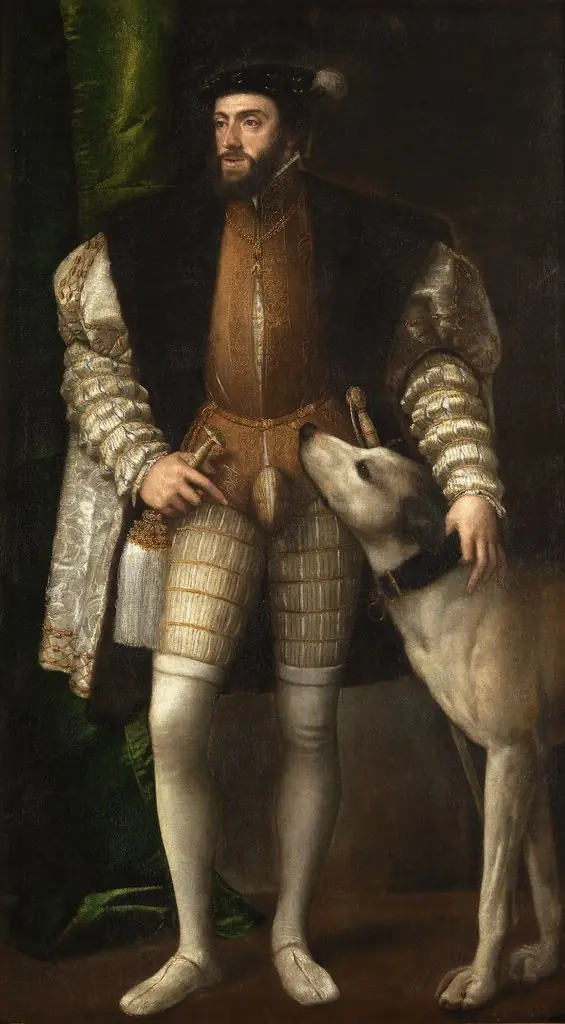 Portrait of Charles V with a Dog