Artwork
The Fisherman (Le Pêcheur)
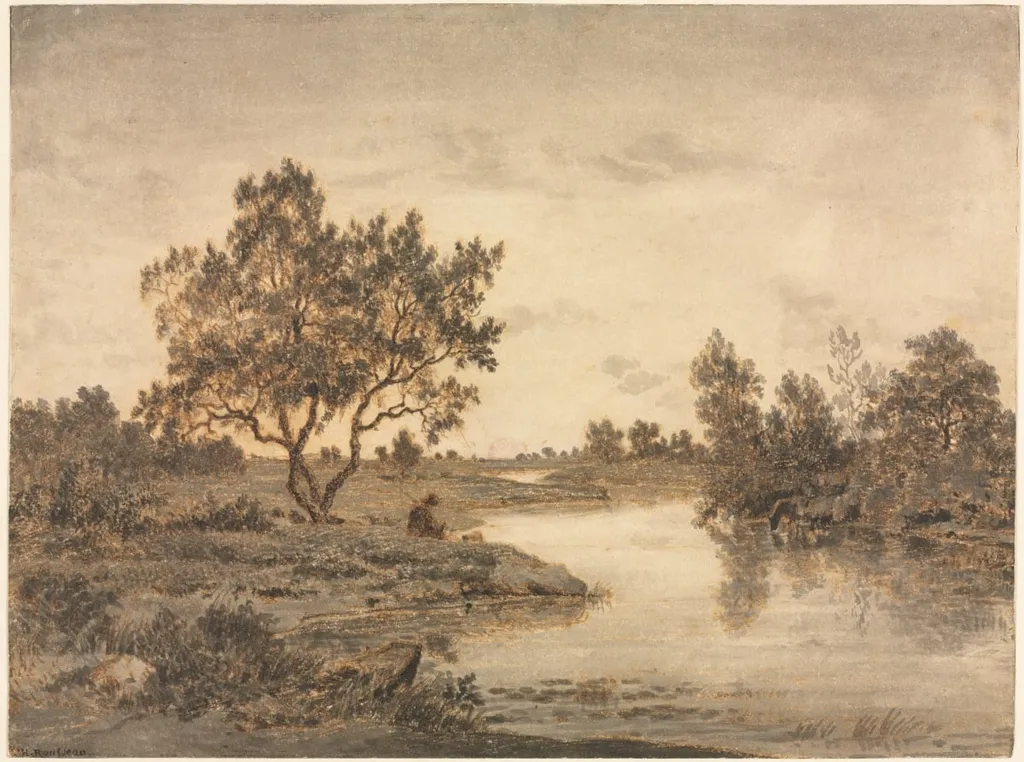
The Fisherman (Le Pêcheur) is a drawing by the Romanticist artist Théodore Rousseau. It dates from 1842 and is held in the collection of the Cleveland Museum of Art.
- Accession no.
- 1980.18
- Credit line
- John L. Severance Fund
About this work
Overview
The drawing titled Le Pêcheur (The Fisherman) is an early work by the French landscape artist Jean‑Baptiste‑Camille Corot, created while he was still establishing his practice on the outskirts of Paris. Executed in pencil, the composition presents a solitary fisherman seated beside a tree, surrounded by meticulously rendered rocks and grasses that convey a quiet, observational tone.
Subject & Meaning
The central figure is a modest fisherman at rest, his posture suggesting a pause in labor. The surrounding natural elements, tree, stones, foliage, are drawn with precise detail, reflecting the artist’s belief that each tree in the nearby Fontainebleau forest possesses its own character and narrative, akin to a human presence within the landscape.
Technique & Style
Rendered with fine, cross‑hatching lines, the drawing employs a subtle chiaroscuro effect to model form and suggest depth. The careful modulation of light and shadow across the tree bark and ground surfaces creates a three‑dimensional quality, while the delicate rendering of grasses and rocks demonstrates the artist’s commitment to close observation of nature.
History & Provenance
Created during the artist’s early career, the work likely dates from the 1820s, a period when he lived in modest circumstances in a cottage at Barbizon and worked in a converted barn. The drawing remained in private collections before being acquired by a regional museum, where it now serves as an example of his formative approach to landscape.
Context
The piece belongs to the Barbizon school’s emphasis on painting en plein air and depicting rural life with realism. By focusing on a solitary laborer amid an unembellished natural setting, the drawing aligns with the movement’s shift away from idealized classical subjects toward a more direct, observational representation of the French countryside.
Artist & collection
Artist
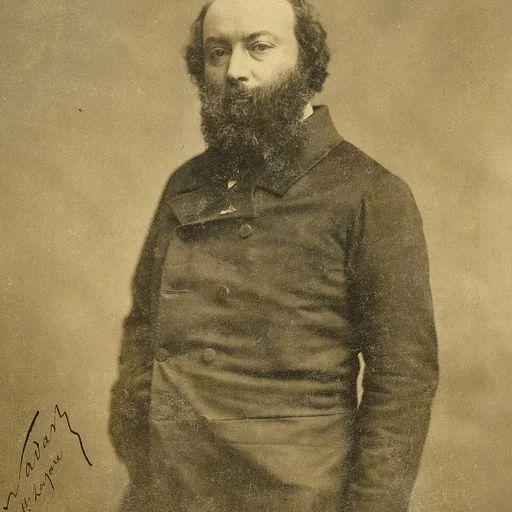
Étienne Pierre Théodore Rousseau (French pronunciation:; 15 April 1812 – 22 December 1867) was a French painter of the Barbizon school.

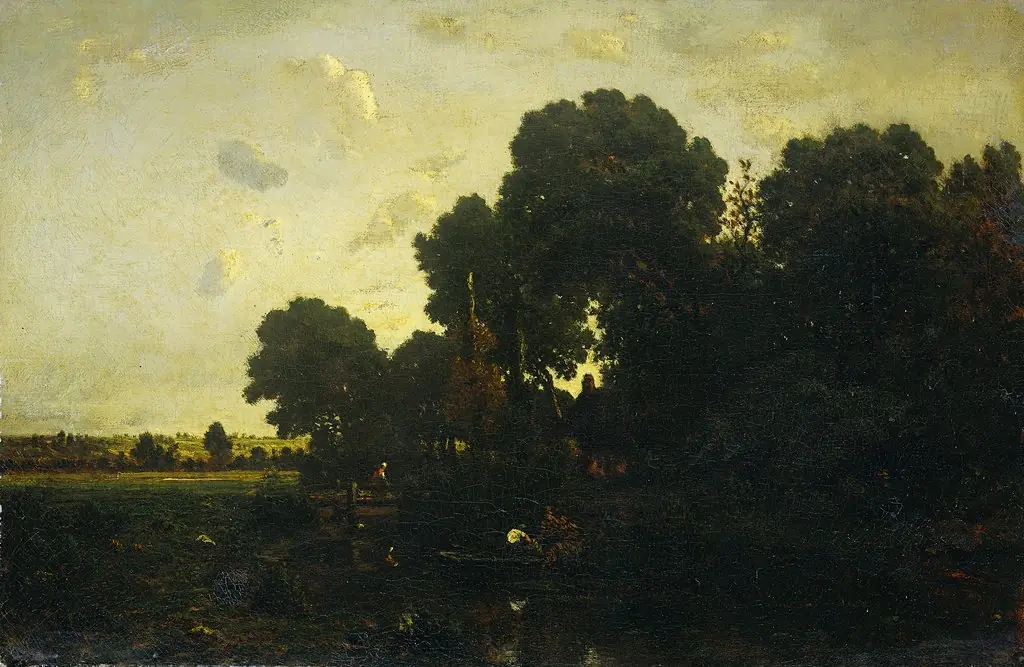
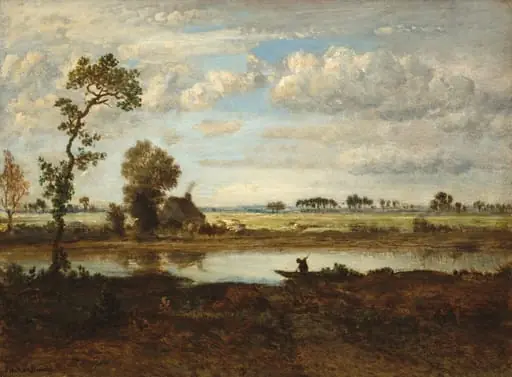
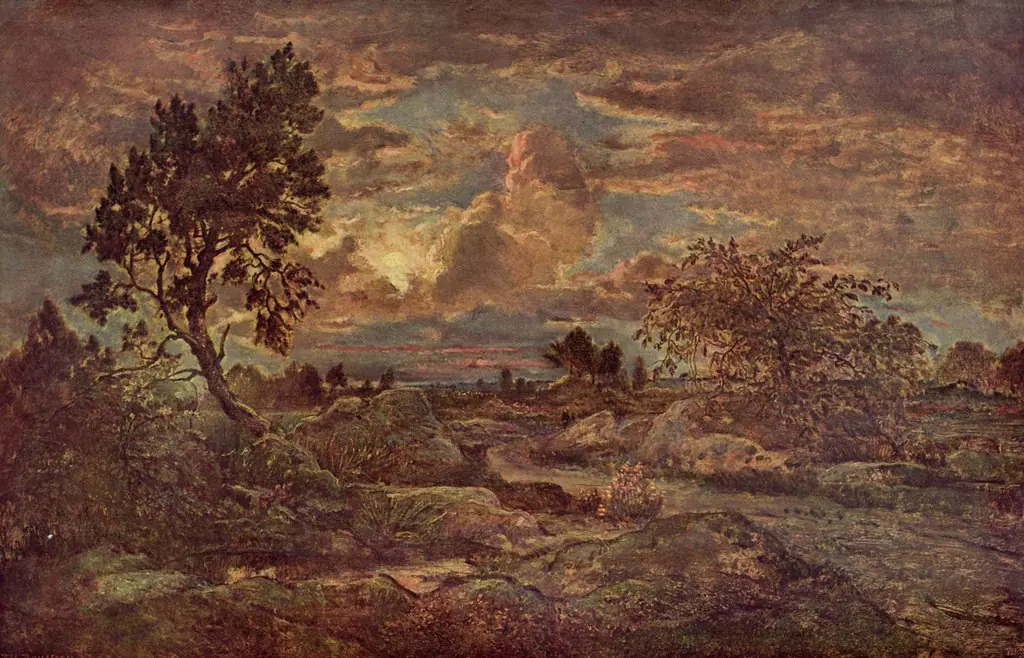
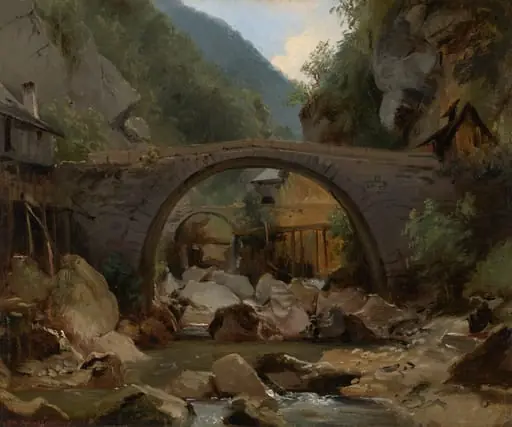
- Pond Edge
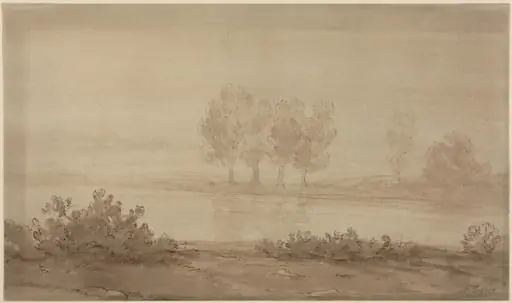 Landscape - Four Trees beyond a River
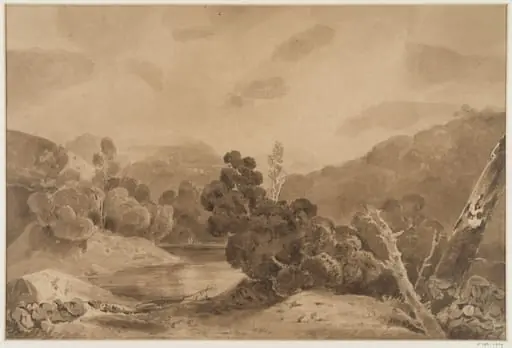 River scene with a temple or palace in the clouds
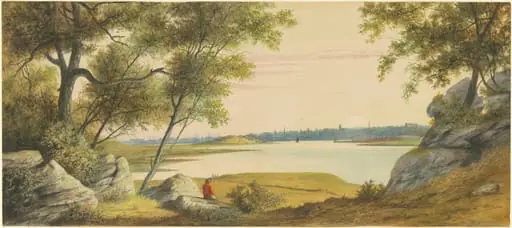 New Bedford, Massachusetts
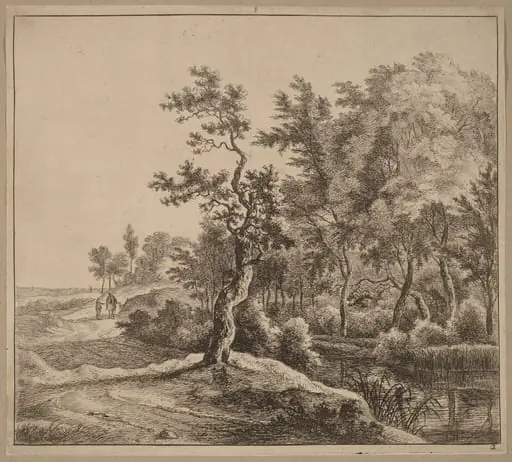 Landscape with a Winding Road
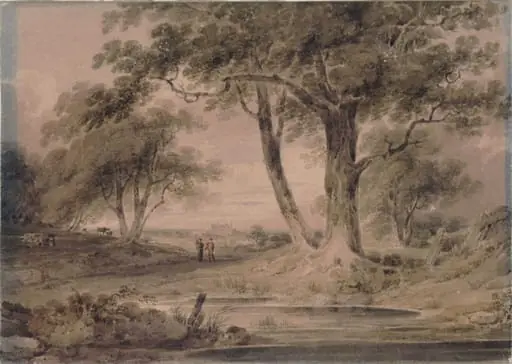 Landscape: Ripon Cathedral in the distance
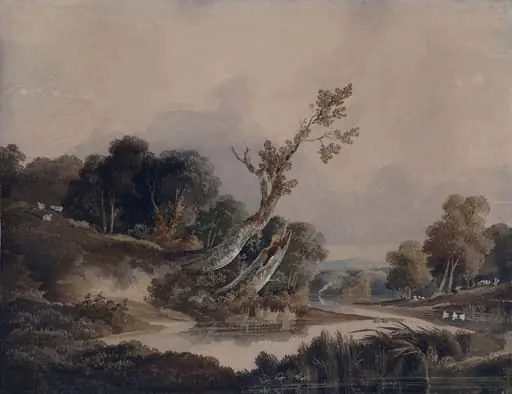 Landscape with trees and a stream
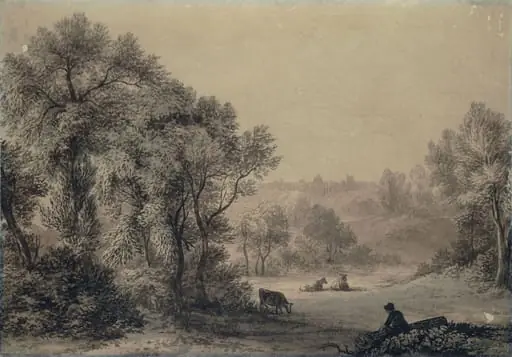 Windsor Castle
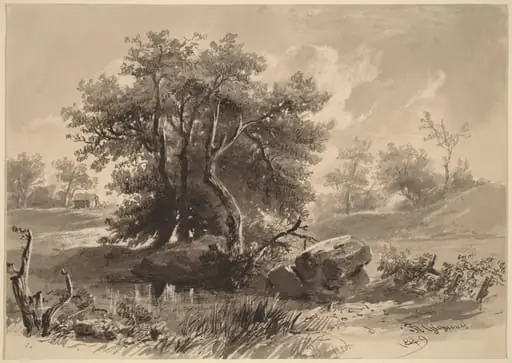 The Trees, Bedford, New York
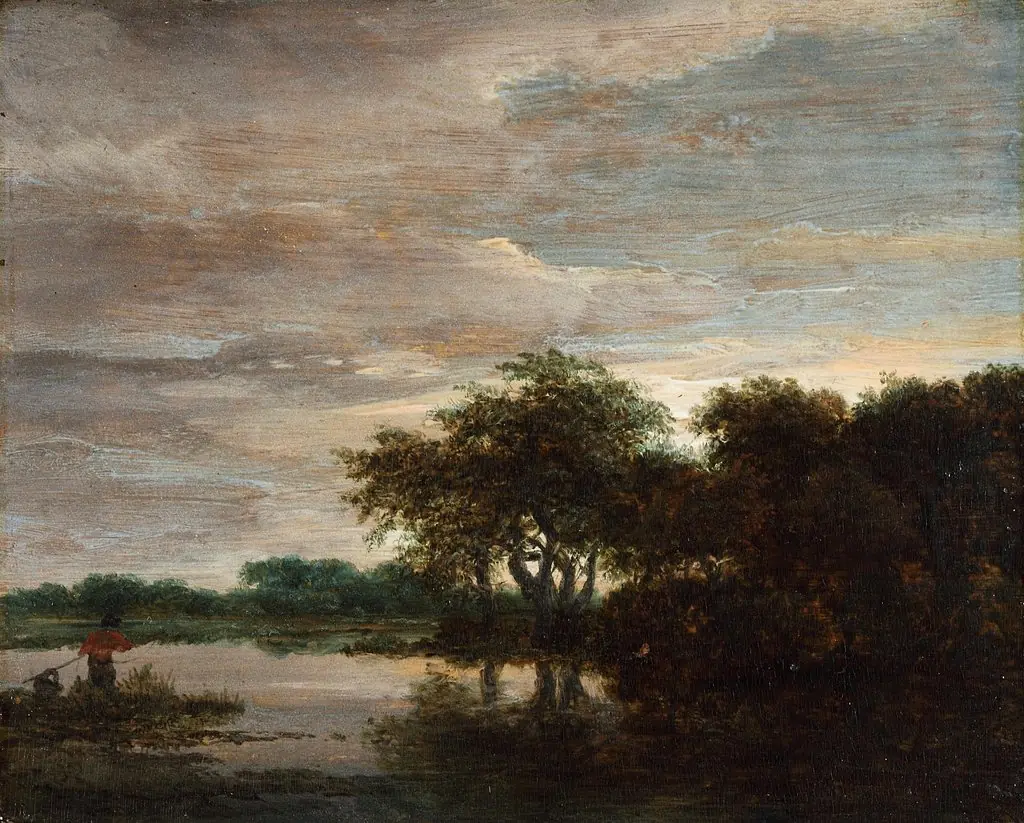 Woodland Scene with Lake
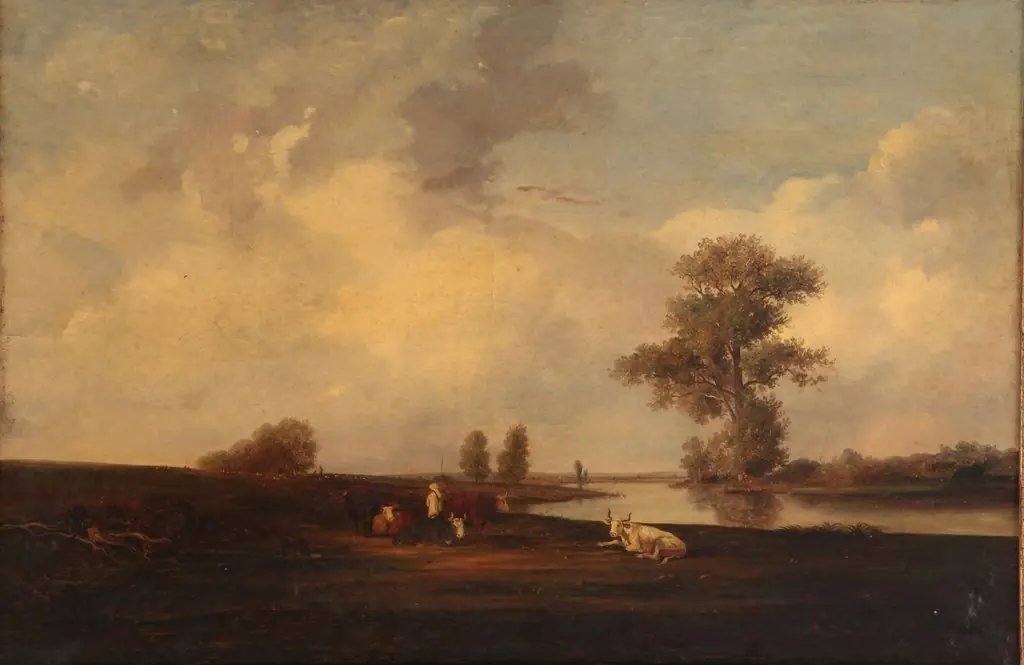 Paisaje con figura y vaca
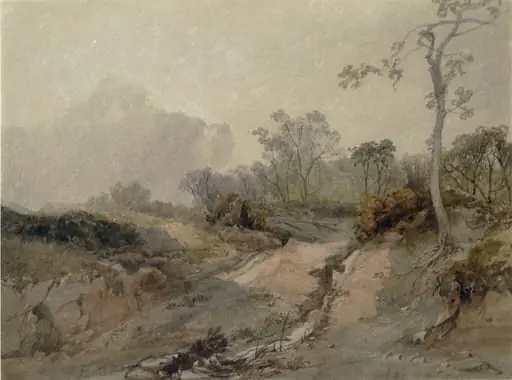 Landscape with Rutted Track