Artwork
The bag of gold which he received for the slave girl being stolen in a mosque, the young man of Baghdad tears his cloths and is about to fling himself into the Tigris, from a Tuti-nama (Tales of a Parrot): Forty-eighth Night
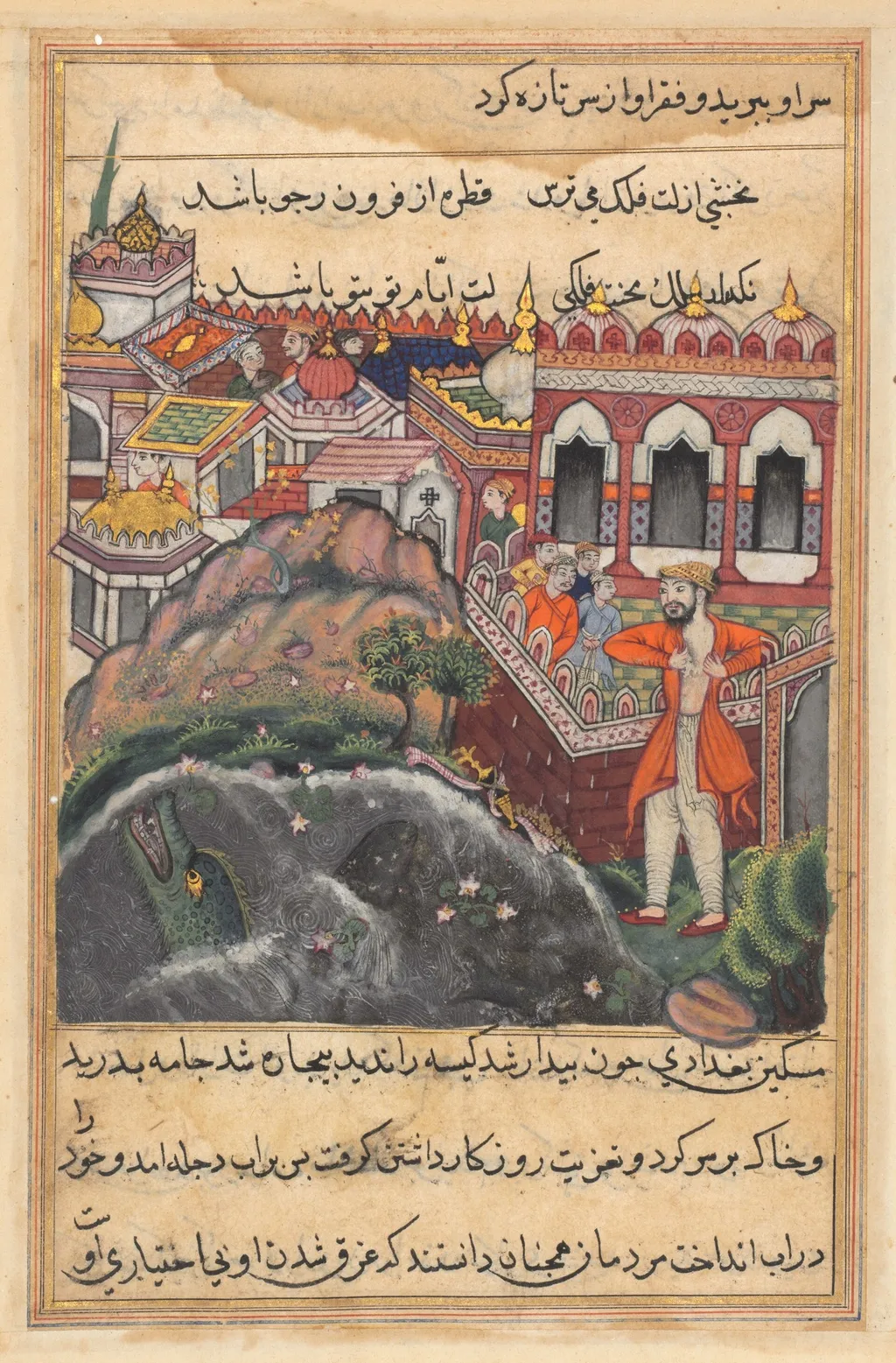
The bag of gold which he received for the slave girl being stolen in a mosque, the young man of Baghdad tears his cloths and is about to fling himself into the Tigris, from a Tuti-nama (Tales of a Parrot): Forty-eighth Night is an unspecified painting by Unknown. It dates from 1560 and is held in the collection of the Cleveland Museum of Art.
About this work
Overview
The palette shifts from warm reds and oranges to cool blues and greens, underscoring the emotional tension.
The canvas portrays a moment of crisis in medieval Baghdad: a young man, clad in an orange robe and white trousers, stands at the river’s edge, his hands pressed to his chest, poised to plunge into the Tigris. Behind him, a crowd gathers near a mosque, while a rocky outcrop dotted with vegetation frames the scene. The palette shifts from warm reds and oranges to cool blues and greens, underscoring the emotional tension.
Subject & Meaning
The narrative derives from the 48th night of the Tuti‑nama (Tales of a Parrot), in which a young Baghdad resident learns that a bag of gold intended for a slave girl has been stolen from a mosque. Overcome with despair, he tears his garments and contemplates suicide by drowning, a visual expression of loss, shame, and the moral weight of theft in the story’s moralistic context.
Technique & Style
Executed with meticulous brushwork, the painting balances intricate patterning on the figure’s clothing with broader, atmospheric treatment of the river and sky. The artist employs a vibrant, saturated palette, reds, oranges, yellows, against cooler blues and greens, creating contrast that heightens the drama. Fine detailing of foliage and architectural elements reflects a careful observation of the urban landscape.
History & Provenance
The work is part of the collection of the Cleveland Museum of Art. Its acquisition details trace back to the museum’s early 20th‑century purchases of Persian and Islamic narrative paintings, though the specific donor or purchase date is not recorded in the provided information.
Context
Narrative paintings such as this were common in Persian manuscript traditions, where illustrated scenes accompanied literary texts like the Tuti‑nama. The depiction of a moral tale set in Baghdad aligns with the period’s interest in didactic storytelling, blending religious, social, and ethical themes within a visually engaging framework.
Artist & collection









- The bag of gold which he received for the slave girl being stolen in a mosque, the young man of Baghdad tears his cloths and is about to fling himself into the Tigris, from a Tuti-nama (Tales of a Parrot): Forty-eighth Night
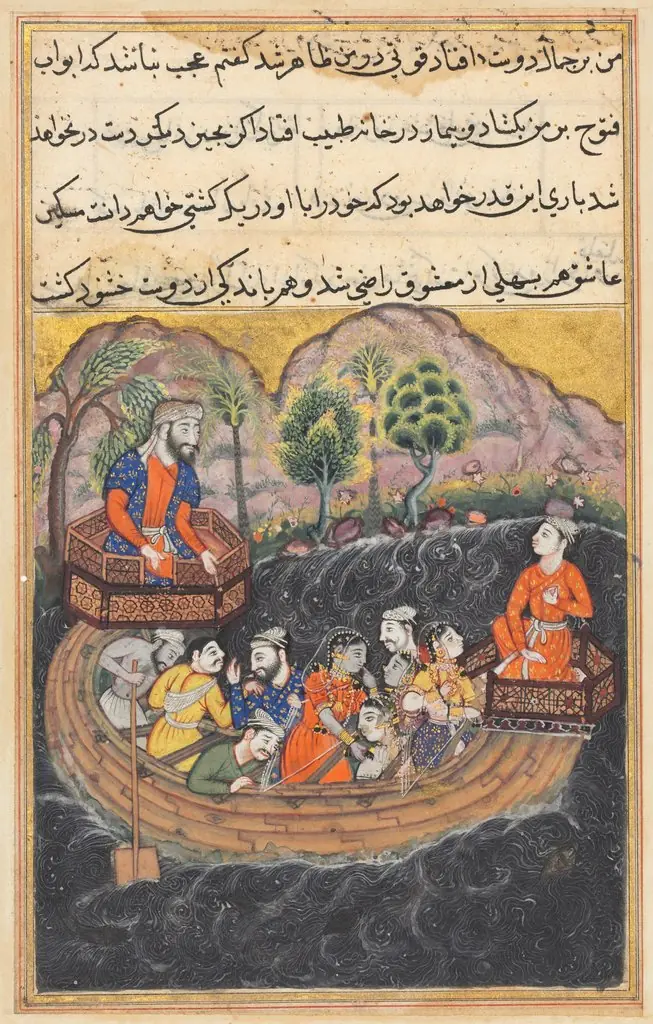 The young man of Baghdad joins the Hashimi’s boat as a sailor to find his slave-girl on board, from a Tuti-nama (Tales of a Parrot): Forty-eighth Night
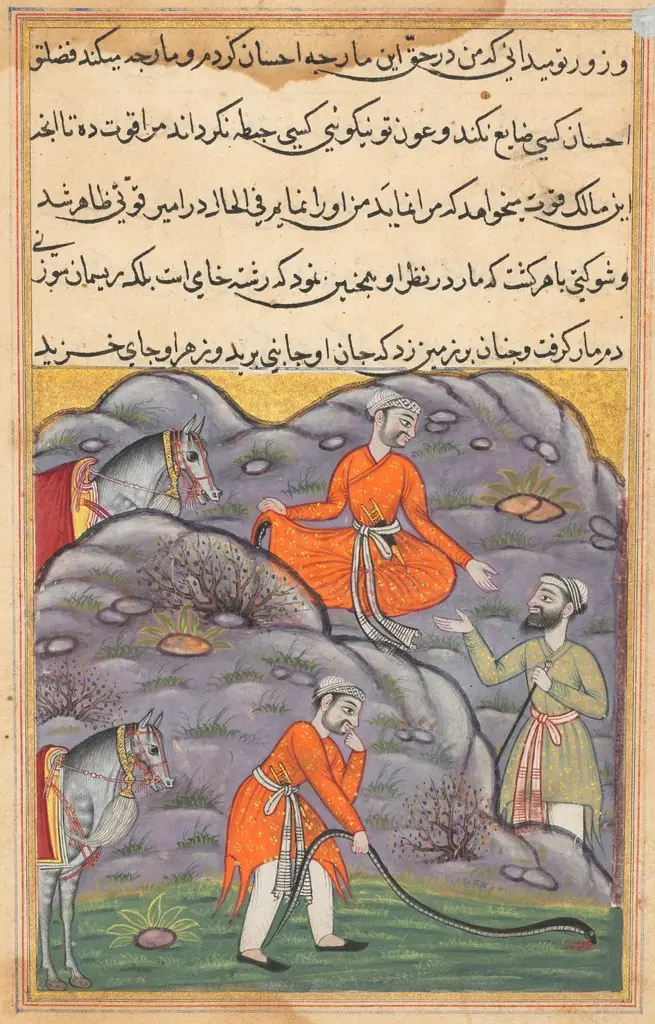 The Emir slays the snake after giving it shelter, from a Tuti-nama (Tales of a Parrot): Forty-fifth Night
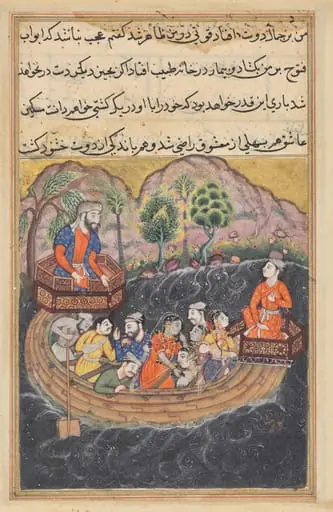 The young man of Baghdad joins the Hashimi’s boat as a sailor to find his slave-girl on board, from a Tuti-nama (Tales of a Parrot): Forty-eighth Night
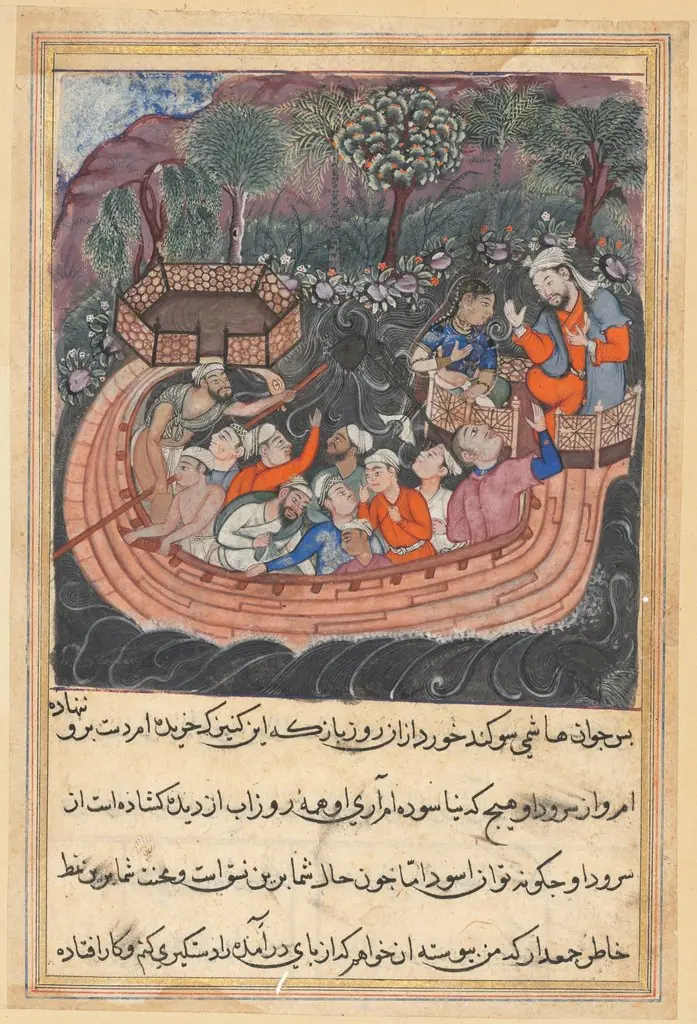 The young man of Baghdad reveals his true identity to the Hashimi, from a Tuti-nama (Tales of a Parrot: Forty-eighth Night
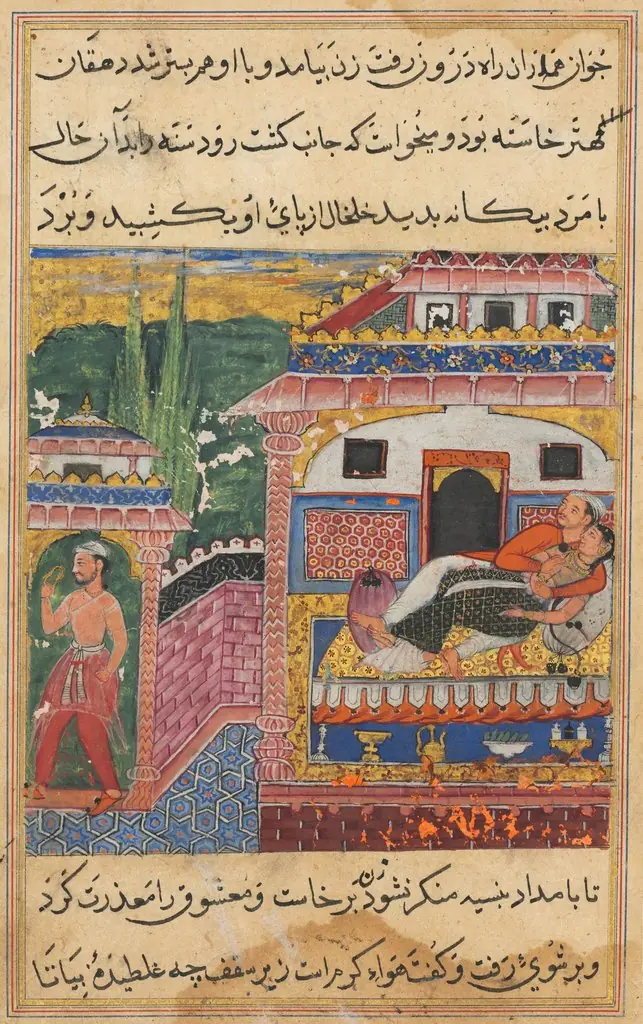 The farmer, father of the son with the deceitful wife, steals away with her anklet while she is in bed with her lover, from a Tuti-nama (Tales of a Parrot): Eighth Night