Artwork
Man with Sickle
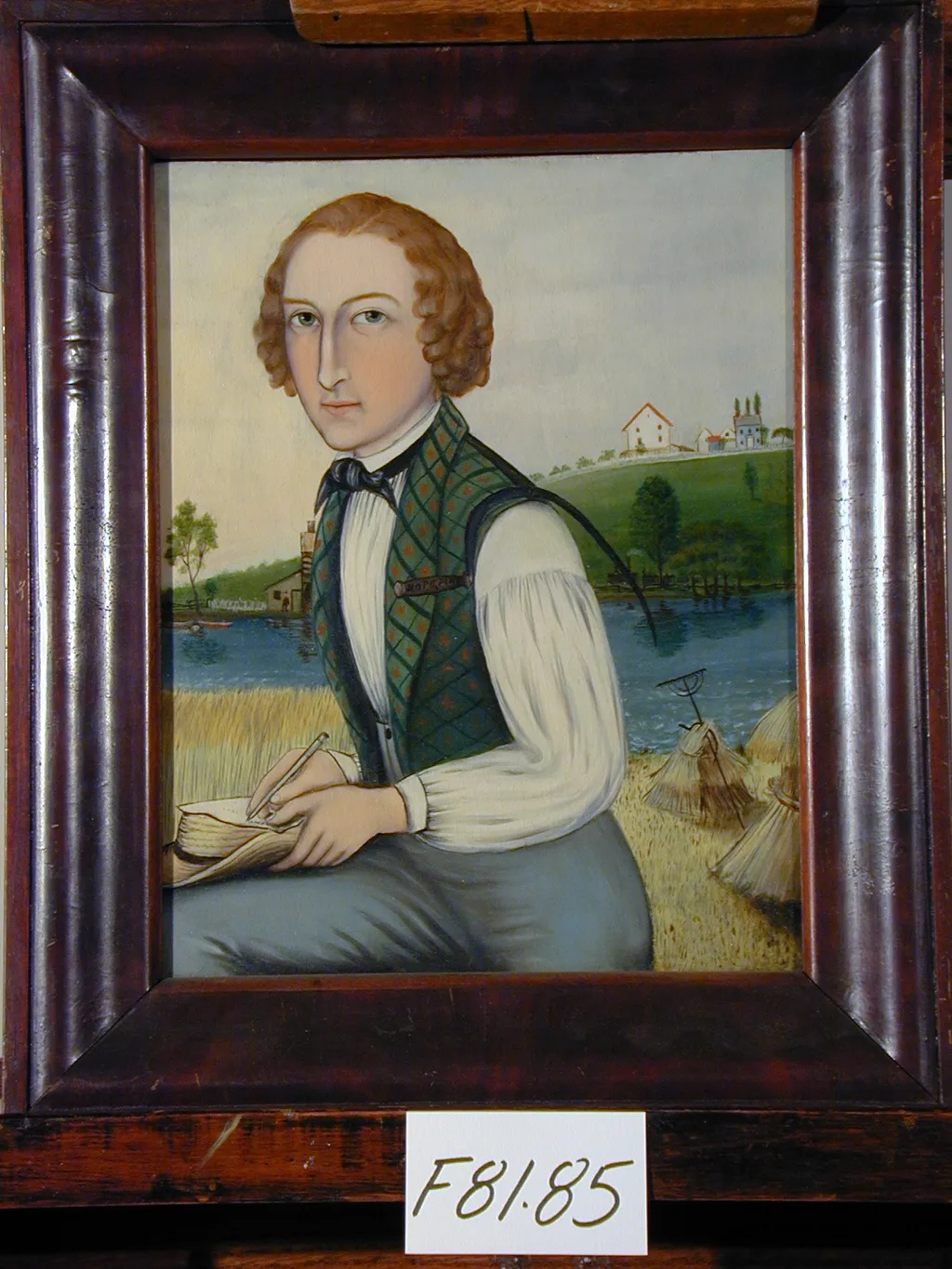
Man with Sickle is an oil painting by the Realist artist Thomas Hope. It is held in the collection of the Detroit Institute of Arts.
About this work
If you're interested in learning more about this artist, check out Thomas Hope (British, 1769–1831).
This painting shows a man sitting in a field, holding a sickle and a book. He is wearing a white shirt, a green vest with red and yellow patterns, and blue pants. The background is a landscape with a body of water, trees, and buildings on a hill.
The man's hair is brown and curly, and he has a serious expression. The painting is done in oil paint and has a realistic style. The artist's use of color and light creates a sense of depth and atmosphere.
If you're interested in learning more about this artist, check out Thomas Hope (British, 1769–1831).
Overview
Man with Sickle is an 1840 oil painting by British artist Thomas Hope, currently part of the Detroit Institute of Arts collection.
Subject & Meaning
The painting depicts a contemplative man seated in a field, balancing a sickle (tool of labor) and a book (symbol of knowledge or leisure), conveying a sense of juxtaposed pursuits. His attire includes a distinctive green vest with red and yellow patterns, set against a serene landscape backdrop featuring water, trees, and distant buildings on a hill.
Technique & Style
Executed in oil paint, the work adopts a realistic style. Hope's manipulation of color and light generates a pronounced sense of depth and atmospheric perspective.
History & Provenance
Created in 1840, the painting is attributed to Thomas Hope (1769–1831). It is now held in the permanent collection of the Detroit Institute of Arts.
Context
While specific contextual details about the painting's creation are not provided, it reflects 19th-century artistic interests in depicting everyday life and the interplay between nature, labor, and personal reflection.
Legacy
Information on the painting's direct influence or notable reception is not available in the provided sources, suggesting it may be appreciated more within the broader context of Hope's oeuvre or the Detroit Institute of Arts' collection.
Own this work as a print
Artist & collection