Artwork
Madonna of the Goldfinch
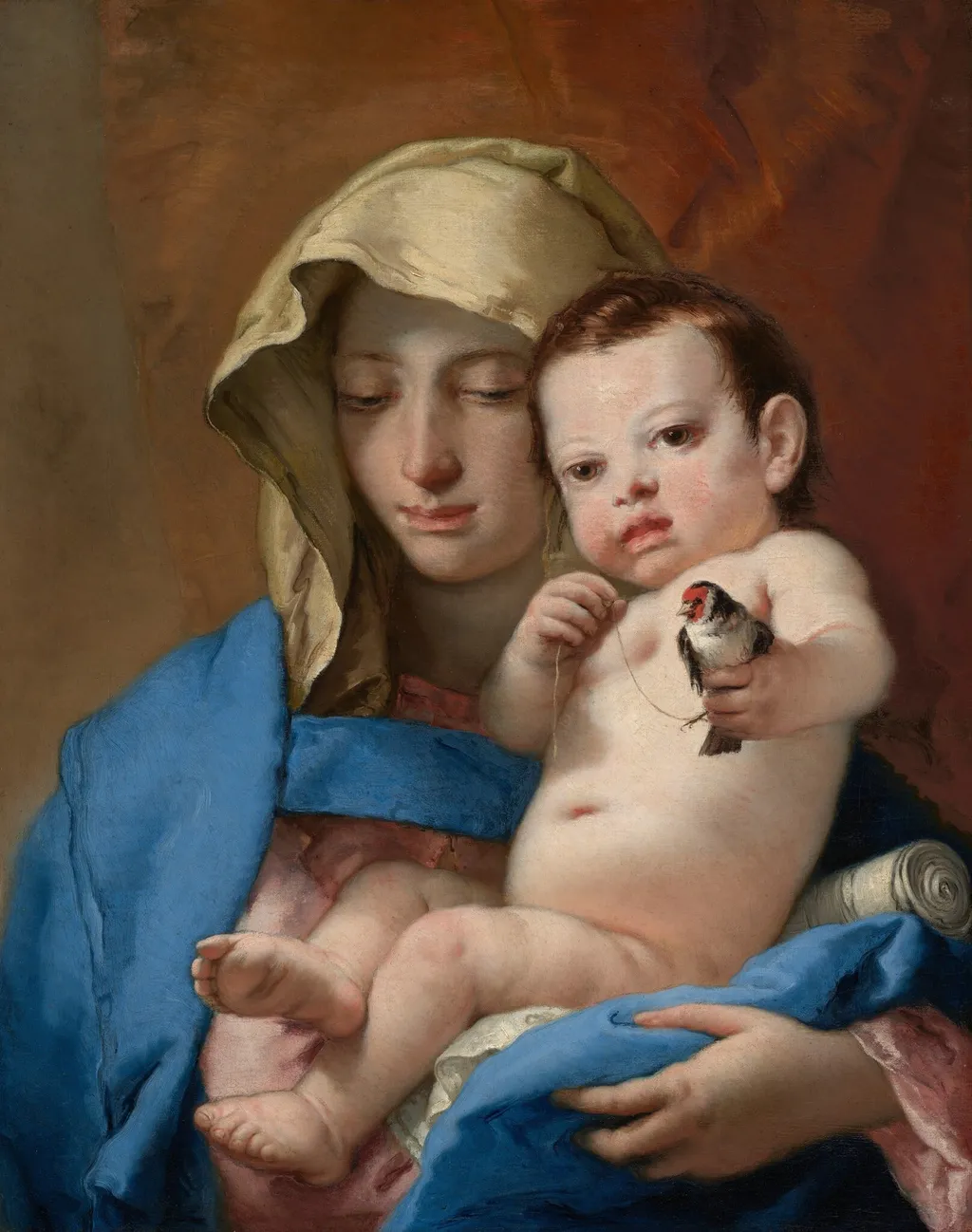
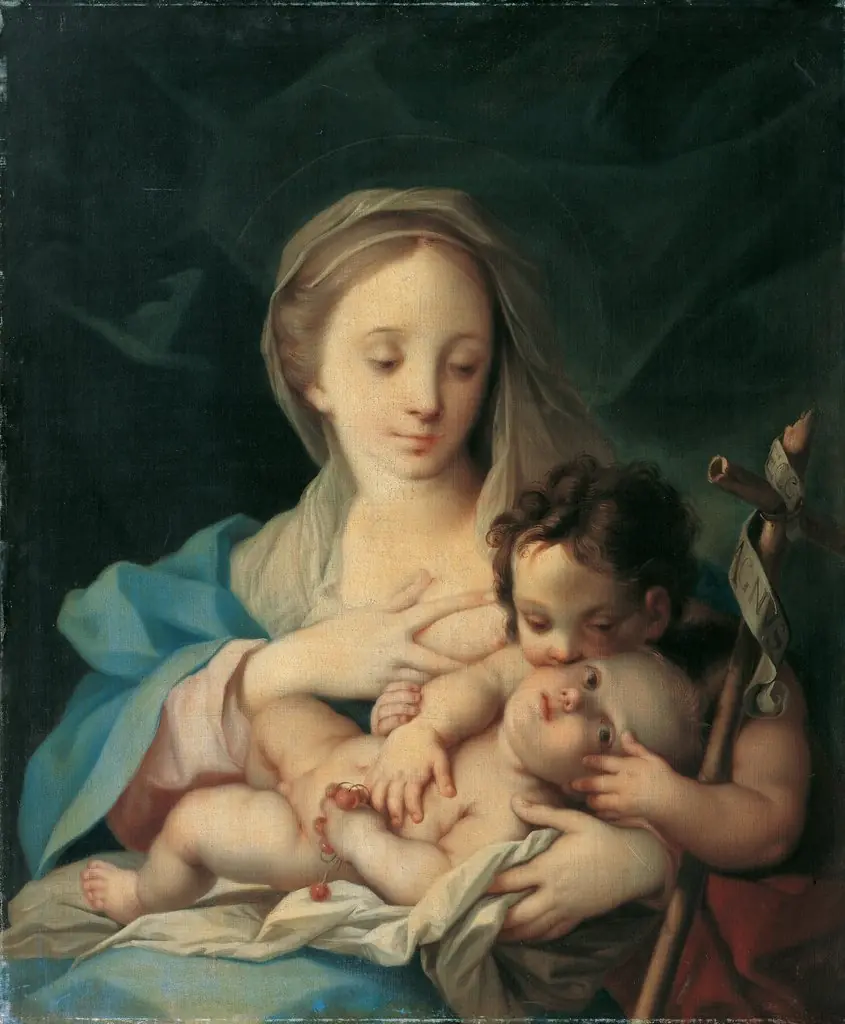
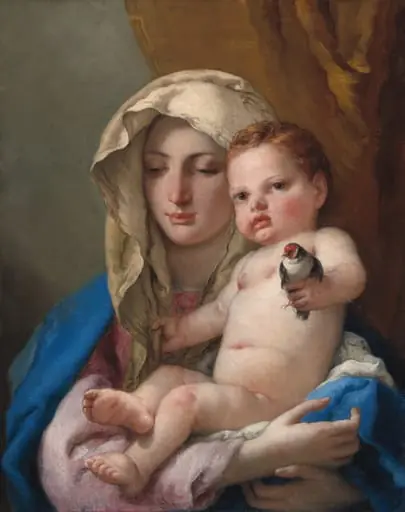
Madonna of the Goldfinch is an oil painting by the Rococo painting artist Giovanni Battista Tiepolo. It dates from 1768 and is held in the collection of the National Gallery of Art.
About this work
Subject & Meaning
The work belongs to the genre of religious art and reflects the Rococo sensibility in its graceful, emotionally accessible treatment of a sacred subject.
The painting depicts the Virgin Mary with the Christ Child, who gently holds a goldfinch. In Christian iconography, the goldfinch is a symbol of Christ's Passion and future sacrifice, traditionally associated with the crown of thorns. The intimate, tender interaction between mother and child presents a devotional image common in eighteenth-century religious painting, blending sacred meaning with human warmth.
The work belongs to the genre of religious art and reflects the Rococo sensibility in its graceful, emotionally accessible treatment of a sacred subject.
Technique & Style
Giovanni Battista Tiepolo's Madonna of the Goldfinch (1768) is executed in oil on canvas, measuring 62 × 49.5 cm. The medium's luminous transparency allows Tiepolo to build delicate glazes, creating the soft, atmospheric effects characteristic of his late Rococo style.
The composition balances grace and movement, employing a diagonal arrangement of the Virgin and Child to evoke intimacy. A restrained palette of cool blues, warm pinks, and creamy whites enhances the painting's ethereal quality.
History & Provenance
The Madonna of the Goldfinch was painted by Giovanni Battista Tiepolo in 1768 in oil on canvas. Its earliest recorded owner was the Marqués de Castillo (or Castrillo) of Madrid. By 1929 the work entered the stock of Jacques Seligmann & Co. in New York, where it was credited in references and exhibition catalogues until at least 1946.
It was consigned by the C.S. Wadsworth Trust to a Parke-Bernet Galleries sale in New York on 11 December 1948 (lot 38), offered as Mother with Child Holding a Bird.
Seligmann subsequently reacquired the picture, possibly acting as agent for Margherita Weber of Lugano, who held it until 6 May 1997, when she sold it through Galerie Lingenauber, Düsseldorf, to the National Gallery of Art, Washington, D.C. The painting has remained at the National Gallery of Art since 1997, catalogued as accession number 1997.60.1.
Overview
Giovanni Battista Tiepolo's Madonna of the Goldfinch, painted around 1768, is an oil on canvas representing a tender religious subject. This work exemplifies the Rococo style through its delicate composition and luminous atmosphere, characteristic of Tiepolo's output. As a leading Venetian painter and printmaker of the 18th century, Tiepolo was renowned for his prolific career and significant contributions to art across Italy, Germany, and Spain.
Context
Giovanni Battista Tiepolo was a preeminent artist of the 18th century, celebrated for his extensive commissions across Europe. His career spanned Italy, Germany, and Spain, where he produced numerous frescoes and easel paintings. This work, created late in his life, reflects his enduring influence and skill in the Rococo style, which emphasized elegance, lightness, and decorative flair, defining much of the era's artistic expression.
Own this work as a print
Artist & collection

Artist
Giovanni Battista Tiepolo, also known as Giambattista Tiepolo, was an Italian painter and printmaker from the Republic of Venice who painted in the Rococo style, considered an important member of the 18th-century Venetian school.