Artwork
Bache Madonna
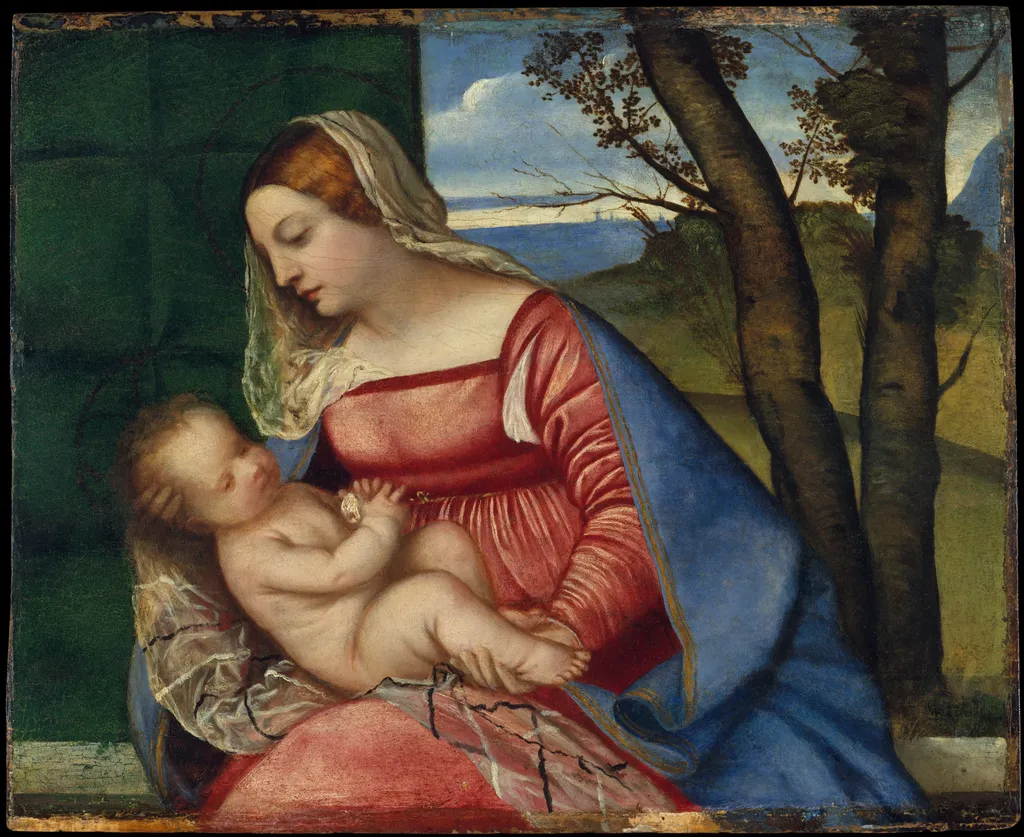
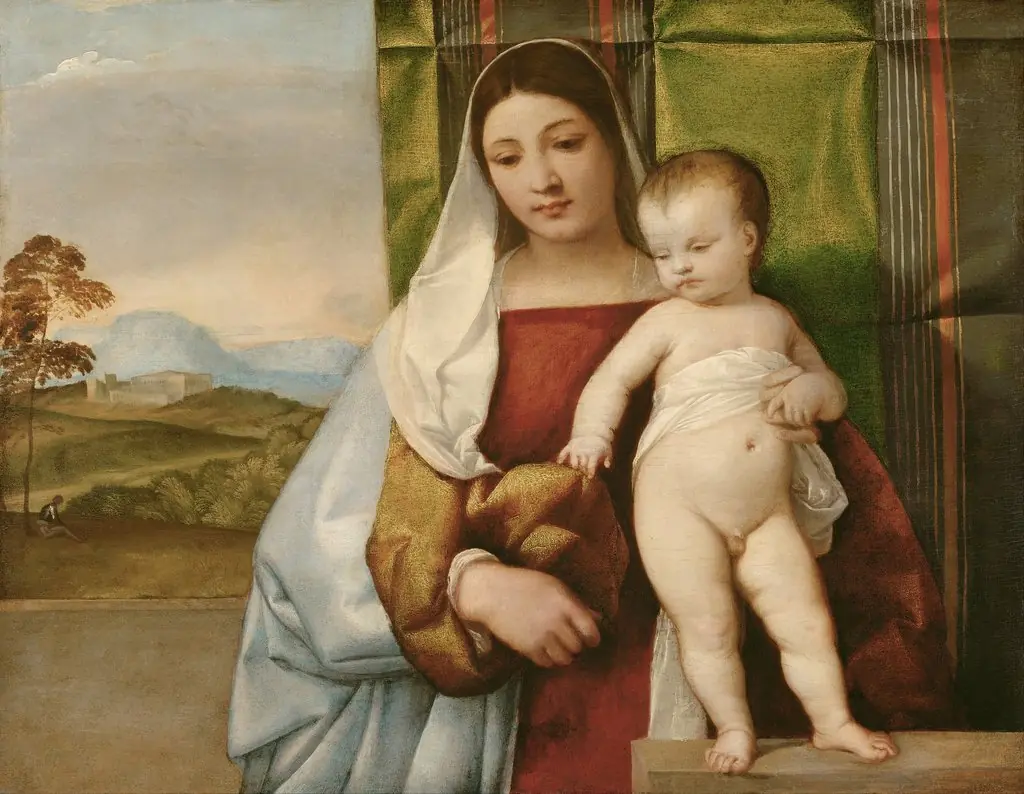
Bache Madonna is an oil painting by the High Renaissance artist Titian. It dates from 1508 and is held in the collection of the Metropolitan Museum of Art.
About this work
Subject & Meaning
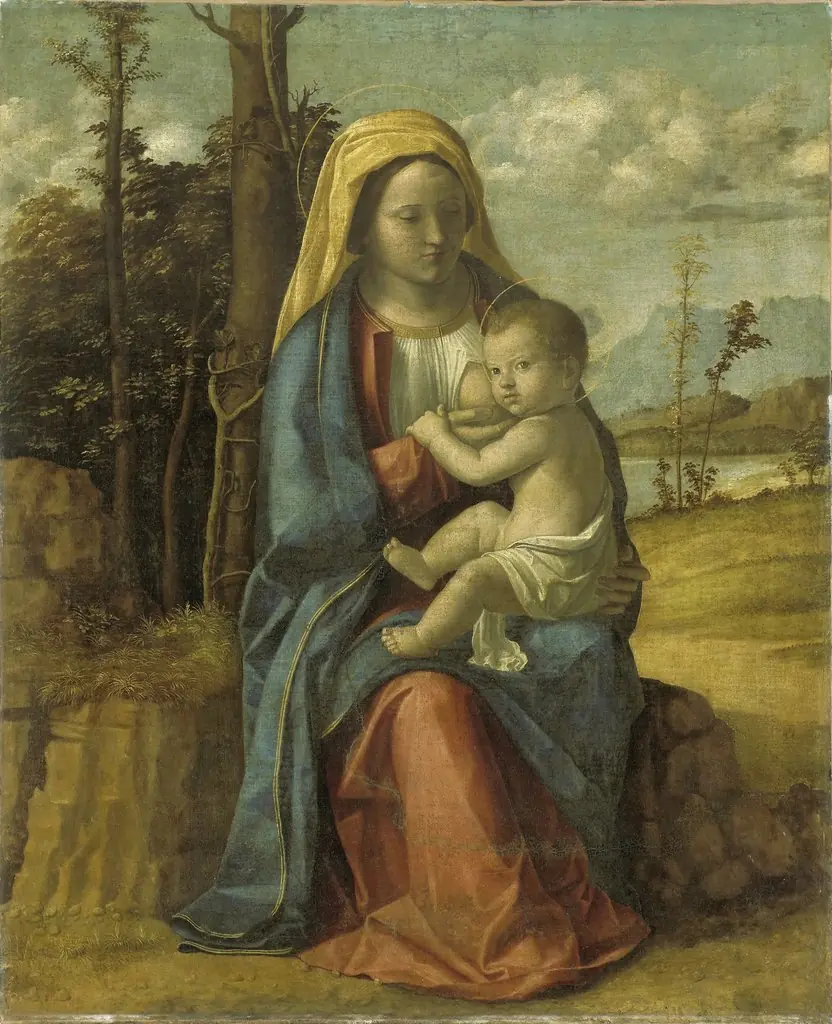
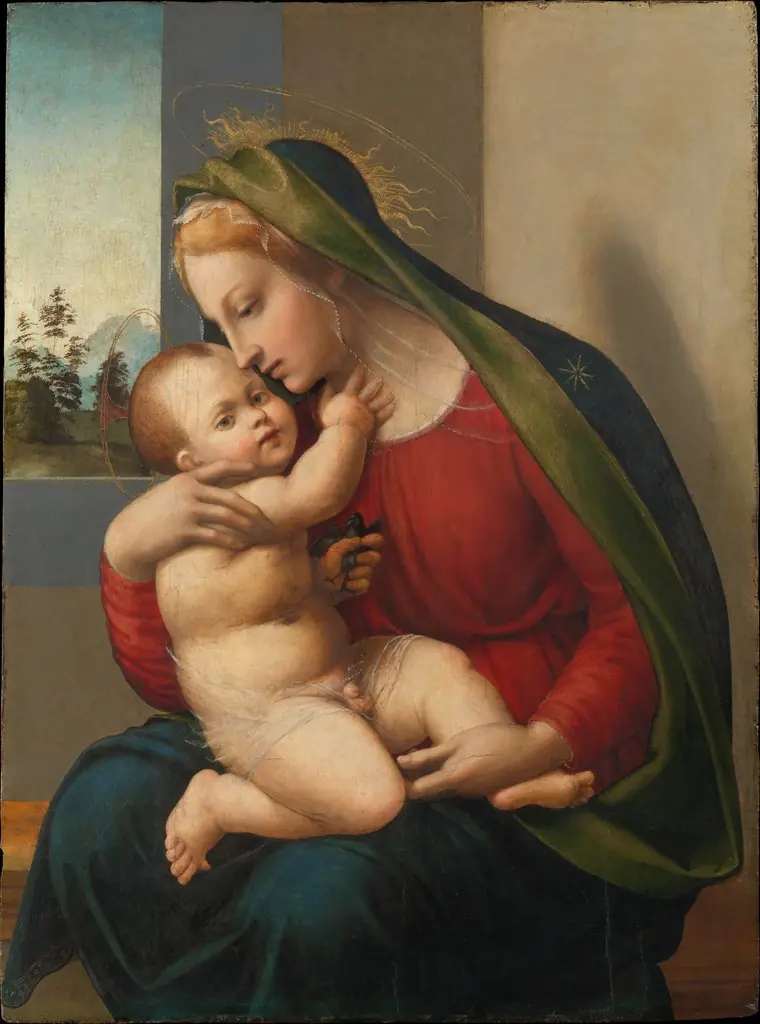
The Bache Madonna depicts the Virgin Mary and the Christ Child in a half-length composition set against a landscape.
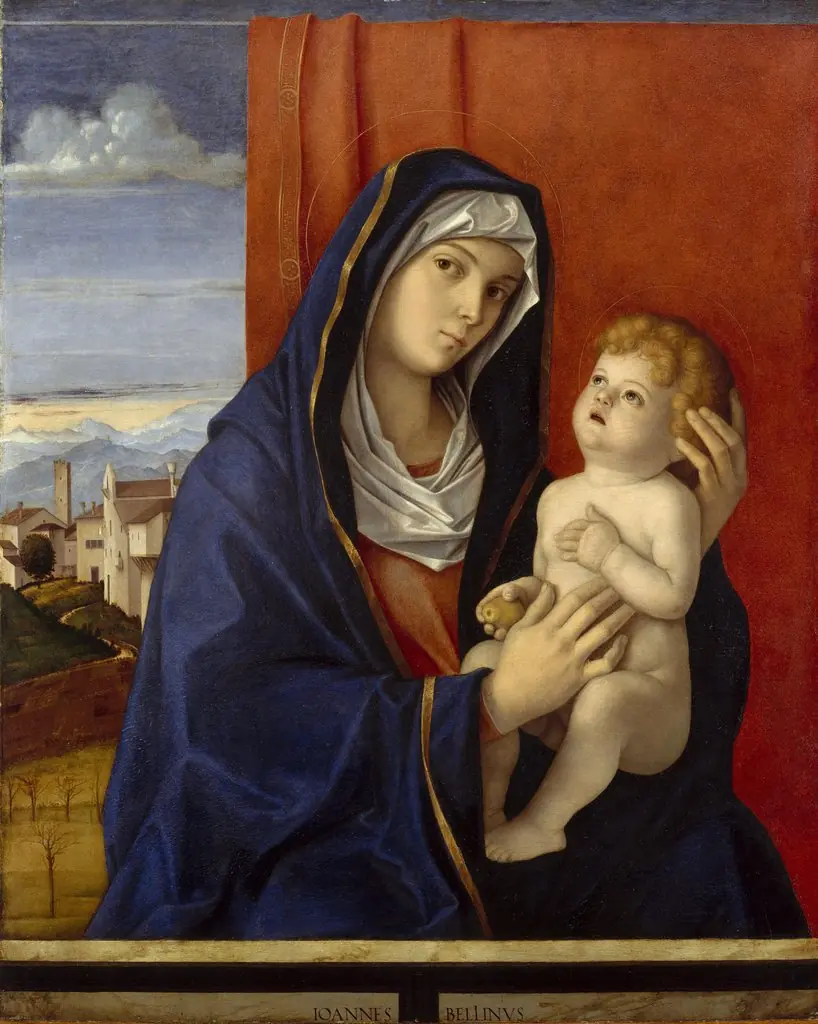
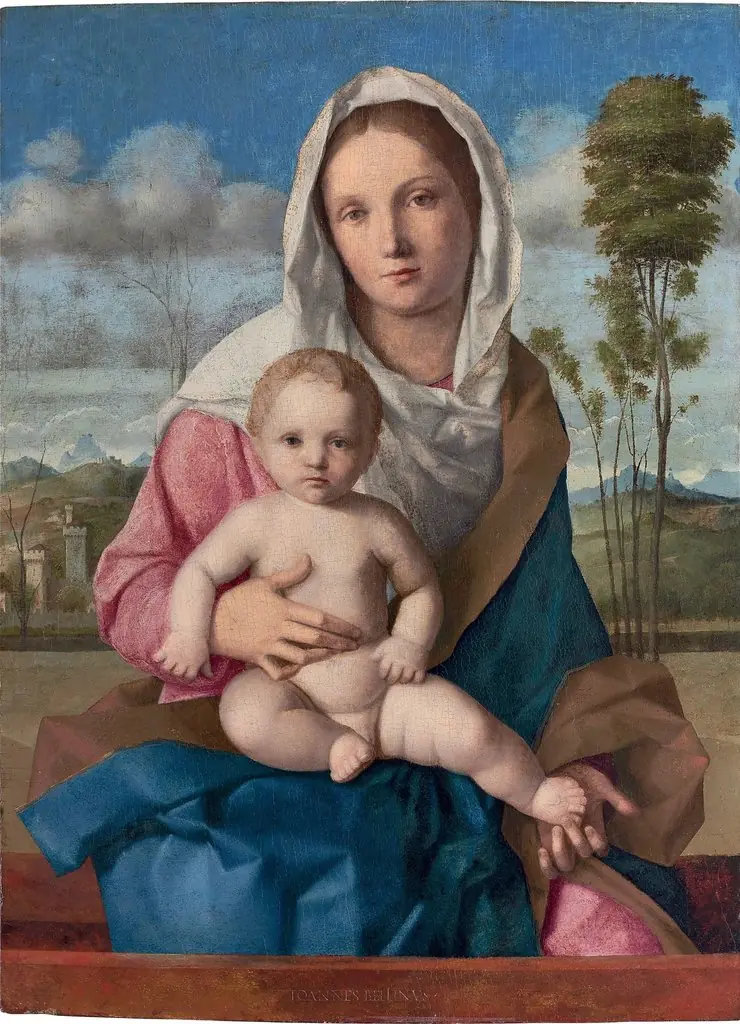
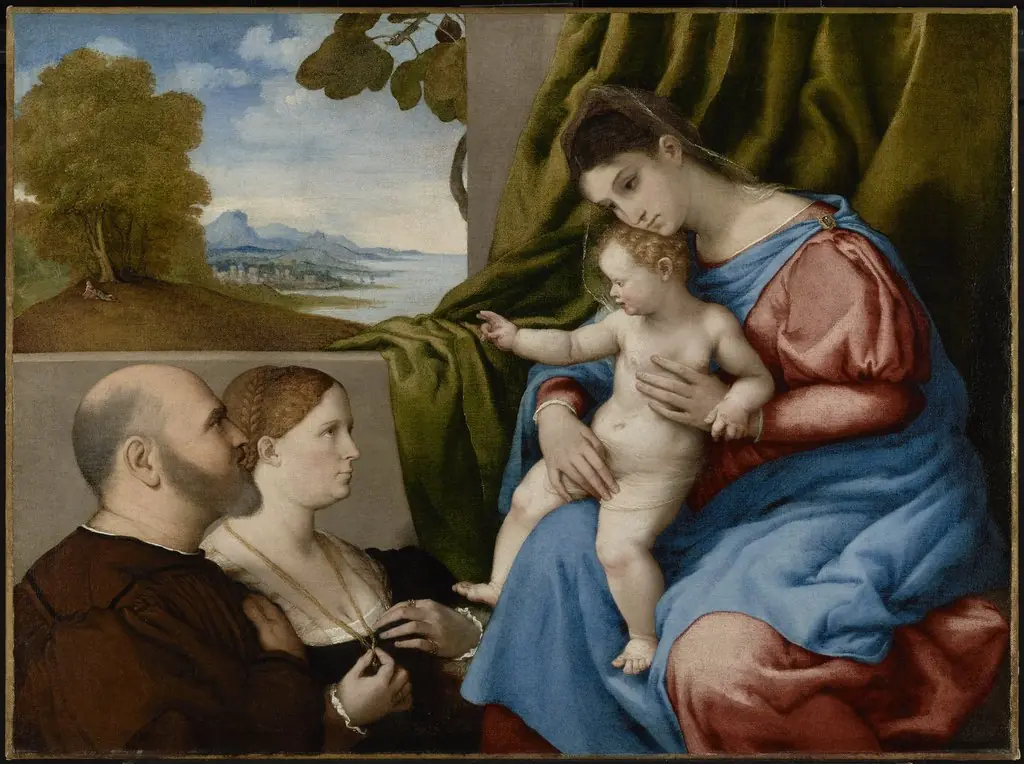
The Bache Madonna depicts the Virgin Mary and the Christ Child in a half-length composition set against a landscape. While early compositional studies suggest the figures were initially positioned centrally in a formal manner akin to Giovanni Bellini, the final work presents a more informal arrangement that emphasizes the tender emotional bond between mother and child. Specific iconographic elements include a transparent cloth surrounding the infant and a marble slab upon which Mary sits; these details invite contemplation of Christ's birth and his future destiny.
The background features a green curtain, characteristic of Venetian painting of the period, alongside massive, looming trees that balance the asymmetrical composition. This rearrangement of traditional thematic elements reflects a modern sensitivity, utilizing intense light and soft tonalism to define the sacred figures within a naturalistic setting.
Technique & Style
The work is executed in oil on a wooden panel, a typical support for Venetian easel paintings of the early 16th century. Its surface has suffered past cleaning that diminished some of the original definition, especially in the fine detailing of the figures. The composition places the Madonna and Child centrally, originally posed upright in the manner of Giovanni Bellini, then adjusted to a more intimate, informal grouping that emphasizes the tender relationship between mother and child.
A green veil and a marble slab frame the scene, while a distant landscape and dense trees provide a balanced, asymmetrical backdrop. The handling of light and rich, saturated colors reflects the High Renaissance Venetian school's tonal and chromatic emphasis.
History & Provenance
Attributed to Titian, the Bache Madonna is an oil painting on wood panel dated to approximately 1508, placing it within the artist's juvenile period characterized by Giorgione's influence. Technical analysis suggests the composition was initially conceived with figures seated erect in the manner of Giovanni Bellini before being adjusted to a more informal pose. The work's documented provenance begins with Jean de Jullienne in Paris around 1756.
It was subsequently acquired by Brownlow Cecil, 9th Earl of Exeter, remaining in that family collection until 1888. Following a period in various private hands, the painting was purchased by Jules Bache in 1928. Upon Bache's death, the Metropolitan Museum of Art in New York acquired the work in 1949, where it currently resides.
The Bache Madonna is held in the collection of the Metropolitan Museum of Art in New York, where it has resided since entering the museum in 1949 from the Jules S. Bache collection. Its provenance traces from Jean de Jullienne (c. 1756) through the Exeter family until 1888, then private hands before Bache’s acquisition in 1928. According to the French Wikipedia entry, the painting has taken part in roughly ten exhibitions in the United Kingdom and the United States spanning the period from 1894 to 2017.
Context
Scholars universally attribute the Bache Madonna to Titian's juvenile period, dating it to approximately 1508 or 1510, a time when his style remained heavily influenced by Giorgione. Art historical analysis suggests the artist initially conceived the composition with figures seated centrally in a formal manner reminiscent of his teacher, Giovanni Bellini. However, Titian ultimately adopted a more informal pose to emphasize the tender bond between mother and child, marking a shift toward modern sensibilities.
The work is characterized by an asymmetric arrangement that displaces the focal point leftward, balanced by massive trees typical of Titian's landscapes. Executed with strong, intense light and soft, sfumato lines associated with Venetian tonalism, the painting represents an early exploration of the Madonna and Child theme that diverges from traditional representations through its atmospheric depth and coloristic approach.
Overview
The "Bache Madonna," also known as "Madonna and Child," is an early oil painting on wood by Titian, created around 1508. This work dates to his formative years, when he was developing his distinctive style while still absorbing lessons from his contemporaries. It depicts the Virgin Mary tenderly embracing the infant Christ.
Own this work as a print
Artist & collection

Artist
Tiziano Vecellio (Italian:; c. 1488/1490 – 27 August 1576), Latinized as Titianus, hence known in English as Titian ( TISH-ən), was an Italian Renaissance painter. The most important artist of Renaissance Venetian…