Artwork
Madonna of the Cherries
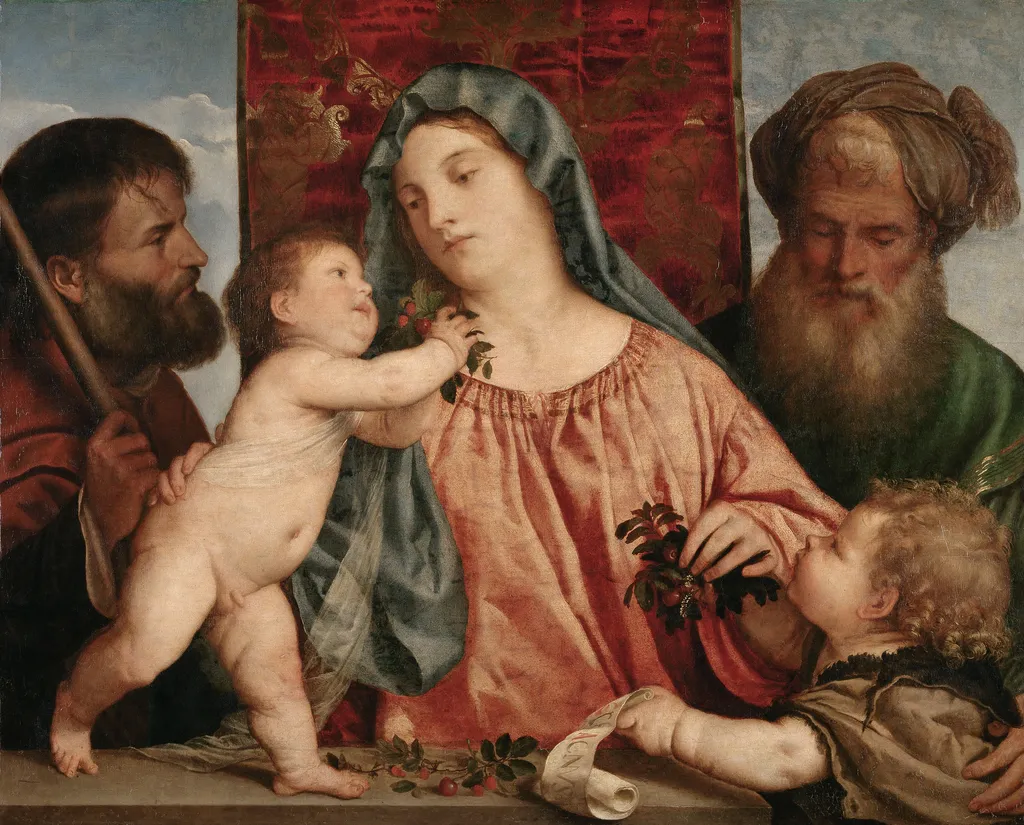
Madonna of the Cherries is an oil painting by the High Renaissance artist Titian. It dates from 1517 and is held in the collection of the Kunsthistorisches Museum.
About this work
Subject & Meaning
Saint John the Baptist leans forward, holding a scroll inscribed "ECCE AGNVS DEI" and presenting cherries alongside a white flower, a symbol of virginity.
The painting depicts the Virgin Mary and the Christ Child flanked by Saint John the Baptist, Saint Joseph, and Zechariah against a red damask curtain. The infant Jesus offers cherries to his mother, a gesture symbolizing Original Sin and the blood of Christ's Passion. Saint John the Baptist leans forward, holding a scroll inscribed "ECCE AGNVS DEI" and presenting cherries alongside a white flower, a symbol of virginity.
The figures are arranged in a triangular composition representing eternity, legitimacy, and harmony, contrasting the idealized Virgin and Child with the realistic saints on either side. This lively interaction and the use of bright, full-bodied colors update the traditional Venetian theme, showing influences from Giovanni Bellini and Albrecht Dürer while emphasizing movement and intimate communication among the figures.
Technique & Style
Executed in oil, this work was originally painted on a wood panel and transferred to canvas between 1853 and 1859. Restoration during this transfer revealed an underdrawing indicating significant compositional changes, suggesting the artist worked with minimal preliminary sketches and likely added the figures of Saint Joseph and Zechariah at a later stage. The composition features half-length figures set against a red damask curtain with gold patterns, arranged in a triangular formation that contrasts the idealized Virgin and Child with the realistically rendered standing saints.
Stylistically, the painting demonstrates a departure from strict tonalism through the use of bright, full-bodied colors and a dynamic sense of movement among the characters. The figures engage in lively, intimate communication, with varying head positions creating visual rhythm. While the arrangement references traditional Venetian prototypes by Giovanni Bellini and Albrecht Dürer, the handling of form exhibits greater freedom and naturalism, particularly in the detailed realism of the saintly figures.
History & Provenance
Titian painted the Madonna of the Cherries around 1516–1518, originally in oil on panel. During the seventeenth century the work entered the collection of Archduke Leopold Wilhelm of Austria, where it was documented in David Teniers the Younger's catalog Theatrum Pictorium in both 1659 and 1673, and also depicted in Teniers' portrayals of the Archduke's holdings. Between 1853 and 1859 the painting was transferred from panel to canvas; during that intervention a preparatory underdrawing was discovered, revealing several changes made by Titian in the course of execution, and the drawing was copied by the restorer Erasmo Engart. The painting subsequently passed to the Kunsthistorisches Museum in Vienna, where it remains today.
The painting is held in the Kunsthistorisches Museum, Vienna, where it carries the inventory number GG 169. It entered the museum’s holdings via the collection of Archduke Leopold Wilhelm of Austria, and is documented in Teniers's 1659 and 1673 Theatrum Pictorium as part of that collection.
Context
The Madonna of the Cherries exemplifies Titian's transition from the tonalism of Giovanni Bellini to the vibrant colorism and dynamic movement characteristic of the Venetian High Renaissance. While the composition retains traditional elements such as the red damask curtain and the triangular arrangement of the Virgin and Child, Titian infused the scene with intimate realism and animated interaction absent in earlier prototypes. The work demonstrates clear influences from Bellini's Madonna and Child as well as Albrecht Dürer's Madonna del Lucherino, particularly in the depiction of the infant John the Baptist and the rendering of Saint Zechariah.
Art historical analysis notes that the painting updates established themes through bold colors and complex figure positioning, marking a significant evolution in Titian's early style. Its inclusion in Archduke Leopold Wilhelm's collection and documentation by Teniers further cement its status as a recognized work of the era.
Legacy
The painting's legacy is anchored in its documented presence within the prestigious collection of Archduke Leopold Wilhelm during the 17th century. Its reputation was solidified when David Teniers the Younger included the work in his illustrated catalog, Theatrum Pictorium, in both 1659 and 1673, and depicted it in his paintings of the Archduke's gallery. This early documentation ensured the work's renown beyond its immediate physical location.
The painting's significance was further highlighted during a mid-19th-century transfer from panel to canvas, which revealed Titian's working method of painting without extensive preparatory sketches and showed that the flanking saints were likely later additions. Today the work remains a key holding of the Kunsthistorisches Museum in Vienna, recognized for updating traditional Venetian compositions with a dynamic sense of movement and vibrant color.
Overview
Titian's "Madonna of the Cherries," painted in 1515, depicts the Virgin Mary with the Christ Child, surrounded by two bearded male saints and a young boy. This early work by the Venetian master reflects the artistic currents of its time, particularly the style of Giovanni Bellini. Originally created with oil on wood, the painting now resides in the Kunsthistorisches Museum in Vienna, where it offers insight into Titian's developing approach to religious subjects.
Own this work as a print
Artist & collection
Artist
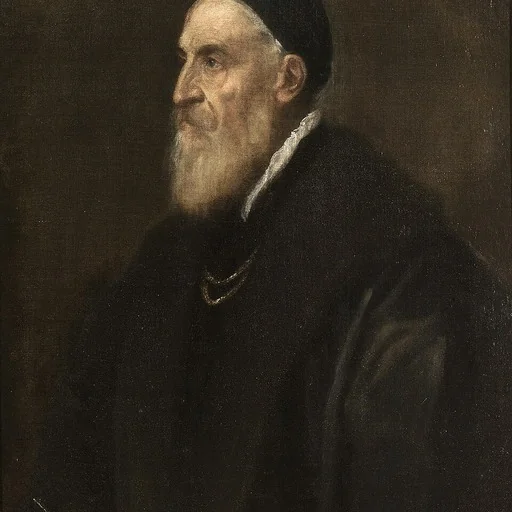
Tiziano Vecellio (Italian:; c. 1488/1490 – 27 August 1576), Latinized as Titianus, hence known in English as Titian ( TISH-ən), was an Italian Renaissance painter. The most important artist of Renaissance Venetian…

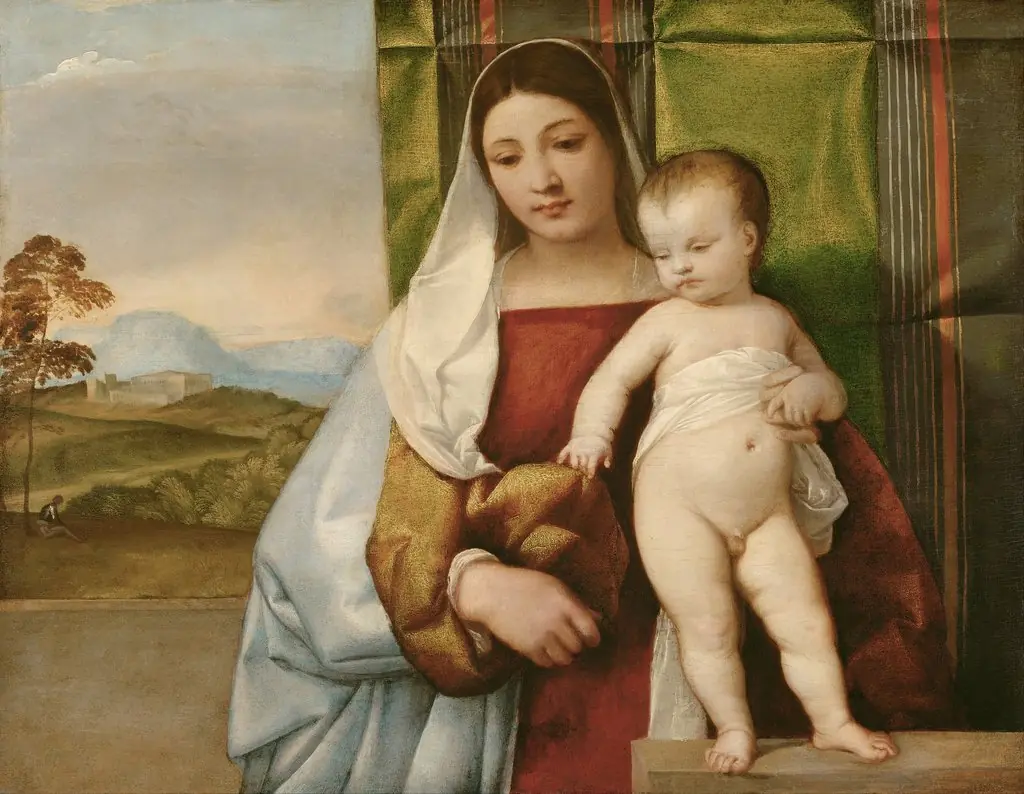 The Gypsy Madonna
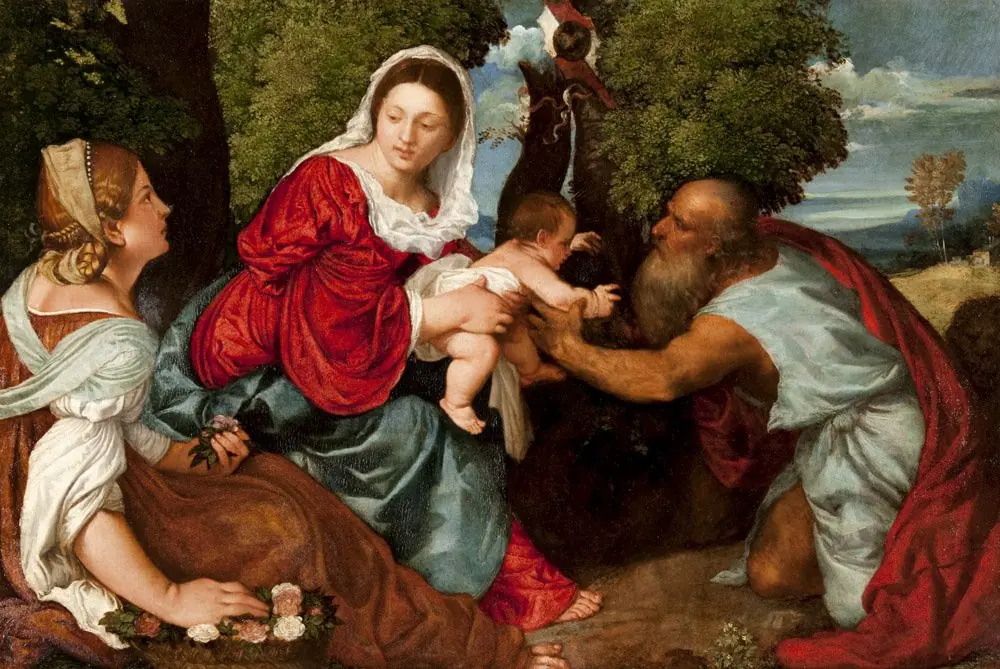 Madonna and Child with Saint Jerome and Saint Dorothy
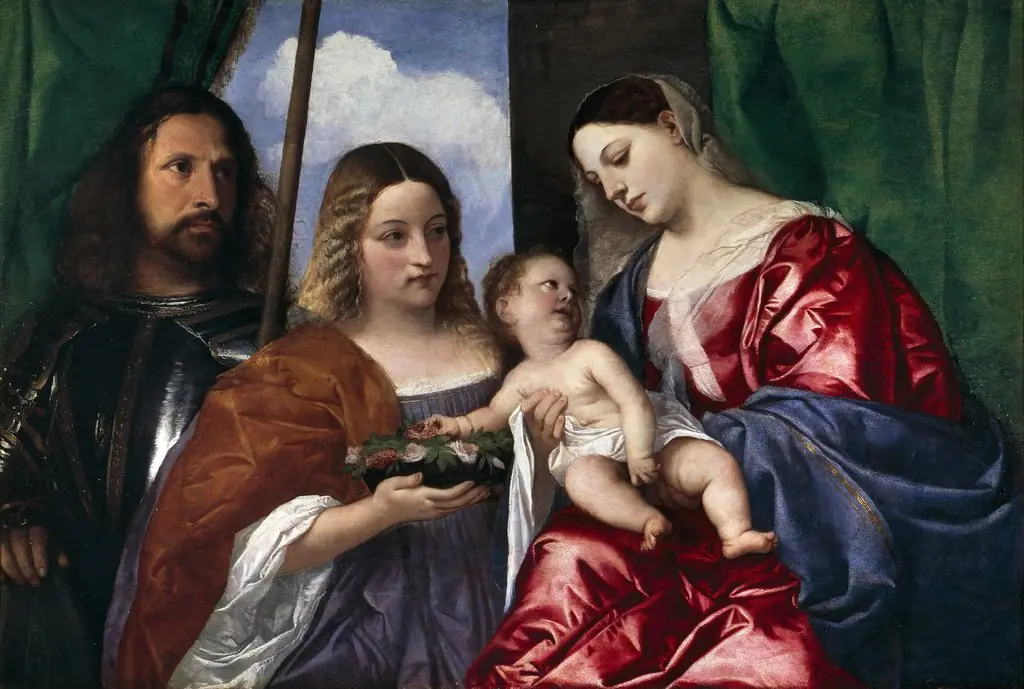 Madonna and Child with Saints Dorothy and George
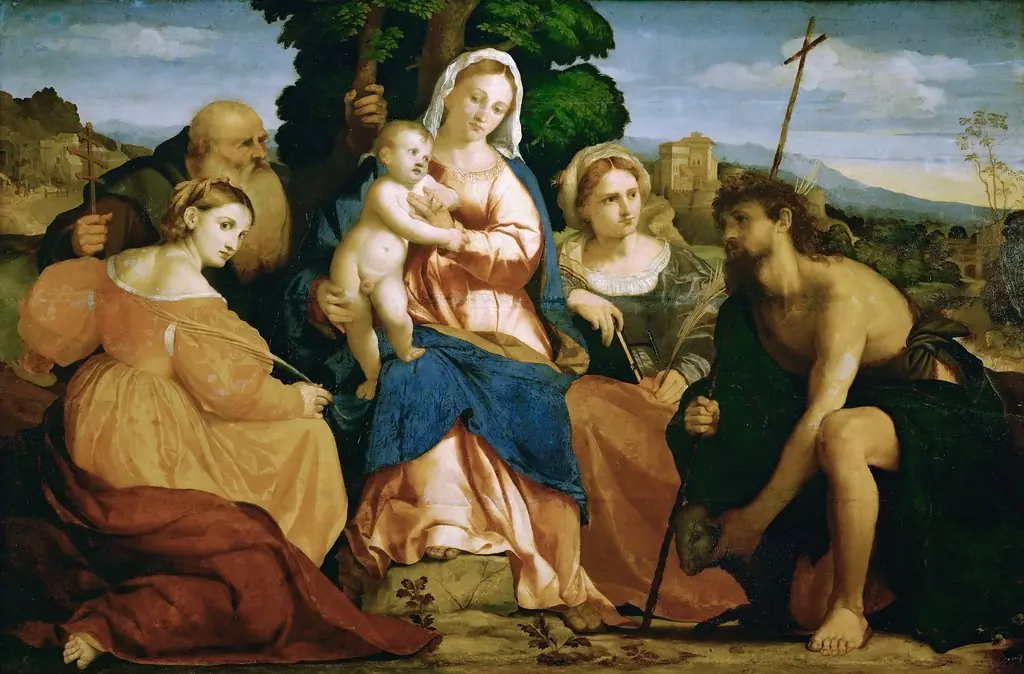 Sacred conversation
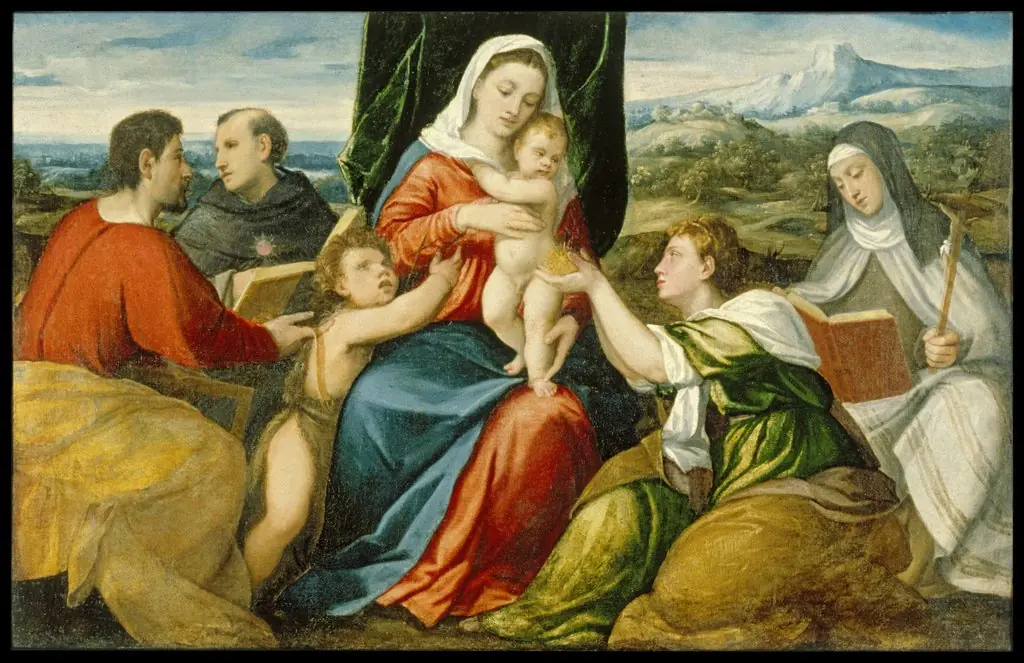 Madonna and Child with Saints
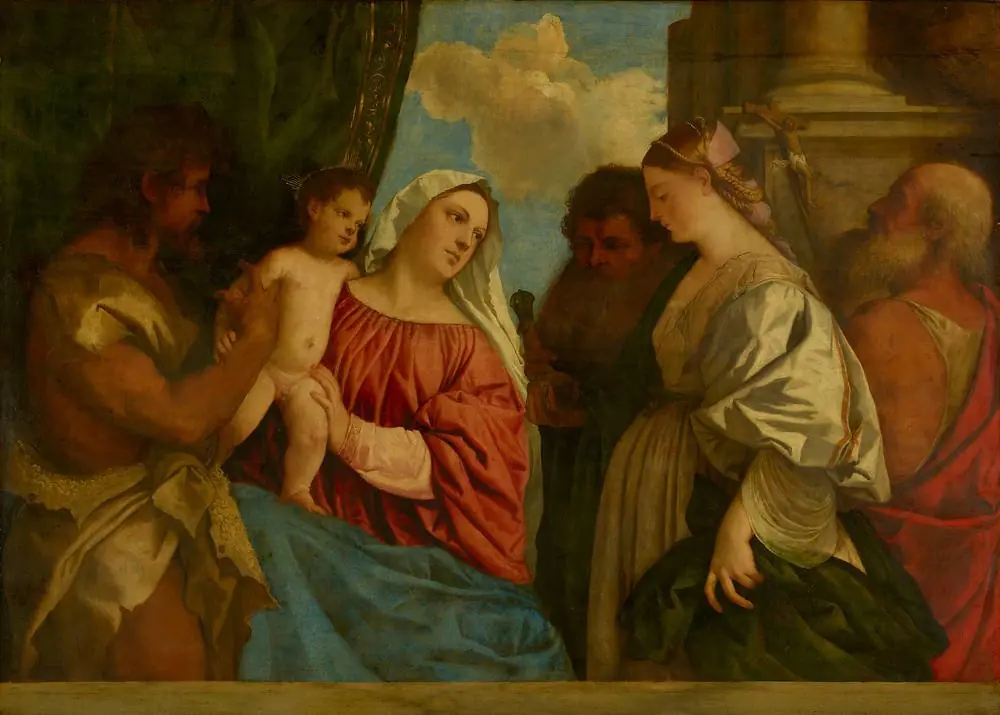 Madonna and Child with Four Saints
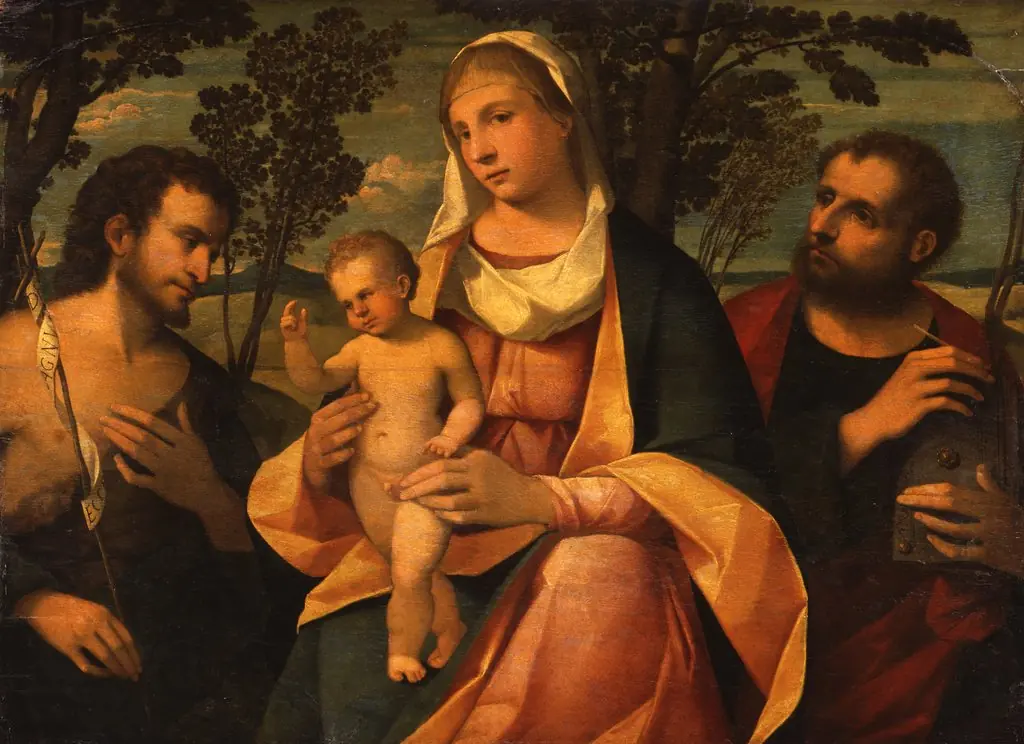 The Virgin with the Blessing Child and St. John the Baptist and Marcus the Evangelist
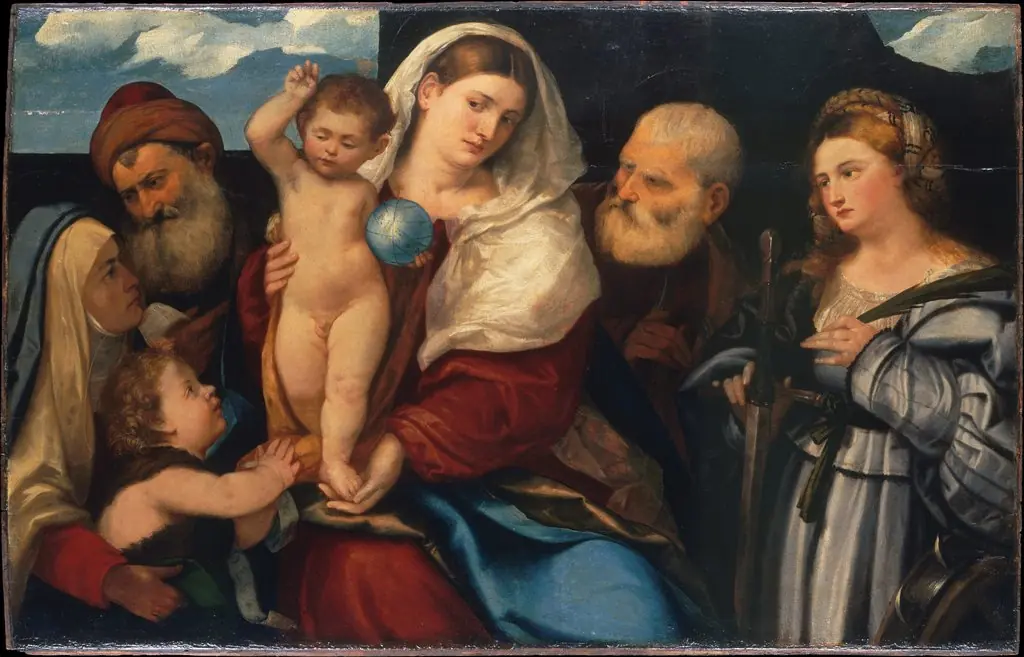 Madonna and Child with Saints
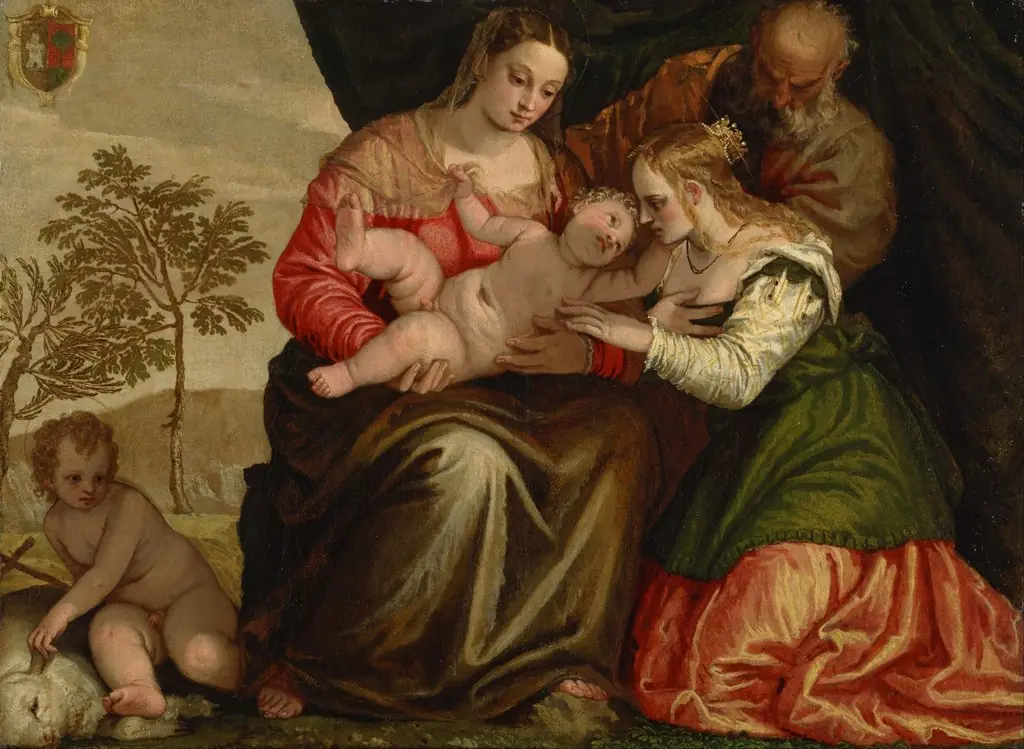 The Mystic Marriage of St. Catherine
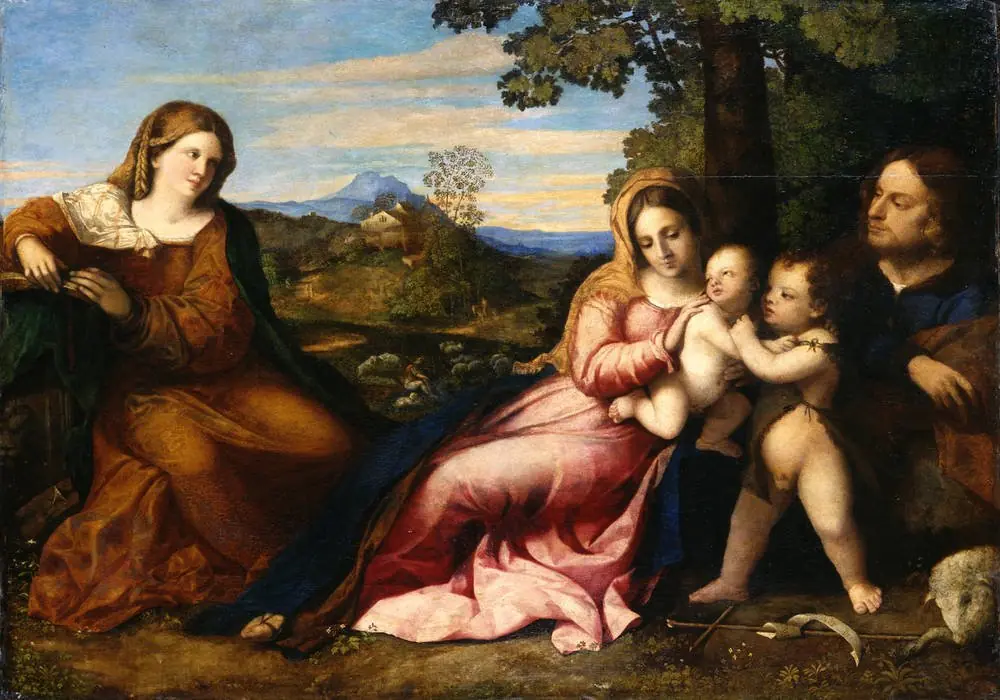 Die Heilige Familie mit der heiligen Katharina
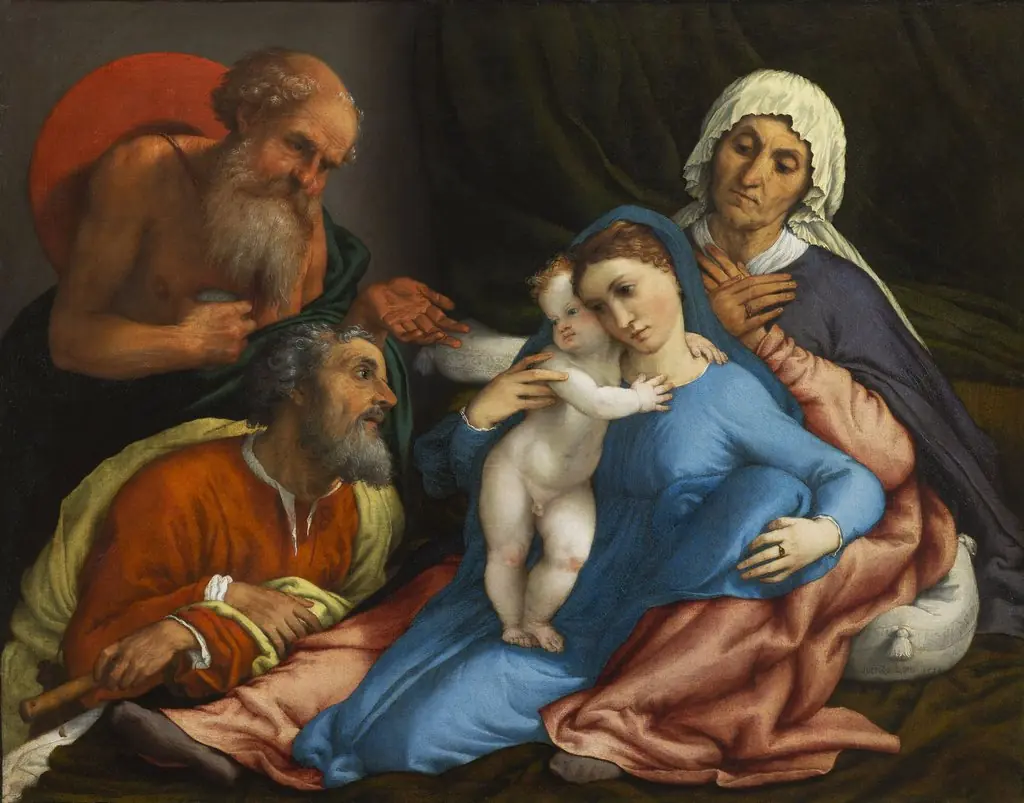 Madonna and Child with Saints
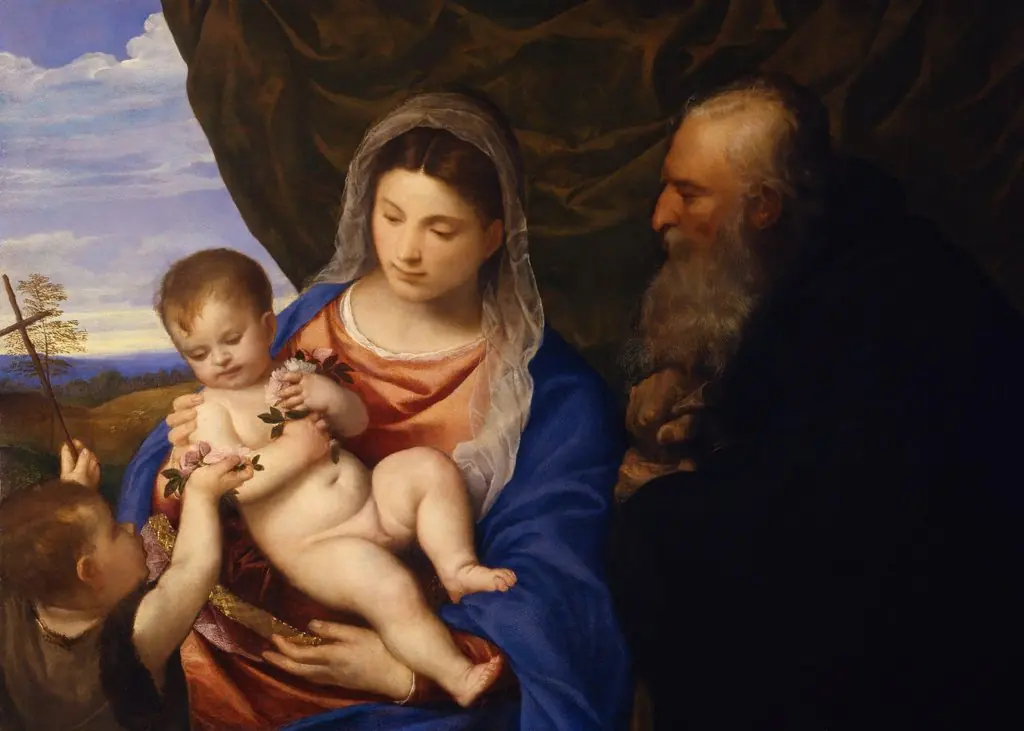
- Madonna of the Roses