Artwork
Madonna and Child with Saints Dorothy and George
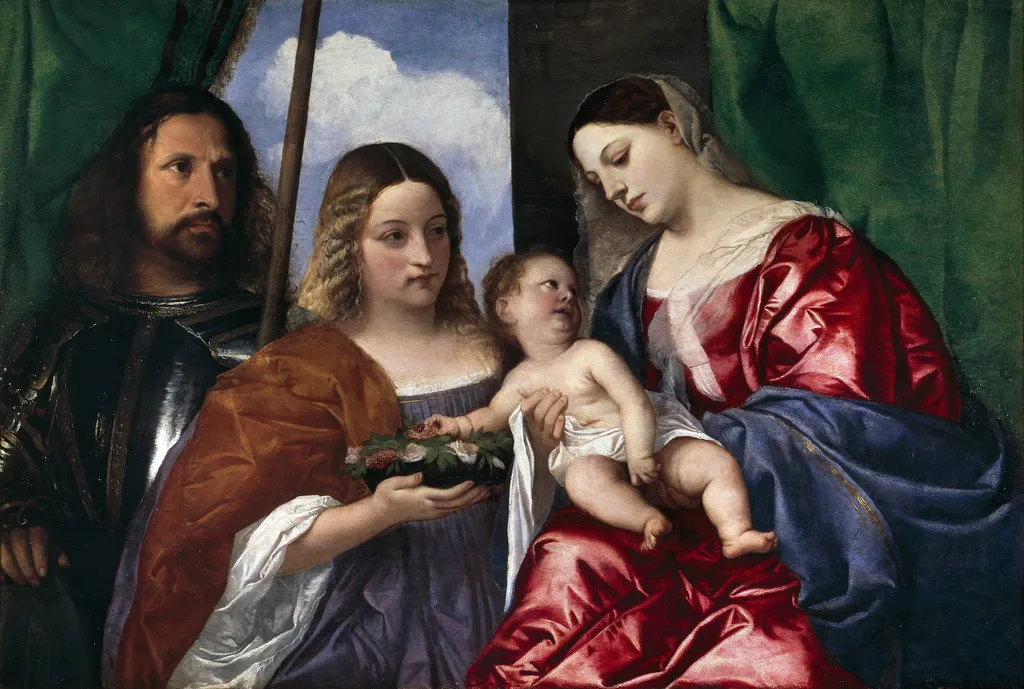
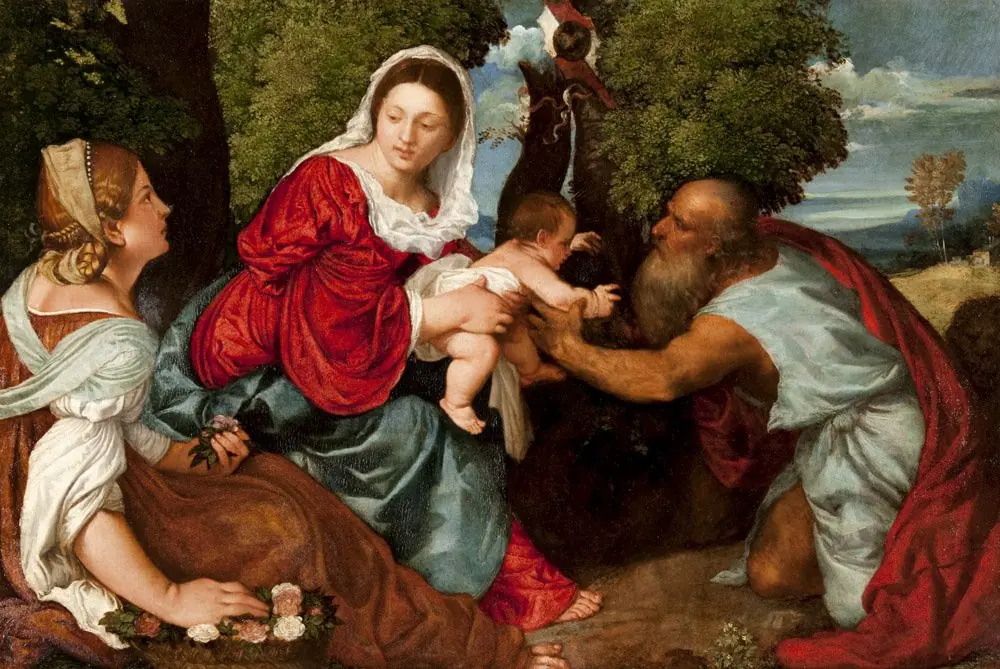
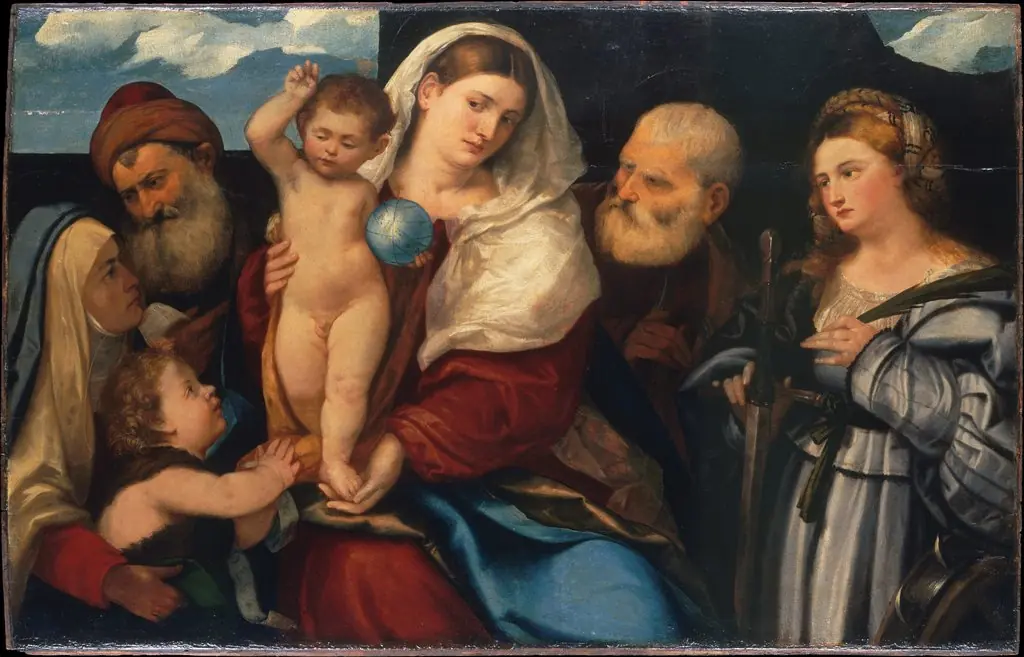
Madonna and Child with Saints Dorothy and George is an oil painting by the High Renaissance artist Titian. It dates from 1515 and is held in the collection of the Museo del Prado.
About this work
Titian painted Madonna and Child with Saints Dorothy and George in oil around 1515. It has hung at the Museo del Prado in Madrid since its transfer there in 1839. Look up glazing to see the layering technique behind its color.
Subject & Meaning
The Virgin presents the Child to Saint Dorothy, who holds a basket of flowers from which Jesus plucks a red rose, a prefiguration of the Passion.
The painting is a sacra conversazione, a devotional format in which the Virgin Mary and Christ Child appear together with saints in a unified, contemplative space. The Virgin presents the Child to Saint Dorothy, who holds a basket of flowers from which Jesus plucks a red rose, a prefiguration of the Passion. The flowers also allude to the miracle attributed to Dorothy during her martyrdom, when she miraculously delivered a basket of fruit and fresh flowers to her executioner.
On the left, Saint George, clad in shining armor and holding a lance, observes the scene; some scholars have proposed that his features may be a self-portrait of Titian. The model for Saint Dorothy, a woman with long curly hair, reappears in several of Titian's half-length allegorical works of the same years and has been tentatively identified as the painter's lover. A partially drawn curtain and a luminous blue sky form the backdrop, while the horizontal composition and intimate scale suit the work's purpose for private devotion.
Technique & Style
The work is an oil painting executed on wooden panel, measuring approximately 86 × 130 cm;. It belongs to the sacra conversazione genre and exemplifies the High Renaissance Venetian school style, characterized by a clear, luminous palette and a freely arranged composition of half‑figures;. The centralized placement of the Virgin presenting the Christ Child to Saint Dorothy, who holds a garland of roses, and the figure of Saint George in brilliantly rendered armor demonstrate Titian’s departure from Giorgione’s tonal approach toward more vivid coloration.
The painting’s condition is stable, with the original panel support preserved, and it has been part of the Museo del Prado collection since 1839.
History & Provenance
Created around 1515 or 1516, this oil-on-panel painting is attributed to Titian and belongs to a series of horizontal Madonnas intended for private devotion during the 1510s and 1520s. The work's provenance begins with Philip II of Spain, who acquired it as the first Titian to enter his collection before sending it to the Escorial monastery in 1593. It remained at the Escorial until 1839, when it was transferred to the Museo del Prado in Madrid.
Although the painting's authorship was unquestioned in the sixteenth century, modern critics initially raised doubts, which have since been resolved. The work is now dated to the same period as Titian's Assumption of the Virgin, sharing similar coloristic sensibilities and compositional fluidity. A variant copy of the painting is held at Hampton Court in London.
The painting is held in the Museo del Prado in Madrid, which houses it as part of its permanent collection. It was the first work by Titian acquired by Philip II of Spain, who sent it to the Monastery of El Escorial in 1593, where it remained until 1839, when it was transferred to the Prado. The sources do not provide a specific inventory or accession number for the work.
No further exhibition history beyond its long residence at El Escorial and subsequent move to the Prado is documented in the available sources.
Context
The painting belongs to a series of sacra conversazione compositions Titian produced in the 1510s and 1520s, predominantly horizontal in format and intended for private devotion. Its authorship was unquestioned in the sixteenth century, but was later doubted by some modern critics; those doubts are now generally considered resolved, and the panel is dated close to Titian's celebrated Assunta for the Frari, with which it shares a comparable sense of color and a majestic compositional fluency. The work is also seen as evidence of Titian's gradual departure from Giorgione's tonal technique toward a brighter, more luminous palette characteristic of the emerging "modern style."
The same female model used for Saint Dorothy appears in several of Titian's half-length allegories of the period, including Flora and the Vanity, and has been tentatively identified as the painter's lover, while some scholars have read the figure of Saint George as a possible self-portrait.
Legacy
The painting became the first Titian work collected by Philip II, who acquired it in 1593 and placed it in the Escorial before its transfer to the Prado in 1839; it exemplifies the sacra conversazione format and forms part of the artist’s early‑1510s series of private devotional panels. Contemporary scholarship notes its influence on later compositional strategies, citing the free arrangement of figures and the shift toward a brighter palette as a precursor to early mannerism, a development also highlighted in later copies such as the version at Hampton Court. Critical discussion has addressed earlier doubts about authorship, now widely accepted and linked to Titian’s contemporaneous works like the Assunta. The depiction of Saint Dorothy, modeled on the artist’s lover, further informs the painting’s cultural resonance.
Overview
Titian's "Madonna and Child with Saints Dorothy and George," an oil on panel painting from approximately 1516, is a significant early work by the Venetian master. This composition, depicting a sacred gathering, resides today in the Museo del Prado in Madrid. It holds historical importance as the first painting by Titian to enter the collection of King Philip II of Spain, a major patron of the artist.
Own this work as a print
Artist & collection
Artist
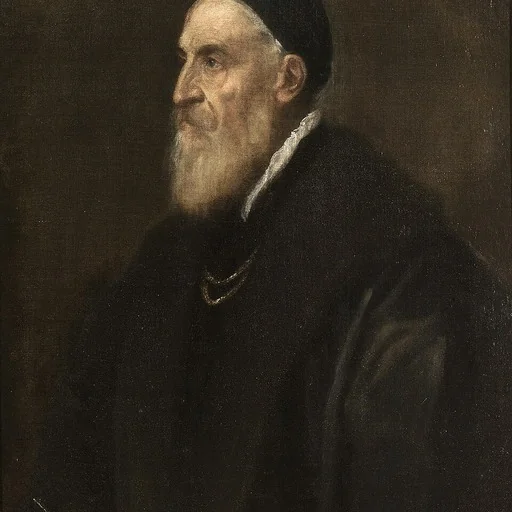
Tiziano Vecellio (Italian:; c. 1488/1490 – 27 August 1576), Latinized as Titianus, hence known in English as Titian ( TISH-ən), was an Italian Renaissance painter. The most important artist of Renaissance Venetian…