Artwork
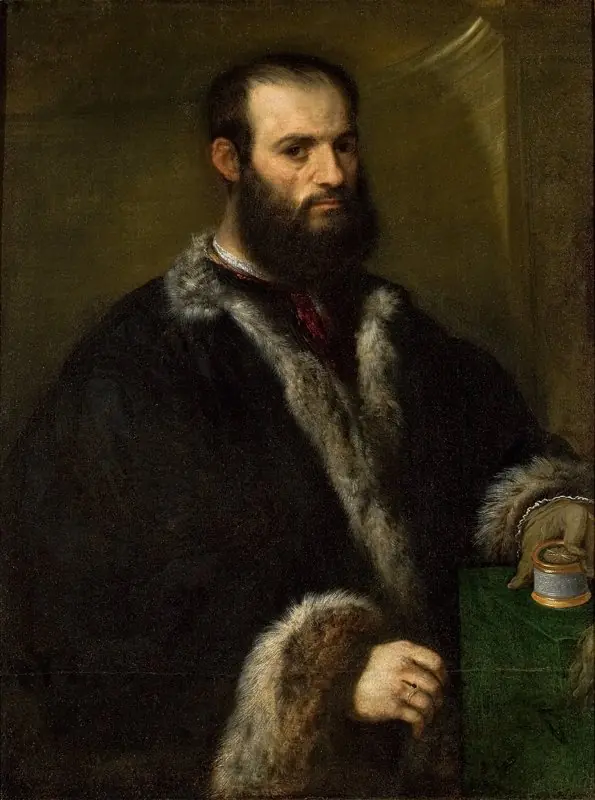
Portrait of Jacopo Strada
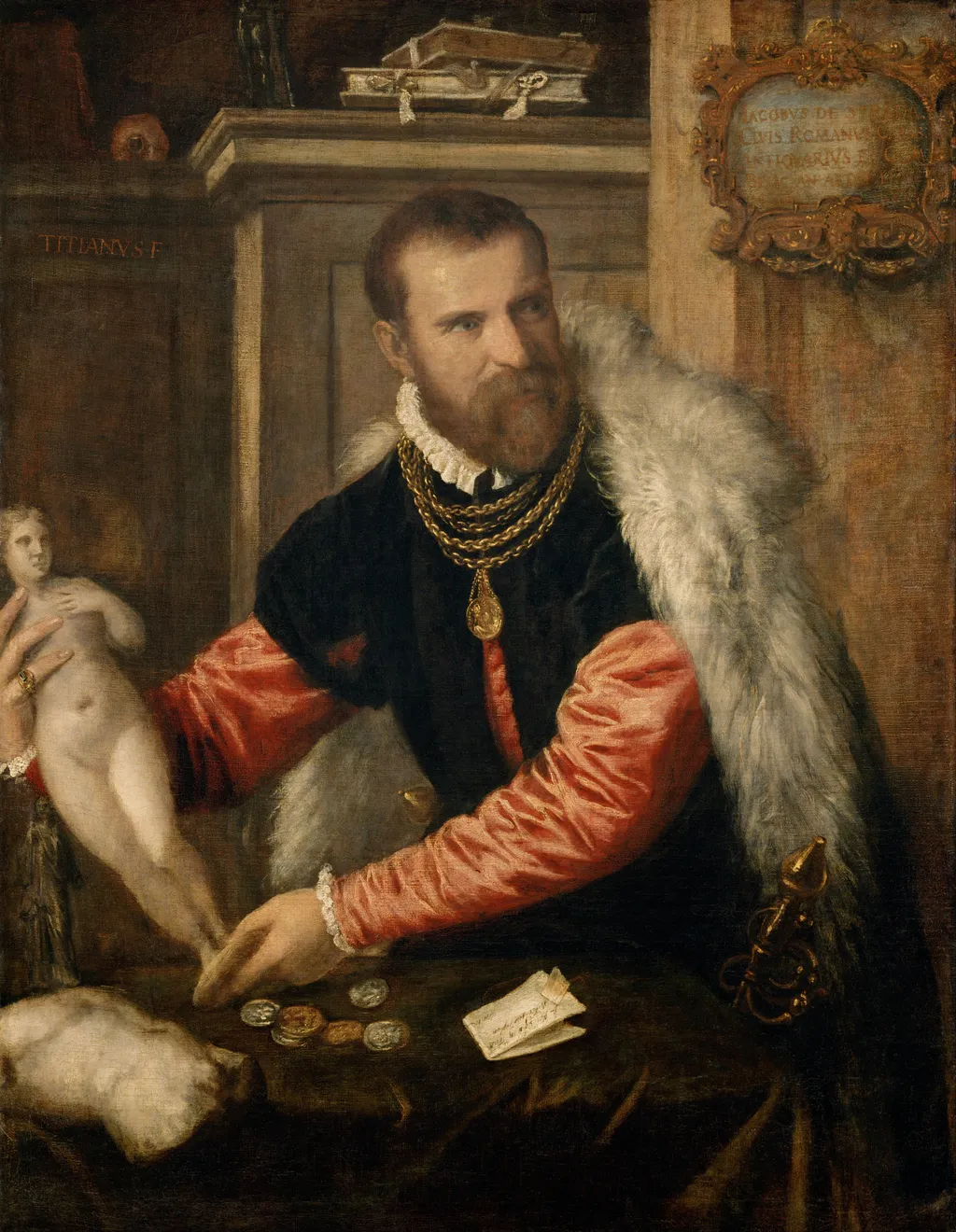
Portrait of Jacopo Strada is an oil painting by the Mannerist artist Titian. It dates from 1567 and is held in the collection of the Kunsthistorisches Museum.
About this work
Subject & Meaning
The portrait depicts Jacopo Strada, a Roman antiquarian and imperial agent, at age 51, surrounded by objects emblematic of his scholarly and mercantile pursuits. He is shown in his study, presenting a small Venus statuette to an unseen interlocutor, underscoring his role as a connoisseur and dealer in classical artifacts. Scattered coins on the table and a cartouche bearing his titles, imperial antiquary and "war minister", reference his expertise in numismatics and his self-fashioned identity as a learned intermediary of imperial culture.
His opulent attire, including a fur-lined cape and gold chain with a helmeted pendant, signals noble status, while the turned-away gaze and active pose depart from conventional court portraiture, conveying Strada's absorption in the exchange of knowledge and goods rather than direct engagement with the viewer.
The inscription further constructs his public persona: it lists his offices, his age in 1566, and the Latinized claim to Roman citizenship, aligning his image with the learned traditions of antiquity.
Technique & Style
Scattered coins on the table underscore his numismatic interests, and a cartouche on a structurally implausible column carries an inscribed Latin encomium.
Executed in oil on canvas in 1567–1568, Titian's portrait presents Jacopo Strada in half-length view, seated at a table amid the trappings of his scholarly and collecting life.
The handling balances painterly breadth with incisive detail: the sitter's opulent fur mantle is rendered with thick, tactile brushwork that slips off his right shoulder to animate the composition, while the red silk doublet and black velvet waistcoat are described with crisp linear precision. A gold chain worn in four turns supports a cameo with a helmeted profile, and a sword at his side signals noble status. Strada does not meet the viewer's gaze but appears absorbed in presenting a small Venus statuette to an unseen interlocutor, a device that lends the scene quiet dynamism.
Scattered coins on the table underscore his numismatic interests, and a cartouche on a structurally implausible column carries an inscribed Latin encomium. The palette favors warm, saturated hues, ruby reds, deep blacks, and burnished gold, contrasted with the cooler stone tones of the background niche.
No condition reports are provided by the cited sources; the painting remains in the Kunsthistorisches Museum, Vienna.
History & Provenance
The Portrait of Jacopo Strada was commissioned by its subject, Jacopo de Strada, and painted by Titian in 1567 while Strada was 51 years old. Strada posed for the work in Venice, as Titian no longer traveled by this date. The painting bears Titian's signature at the top left, "TITIANVS F(ECIT)", and includes a letter on the table addressed to "il Sigor Titian Vecellio Venezia," indicating a friendly character beyond the commission.
The work entered the imperial collection after being recorded in David Teniers the Younger's Theatrum Pictorium, documenting Archduke Leopold Wilhelm of Austria's collection in 1659 and again in 1673. Upon the archduke's death, his nephew Emperor Leopold I inherited the collection, which then passed to the Kunsthistorisches Museum in Vienna, where the portrait remains.
The Portrait of Jacopo Strada is housed in the Kunsthistorisches Museum in Vienna. The work was originally part of the extensive art collection assembled by Archduke Leopold Wilhelm of Austria in the Spanish Netherlands. It was documented in David Teniers the Younger's catalog of the Archduke's collection, appearing in the 1659 and 1673 editions of the Theatrum Pictorium.
Teniers also depicted the painting in a gallery view created around 1651, showing it located in the upper left portion of the scene. Following the Archduke's death, the portrait passed to his nephew, Emperor Leopold I, before entering the imperial holdings that eventually formed the Kunsthistorisches Museum.
Context
Scholars recognize Titian's 1567 portrait of Jacopo Strada as a critical depiction rather than a purely flattering one, suggesting the artist held a low opinion of the sitter. The composition portrays Strada as greedy and unscrupulous, literally shown grasping a statuette of Venus while surrounded by coins that highlight his numismatic interests. Unusually for the period, the subject does not engage the viewer directly but is captured in action, seemingly communicating with an unseen figure.
This dynamic approach, combined with the slipping fur cape and rich attire, emphasizes movement and prosperity while documenting Strada's role as an imperial antiquary. The work stands within the Venetian school tradition yet offers a complex psychological study of a cultural patron and dealer active across multiple imperial courts.
Legacy
The portrait commissioned by Jacopo Strada in 1567-1568 has been recognized for its unconventional composition and critical portrayal of the sitter. Unlike typical portraits of the period, Strada is depicted engaged in scholarly activity rather than facing the viewer directly, suggesting interaction with an unseen interlocutor while presenting a statuette of Venus. The work features symbolic elements such as scattered coins, a gold chain with a helmeted pendant, and an opulent fur-trimmed attire that underscores his status as an antiquarian and imperial minister.
Inscriptions and accompanying text on a table reference his titles, including 'imperial antiquary' and 'minister of war,' reflecting his self-perceived roles. The painting was documented in David Teniers the Younger's 1659 catalog of Archduke Leopold Wilhelm's collection and later entered the Kunsthistorisches Museum in Vienna through the archduke's bequest. Contemporary scholarship has highlighted its significance as a rare example of a Renaissance portrait emphasizing the sitter's professional identity and intellectual pursuits rather than mere likeness.
Overview
Titian’s oil on canvas portrait of Jacopo Strada, created between 1567 and 1568, is part of the collection of the Kunsthistorisches Museum in Vienna. The work presents the court librarian seated at a table, dressed in a dark shirt with red sleeves and a fur‑trimmed coat, his beard rendered with careful attention.
Own this work as a print
Artist & collection
Artist
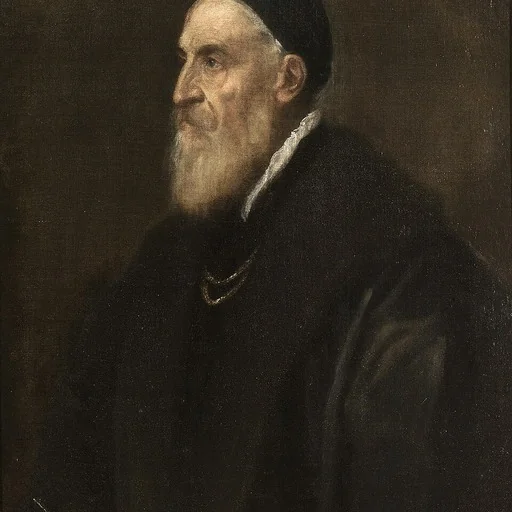
Tiziano Vecellio (Italian:; c. 1488/1490 – 27 August 1576), Latinized as Titianus, hence known in English as Titian ( TISH-ən), was an Italian Renaissance painter. The most important artist of Renaissance Venetian…


- Portrait of Marino Grimani
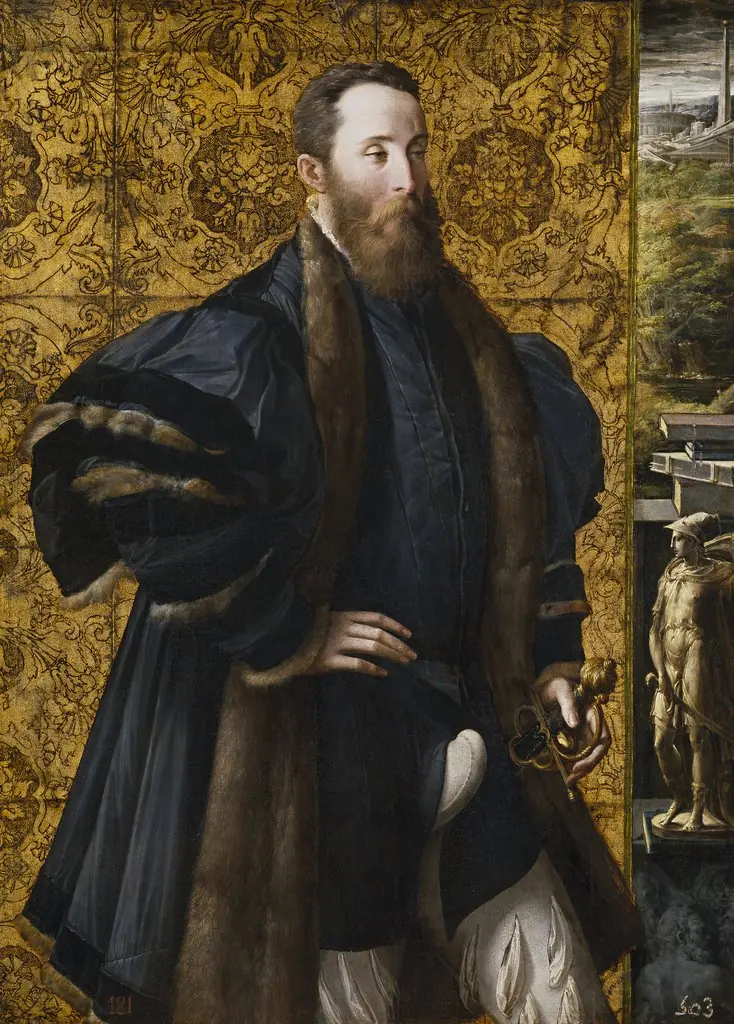 Portrait of Pier Maria Rossi di San Secondo
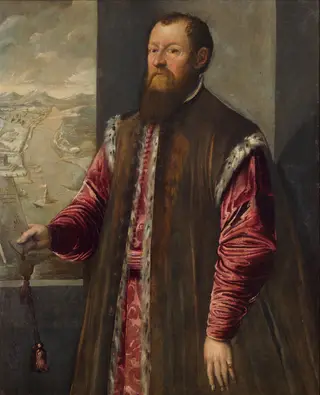 Portrait of Marcantonio Barbaro (1518-1595) as ambassador to Constantinople
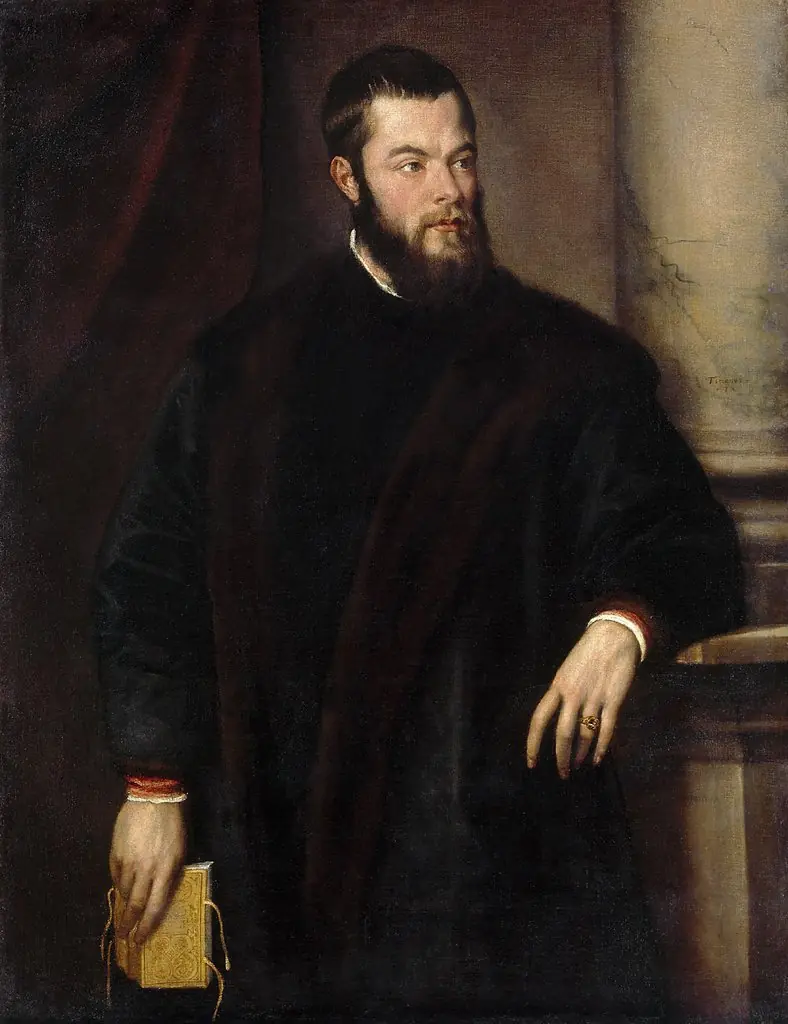 Portrait of Benedetto Varchi
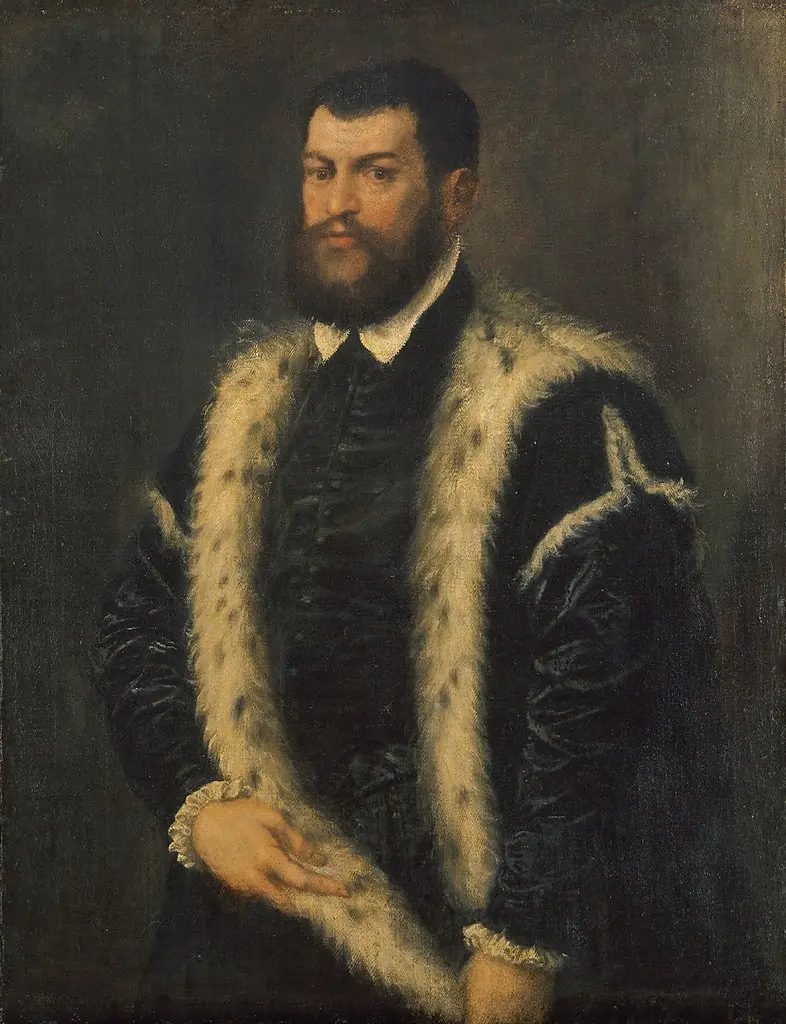 Man with Ermine Coat
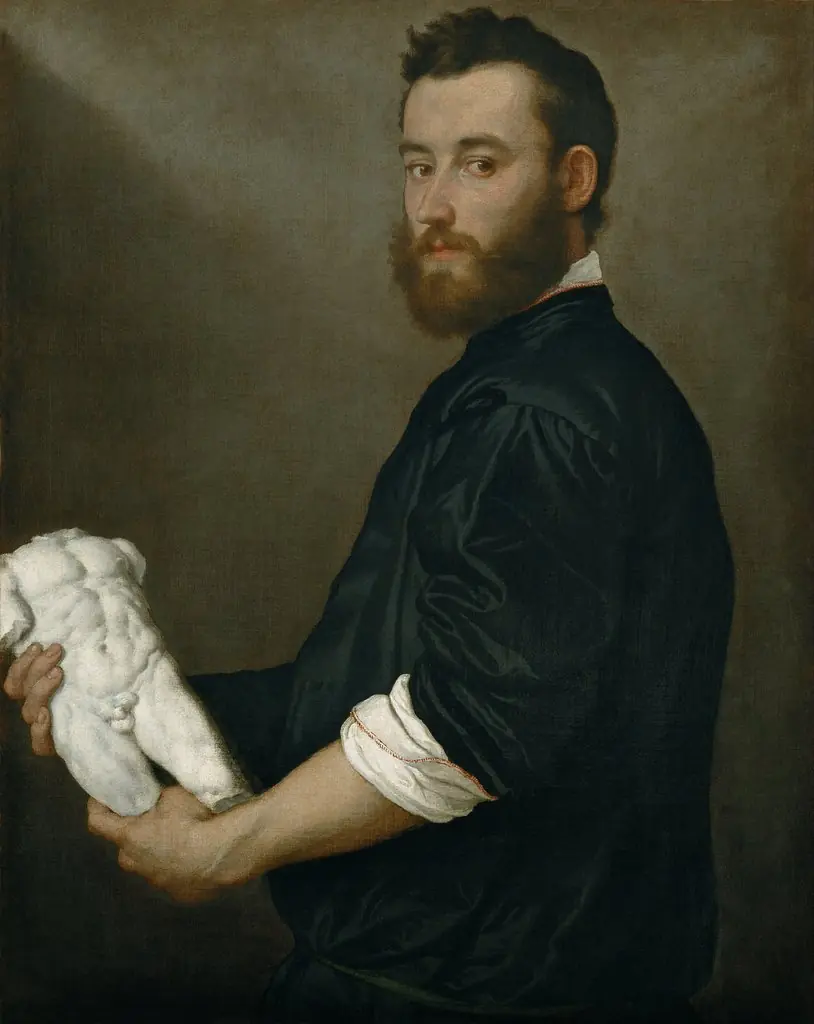 Portrait of the sculptor Alessandro Vittoria
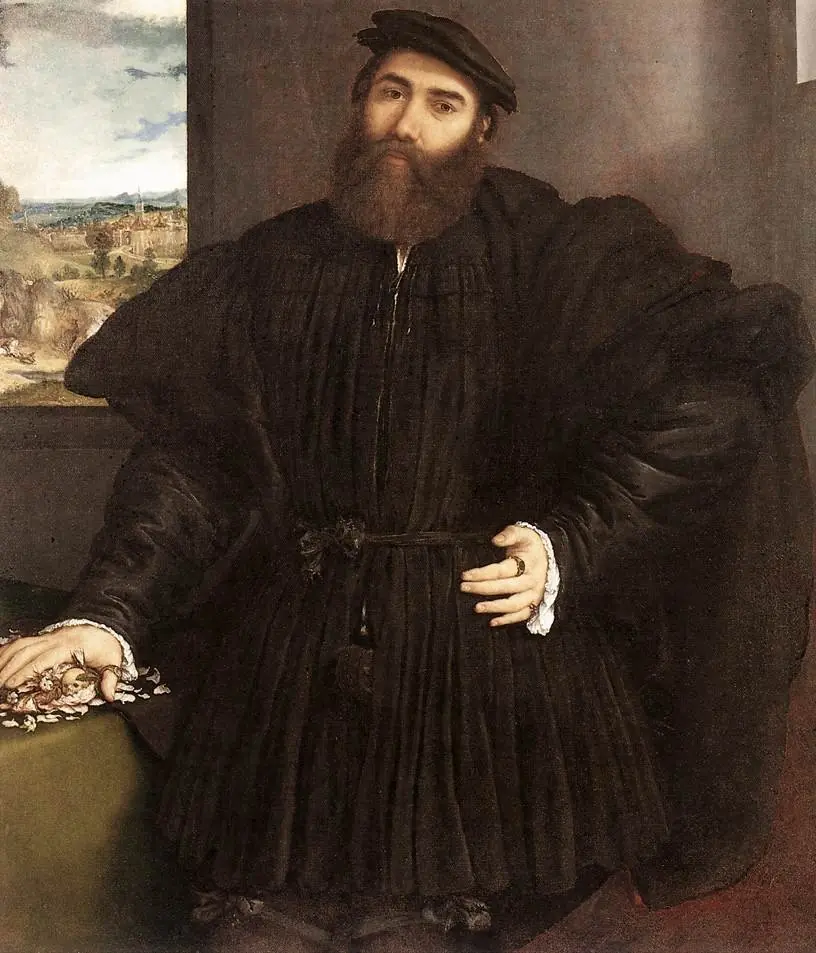 Portrait of a Gentleman
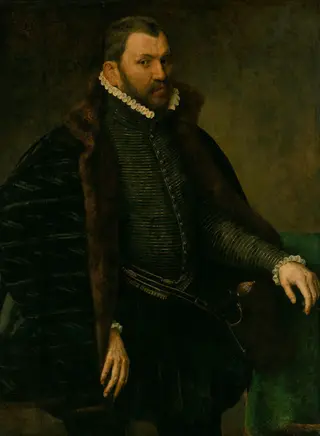 Portrait of a Man
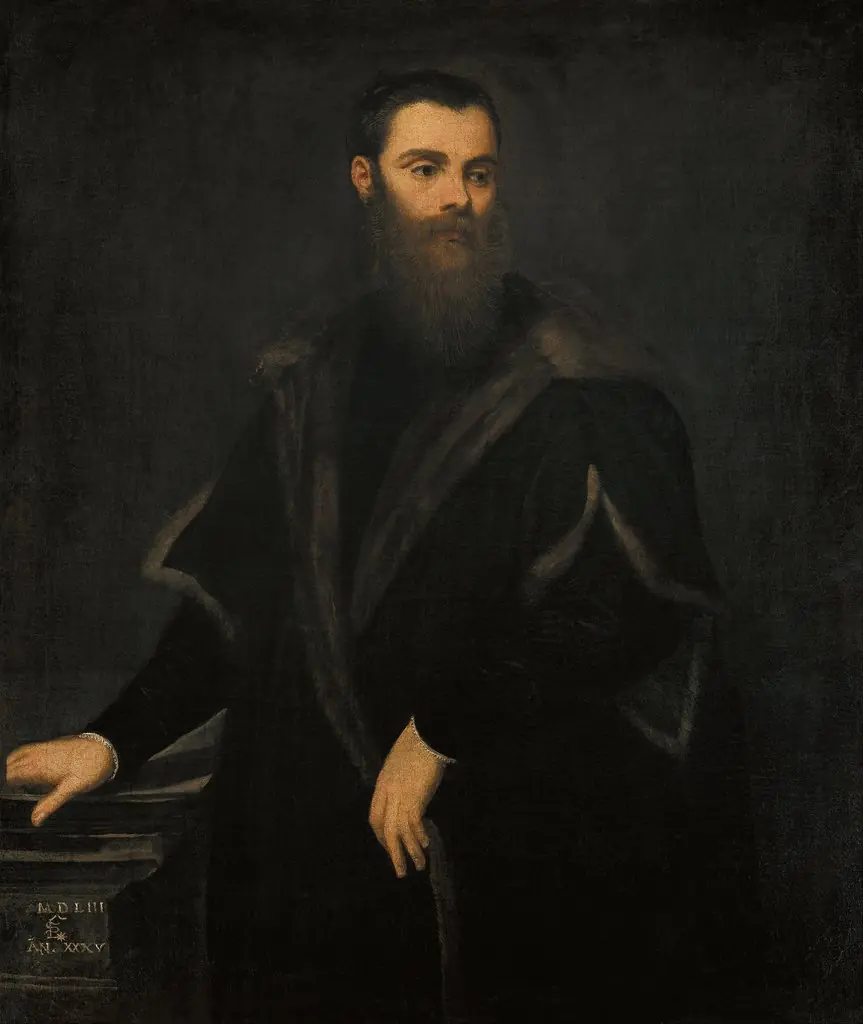 Lorenzo Soranzo
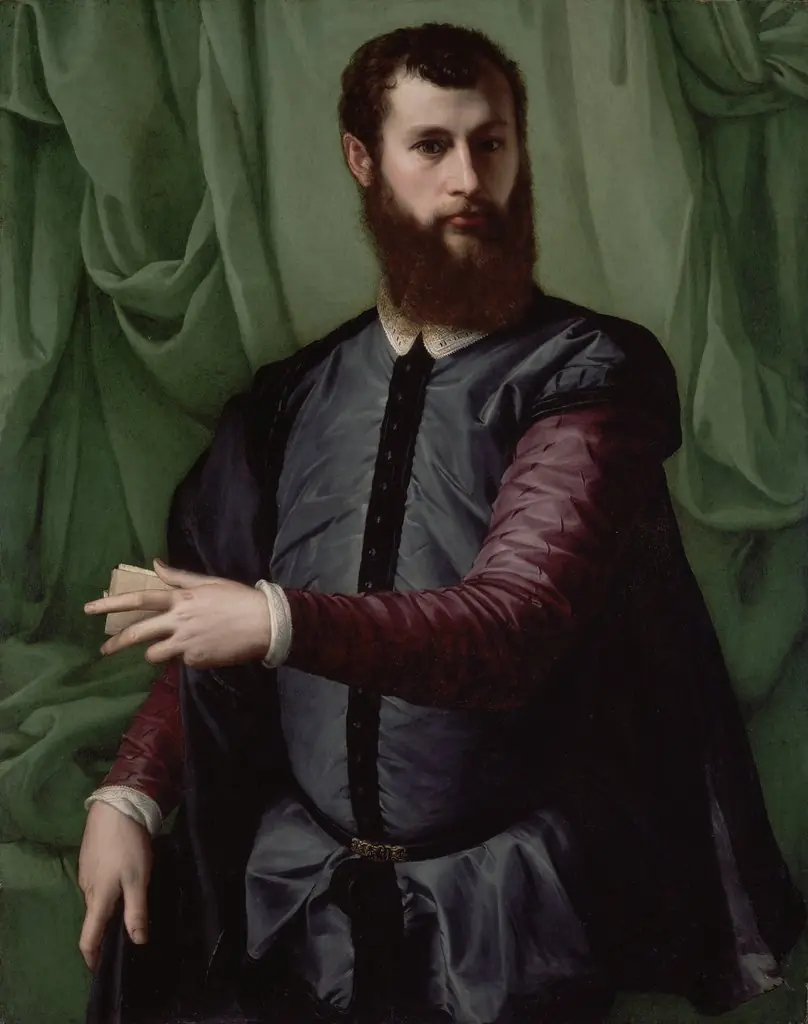 Portrait of a Man
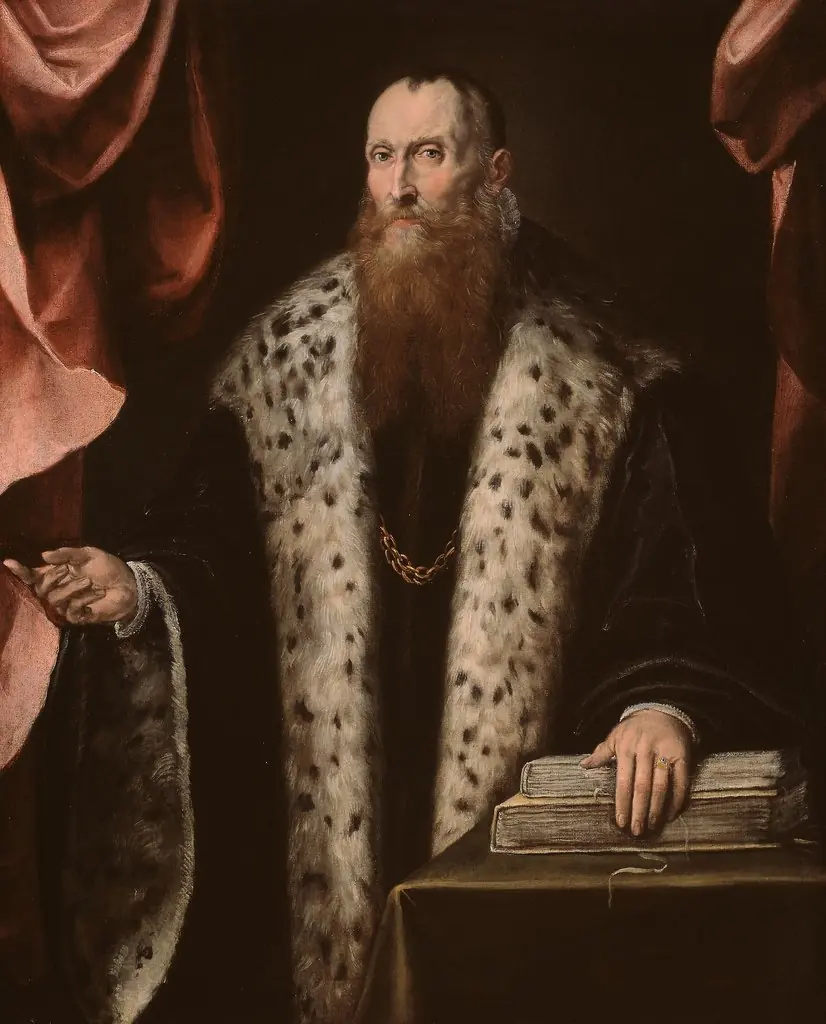 Portrait of a Gentleman
 Portrait of Alvise Contarini (?)