Artwork
Portrait of Marcantonio Trevisan, Doge of Venice
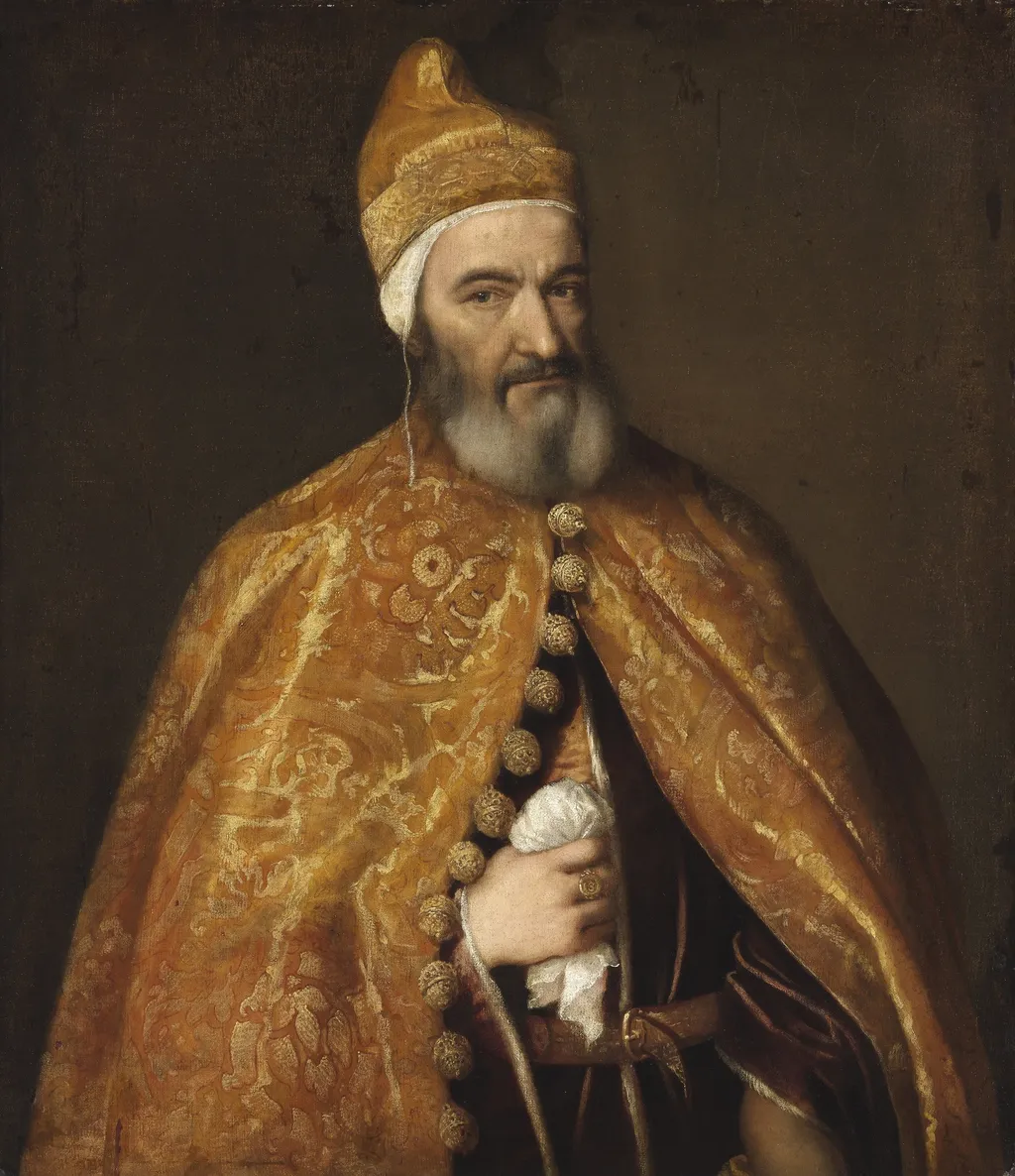
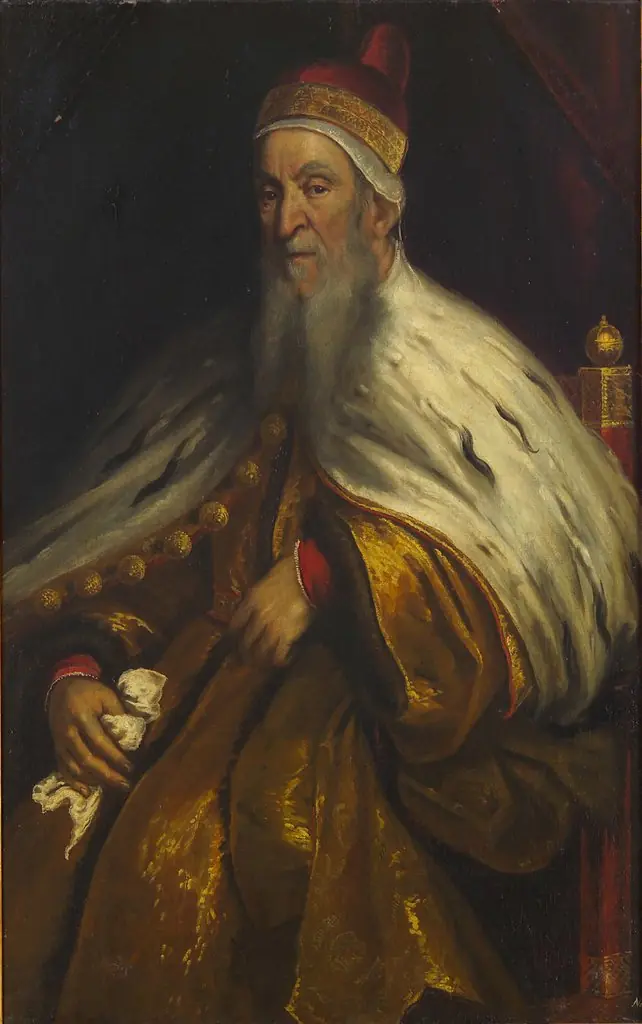
Portrait of Marcantonio Trevisan, Doge of Venice is an oil painting by the High Renaissance artist Titian. It dates from 1553 and is held in the collection of the Museum of Fine Arts, Budapest. Painted in 1553, this oil portrait captures Marcantonio Trevisan, the Doge of Venice, as a figure of solemn authority.
About this work
Overview
Executed by Titian, the leading Venetian painter of the era, the work exemplifies the city’s tradition of political portraiture.
Painted in 1553, this oil portrait captures Marcantonio Trevisan, the Doge of Venice, as a figure of solemn authority. Executed by Titian, the leading Venetian painter of the era, the work exemplifies the city’s tradition of political portraiture. Rendered against a deep, unbroken background, the subject emerges with striking presence, his attire and posture conveying institutional dignity rather than personal expression.
Subject & Meaning
Marcantonio Trevisan, Doge from 1553 until his death in 1554, is shown in full ceremonial regalia, emphasizing his role as head of the Venetian Republic. The golden robe, embroidered with elaborate patterns and heavy buttons, signifies his office, while the white cloth in his hand may reference ritual or civic duty. His long white beard and composed gaze suggest wisdom and gravitas, aligning the image with ideals of stable, aged leadership in a republic wary of dynastic power.
Technique & Style
Titian employs rich, layered oil pigments to render the textures of silk, metal, and skin with subtle variation. Chiaroscuro defines the contours of the face and robe, lending three-dimensionality without theatricality. The brushwork varies from smooth transitions in the skin to dense, almost sculptural strokes in the embroidery, demonstrating his command of both detail and atmospheric tone. The dark background isolates the figure, focusing attention on material richness and psychological stillness.
History & Provenance
Commissioned during Trevisan’s brief tenure as Doge, the portrait was likely intended for public display in a governmental space. It entered the collection of the Museum of Fine Arts in Budapest in the early 20th century, possibly through acquisitions of European art during the Austro-Hungarian period. Its survival through centuries of political change reflects its status as a document of Venetian state identity rather than personal commemoration.
Context
In mid-16th century Venice, portraits of Doges served as symbols of republican continuity, distinct from the dynastic imagery of other European courts. Titian, as court painter, shaped this visual language with restrained grandeur. The portrait aligns with other state images of the period, emphasizing dignity over individuality, while reflecting Venice’s wealth through luxurious materials rendered with technical precision, reinforcing civic pride amid external pressures.
Legacy
The portrait stands as a representative example of Venetian state portraiture, influencing later depictions of political figures through its balance of realism and symbolic form. Titian’s handling of fabric and light became a reference for subsequent generations of portraitists. Though not widely exhibited, its presence in Budapest underscores the broader European circulation of Venetian art and its enduring role in defining institutional authority through visual culture.
Own this work as a print
Artist & collection
Artist
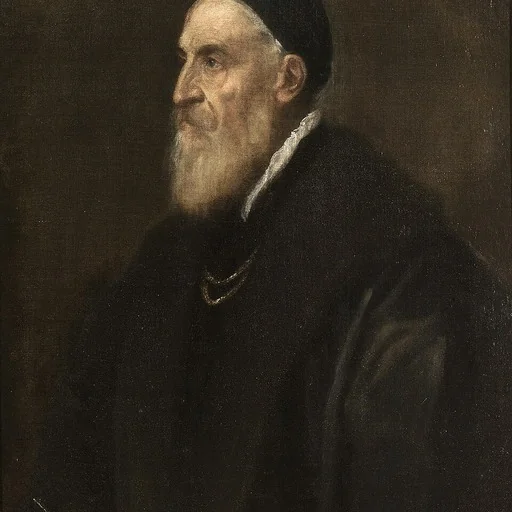
Tiziano Vecellio (Italian:; c. 1488/1490 – 27 August 1576), Latinized as Titianus, hence known in English as Titian ( TISH-ən), was an Italian Renaissance painter. The most important artist of Renaissance Venetian…