Artwork
Saint Sebastian
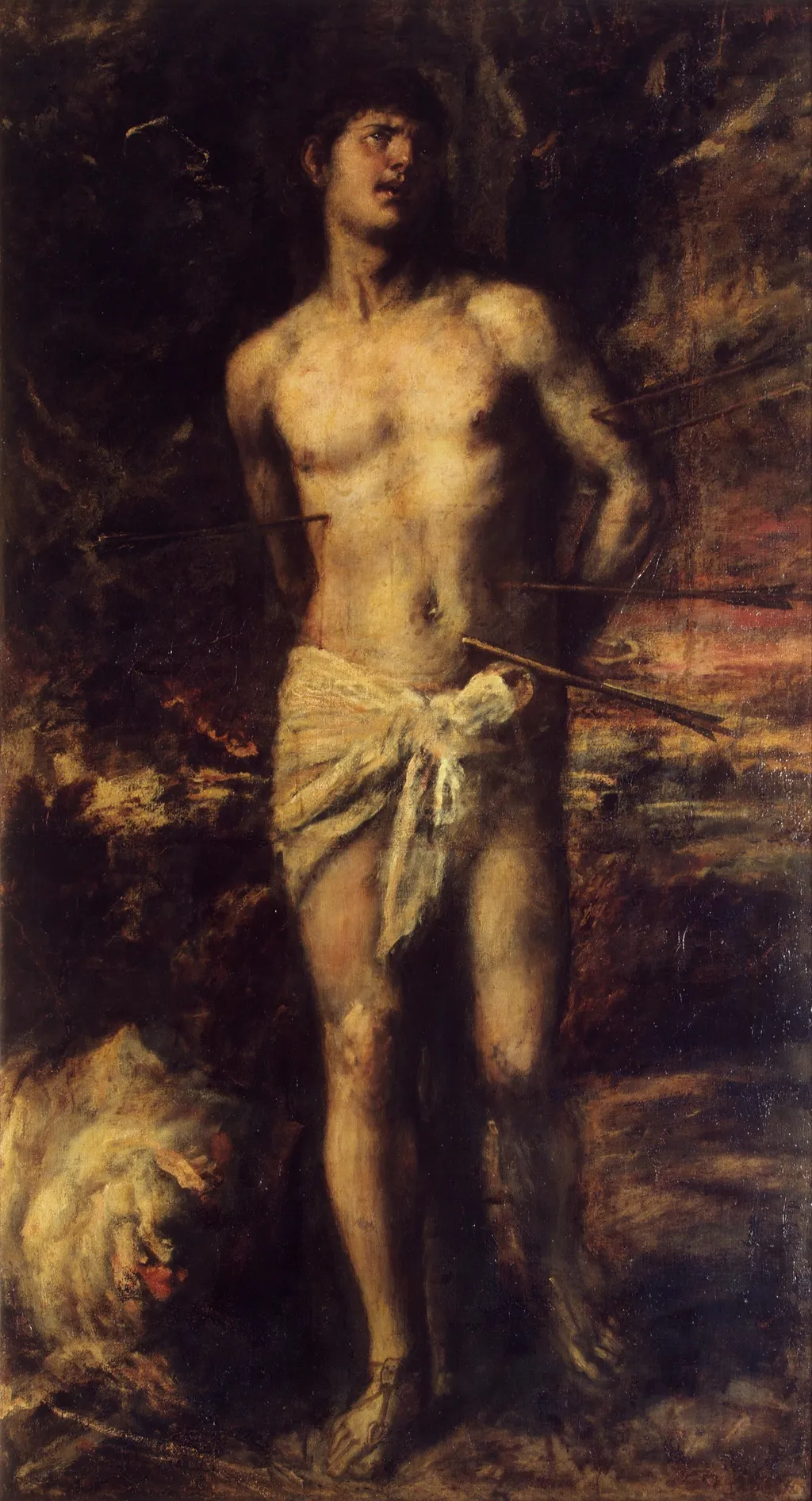
Saint Sebastian is an oil painting by the Mannerist artist Titian. It dates from 1570 and is held in the collection of the Hermitage Museum.
About this work
Subject & Meaning
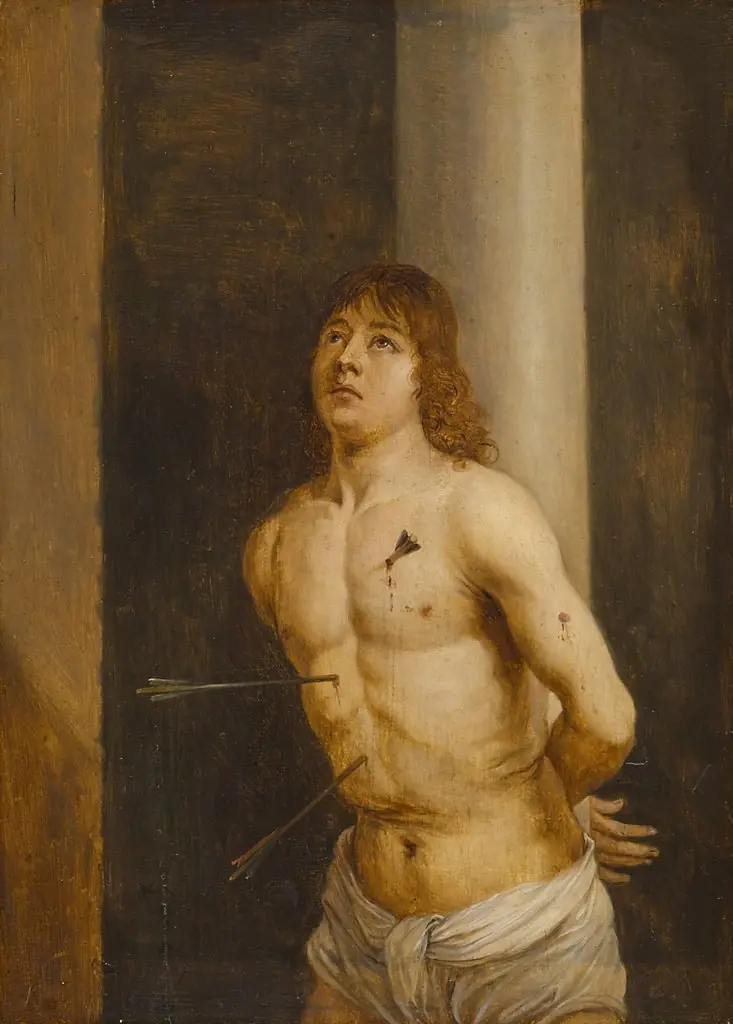
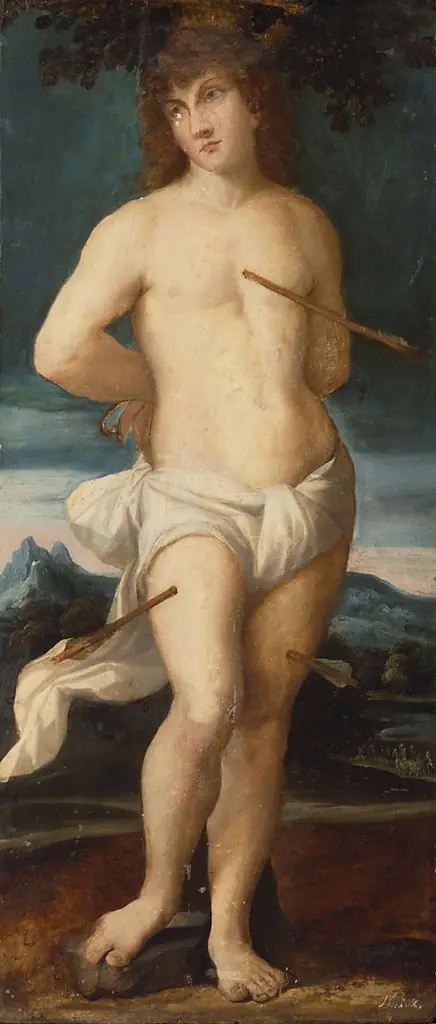
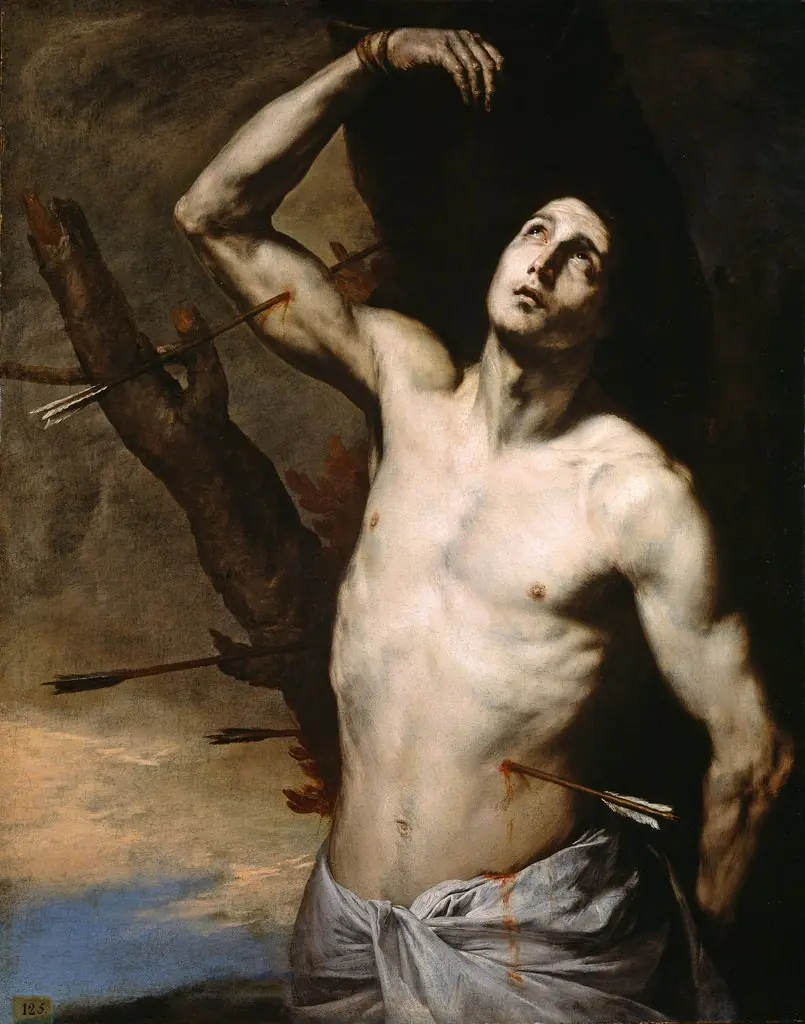
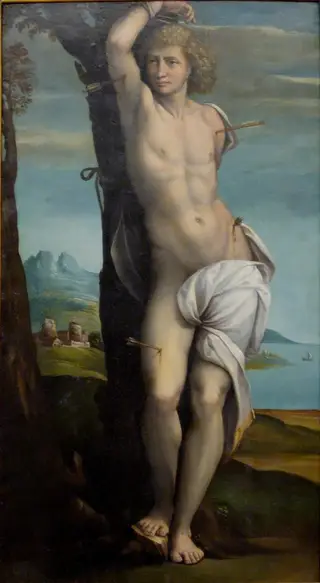
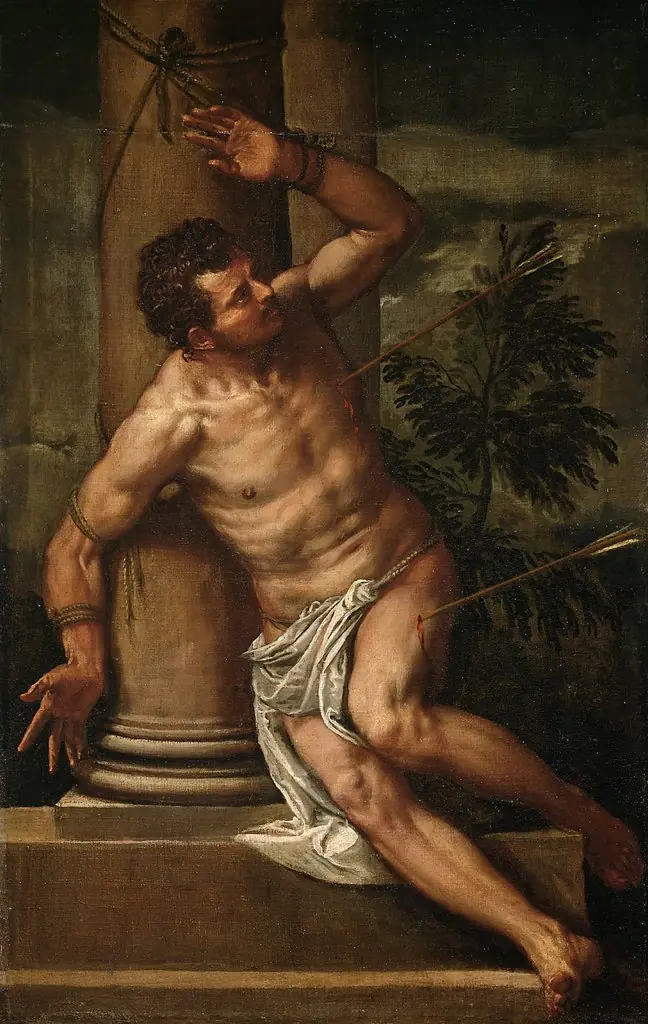
The saint is shown with arrows piercing his body, gazing upward toward the sky in a pose that evokes the crucifixion of Christ, suggesting his imminent passing.
The work depicts the martyrdom of Saint Sebastian, a Christian saint who was tied to a post and pierced with arrows for professing the teachings of Christ. In this late version by Titian, created around 1570–1572, the artist moved away from the anatomical precision of his earlier works to emphasize spiritual intensity and the proximity of death. The saint is shown with arrows piercing his body, gazing upward toward the sky in a pose that evokes the crucifixion of Christ, suggesting his imminent passing.
The composition utilizes dramatic lighting, with fire flames on one side and evening light on the other, to highlight the textured paint application and the martyr's suffering. This approach reflects a shift from technical perfection to a profound representation of the saint's spiritual vision at the moment of martyrdom.
Technique & Style
Created between 1570 and 1572, this work is an oil painting on canvas measuring 210 cm in height and 115.5 cm in width. As a late masterpiece by Titian, it exemplifies the Venetian school's emphasis on color and light over strict linear precision. The artist employed broad, visible brushstrokes and applied paint in thick impasto layers, particularly where light interacts with the surface.
To achieve smooth tonal transitions, Titian utilized a technique of rubbing the wet paint with his fingers, a method characteristic of his final period. The composition features dramatic lighting, with flames on the left and evening light on the right, which highlights the textured application of the medium. This handling creates a spiritual atmosphere that prioritizes emotional expression and the depiction of martyrdom over the anatomical perfection seen in his earlier versions of the subject.
History & Provenance
The painting Saint Sebastian by Titian is dated to circa 1570–1572. It was transferred to the Hermitage Museum in Saint Petersburg from the Barbarigo Gallery in Venice in 1850, where it had previously been held. The work entered the Hermitage’s collection as part of a broader acquisition from the Barbarigo holdings during the mid-nineteenth century.
The painting is held by the Hermitage Museum in Saint Petersburg, where it is displayed in hall 221. It entered the Hermitage collection in 1850 through an acquisition from the Barbarigo Gallery in Venice.
No specific inventory or accession number is recorded in the available sources, and no exhibition history beyond its long-term residence at the Hermitage is documented.
Legacy
Titian’s Saint Sebastian (1570) became a pivotal reference for later interpretations of the martyr’s iconography, particularly within the Venetian school. Its expressive, almost abstract handling of light and form, achieved through broad brushstrokes and tactile impasto, distanced the work from earlier, anatomically precise depictions, such as Titian’s own Averoldi Polyptych (1520–1522). This shift toward spiritual intensity over technical perfection influenced subsequent artists exploring martyrdom as a theme.
The painting’s acquisition by the Hermitage Museum in 1850 from the Barbarigo Gallery in Venice further cemented its reputation among scholars and collectors. Its inclusion in the museum’s holdings ensured visibility within European art historical discourse, reinforcing Titian’s late style as a model for emotive, painterly execution in religious subjects.
Overview
Created in the latter half of the sixteenth century, this oil painting portrays the Christian martyr Saint Sebastian. Executed in a mannerist idiom, the work presents the saint standing nude, his torso bound by a simple cloth, while arrows pierce his flesh. The composition is set against a dimly lit landscape that recedes into shadow, lending the scene a solemn, reflective atmosphere.

Artist & collection
Artist
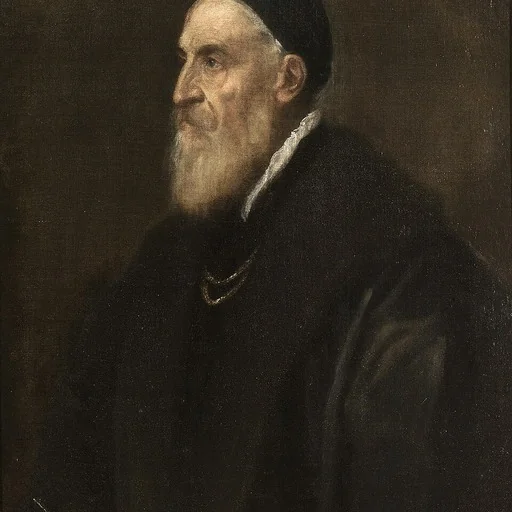
Tiziano Vecellio (Italian:; c. 1488/1490 – 27 August 1576), Latinized as Titianus, hence known in English as Titian ( TISH-ən), was an Italian Renaissance painter. The most important artist of Renaissance Venetian…