Artwork
Young Woman in a Black Dress
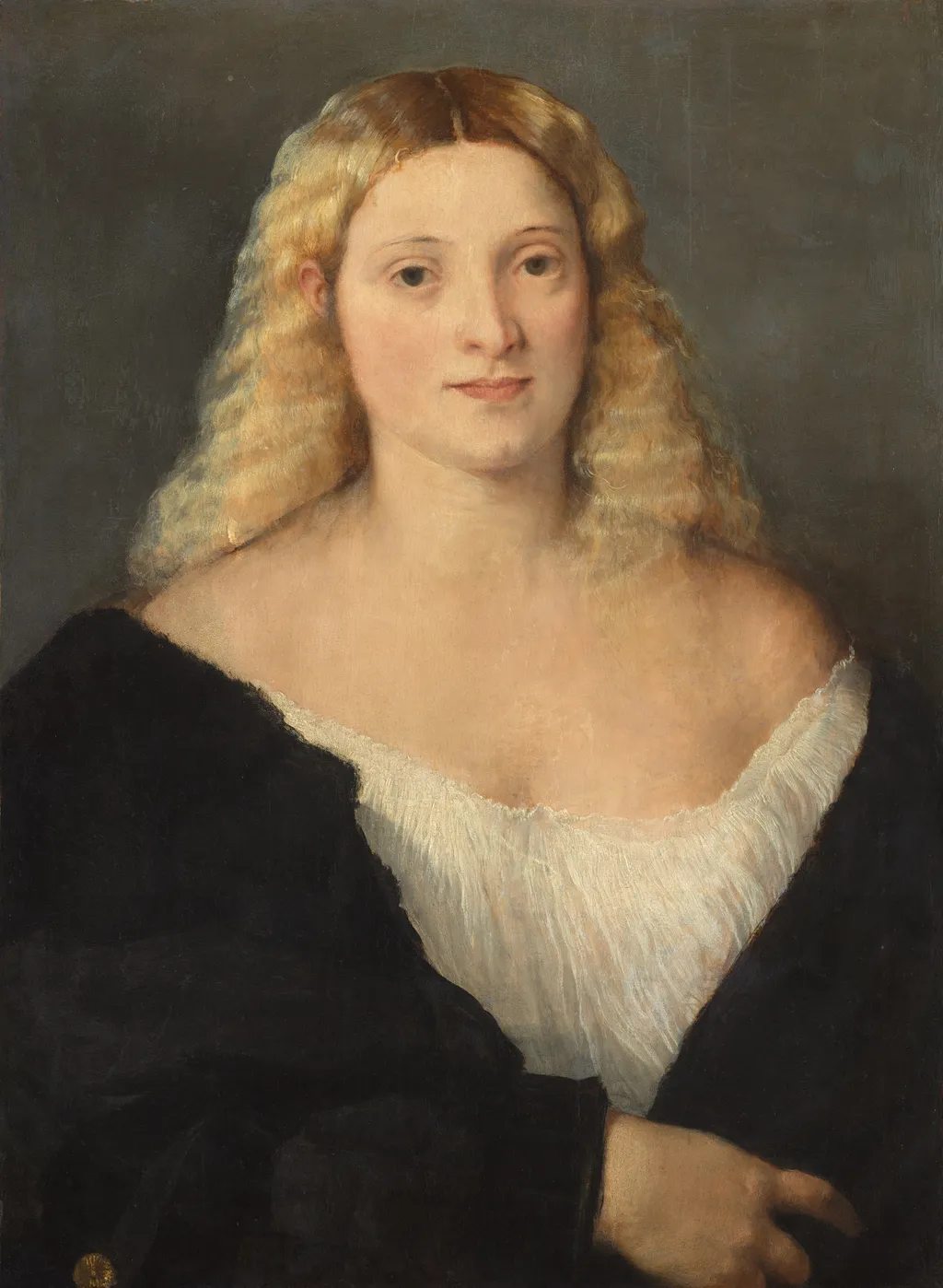
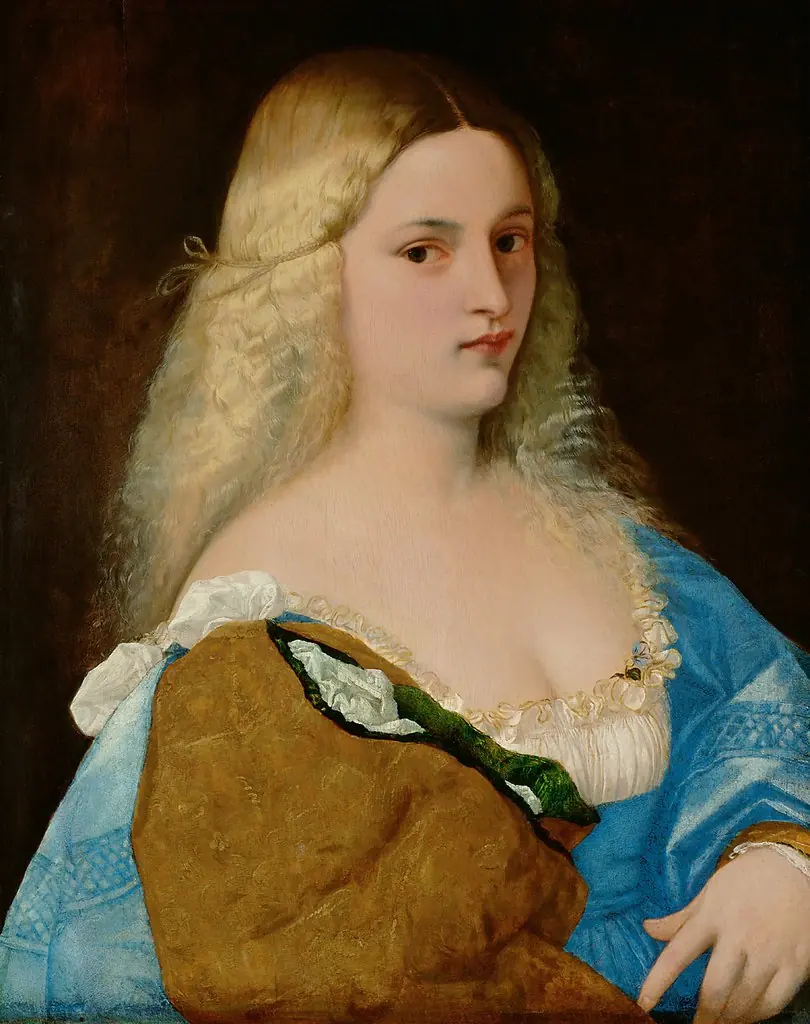
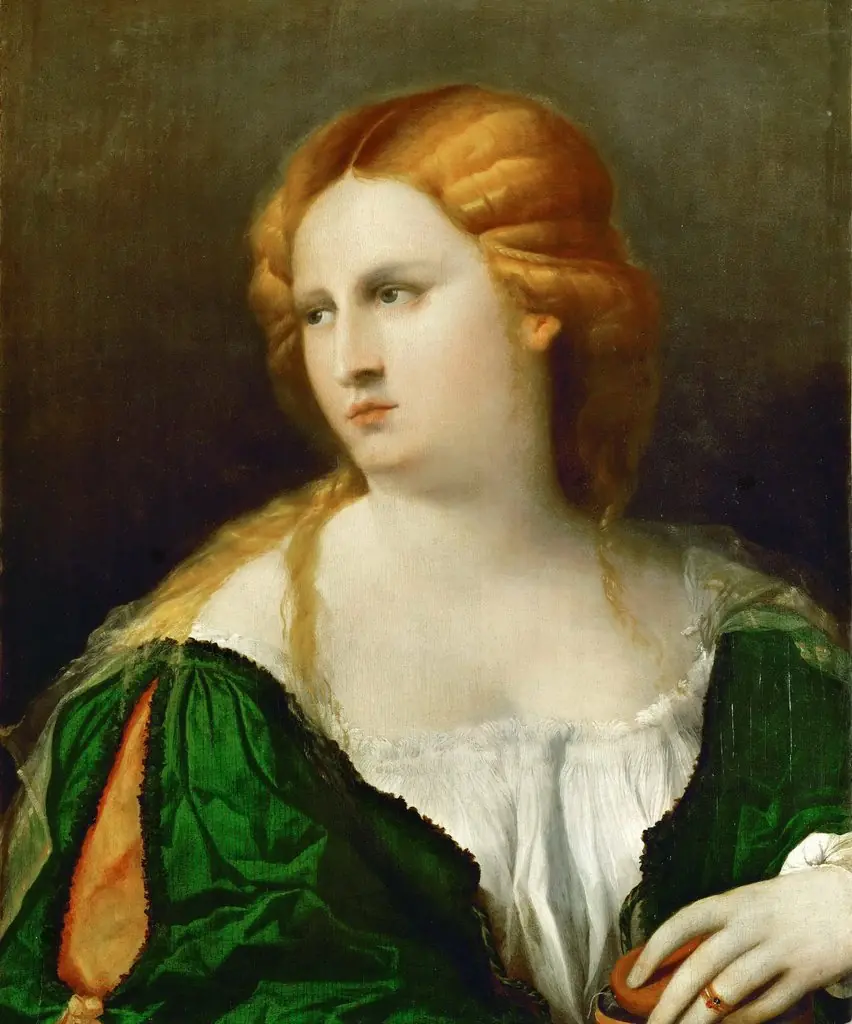
Young Woman in a Black Dress is an oil painting by the High Renaissance artist Titian. It dates from 1520 and is held in the collection of the Kunsthistorisches Museum. Created around 1520, this oil on canvas portrays a young woman dressed in a dark garment.
About this work
The work was once thought to be by Palma il Vecchio, then Giovanni Cariani, before Roberto Longhi correctly identified it as a Titian.
Young Woman in a Black Dress is an oil painting by Titian, dated around 1520. It’s a portrait of a young adult woman in a black dress, painted with oil on canvas.
The work was once thought to be by Palma il Vecchio, then Giovanni Cariani, before Roberto Longhi correctly identified it as a Titian. This reattribution is now the accepted view.
You can see more about the piece at the Kunsthistorisches Museum.
Subject & Meaning
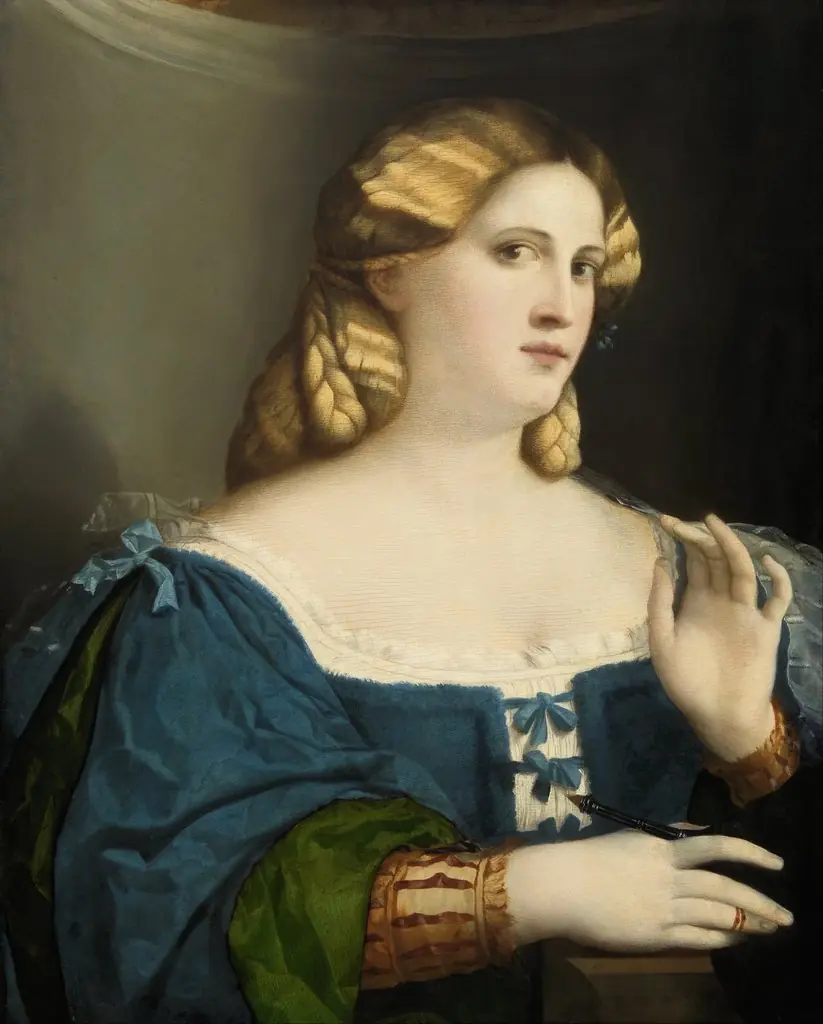
The painting depicts a half-length young woman facing the viewer, her torso slightly twisted to suggest movement. She holds her black dress open over a white shift, revealing a generous cleavage. This specific physical type appears in other works by the artist, such as Flora and Woman with a Mirror, leading to speculation that the sitter may have been Titian's mistress or a recurring model.
The composition focuses on the contrast between the dark garment and the white undergarment, emphasizing the figure's presence against a dark background.
Technique & Style
Executed in oil paint on a poplar panel, the work measures 59.5 cm in height by 44.5 cm in width. Dating to approximately 1520, the painting exemplifies the Venetian school and High Renaissance movements through its handling of color and form. The composition depicts a half-length figure facing the viewer, utilizing a slight torsion of the torso to create a dynamic sense of movement rather than static rigidity.
One hand grasps the black dress, pulling it aside to reveal a white shift and a generous décolleté against a dark background. This specific physical type of the sitter recurs in other contemporary works by the artist, suggesting the use of a favored model or mistress.
History & Provenance
The work was created around 1520, likely by 1515, and was originally painted for a private patron before entering the Kunsthistorisches Museum in Vienna, where it has been housed since its acquisition. It was first misattributed to Palma il Vecchio and later to Giovanni Cariani, but Roberto Longhi reattributed it to Titian, a view that has become the critical consensus. The painting remains in the museum's collection and is displayed in the gallery dedicated to Venetian Renaissance works.
Young Woman in a Black Dress is held by the Kunsthistorisches Museum in Vienna. The work has been part of the museum's collection for a significant period, though specific inventory or accession numbers are not provided in the available documentation. The painting was historically misattributed to Palma il Vecchio and later to Giovanni Cariani before Roberto Longhi successfully reattributed it to Titian, a conclusion now accepted by critical consensus.
While the museum lists the work in its public records, no specific exhibition history detailing past shows or loan records is documented in the provided sources.
Legacy
The painting has been influential in scholarly reattribution practices, particularly in the history of art criticism. It was initially misattributed to Palma il Vecchio and later to Giovanni Cariani before Roberto Longhi restored it to Titian's oeuvre, a consensus now established in art historical scholarship. This reattribution contributed to broader methodological discussions about connoisseurship and stylistic analysis in Renaissance painting.
The work's compositional treatment of the female form, with its subtle torsion and rendering of fabric, has been cited as influential in later portraiture, particularly in its handling of gesture and drapery. Its inclusion in major museum collections has ensured continued visibility in studies of Venetian Renaissance art.
The painting remains accessible for study through the Kunsthistorisches Museum's collection, where it is documented as a key example of Titian's evolving portrait style during the early 1520s.
Overview
Created around 1520, this oil on canvas portrays a young woman dressed in a dark garment. The sitter’s calm demeanor and the subtle handling of light give the work a quiet, intimate presence. The painting is part of the collection of the Kunsthistorisches Museum in Vienna, where it is displayed among other works of the Venetian Renaissance.
Context
The portrait’s authorship was long uncertain. Initially credited to Palma il Vecchio, later scholars assigned it to Giovanni Cariani. In the mid‑20th century, art historian Roberto Longhi presented stylistic evidence linking the piece to Titian, a view that has since become the scholarly consensus.
Own this work as a print
Artist & collection
Artist
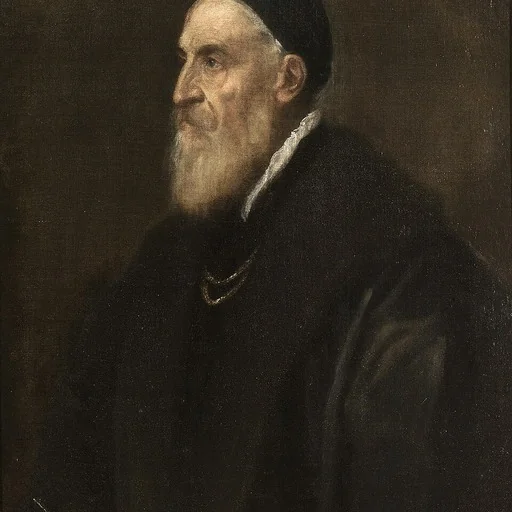
Tiziano Vecellio (Italian:; c. 1488/1490 – 27 August 1576), Latinized as Titianus, hence known in English as Titian ( TISH-ən), was an Italian Renaissance painter. The most important artist of Renaissance Venetian…