Artwork
Daoist Immortal on a Qilin and Two Attendants
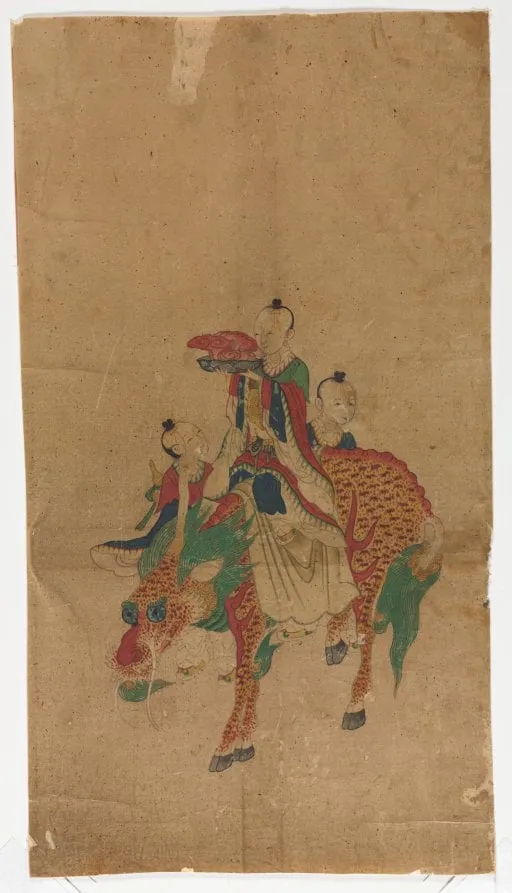
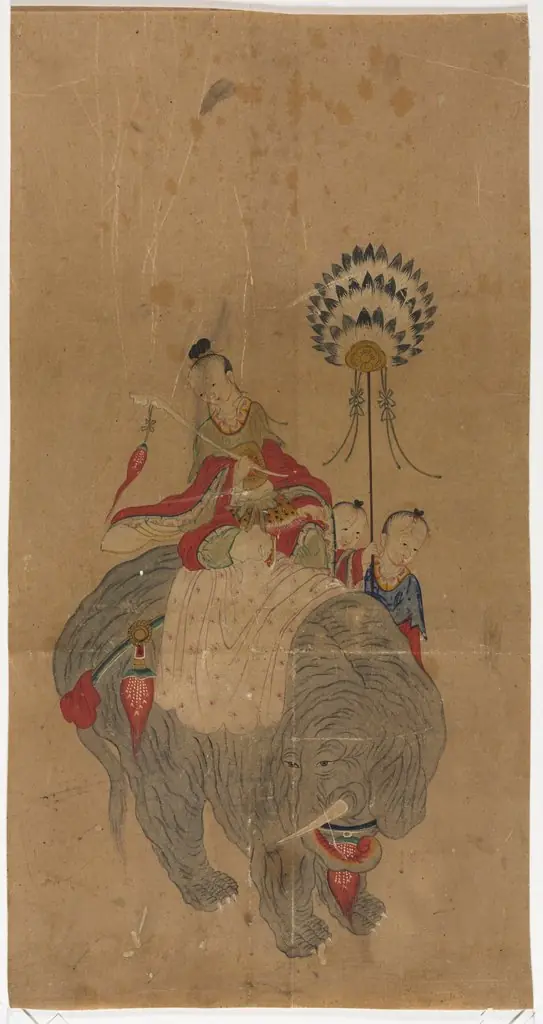
Daoist Immortal on a Qilin and Two Attendants is an unspecified painting by the Impressionist artist Unknown. It dates from 1804 and is held in the collection of the Cleveland Museum of Art. This painting depicts a Daoist immortal mounted on a qilin, accompanied by two attendants, all floating above cloud formations.
- Accession no.
- 1915.220
About this work
This painting was likely made for a celebration, maybe a birthday or festival, because Daoist immortals were thought to bring good luck.
You see a Daoist immortal riding a mythical qilin, followed by two attendants. The figures float on clouds, dressed in flowing robes with bright colors.
This painting was likely made for a celebration, maybe a birthday or festival, because Daoist immortals were thought to bring good luck. It’s small, so it might have been part of a folding screen or an album with other religious figures.
If you like this, look up more art from Korea, Joseon dynasty (1392–1910).
Overview
This painting depicts a Daoist immortal mounted on a qilin, accompanied by two attendants, all floating above cloud formations. Executed in vibrant pigments with fluid brushwork, it reflects late 18th-century Korean artistic trends favoring mythological themes. Its modest size suggests it was once part of a multi-panel folding screen or an illustrated album, likely intended for private or ceremonial display during seasonal festivities.
Subject & Meaning
The immortal, a figure of transcendence in Daoist belief, rides the qilin, a benevolent chimera symbolizing virtue and auspiciousness. The attendants, positioned behind, reinforce the divine procession. Such imagery was commonly invoked to invoke blessings, particularly during celebrations like birthdays or New Year observances, where the presence of immortals was thought to invite fortune and longevity.
Technique & Style
The figures are rendered with delicate, flowing lines that emphasize the movement of robes and the grace of the qilin’s form. Colors are rich but not garish, applied with precision to highlight textures and spatial depth. The clouds are suggested rather than detailed, using soft washes to imply elevation and otherworldliness, characteristic of Joseon-era religious painting conventions.
History & Provenance
Created during the late Joseon dynasty, the work aligns with a broader revival of Daoist iconography in Korean court and elite circles. Its compact format indicates it was not a public altarpiece but a portable devotional or celebratory object, possibly commissioned by a scholar-official or noble household. No definitive record of its early ownership survives, though similar works are found in temple and private collections from the period.
Context
While Buddhist imagery dominated official religious art, Daoist themes gained popularity among the literati for their association with personal cultivation and celestial harmony. Paintings of immortals often appeared alongside Buddhist deities in multi-panel formats, reflecting a syncretic spiritual culture. This piece fits within a trend of integrating mythological narratives into domestic and festive settings.
Legacy
Though not widely exhibited today, such works contribute to understanding how Daoist cosmology was visually adapted in Joseon Korea. They reveal a nuanced blend of Chinese influences and local aesthetic sensibilities, preserved in collections that emphasize ritual function over monumental scale. Their survival offers insight into the private spiritual lives of the elite during a period of Confucian dominance.
Artist & collection