Artwork
Ecce homo
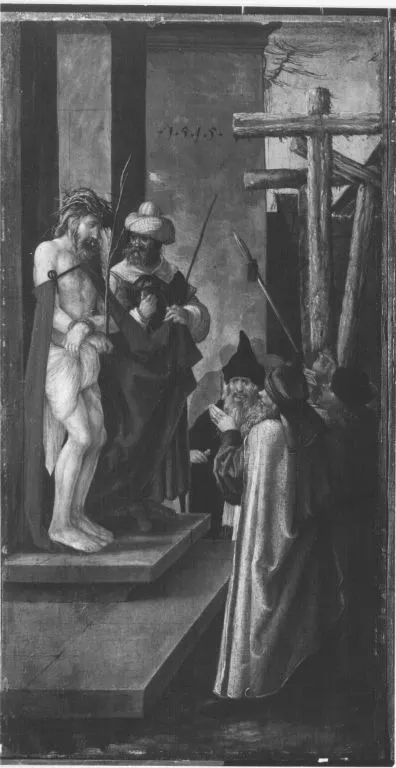
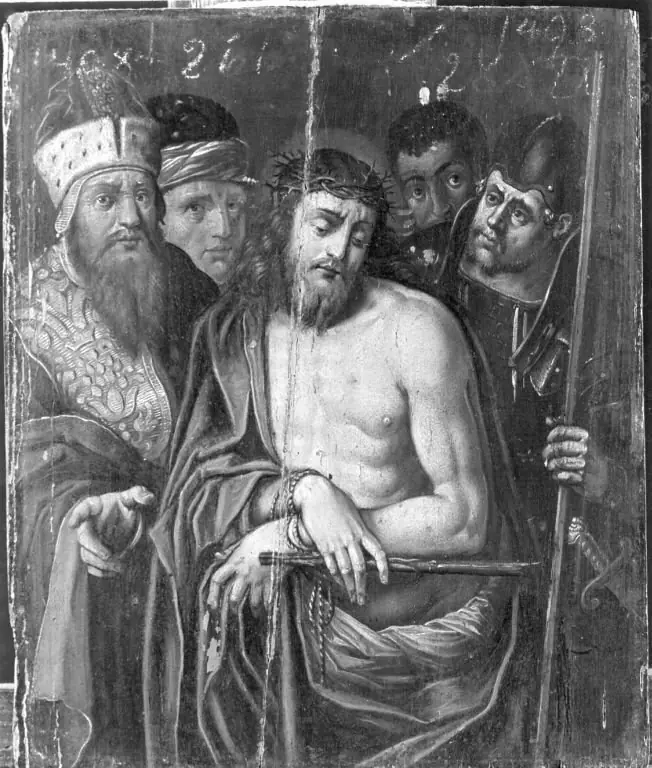
Ecce homo is an unspecified painting by the High Renaissance artist Unknown. It dates from 1515 and is held in the collection of the Bavarian State Painting Collections. The work portrays a somber tableau centered on a figure identified as Jesus Christ, positioned on a raised platform.
About this work
Subject & Meaning
The subject matter focuses entirely on the moment of Christ's presentation, emphasizing his suffering and the theological weight of the scene.
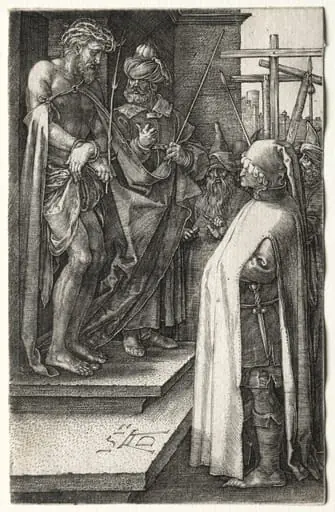
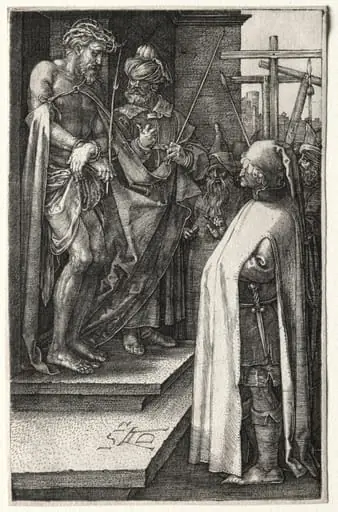
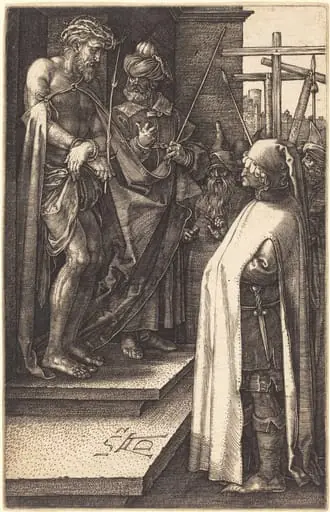
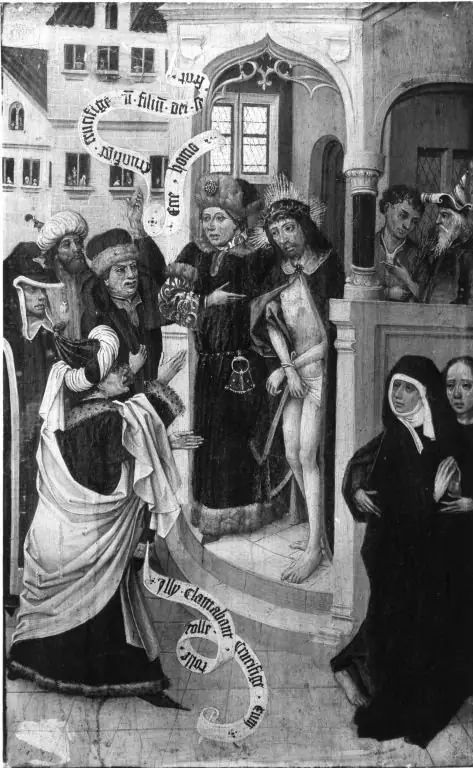
The painting depicts Jesus Christ as the central figure, illustrating the biblical 'Ecce Homo' theme where Pontius Pilate presents the scourged and crowned Christ to the crowd. As a religious work created in 1515, the piece functions as a painted copy after Albrecht Dürer's engraving cataloged as B. 10. The subject matter focuses entirely on the moment of Christ's presentation, emphasizing his suffering and the theological weight of the scene.
This specific iconography, derived from Dürer's composition, serves to highlight the human vulnerability of Jesus within the context of his Passion, a common motif in religious art of the period.
Technique & Style
Ecce Homo is an oil painting on panel created in 1515, measuring 42.2 centimeters in height and 21.8 centimeters in width. The work functions as a painted copy after Albrecht Dürer's engraving B. 10, depicting Jesus Christ in the moment of condemnation. It is housed in the Bavarian State Painting Collections at the Alte Pinakothek in Munich.
The composition emphasizes Christ's suffering and the gesture of Pontius Pilate, rendered with precise detail characteristic of Northern Renaissance technique.
The painting's surface exhibits fine brushwork and layered glazing, contributing to a lifelike texture and depth. Its stylistic approach aligns with religious art of the early 16th century, combining naturalistic figure rendering with symbolic composition to convey theological narrative. The work's condition remains stable, with no documented alterations to its structural integrity or visual integrity since its creation.
History & Provenance
The work is a painted copy after an engraving by Albrecht Dürer, part of the Bavarian State Painting Collections and housed in the Alte Pinakothek.
It was created in 1515 and measures 42.2 cm in height by 21.8 cm in width.
The work is held by the Bavarian State Painting Collections in Munich, where it is part of the holdings of the Alte Pinakothek. It is inventoried under the accession number 7726. The painting is a painted copy after Albrecht Dürer’s engraving of the same subject, dated to 1515. There are no documented exhibitions specifically listing this copy in the provided sources.
Overview
The work portrays a somber tableau centered on a figure identified as Jesus Christ, positioned on a raised platform. He is clad only in a white loincloth, crowned with thorns, and his hands are bound before him. Flanking him are two dark‑robed individuals who appear to wield implements associated with torture, while a large cross looms in the shadowed background, reinforcing the scene’s solemn tone.
Context
The subject draws from the New Testament narrative of the trial and mockery of Jesus, a motif frequently revisited in Western art from the medieval period onward. By emphasizing the starkness of the setting and the physical restraints, the work aligns with a tradition that seeks to evoke contemplation of Christ’s sacrifice.
Artist & collection