Artwork
Guy Little Theatrical Photograph
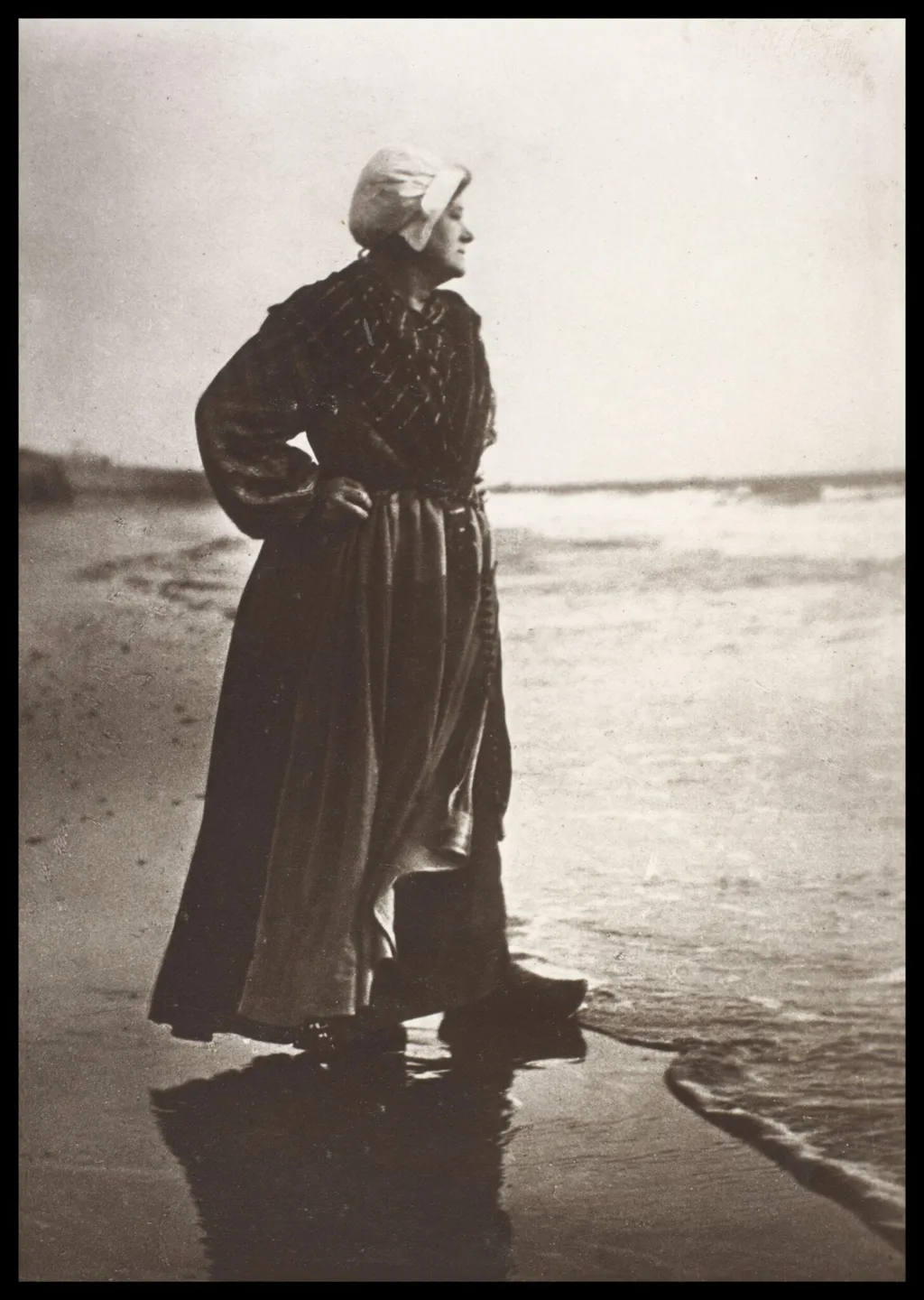
Guy Little Theatrical Photograph is a photographic photography by Unknown. It dates from 1904 and is held in the collection of the Victoria and Albert Museum.
About this work
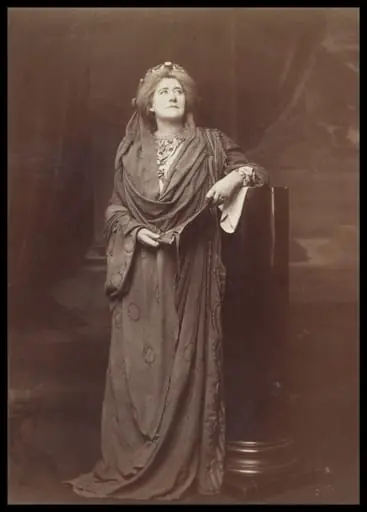
This black-and-white photo shows Ellen Terry dressed as Kniertje from The Good Hope in 1904.
She stands in costume, thick skirts, apron, headscarf, posed for the camera. The photo was made from a glass negative, then printed on stiff card. The light catches her face and costume just enough to show detail.
Check out the original at the Victoria and Albert Museum.
Overview
The image is a black‑and‑white portrait of celebrated English actress Ellen Terry in the role of Kniertje from the 1904 production of The Good Hope.
The image is a black‑and‑white portrait of celebrated English actress Ellen Terry in the role of Kniertje from the 1904 production of The Good Hope. Captured in full costume, the photograph presents Terry standing with a modest pose, her face illuminated against the dark folds of her skirt, apron and headscarf. The picture is part of a larger set of early photographic cards now held by the Victoria and Albert Museum.
Subject & Meaning
The portrait records a specific theatrical moment, preserving Terry’s interpretation of Kniertje, a character from a contemporary play. By presenting the actress in costume rather than everyday attire, the image emphasizes the performative identity of the stage role, offering viewers a visual reference to the production’s visual design and to Terry’s status as a leading figure in Edwardian theatre.
Technique & Style
Created from a glass plate negative, the photograph was printed as an albumen print on a stiff card backing, a common method for mid‑19th‑century cartes de visite and later cabinet cards. The process yields fine detail and a characteristic matte surface, while the composition follows the formal, frontal portrait style typical of studio photography of the period, balancing illumination of the face with the texture of the costume.
History & Provenance
The card originated as part of a series of cartes de visite and cabinet cards produced for the popular market of collectible portrait cards in the late Victorian and Edwardian eras. The set was later removed from its original backing and mounted in albums by solicitor Guy Tristram Little, a noted collector of photographic ephemera. Upon his death in 1953, Little bequeathed the collection to the Victoria and Albert Museum, where it remains in the Theatre Collections.
Context
During the 1860s and 1870s, cartes de visite became a social craze, allowing the public to acquire images of notable personalities, including actors. By the 1890s, larger cabinet cards had largely replaced them, before postcards and modern studio prints took precedence. This photograph reflects the transitional phase of photographic media, serving both as a souvenir of a theatrical performance and as a collectible item within the broader culture of visual memorabilia.
Artist & collection